

Easter Flowers: 8 Symbolic Choices & Their Meanings (2026)
What do you think of when you think about Easter flowers?
- Easter Lilies?
- Daffodils?
- Tulips?
The flowers we associate with Easter are not accidental.
Each one arrived at this season through centuries of meaning, ritual, and repeated use – and each one, looked at closely enough, earns its place.
Below we move through the most significant Easter blooms, along with a few, more unusual, choices we love to use at this time of year. 🙂
Easter Flowers & What They Mean
2. Daffodil
3. Tulip
4. Poppy
5. Gerbera Daisy
6. Iris
7. Gypsophila (Baby’s Breath)
8. Hyacinth
9. Unusual Blooms for Easter
Easter flowers mark a specific kind of transition…the moment when winter stops being the default and something else becomes possible.
1. Easter Lily
There is a reason the Easter Lily (Lilium longiflorum) keeps returning. Not because it is expected – though it is – but because it is correct.
The trumpet-shaped bloom opens with a kind of inevitability, pure white against clean green, structured in a way that makes most other flowers feel decorative by comparison.
It does not compete. It simply arrives.
What Does The Easter Lily Symbolise?
Few flowers are asked to carry as much as the Easter Lily.
Purity. Rebirth. Resurrection. Motherhood.
It holds all of it without collapsing under the weight, which says something about the flower itself.
In Christian tradition it is bound to the resurrection of Christ; in older Pagan practice, to the figure of the mother.
What strikes us is how little the symbolism feels imposed. The whiteness of the lily is not a blank canvas – it is a position.
The meaning was already in the material before anyone named it.
2. Daffodil
The daffodil does not ease you into spring – it insists on it.
That forwardness is part of what makes it such a persistent Easter choice.
Yellow, white, occasionally orange or pale pink, always with that familiar trumpet at the centre: the daffodil has a confidence about it that is difficult to ignore.
You will find it in our Colours of Spring bouquet, where it belongs.
A footnote worth knowing: the daffodil is the national flower of Wales.

What does the Daffodil symbolise?
Happiness and hope are the qualities most often attached to the daffodil, and it is easy to understand why – there is something almost confrontational about its brightness.
But the meaning we find most interesting is resilience.
The daffodil pushes through cold ground before anything else dares to.
Given that, it makes a particularly considered gift for someone who has had a difficult winter of their own.
3. Tulip
Where the daffodil announces, the tulip considers.
Its range is wider than most people realise – red, pink, orange, deep bronze, near-black – and its forms vary considerably depending on variety: single, double, ruffled, fringed, lily-shaped.
The one we return to most is the parrot tulip. Its fringed, irregular petals carry a complexity that rewards attention in a way that a standard tulip does not.
What does the Tulip symbolise?
The tulip has accumulated a precise colour symbolism over time – white for forgiveness, purple for faith, red for passion, yellow for the quality of sunshine.
Whether or not you lean into that system, what the tulip offers Easter arrangements is range: it can hold a quiet, monochrome composition as easily as it can anchor something more layered.
That flexibility is underrated.

4. Poppy
The poppy is not the most obvious Easter flower – and that is precisely why we love it.
Where tulips and daffodils announce spring loudly, the poppy earns your attention slowly.
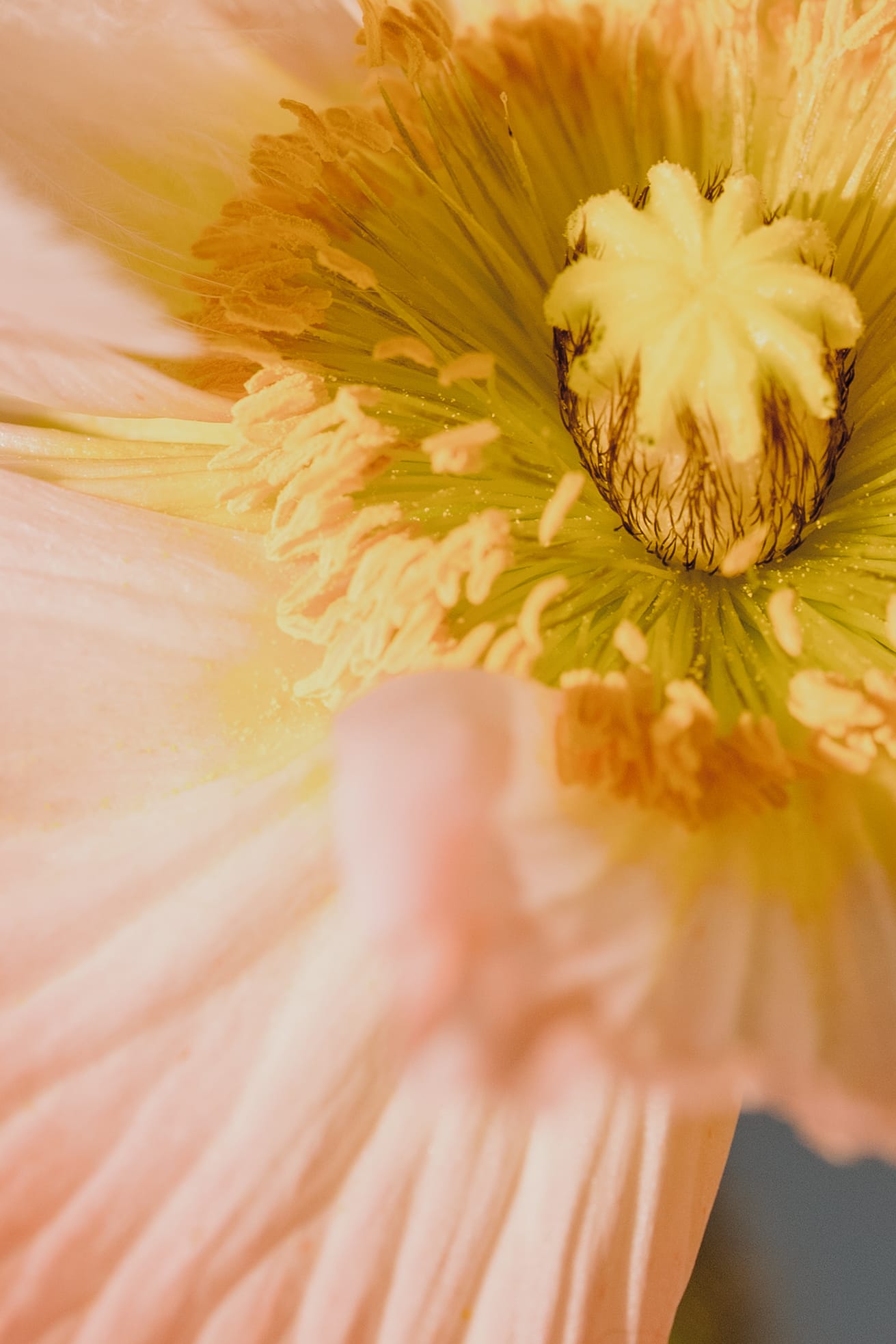
Its tissue-thin petals carry an almost architectural interior: layered structure, unexpected colour, and a centre that rewards looking closely.
Available in white, cream, peach, coral, red, and near-black, the poppy brings a quiet drama to any Easter arrangement.
What does the Poppy symbolise?
The poppy has long carried associations with both sleep and awakening – a duality that makes it a quietly fitting choice for Easter.
In many traditions it represents remembrance and renewal, the idea that something can pass and return.
For us at Blooming Haus, the poppy is chosen for its structure before its symbolism.
Get close enough and it stops being a flower entirely – it becomes form, light, and surface.
If you are looking for an Easter bloom that is thoughtful rather than obvious, the poppy is our top recommendation.
5. Gerbera Daisy
Few flowers are as straightforwardly generous as the gerbera daisy.
One of the most widely used cut flowers in the world, it arrives in a range of colours – from pale pastels through to deep orange and red – and it gives whatever arrangement it enters an immediate lift.
There is no complexity to manage here.
The gerbera does exactly what it appears to do.
What does the Gerbera Daisy symbolise?
Cheerfulness, innocence, and purity are the qualities most associated with the gerbera daisy – all of which resonate at Easter, whether you are marking the religious occasion or simply embracing the season.
For anyone who needs something uncomplicated and genuinely bright in their space, the gerbera daisy is a reliable and honest choice.
6. Iris
With around 300 species, the iris has a range that most flowers cannot match.
Many varieties bloom in late spring and summer, but enough arrive earlier to make the iris a natural Easter flower.
Purple is the most common colour, though it moves freely through blue, yellow, white, pink, orange, red, and near-black – giving it a flexibility that suits almost any considered arrangement.

What does the Iris symbolise?
Van Gogh returned to the iris repeatedly, which tells you something about the kind of attention it demands.
It is not a flower that reveals itself immediately.
In Christian tradition the iris is connected to the Passion of Christ, giving it a direct link to the Easter story; more broadly it is considered to represent wisdom.
What we find interesting is that both meanings – the religious and the philosophical – point toward the same quality: something that has been looked at carefully enough to be understood.
7. Gypsophila (Baby’s Breath)
Gypsophila is one of the most misunderstood flowers in common use.
Known widely as Baby’s Breath, it is often treated as filler – background material for whatever else is happening in an arrangement.
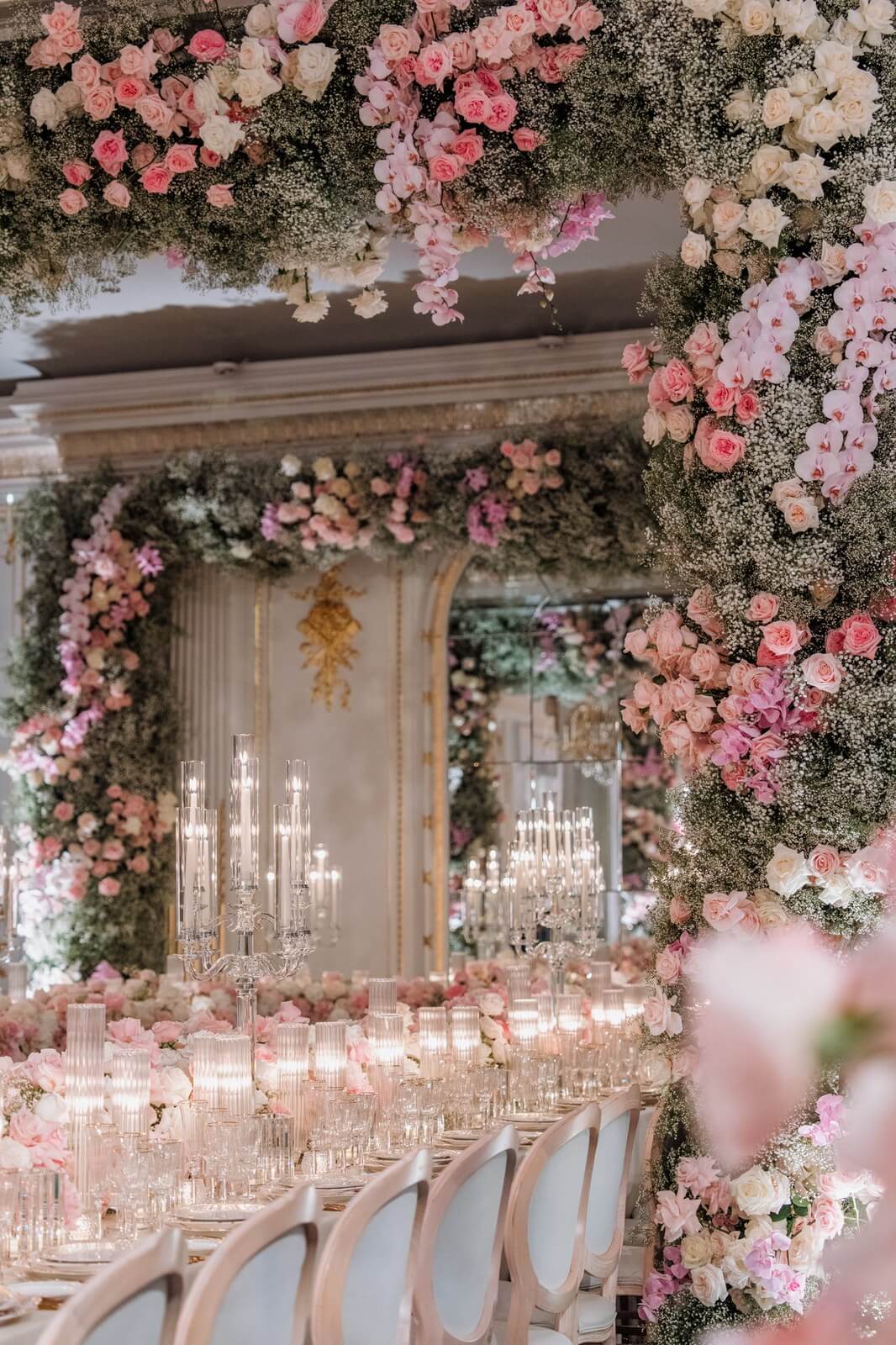
Used well, it is anything but. Its clouds of small white or pale pink flowers carry a lightness that few other blooms can provide, and on its own, without competition, it becomes something quietly striking.

What does Gypsophila symbolise?
Everlasting love is the meaning most closely associated with gypsophila, which is why it appears so frequently in wedding flowers. If you are marrying around Easter, it carries an additional resonance worth considering.
It is also associated with innocence, which makes it a natural choice for Easter arrangements where children are part of the occasion.
8. Hyacinth
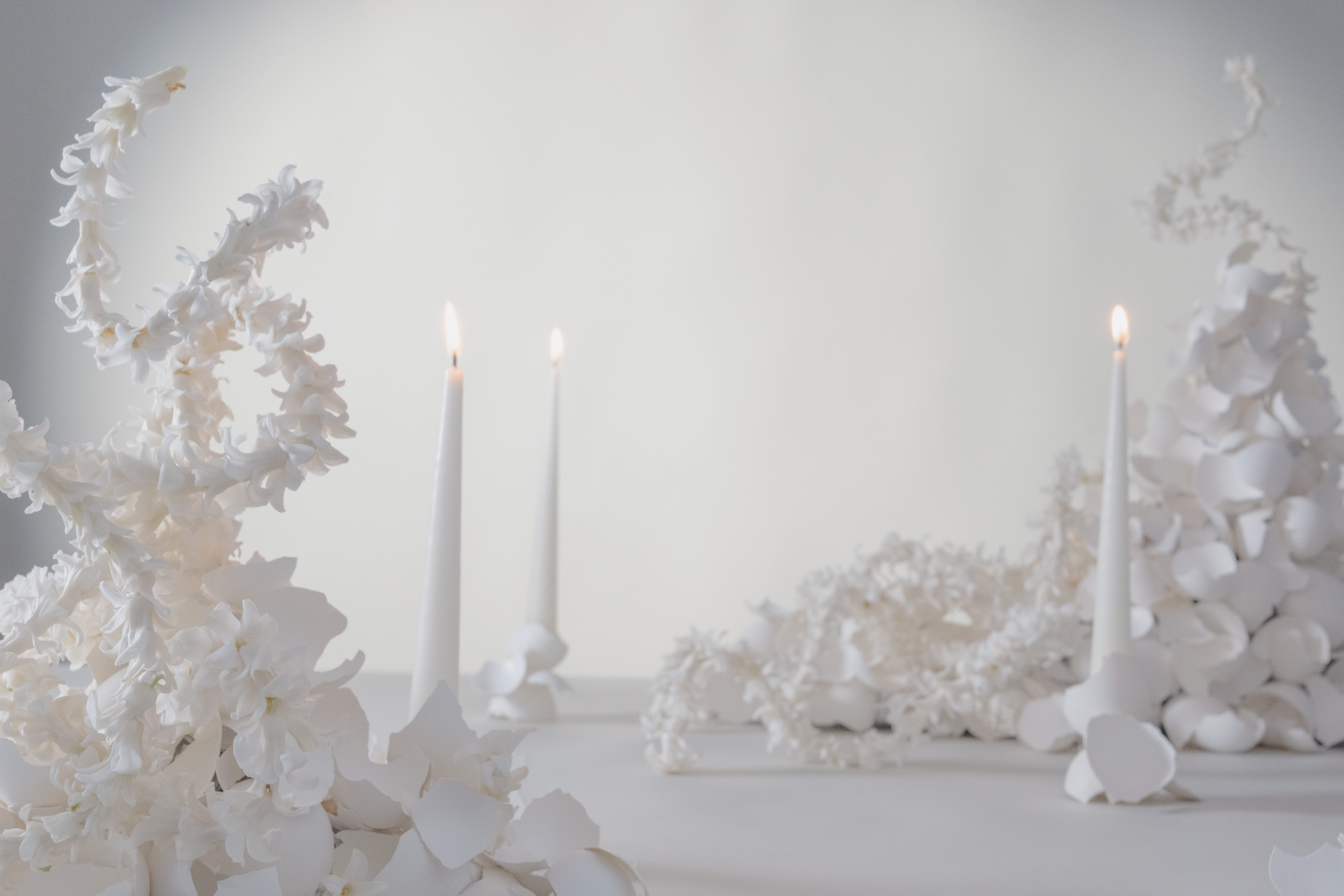
The hyacinth makes its presence known before you see it. Its fragrance is one of the most distinctive of any spring flower – dense, sweet, and particular in a way that is difficult to describe without simply saying: hyacinth.
The blooms are tubular and tightly clustered along the stem, available in white, blue, purple, pink, and red.
It is a flower that rewards being in the same room as.
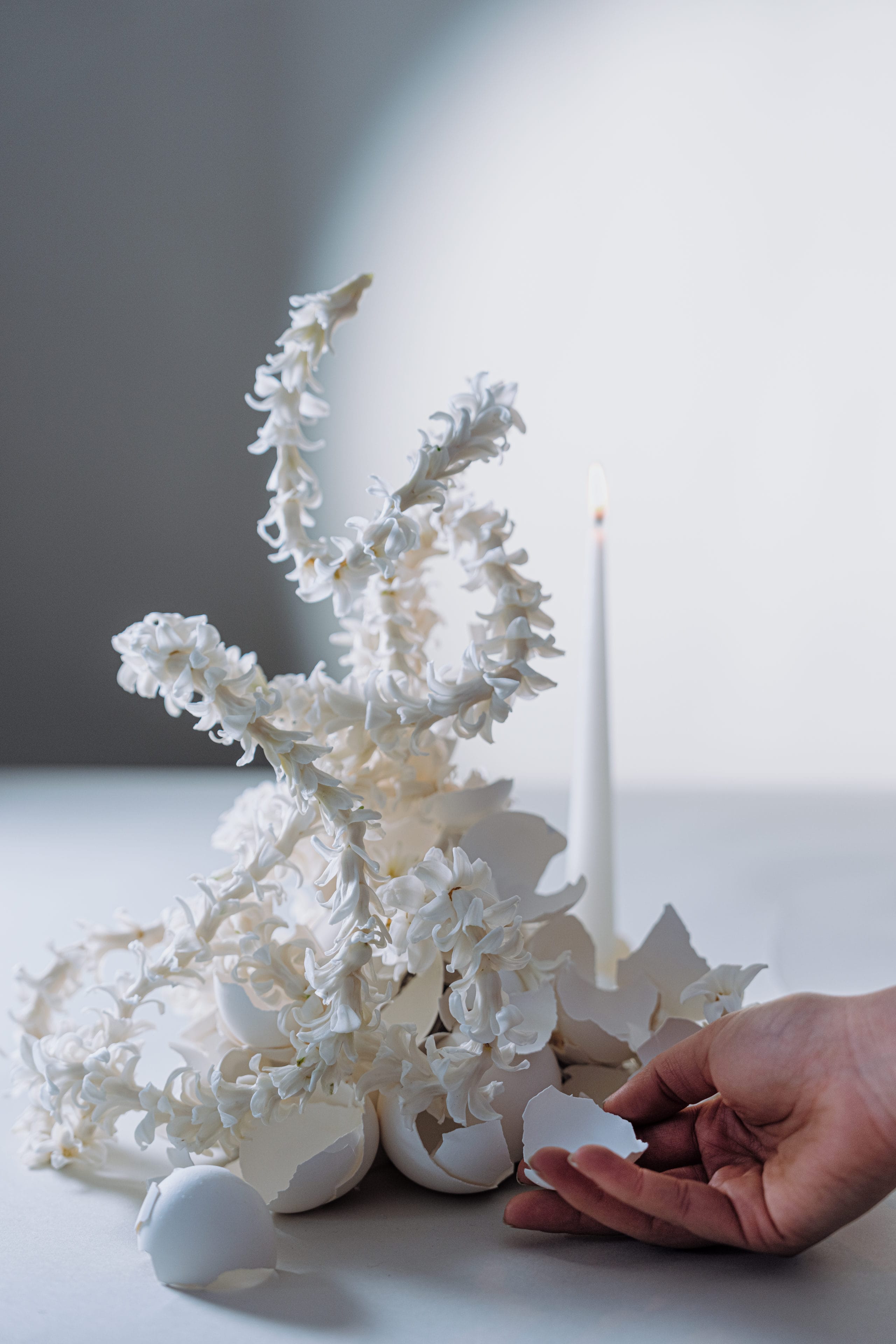
What does the Hyacinth symbolise?
The pastel shades of the hyacinth carry associations with peace, calm, and the specific joy of spring returning.
In Christian settings it is often connected to commitment and hope. What we find compelling is that the hyacinth does not need its symbolism explained – the scent alone communicates something about renewal that goes beyond what language can tidy up.
That is a quality worth looking for in a flower.
Other Journal Entries You May Find Useful
You may also like: