
A Guide To Flower Arrangements For Events
Tips for floral displays at your event
If you plan to livestream your event, choose brightly coloured and larger arrangements — they read beautifully on camera. Be mindful of proportions.
Measure vases and containers ahead of time to ensure your flowers will fit, and check that your colour scheme is consistent throughout.
Create a mood board to maintain visual consistency across the whole event.
Check which flowers are in season — seasonal blooms are more sustainable, more affordable, and always more beautiful.
Set a budget and stick to it. It is easy to get carried away, so knowing your numbers early keeps planning on track.
When looking for inspiration, Pinterest and architectural or interior design publications are excellent starting points for building a visual reference.
For a free consultation, contact us. Our team works with corporate events and private occasions of every scale and style.
Measure vases and containers ahead of time to ensure your flowers will fit, and check that your colour scheme is consistent throughout.
Create a mood board to maintain visual consistency across the whole event.
Check which flowers are in season — seasonal blooms are more sustainable, more affordable, and always more beautiful.
Set a budget and stick to it. It is easy to get carried away, so knowing your numbers early keeps planning on track.
When looking for inspiration, Pinterest and architectural or interior design publications are excellent starting points for building a visual reference.
For a free consultation, contact us. Our team works with corporate events and private occasions of every scale and style.
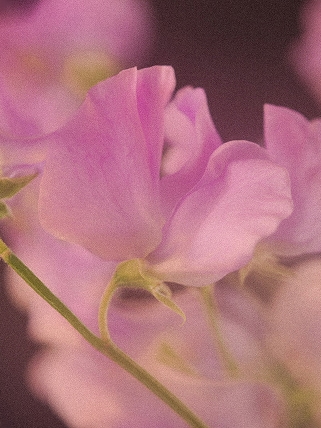
Use your venue’s floor plan to assess the space and decide where your arrangements will have the most impact — on stage, in entrances and hallways, suspended from the ceilings, or on dining tables. Mapping out the traffic flow will help you identify the best positions to create moments of interest. If displaying flowers near where food will be served, opt for smaller, more textural and less fragrant varieties — garden roses, sweet peas or dahlias work beautifully without overwhelming the senses.
Tips for floral displays at your event
If you plan to livestream your event, choose brightly coloured and larger arrangements — they read beautifully on camera. Be mindful of proportions.
Measure vases and containers ahead of time to ensure your flowers will fit, and check that your colour scheme is consistent throughout.
Create a mood board to maintain visual consistency across the whole event.
Check which flowers are in season — seasonal blooms are more sustainable, more affordable, and always more beautiful.
Set a budget and stick to it. It is easy to get carried away, so knowing your numbers early keeps planning on track.
When looking for inspiration, Pinterest and architectural or interior design publications are excellent starting points for building a visual reference.
For a free consultation, contact us. Our team works with corporate events and private occasions of every scale and style.
Measure vases and containers ahead of time to ensure your flowers will fit, and check that your colour scheme is consistent throughout.
Create a mood board to maintain visual consistency across the whole event.
Check which flowers are in season — seasonal blooms are more sustainable, more affordable, and always more beautiful.
Set a budget and stick to it. It is easy to get carried away, so knowing your numbers early keeps planning on track.
When looking for inspiration, Pinterest and architectural or interior design publications are excellent starting points for building a visual reference.
For a free consultation, contact us. Our team works with corporate events and private occasions of every scale and style.

Use your venue’s floor plan to assess the space and decide where your arrangements will have the most impact — on stage, in entrances and hallways, suspended from the ceilings, or on dining tables. Mapping out the traffic flow will help you identify the best positions to create moments of interest. If displaying flowers near where food will be served, opt for smaller, more textural and less fragrant varieties — garden roses, sweet peas or dahlias work beautifully without overwhelming the senses.
Tips for floral displays at your event
If you plan to livestream your event, choose brightly coloured and larger arrangements — they read beautifully on camera. Be mindful of proportions.
Measure vases and containers ahead of time to ensure your flowers will fit, and check that your colour scheme is consistent throughout.
Create a mood board to maintain visual consistency across the whole event.
Check which flowers are in season — seasonal blooms are more sustainable, more affordable, and always more beautiful.
Set a budget and stick to it. It is easy to get carried away, so knowing your numbers early keeps planning on track.
When looking for inspiration, Pinterest and architectural or interior design publications are excellent starting points for building a visual reference.
For a free consultation, contact us. Our team works with corporate events and private occasions of every scale and style.
Measure vases and containers ahead of time to ensure your flowers will fit, and check that your colour scheme is consistent throughout.
Create a mood board to maintain visual consistency across the whole event.
Check which flowers are in season — seasonal blooms are more sustainable, more affordable, and always more beautiful.
Set a budget and stick to it. It is easy to get carried away, so knowing your numbers early keeps planning on track.
When looking for inspiration, Pinterest and architectural or interior design publications are excellent starting points for building a visual reference.
For a free consultation, contact us. Our team works with corporate events and private occasions of every scale and style.
Where to position flowers at your event
Use your venue’s floor plan to assess the space and decide where your arrangements will have the most impact — on stage, in entrances and hallways, suspended from the ceilings, or on dining tables. Mapping out the traffic flow will help you identify the best positions to create moments of interest. If displaying flowers near where food will be served, opt for smaller, more textural and less fragrant varieties — garden roses, sweet peas or dahlias work beautifully without overwhelming the senses.
Tips for floral displays at your event
If you plan to livestream your event, choose brightly coloured and larger arrangements — they read beautifully on camera. Be mindful of proportions.
Measure vases and containers ahead of time to ensure your flowers will fit, and check that your colour scheme is consistent throughout.
Create a mood board to maintain visual consistency across the whole event.
Check which flowers are in season — seasonal blooms are more sustainable, more affordable, and always more beautiful.
Set a budget and stick to it. It is easy to get carried away, so knowing your numbers early keeps planning on track.
When looking for inspiration, Pinterest and architectural or interior design publications are excellent starting points for building a visual reference.
For a free consultation, contact us. Our team works with corporate events and private occasions of every scale and style.
Measure vases and containers ahead of time to ensure your flowers will fit, and check that your colour scheme is consistent throughout.
Create a mood board to maintain visual consistency across the whole event.
Check which flowers are in season — seasonal blooms are more sustainable, more affordable, and always more beautiful.
Set a budget and stick to it. It is easy to get carried away, so knowing your numbers early keeps planning on track.
When looking for inspiration, Pinterest and architectural or interior design publications are excellent starting points for building a visual reference.
For a free consultation, contact us. Our team works with corporate events and private occasions of every scale and style.
Triangular
A perennially classic form. Flowers are cut and arranged to follow the lines of a triangle, with taller blooms at the apex and smaller ones around the base to hold the shape.
Where to position flowers at your event
Use your venue’s floor plan to assess the space and decide where your arrangements will have the most impact — on stage, in entrances and hallways, suspended from the ceilings, or on dining tables. Mapping out the traffic flow will help you identify the best positions to create moments of interest. If displaying flowers near where food will be served, opt for smaller, more textural and less fragrant varieties — garden roses, sweet peas or dahlias work beautifully without overwhelming the senses.
Tips for floral displays at your event
If you plan to livestream your event, choose brightly coloured and larger arrangements — they read beautifully on camera. Be mindful of proportions.
Measure vases and containers ahead of time to ensure your flowers will fit, and check that your colour scheme is consistent throughout.
Create a mood board to maintain visual consistency across the whole event.
Check which flowers are in season — seasonal blooms are more sustainable, more affordable, and always more beautiful.
Set a budget and stick to it. It is easy to get carried away, so knowing your numbers early keeps planning on track.
When looking for inspiration, Pinterest and architectural or interior design publications are excellent starting points for building a visual reference.
For a free consultation, contact us. Our team works with corporate events and private occasions of every scale and style.
Measure vases and containers ahead of time to ensure your flowers will fit, and check that your colour scheme is consistent throughout.
Create a mood board to maintain visual consistency across the whole event.
Check which flowers are in season — seasonal blooms are more sustainable, more affordable, and always more beautiful.
Set a budget and stick to it. It is easy to get carried away, so knowing your numbers early keeps planning on track.
When looking for inspiration, Pinterest and architectural or interior design publications are excellent starting points for building a visual reference.
For a free consultation, contact us. Our team works with corporate events and private occasions of every scale and style.
Crescent
This elegant moon-shaped arrangement can be created using flowers with naturally flexible stems — such as clematis, spirea or gloriosas — which can be gently curved to form the crescent. Flowers with more rigid stems, such as rudbeckias, coreopsis or echinaceas, are also suitable with a supporting armature. Choose flowers and greenery with tapered ends to sit neatly within the ‘c’ shape, and ensure their natural curve is visible once displayed.
Triangular
A perennially classic form. Flowers are cut and arranged to follow the lines of a triangle, with taller blooms at the apex and smaller ones around the base to hold the shape.
Where to position flowers at your event
Use your venue’s floor plan to assess the space and decide where your arrangements will have the most impact — on stage, in entrances and hallways, suspended from the ceilings, or on dining tables. Mapping out the traffic flow will help you identify the best positions to create moments of interest. If displaying flowers near where food will be served, opt for smaller, more textural and less fragrant varieties — garden roses, sweet peas or dahlias work beautifully without overwhelming the senses.
Tips for floral displays at your event
If you plan to livestream your event, choose brightly coloured and larger arrangements — they read beautifully on camera. Be mindful of proportions.
Measure vases and containers ahead of time to ensure your flowers will fit, and check that your colour scheme is consistent throughout.
Create a mood board to maintain visual consistency across the whole event.
Check which flowers are in season — seasonal blooms are more sustainable, more affordable, and always more beautiful.
Set a budget and stick to it. It is easy to get carried away, so knowing your numbers early keeps planning on track.
When looking for inspiration, Pinterest and architectural or interior design publications are excellent starting points for building a visual reference.
For a free consultation, contact us. Our team works with corporate events and private occasions of every scale and style.
Measure vases and containers ahead of time to ensure your flowers will fit, and check that your colour scheme is consistent throughout.
Create a mood board to maintain visual consistency across the whole event.
Check which flowers are in season — seasonal blooms are more sustainable, more affordable, and always more beautiful.
Set a budget and stick to it. It is easy to get carried away, so knowing your numbers early keeps planning on track.
When looking for inspiration, Pinterest and architectural or interior design publications are excellent starting points for building a visual reference.
For a free consultation, contact us. Our team works with corporate events and private occasions of every scale and style.
Classic Round
A round arrangement emphasises its shape by placing the tallest flowers at the centre, with blooms gradually reducing in size towards the edges. Colours can also grade outwards to further emphasise the focal flowers. Dense, textured and beautifully symmetrical, this style is a natural choice for formal events.
Crescent
This elegant moon-shaped arrangement can be created using flowers with naturally flexible stems — such as clematis, spirea or gloriosas — which can be gently curved to form the crescent. Flowers with more rigid stems, such as rudbeckias, coreopsis or echinaceas, are also suitable with a supporting armature. Choose flowers and greenery with tapered ends to sit neatly within the ‘c’ shape, and ensure their natural curve is visible once displayed.
Triangular
A perennially classic form. Flowers are cut and arranged to follow the lines of a triangle, with taller blooms at the apex and smaller ones around the base to hold the shape.
Where to position flowers at your event
Use your venue’s floor plan to assess the space and decide where your arrangements will have the most impact — on stage, in entrances and hallways, suspended from the ceilings, or on dining tables. Mapping out the traffic flow will help you identify the best positions to create moments of interest. If displaying flowers near where food will be served, opt for smaller, more textural and less fragrant varieties — garden roses, sweet peas or dahlias work beautifully without overwhelming the senses.
Tips for floral displays at your event
If you plan to livestream your event, choose brightly coloured and larger arrangements — they read beautifully on camera. Be mindful of proportions.
Measure vases and containers ahead of time to ensure your flowers will fit, and check that your colour scheme is consistent throughout.
Create a mood board to maintain visual consistency across the whole event.
Check which flowers are in season — seasonal blooms are more sustainable, more affordable, and always more beautiful.
Set a budget and stick to it. It is easy to get carried away, so knowing your numbers early keeps planning on track.
When looking for inspiration, Pinterest and architectural or interior design publications are excellent starting points for building a visual reference.
For a free consultation, contact us. Our team works with corporate events and private occasions of every scale and style.
Measure vases and containers ahead of time to ensure your flowers will fit, and check that your colour scheme is consistent throughout.
Create a mood board to maintain visual consistency across the whole event.
Check which flowers are in season — seasonal blooms are more sustainable, more affordable, and always more beautiful.
Set a budget and stick to it. It is easy to get carried away, so knowing your numbers early keeps planning on track.
When looking for inspiration, Pinterest and architectural or interior design publications are excellent starting points for building a visual reference.
For a free consultation, contact us. Our team works with corporate events and private occasions of every scale and style.
Vertical
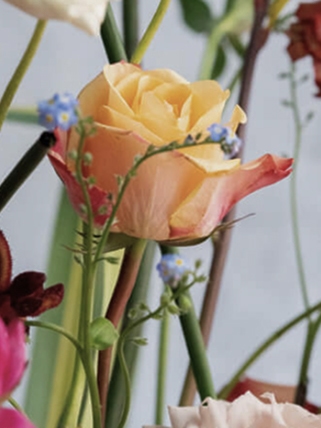
A vertical arrangement is perfect for tall flowers with long stems and leaves, such as tulips, roses and carnations. It is striking and commands attention. Choose a tall vase, select a focal flower, then surround it with smaller blooms like forget-me-nots at varying heights to create visual interest. A vertical arrangement can be displayed almost anywhere in your venue, as it takes up very little footprint.
Classic Round
A round arrangement emphasises its shape by placing the tallest flowers at the centre, with blooms gradually reducing in size towards the edges. Colours can also grade outwards to further emphasise the focal flowers. Dense, textured and beautifully symmetrical, this style is a natural choice for formal events.
Crescent
This elegant moon-shaped arrangement can be created using flowers with naturally flexible stems — such as clematis, spirea or gloriosas — which can be gently curved to form the crescent. Flowers with more rigid stems, such as rudbeckias, coreopsis or echinaceas, are also suitable with a supporting armature. Choose flowers and greenery with tapered ends to sit neatly within the ‘c’ shape, and ensure their natural curve is visible once displayed.
Triangular
A perennially classic form. Flowers are cut and arranged to follow the lines of a triangle, with taller blooms at the apex and smaller ones around the base to hold the shape.
Where to position flowers at your event
Use your venue’s floor plan to assess the space and decide where your arrangements will have the most impact — on stage, in entrances and hallways, suspended from the ceilings, or on dining tables. Mapping out the traffic flow will help you identify the best positions to create moments of interest. If displaying flowers near where food will be served, opt for smaller, more textural and less fragrant varieties — garden roses, sweet peas or dahlias work beautifully without overwhelming the senses.
Tips for floral displays at your event
If you plan to livestream your event, choose brightly coloured and larger arrangements — they read beautifully on camera. Be mindful of proportions.
Measure vases and containers ahead of time to ensure your flowers will fit, and check that your colour scheme is consistent throughout.
Create a mood board to maintain visual consistency across the whole event.
Check which flowers are in season — seasonal blooms are more sustainable, more affordable, and always more beautiful.
Set a budget and stick to it. It is easy to get carried away, so knowing your numbers early keeps planning on track.
When looking for inspiration, Pinterest and architectural or interior design publications are excellent starting points for building a visual reference.
For a free consultation, contact us. Our team works with corporate events and private occasions of every scale and style.
Measure vases and containers ahead of time to ensure your flowers will fit, and check that your colour scheme is consistent throughout.
Create a mood board to maintain visual consistency across the whole event.
Check which flowers are in season — seasonal blooms are more sustainable, more affordable, and always more beautiful.
Set a budget and stick to it. It is easy to get carried away, so knowing your numbers early keeps planning on track.
When looking for inspiration, Pinterest and architectural or interior design publications are excellent starting points for building a visual reference.
For a free consultation, contact us. Our team works with corporate events and private occasions of every scale and style.
What are some of the shapes of flower arrangements?
Vertical
A vertical arrangement is perfect for tall flowers with long stems and leaves, such as tulips, roses and carnations. It is striking and commands attention. Choose a tall vase, select a focal flower, then surround it with smaller blooms like forget-me-nots at varying heights to create visual interest. A vertical arrangement can be displayed almost anywhere in your venue, as it takes up very little footprint.
Classic Round
A round arrangement emphasises its shape by placing the tallest flowers at the centre, with blooms gradually reducing in size towards the edges. Colours can also grade outwards to further emphasise the focal flowers. Dense, textured and beautifully symmetrical, this style is a natural choice for formal events.
Crescent
This elegant moon-shaped arrangement can be created using flowers with naturally flexible stems — such as clematis, spirea or gloriosas — which can be gently curved to form the crescent. Flowers with more rigid stems, such as rudbeckias, coreopsis or echinaceas, are also suitable with a supporting armature. Choose flowers and greenery with tapered ends to sit neatly within the ‘c’ shape, and ensure their natural curve is visible once displayed.
Triangular
A perennially classic form. Flowers are cut and arranged to follow the lines of a triangle, with taller blooms at the apex and smaller ones around the base to hold the shape.
Where to position flowers at your event
Use your venue’s floor plan to assess the space and decide where your arrangements will have the most impact — on stage, in entrances and hallways, suspended from the ceilings, or on dining tables. Mapping out the traffic flow will help you identify the best positions to create moments of interest. If displaying flowers near where food will be served, opt for smaller, more textural and less fragrant varieties — garden roses, sweet peas or dahlias work beautifully without overwhelming the senses.
Tips for floral displays at your event
If you plan to livestream your event, choose brightly coloured and larger arrangements — they read beautifully on camera. Be mindful of proportions.
Measure vases and containers ahead of time to ensure your flowers will fit, and check that your colour scheme is consistent throughout.
Create a mood board to maintain visual consistency across the whole event.
Check which flowers are in season — seasonal blooms are more sustainable, more affordable, and always more beautiful.
Set a budget and stick to it. It is easy to get carried away, so knowing your numbers early keeps planning on track.
When looking for inspiration, Pinterest and architectural or interior design publications are excellent starting points for building a visual reference.
For a free consultation, contact us. Our team works with corporate events and private occasions of every scale and style.
Measure vases and containers ahead of time to ensure your flowers will fit, and check that your colour scheme is consistent throughout.
Create a mood board to maintain visual consistency across the whole event.
Check which flowers are in season — seasonal blooms are more sustainable, more affordable, and always more beautiful.
Set a budget and stick to it. It is easy to get carried away, so knowing your numbers early keeps planning on track.
When looking for inspiration, Pinterest and architectural or interior design publications are excellent starting points for building a visual reference.
For a free consultation, contact us. Our team works with corporate events and private occasions of every scale and style.
For casual events
Anniversaries, baby showers and birthdays benefit from smaller, more whimsical arrangements. For casual occasions, there’s wonderful scope to personalise — you might draw inspiration from the guest of honour’s favourite colours and flowers, or follow a specific theme. The setting also opens up creative possibilities: a beach party, for instance, lends itself beautifully to tropical varieties and an abundant, sun-soaked palette.
What are some of the shapes of flower arrangements?
Vertical
A vertical arrangement is perfect for tall flowers with long stems and leaves, such as tulips, roses and carnations. It is striking and commands attention. Choose a tall vase, select a focal flower, then surround it with smaller blooms like forget-me-nots at varying heights to create visual interest. A vertical arrangement can be displayed almost anywhere in your venue, as it takes up very little footprint.
Classic Round
A round arrangement emphasises its shape by placing the tallest flowers at the centre, with blooms gradually reducing in size towards the edges. Colours can also grade outwards to further emphasise the focal flowers. Dense, textured and beautifully symmetrical, this style is a natural choice for formal events.
Crescent
This elegant moon-shaped arrangement can be created using flowers with naturally flexible stems — such as clematis, spirea or gloriosas — which can be gently curved to form the crescent. Flowers with more rigid stems, such as rudbeckias, coreopsis or echinaceas, are also suitable with a supporting armature. Choose flowers and greenery with tapered ends to sit neatly within the ‘c’ shape, and ensure their natural curve is visible once displayed.
Triangular
A perennially classic form. Flowers are cut and arranged to follow the lines of a triangle, with taller blooms at the apex and smaller ones around the base to hold the shape.
Where to position flowers at your event
Use your venue’s floor plan to assess the space and decide where your arrangements will have the most impact — on stage, in entrances and hallways, suspended from the ceilings, or on dining tables. Mapping out the traffic flow will help you identify the best positions to create moments of interest. If displaying flowers near where food will be served, opt for smaller, more textural and less fragrant varieties — garden roses, sweet peas or dahlias work beautifully without overwhelming the senses.
Tips for floral displays at your event
If you plan to livestream your event, choose brightly coloured and larger arrangements — they read beautifully on camera. Be mindful of proportions.
Measure vases and containers ahead of time to ensure your flowers will fit, and check that your colour scheme is consistent throughout.
Create a mood board to maintain visual consistency across the whole event.
Check which flowers are in season — seasonal blooms are more sustainable, more affordable, and always more beautiful.
Set a budget and stick to it. It is easy to get carried away, so knowing your numbers early keeps planning on track.
When looking for inspiration, Pinterest and architectural or interior design publications are excellent starting points for building a visual reference.
For a free consultation, contact us. Our team works with corporate events and private occasions of every scale and style.
Measure vases and containers ahead of time to ensure your flowers will fit, and check that your colour scheme is consistent throughout.
Create a mood board to maintain visual consistency across the whole event.
Check which flowers are in season — seasonal blooms are more sustainable, more affordable, and always more beautiful.
Set a budget and stick to it. It is easy to get carried away, so knowing your numbers early keeps planning on track.
When looking for inspiration, Pinterest and architectural or interior design publications are excellent starting points for building a visual reference.
For a free consultation, contact us. Our team works with corporate events and private occasions of every scale and style.
For formal events
Elegant and striking flowers like orchids, tropical leaves, anthuriums, structural line flowers like poppies, and textural ferns work beautifully at formal events such as product launches or awards ceremonies. Arrangements should be considered and purposeful — overdoing it could distract guests from the occasion itself.
Do also bear in mind that flowers carry deeper meanings. Roses, though beautiful, are so closely associated with romance that they may not feel right for a professional event. Purple irises, which symbolise wisdom, and orchids, which represent maturity and refinement, are both excellent alternatives. Colour choices matter here too — selecting shades that echo your brand palette is a subtle but effective way to strengthen your identity.
For product launches specifically, the wider theme and aesthetic will inform everything — many clients opt for luxury flower walls and arched entrances to make a truly glamorous first impression.
For casual events
Anniversaries, baby showers and birthdays benefit from smaller, more whimsical arrangements. For casual occasions, there’s wonderful scope to personalise — you might draw inspiration from the guest of honour’s favourite colours and flowers, or follow a specific theme. The setting also opens up creative possibilities: a beach party, for instance, lends itself beautifully to tropical varieties and an abundant, sun-soaked palette.
What are some of the shapes of flower arrangements?
Vertical
A vertical arrangement is perfect for tall flowers with long stems and leaves, such as tulips, roses and carnations. It is striking and commands attention. Choose a tall vase, select a focal flower, then surround it with smaller blooms like forget-me-nots at varying heights to create visual interest. A vertical arrangement can be displayed almost anywhere in your venue, as it takes up very little footprint.
Classic Round
A round arrangement emphasises its shape by placing the tallest flowers at the centre, with blooms gradually reducing in size towards the edges. Colours can also grade outwards to further emphasise the focal flowers. Dense, textured and beautifully symmetrical, this style is a natural choice for formal events.
Crescent
This elegant moon-shaped arrangement can be created using flowers with naturally flexible stems — such as clematis, spirea or gloriosas — which can be gently curved to form the crescent. Flowers with more rigid stems, such as rudbeckias, coreopsis or echinaceas, are also suitable with a supporting armature. Choose flowers and greenery with tapered ends to sit neatly within the ‘c’ shape, and ensure their natural curve is visible once displayed.
Triangular
A perennially classic form. Flowers are cut and arranged to follow the lines of a triangle, with taller blooms at the apex and smaller ones around the base to hold the shape.
Where to position flowers at your event
Use your venue’s floor plan to assess the space and decide where your arrangements will have the most impact — on stage, in entrances and hallways, suspended from the ceilings, or on dining tables. Mapping out the traffic flow will help you identify the best positions to create moments of interest. If displaying flowers near where food will be served, opt for smaller, more textural and less fragrant varieties — garden roses, sweet peas or dahlias work beautifully without overwhelming the senses.
Tips for floral displays at your event
If you plan to livestream your event, choose brightly coloured and larger arrangements — they read beautifully on camera. Be mindful of proportions.
Measure vases and containers ahead of time to ensure your flowers will fit, and check that your colour scheme is consistent throughout.
Create a mood board to maintain visual consistency across the whole event.
Check which flowers are in season — seasonal blooms are more sustainable, more affordable, and always more beautiful.
Set a budget and stick to it. It is easy to get carried away, so knowing your numbers early keeps planning on track.
When looking for inspiration, Pinterest and architectural or interior design publications are excellent starting points for building a visual reference.
For a free consultation, contact us. Our team works with corporate events and private occasions of every scale and style.
Measure vases and containers ahead of time to ensure your flowers will fit, and check that your colour scheme is consistent throughout.
Create a mood board to maintain visual consistency across the whole event.
Check which flowers are in season — seasonal blooms are more sustainable, more affordable, and always more beautiful.
Set a budget and stick to it. It is easy to get carried away, so knowing your numbers early keeps planning on track.
When looking for inspiration, Pinterest and architectural or interior design publications are excellent starting points for building a visual reference.
For a free consultation, contact us. Our team works with corporate events and private occasions of every scale and style.
Match the tone of your event
The florals you choose will depend on the type of event you’re planning, as they need to complement the style and atmosphere of your occasion. Large red flowers may suit a Valentine’s party, for instance, while a conference will generally be better served by more understated arrangements in lighter, cooler tones.
For formal events
Elegant and striking flowers like orchids, tropical leaves, anthuriums, structural line flowers like poppies, and textural ferns work beautifully at formal events such as product launches or awards ceremonies. Arrangements should be considered and purposeful — overdoing it could distract guests from the occasion itself.
Do also bear in mind that flowers carry deeper meanings. Roses, though beautiful, are so closely associated with romance that they may not feel right for a professional event. Purple irises, which symbolise wisdom, and orchids, which represent maturity and refinement, are both excellent alternatives. Colour choices matter here too — selecting shades that echo your brand palette is a subtle but effective way to strengthen your identity.
For product launches specifically, the wider theme and aesthetic will inform everything — many clients opt for luxury flower walls and arched entrances to make a truly glamorous first impression.
For casual events
Anniversaries, baby showers and birthdays benefit from smaller, more whimsical arrangements. For casual occasions, there’s wonderful scope to personalise — you might draw inspiration from the guest of honour’s favourite colours and flowers, or follow a specific theme. The setting also opens up creative possibilities: a beach party, for instance, lends itself beautifully to tropical varieties and an abundant, sun-soaked palette.
What are some of the shapes of flower arrangements?
Vertical
A vertical arrangement is perfect for tall flowers with long stems and leaves, such as tulips, roses and carnations. It is striking and commands attention. Choose a tall vase, select a focal flower, then surround it with smaller blooms like forget-me-nots at varying heights to create visual interest. A vertical arrangement can be displayed almost anywhere in your venue, as it takes up very little footprint.
Classic Round
A round arrangement emphasises its shape by placing the tallest flowers at the centre, with blooms gradually reducing in size towards the edges. Colours can also grade outwards to further emphasise the focal flowers. Dense, textured and beautifully symmetrical, this style is a natural choice for formal events.
Crescent
This elegant moon-shaped arrangement can be created using flowers with naturally flexible stems — such as clematis, spirea or gloriosas — which can be gently curved to form the crescent. Flowers with more rigid stems, such as rudbeckias, coreopsis or echinaceas, are also suitable with a supporting armature. Choose flowers and greenery with tapered ends to sit neatly within the ‘c’ shape, and ensure their natural curve is visible once displayed.
Triangular
A perennially classic form. Flowers are cut and arranged to follow the lines of a triangle, with taller blooms at the apex and smaller ones around the base to hold the shape.
Where to position flowers at your event
Use your venue’s floor plan to assess the space and decide where your arrangements will have the most impact — on stage, in entrances and hallways, suspended from the ceilings, or on dining tables. Mapping out the traffic flow will help you identify the best positions to create moments of interest. If displaying flowers near where food will be served, opt for smaller, more textural and less fragrant varieties — garden roses, sweet peas or dahlias work beautifully without overwhelming the senses.
Tips for floral displays at your event
If you plan to livestream your event, choose brightly coloured and larger arrangements — they read beautifully on camera. Be mindful of proportions.
Measure vases and containers ahead of time to ensure your flowers will fit, and check that your colour scheme is consistent throughout.
Create a mood board to maintain visual consistency across the whole event.
Check which flowers are in season — seasonal blooms are more sustainable, more affordable, and always more beautiful.
Set a budget and stick to it. It is easy to get carried away, so knowing your numbers early keeps planning on track.
When looking for inspiration, Pinterest and architectural or interior design publications are excellent starting points for building a visual reference.
For a free consultation, contact us. Our team works with corporate events and private occasions of every scale and style.
Measure vases and containers ahead of time to ensure your flowers will fit, and check that your colour scheme is consistent throughout.
Create a mood board to maintain visual consistency across the whole event.
Check which flowers are in season — seasonal blooms are more sustainable, more affordable, and always more beautiful.
Set a budget and stick to it. It is easy to get carried away, so knowing your numbers early keeps planning on track.
When looking for inspiration, Pinterest and architectural or interior design publications are excellent starting points for building a visual reference.
For a free consultation, contact us. Our team works with corporate events and private occasions of every scale and style.

Match the tone of your event
The florals you choose will depend on the type of event you’re planning, as they need to complement the style and atmosphere of your occasion. Large red flowers may suit a Valentine’s party, for instance, while a conference will generally be better served by more understated arrangements in lighter, cooler tones.
For formal events
Elegant and striking flowers like orchids, tropical leaves, anthuriums, structural line flowers like poppies, and textural ferns work beautifully at formal events such as product launches or awards ceremonies. Arrangements should be considered and purposeful — overdoing it could distract guests from the occasion itself.
Do also bear in mind that flowers carry deeper meanings. Roses, though beautiful, are so closely associated with romance that they may not feel right for a professional event. Purple irises, which symbolise wisdom, and orchids, which represent maturity and refinement, are both excellent alternatives. Colour choices matter here too — selecting shades that echo your brand palette is a subtle but effective way to strengthen your identity.
For product launches specifically, the wider theme and aesthetic will inform everything — many clients opt for luxury flower walls and arched entrances to make a truly glamorous first impression.
For casual events
Anniversaries, baby showers and birthdays benefit from smaller, more whimsical arrangements. For casual occasions, there’s wonderful scope to personalise — you might draw inspiration from the guest of honour’s favourite colours and flowers, or follow a specific theme. The setting also opens up creative possibilities: a beach party, for instance, lends itself beautifully to tropical varieties and an abundant, sun-soaked palette.
What are some of the shapes of flower arrangements?
Vertical
A vertical arrangement is perfect for tall flowers with long stems and leaves, such as tulips, roses and carnations. It is striking and commands attention. Choose a tall vase, select a focal flower, then surround it with smaller blooms like forget-me-nots at varying heights to create visual interest. A vertical arrangement can be displayed almost anywhere in your venue, as it takes up very little footprint.
Classic Round
A round arrangement emphasises its shape by placing the tallest flowers at the centre, with blooms gradually reducing in size towards the edges. Colours can also grade outwards to further emphasise the focal flowers. Dense, textured and beautifully symmetrical, this style is a natural choice for formal events.
Crescent
This elegant moon-shaped arrangement can be created using flowers with naturally flexible stems — such as clematis, spirea or gloriosas — which can be gently curved to form the crescent. Flowers with more rigid stems, such as rudbeckias, coreopsis or echinaceas, are also suitable with a supporting armature. Choose flowers and greenery with tapered ends to sit neatly within the ‘c’ shape, and ensure their natural curve is visible once displayed.
Triangular
A perennially classic form. Flowers are cut and arranged to follow the lines of a triangle, with taller blooms at the apex and smaller ones around the base to hold the shape.
Where to position flowers at your event
Use your venue’s floor plan to assess the space and decide where your arrangements will have the most impact — on stage, in entrances and hallways, suspended from the ceilings, or on dining tables. Mapping out the traffic flow will help you identify the best positions to create moments of interest. If displaying flowers near where food will be served, opt for smaller, more textural and less fragrant varieties — garden roses, sweet peas or dahlias work beautifully without overwhelming the senses.
Tips for floral displays at your event
If you plan to livestream your event, choose brightly coloured and larger arrangements — they read beautifully on camera. Be mindful of proportions.
Measure vases and containers ahead of time to ensure your flowers will fit, and check that your colour scheme is consistent throughout.
Create a mood board to maintain visual consistency across the whole event.
Check which flowers are in season — seasonal blooms are more sustainable, more affordable, and always more beautiful.
Set a budget and stick to it. It is easy to get carried away, so knowing your numbers early keeps planning on track.
When looking for inspiration, Pinterest and architectural or interior design publications are excellent starting points for building a visual reference.
For a free consultation, contact us. Our team works with corporate events and private occasions of every scale and style.
Measure vases and containers ahead of time to ensure your flowers will fit, and check that your colour scheme is consistent throughout.
Create a mood board to maintain visual consistency across the whole event.
Check which flowers are in season — seasonal blooms are more sustainable, more affordable, and always more beautiful.
Set a budget and stick to it. It is easy to get carried away, so knowing your numbers early keeps planning on track.
When looking for inspiration, Pinterest and architectural or interior design publications are excellent starting points for building a visual reference.
For a free consultation, contact us. Our team works with corporate events and private occasions of every scale and style.
Evaluate the venue
If your event is taking place in a smaller venue, flower arrangements can be displayed subtly on tables — tall designs will be more effective than wide ones, and delicate flowers like ruffled roses are ideal for letting guests appreciate their beauty up close. By contrast, larger venues have room for more elaborate decorations, and grand displays packed with foliage will fill any empty space in spectacular fashion.
Match the tone of your event
The florals you choose will depend on the type of event you’re planning, as they need to complement the style and atmosphere of your occasion. Large red flowers may suit a Valentine’s party, for instance, while a conference will generally be better served by more understated arrangements in lighter, cooler tones.
For formal events
Elegant and striking flowers like orchids, tropical leaves, anthuriums, structural line flowers like poppies, and textural ferns work beautifully at formal events such as product launches or awards ceremonies. Arrangements should be considered and purposeful — overdoing it could distract guests from the occasion itself.
Do also bear in mind that flowers carry deeper meanings. Roses, though beautiful, are so closely associated with romance that they may not feel right for a professional event. Purple irises, which symbolise wisdom, and orchids, which represent maturity and refinement, are both excellent alternatives. Colour choices matter here too — selecting shades that echo your brand palette is a subtle but effective way to strengthen your identity.
For product launches specifically, the wider theme and aesthetic will inform everything — many clients opt for luxury flower walls and arched entrances to make a truly glamorous first impression.
For casual events
Anniversaries, baby showers and birthdays benefit from smaller, more whimsical arrangements. For casual occasions, there’s wonderful scope to personalise — you might draw inspiration from the guest of honour’s favourite colours and flowers, or follow a specific theme. The setting also opens up creative possibilities: a beach party, for instance, lends itself beautifully to tropical varieties and an abundant, sun-soaked palette.
What are some of the shapes of flower arrangements?
Vertical
A vertical arrangement is perfect for tall flowers with long stems and leaves, such as tulips, roses and carnations. It is striking and commands attention. Choose a tall vase, select a focal flower, then surround it with smaller blooms like forget-me-nots at varying heights to create visual interest. A vertical arrangement can be displayed almost anywhere in your venue, as it takes up very little footprint.
Classic Round
A round arrangement emphasises its shape by placing the tallest flowers at the centre, with blooms gradually reducing in size towards the edges. Colours can also grade outwards to further emphasise the focal flowers. Dense, textured and beautifully symmetrical, this style is a natural choice for formal events.
Crescent
This elegant moon-shaped arrangement can be created using flowers with naturally flexible stems — such as clematis, spirea or gloriosas — which can be gently curved to form the crescent. Flowers with more rigid stems, such as rudbeckias, coreopsis or echinaceas, are also suitable with a supporting armature. Choose flowers and greenery with tapered ends to sit neatly within the ‘c’ shape, and ensure their natural curve is visible once displayed.
Triangular
A perennially classic form. Flowers are cut and arranged to follow the lines of a triangle, with taller blooms at the apex and smaller ones around the base to hold the shape.
Where to position flowers at your event
Use your venue’s floor plan to assess the space and decide where your arrangements will have the most impact — on stage, in entrances and hallways, suspended from the ceilings, or on dining tables. Mapping out the traffic flow will help you identify the best positions to create moments of interest. If displaying flowers near where food will be served, opt for smaller, more textural and less fragrant varieties — garden roses, sweet peas or dahlias work beautifully without overwhelming the senses.
Tips for floral displays at your event
If you plan to livestream your event, choose brightly coloured and larger arrangements — they read beautifully on camera. Be mindful of proportions.
Measure vases and containers ahead of time to ensure your flowers will fit, and check that your colour scheme is consistent throughout.
Create a mood board to maintain visual consistency across the whole event.
Check which flowers are in season — seasonal blooms are more sustainable, more affordable, and always more beautiful.
Set a budget and stick to it. It is easy to get carried away, so knowing your numbers early keeps planning on track.
When looking for inspiration, Pinterest and architectural or interior design publications are excellent starting points for building a visual reference.
For a free consultation, contact us. Our team works with corporate events and private occasions of every scale and style.
Measure vases and containers ahead of time to ensure your flowers will fit, and check that your colour scheme is consistent throughout.
Create a mood board to maintain visual consistency across the whole event.
Check which flowers are in season — seasonal blooms are more sustainable, more affordable, and always more beautiful.
Set a budget and stick to it. It is easy to get carried away, so knowing your numbers early keeps planning on track.
When looking for inspiration, Pinterest and architectural or interior design publications are excellent starting points for building a visual reference.
For a free consultation, contact us. Our team works with corporate events and private occasions of every scale and style.
How to choose flower arrangements for events
Evaluate the venue
If your event is taking place in a smaller venue, flower arrangements can be displayed subtly on tables — tall designs will be more effective than wide ones, and delicate flowers like ruffled roses are ideal for letting guests appreciate their beauty up close. By contrast, larger venues have room for more elaborate decorations, and grand displays packed with foliage will fill any empty space in spectacular fashion.
Match the tone of your event
The florals you choose will depend on the type of event you’re planning, as they need to complement the style and atmosphere of your occasion. Large red flowers may suit a Valentine’s party, for instance, while a conference will generally be better served by more understated arrangements in lighter, cooler tones.
For formal events
Elegant and striking flowers like orchids, tropical leaves, anthuriums, structural line flowers like poppies, and textural ferns work beautifully at formal events such as product launches or awards ceremonies. Arrangements should be considered and purposeful — overdoing it could distract guests from the occasion itself.
Do also bear in mind that flowers carry deeper meanings. Roses, though beautiful, are so closely associated with romance that they may not feel right for a professional event. Purple irises, which symbolise wisdom, and orchids, which represent maturity and refinement, are both excellent alternatives. Colour choices matter here too — selecting shades that echo your brand palette is a subtle but effective way to strengthen your identity.
For product launches specifically, the wider theme and aesthetic will inform everything — many clients opt for luxury flower walls and arched entrances to make a truly glamorous first impression.
For casual events
Anniversaries, baby showers and birthdays benefit from smaller, more whimsical arrangements. For casual occasions, there’s wonderful scope to personalise — you might draw inspiration from the guest of honour’s favourite colours and flowers, or follow a specific theme. The setting also opens up creative possibilities: a beach party, for instance, lends itself beautifully to tropical varieties and an abundant, sun-soaked palette.
What are some of the shapes of flower arrangements?
Vertical
A vertical arrangement is perfect for tall flowers with long stems and leaves, such as tulips, roses and carnations. It is striking and commands attention. Choose a tall vase, select a focal flower, then surround it with smaller blooms like forget-me-nots at varying heights to create visual interest. A vertical arrangement can be displayed almost anywhere in your venue, as it takes up very little footprint.
Classic Round
A round arrangement emphasises its shape by placing the tallest flowers at the centre, with blooms gradually reducing in size towards the edges. Colours can also grade outwards to further emphasise the focal flowers. Dense, textured and beautifully symmetrical, this style is a natural choice for formal events.
Crescent
This elegant moon-shaped arrangement can be created using flowers with naturally flexible stems — such as clematis, spirea or gloriosas — which can be gently curved to form the crescent. Flowers with more rigid stems, such as rudbeckias, coreopsis or echinaceas, are also suitable with a supporting armature. Choose flowers and greenery with tapered ends to sit neatly within the ‘c’ shape, and ensure their natural curve is visible once displayed.
Triangular
A perennially classic form. Flowers are cut and arranged to follow the lines of a triangle, with taller blooms at the apex and smaller ones around the base to hold the shape.
Where to position flowers at your event
Use your venue’s floor plan to assess the space and decide where your arrangements will have the most impact — on stage, in entrances and hallways, suspended from the ceilings, or on dining tables. Mapping out the traffic flow will help you identify the best positions to create moments of interest. If displaying flowers near where food will be served, opt for smaller, more textural and less fragrant varieties — garden roses, sweet peas or dahlias work beautifully without overwhelming the senses.
Tips for floral displays at your event
If you plan to livestream your event, choose brightly coloured and larger arrangements — they read beautifully on camera. Be mindful of proportions.
Measure vases and containers ahead of time to ensure your flowers will fit, and check that your colour scheme is consistent throughout.
Create a mood board to maintain visual consistency across the whole event.
Check which flowers are in season — seasonal blooms are more sustainable, more affordable, and always more beautiful.
Set a budget and stick to it. It is easy to get carried away, so knowing your numbers early keeps planning on track.
When looking for inspiration, Pinterest and architectural or interior design publications are excellent starting points for building a visual reference.
For a free consultation, contact us. Our team works with corporate events and private occasions of every scale and style.
Measure vases and containers ahead of time to ensure your flowers will fit, and check that your colour scheme is consistent throughout.
Create a mood board to maintain visual consistency across the whole event.
Check which flowers are in season — seasonal blooms are more sustainable, more affordable, and always more beautiful.
Set a budget and stick to it. It is easy to get carried away, so knowing your numbers early keeps planning on track.
When looking for inspiration, Pinterest and architectural or interior design publications are excellent starting points for building a visual reference.
For a free consultation, contact us. Our team works with corporate events and private occasions of every scale and style.
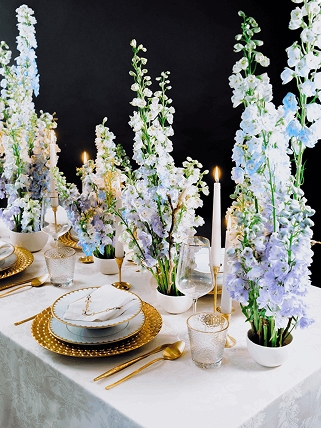
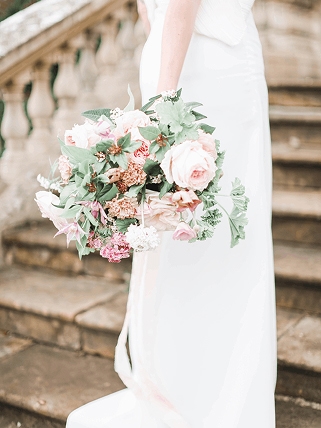
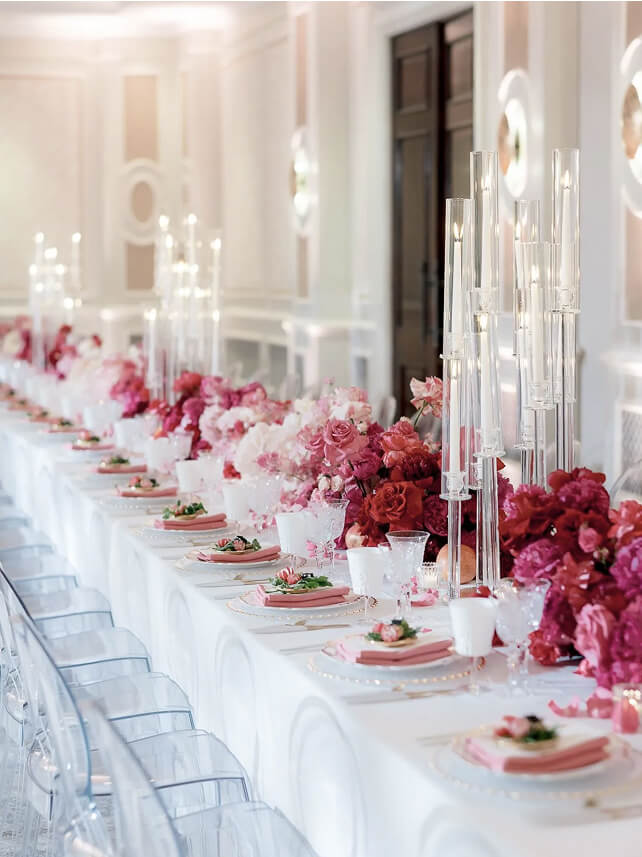
Flowers are one of the most powerful ways to make a statement at any event. Whether you’re dressing a venue for a corporate function or a celebration, blooms need to be carefully considered to set the atmosphere and elevate the space. With so many varieties to choose from, we’ve put together a guide on how to decide which flowers will define your event.
How to choose flower arrangements for events
Evaluate the venue
If your event is taking place in a smaller venue, flower arrangements can be displayed subtly on tables — tall designs will be more effective than wide ones, and delicate flowers like ruffled roses are ideal for letting guests appreciate their beauty up close. By contrast, larger venues have room for more elaborate decorations, and grand displays packed with foliage will fill any empty space in spectacular fashion.
Match the tone of your event
The florals you choose will depend on the type of event you’re planning, as they need to complement the style and atmosphere of your occasion. Large red flowers may suit a Valentine’s party, for instance, while a conference will generally be better served by more understated arrangements in lighter, cooler tones.
For formal events
Elegant and striking flowers like orchids, tropical leaves, anthuriums, structural line flowers like poppies, and textural ferns work beautifully at formal events such as product launches or awards ceremonies. Arrangements should be considered and purposeful — overdoing it could distract guests from the occasion itself.
Do also bear in mind that flowers carry deeper meanings. Roses, though beautiful, are so closely associated with romance that they may not feel right for a professional event. Purple irises, which symbolise wisdom, and orchids, which represent maturity and refinement, are both excellent alternatives. Colour choices matter here too — selecting shades that echo your brand palette is a subtle but effective way to strengthen your identity.
For product launches specifically, the wider theme and aesthetic will inform everything — many clients opt for luxury flower walls and arched entrances to make a truly glamorous first impression.
For casual events
Anniversaries, baby showers and birthdays benefit from smaller, more whimsical arrangements. For casual occasions, there’s wonderful scope to personalise — you might draw inspiration from the guest of honour’s favourite colours and flowers, or follow a specific theme. The setting also opens up creative possibilities: a beach party, for instance, lends itself beautifully to tropical varieties and an abundant, sun-soaked palette.
What are some of the shapes of flower arrangements?
Vertical
A vertical arrangement is perfect for tall flowers with long stems and leaves, such as tulips, roses and carnations. It is striking and commands attention. Choose a tall vase, select a focal flower, then surround it with smaller blooms like forget-me-nots at varying heights to create visual interest. A vertical arrangement can be displayed almost anywhere in your venue, as it takes up very little footprint.
Classic Round
A round arrangement emphasises its shape by placing the tallest flowers at the centre, with blooms gradually reducing in size towards the edges. Colours can also grade outwards to further emphasise the focal flowers. Dense, textured and beautifully symmetrical, this style is a natural choice for formal events.
Crescent
This elegant moon-shaped arrangement can be created using flowers with naturally flexible stems — such as clematis, spirea or gloriosas — which can be gently curved to form the crescent. Flowers with more rigid stems, such as rudbeckias, coreopsis or echinaceas, are also suitable with a supporting armature. Choose flowers and greenery with tapered ends to sit neatly within the ‘c’ shape, and ensure their natural curve is visible once displayed.
Triangular
A perennially classic form. Flowers are cut and arranged to follow the lines of a triangle, with taller blooms at the apex and smaller ones around the base to hold the shape.
Where to position flowers at your event
Use your venue’s floor plan to assess the space and decide where your arrangements will have the most impact — on stage, in entrances and hallways, suspended from the ceilings, or on dining tables. Mapping out the traffic flow will help you identify the best positions to create moments of interest. If displaying flowers near where food will be served, opt for smaller, more textural and less fragrant varieties — garden roses, sweet peas or dahlias work beautifully without overwhelming the senses.
Tips for floral displays at your event
If you plan to livestream your event, choose brightly coloured and larger arrangements — they read beautifully on camera. Be mindful of proportions.
Measure vases and containers ahead of time to ensure your flowers will fit, and check that your colour scheme is consistent throughout.
Create a mood board to maintain visual consistency across the whole event.
Check which flowers are in season — seasonal blooms are more sustainable, more affordable, and always more beautiful.
Set a budget and stick to it. It is easy to get carried away, so knowing your numbers early keeps planning on track.
When looking for inspiration, Pinterest and architectural or interior design publications are excellent starting points for building a visual reference.
For a free consultation, contact us. Our team works with corporate events and private occasions of every scale and style.
Measure vases and containers ahead of time to ensure your flowers will fit, and check that your colour scheme is consistent throughout.
Create a mood board to maintain visual consistency across the whole event.
Check which flowers are in season — seasonal blooms are more sustainable, more affordable, and always more beautiful.
Set a budget and stick to it. It is easy to get carried away, so knowing your numbers early keeps planning on track.
When looking for inspiration, Pinterest and architectural or interior design publications are excellent starting points for building a visual reference.
For a free consultation, contact us. Our team works with corporate events and private occasions of every scale and style.
You may also like: