Artist Violeta Sofia’s Hand-Masters Series
Back to all videos
What does being "In Bloom" mean to Violeta Sofia?
"Ever since I started this project [Hand Masters], it’s been in bloom throughout my career.”
Transcript
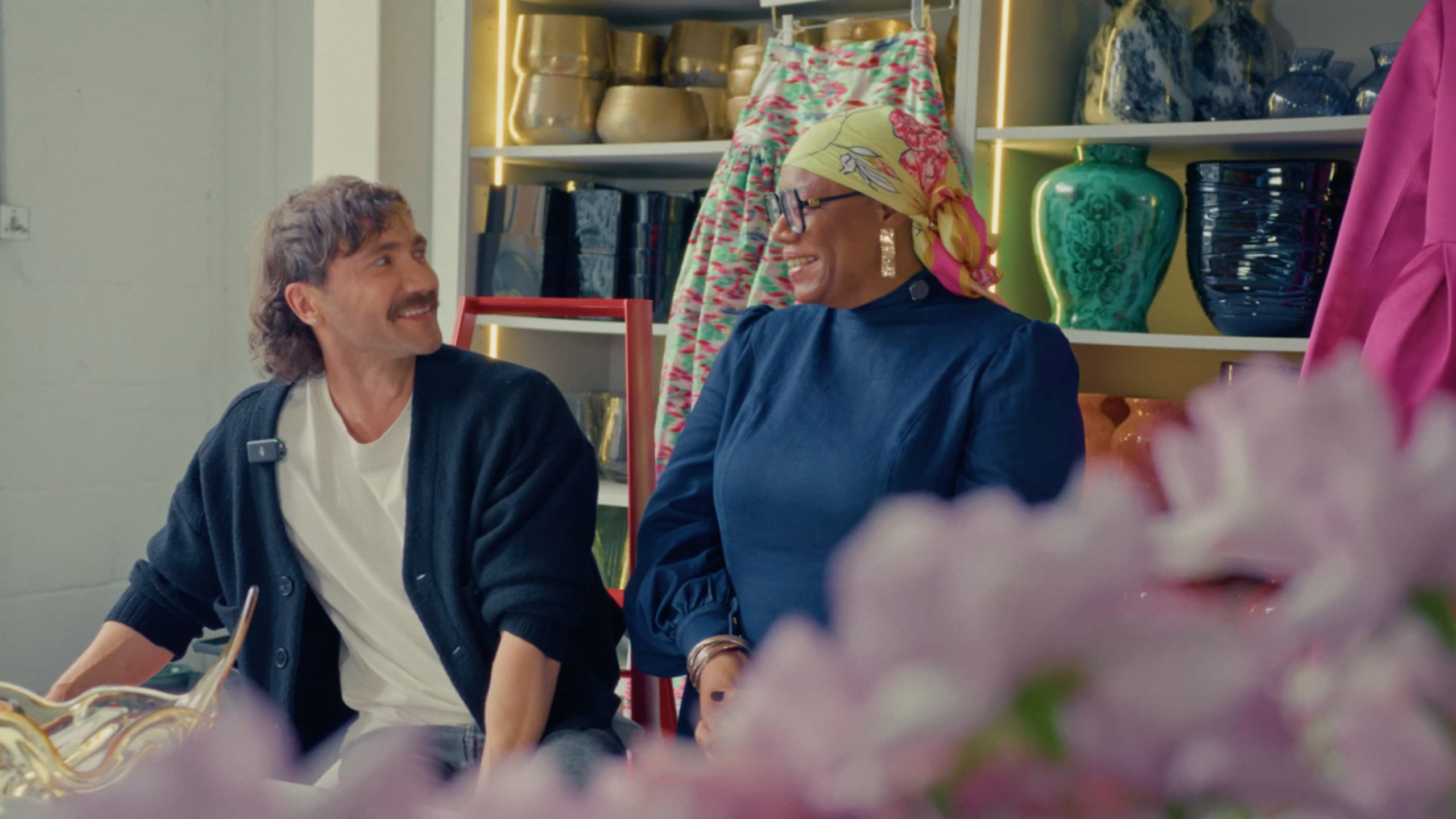
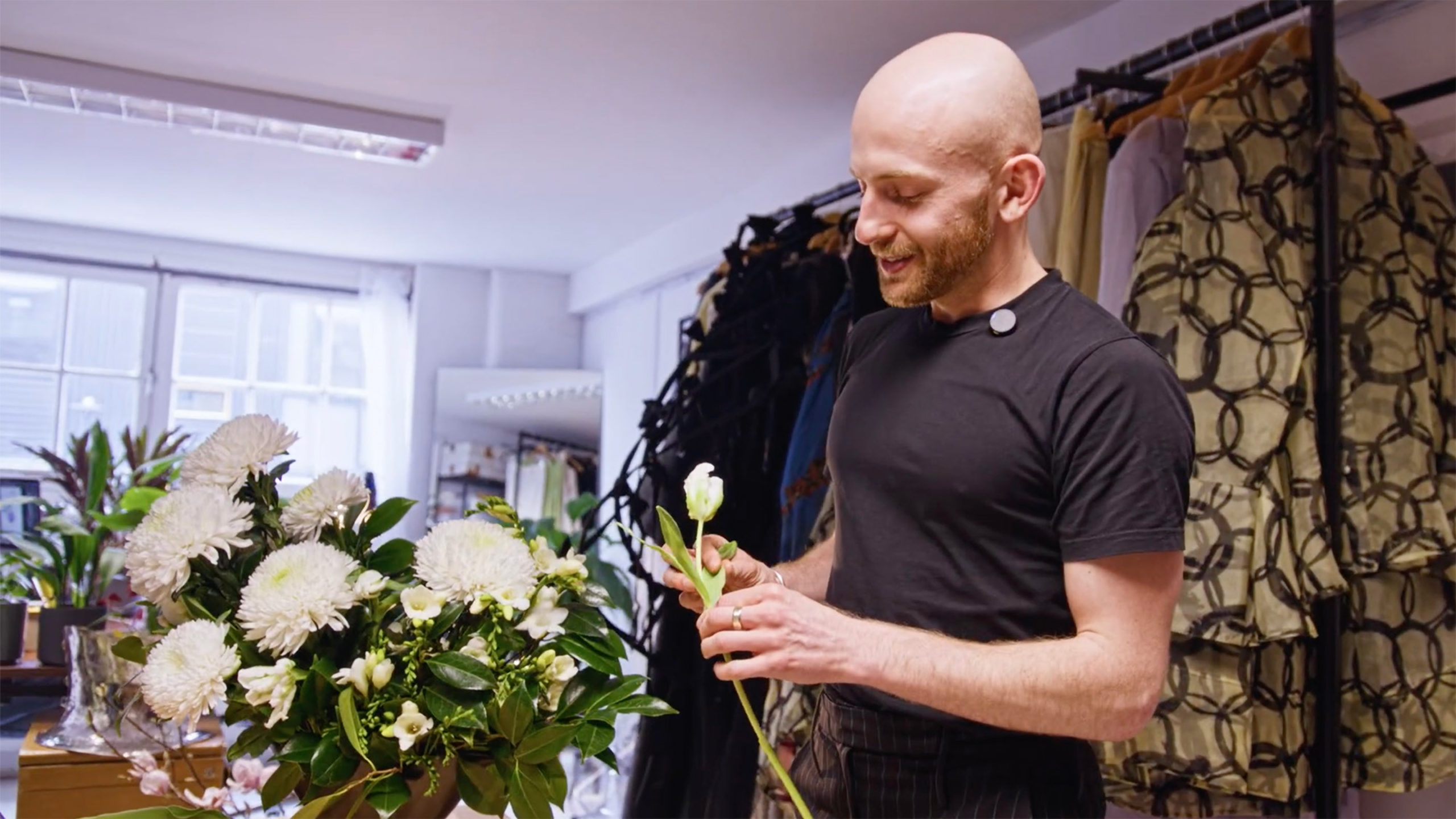
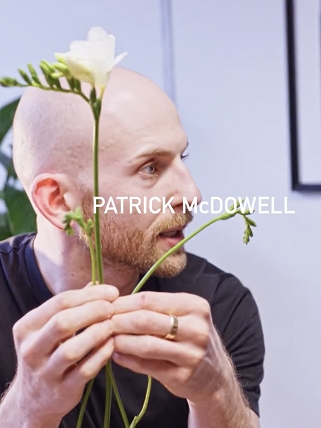
Hi, I'm Michael. Hi, I'm Michal. I'm Violeta Sofia, and we're here today to discover Violeta's art.
Tell us more about yourself.
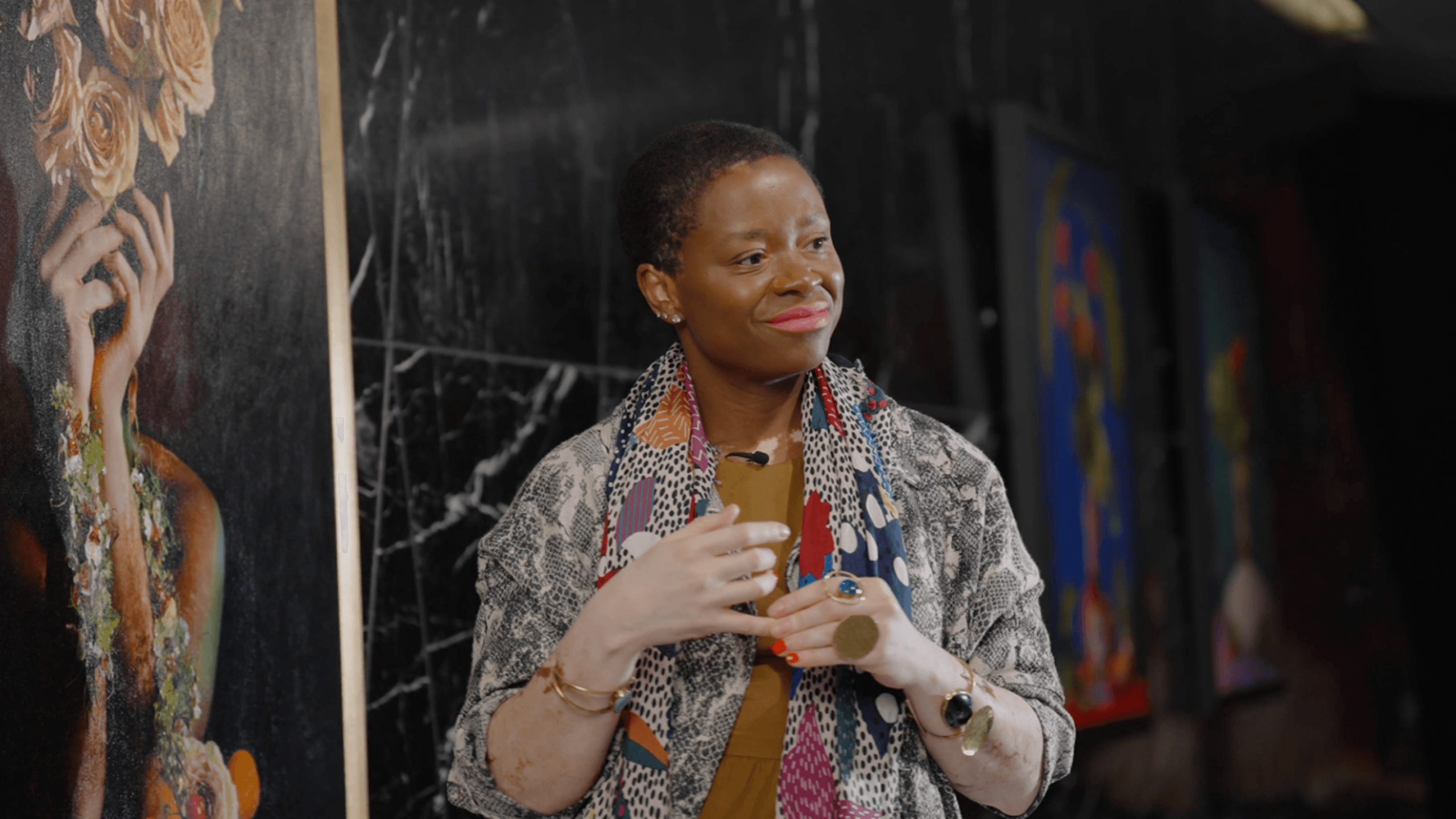
So my name is Violeta Sofia. And I am an artist. I'm a photographer. I do fine art photography, which is my hands.
Can you tell us more about how your inspiration comes around? How did you think of combining the different elements?
The different elements? So I started getting vitiligo when I was 19. I think luckily for me, it was a time where or right before the time it became fashionable. So people were asking me if people would find me on the streets and they'd be like, oh my God, you're so cool, I want to take your pictures. But I didn't like the association of my skin condition with being fashionable, so I never really allowed anyone to take my pictures, but I knew it needed to be documented.
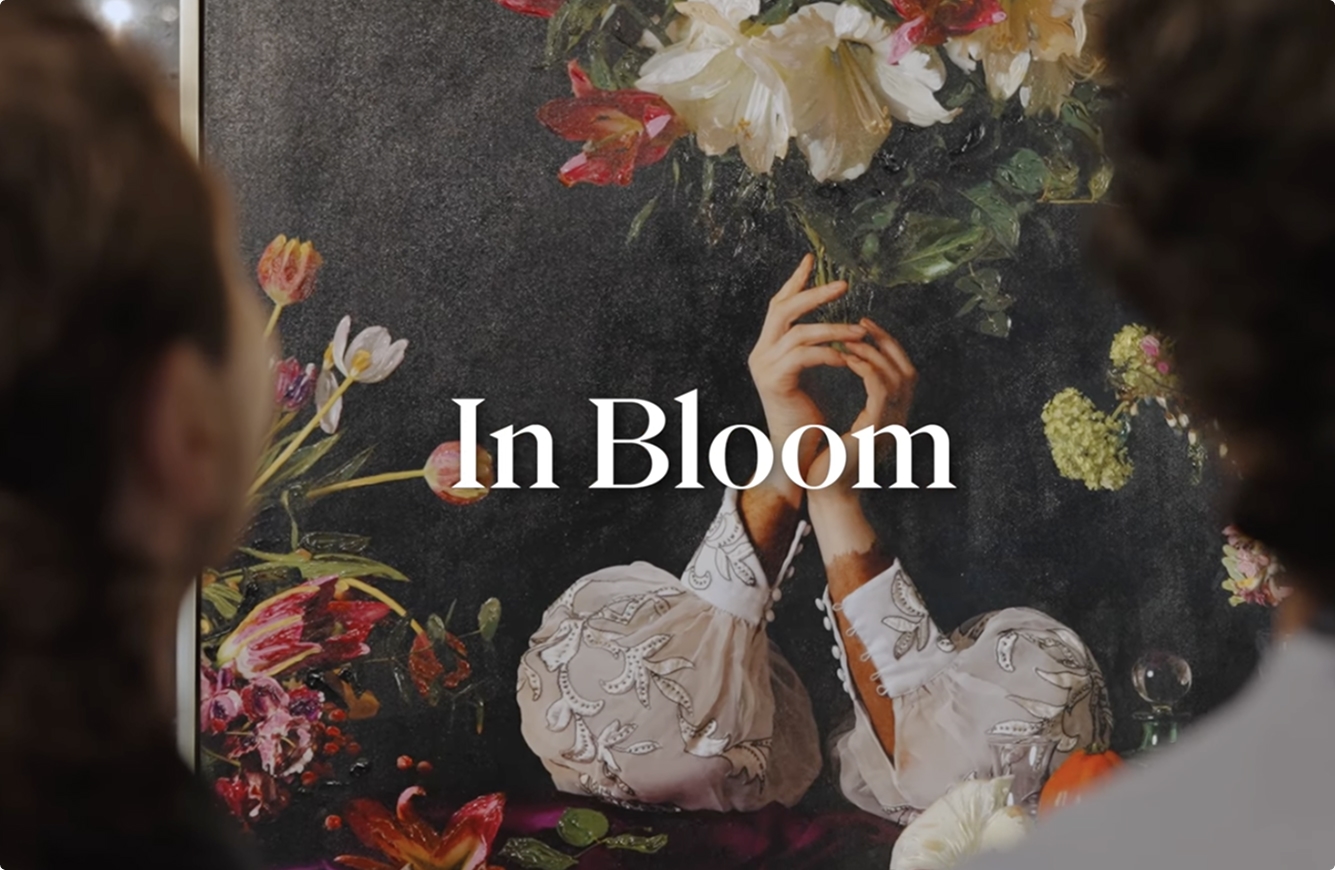
So I started taking pictures at some point where my hands became completely white, and I saw a picture of a man on a table with flowers. You can see everything. So I tried to imitate him, but as I was progressing with the pictures, I thought it looked better without my face in the pictures. And it was just about the hands. It was just about the beauty of the hands. In the beginning it was just documented, but then it turned into loving myself, embracing the change and the resilience. And then from there it has transformed into so many other things. But initially it was just about creating something beautiful with what people think, that it's not so beautiful.
So you could say that your art became a form of a therapy for.
Yes, definitely.
What role do the flowers play in it?
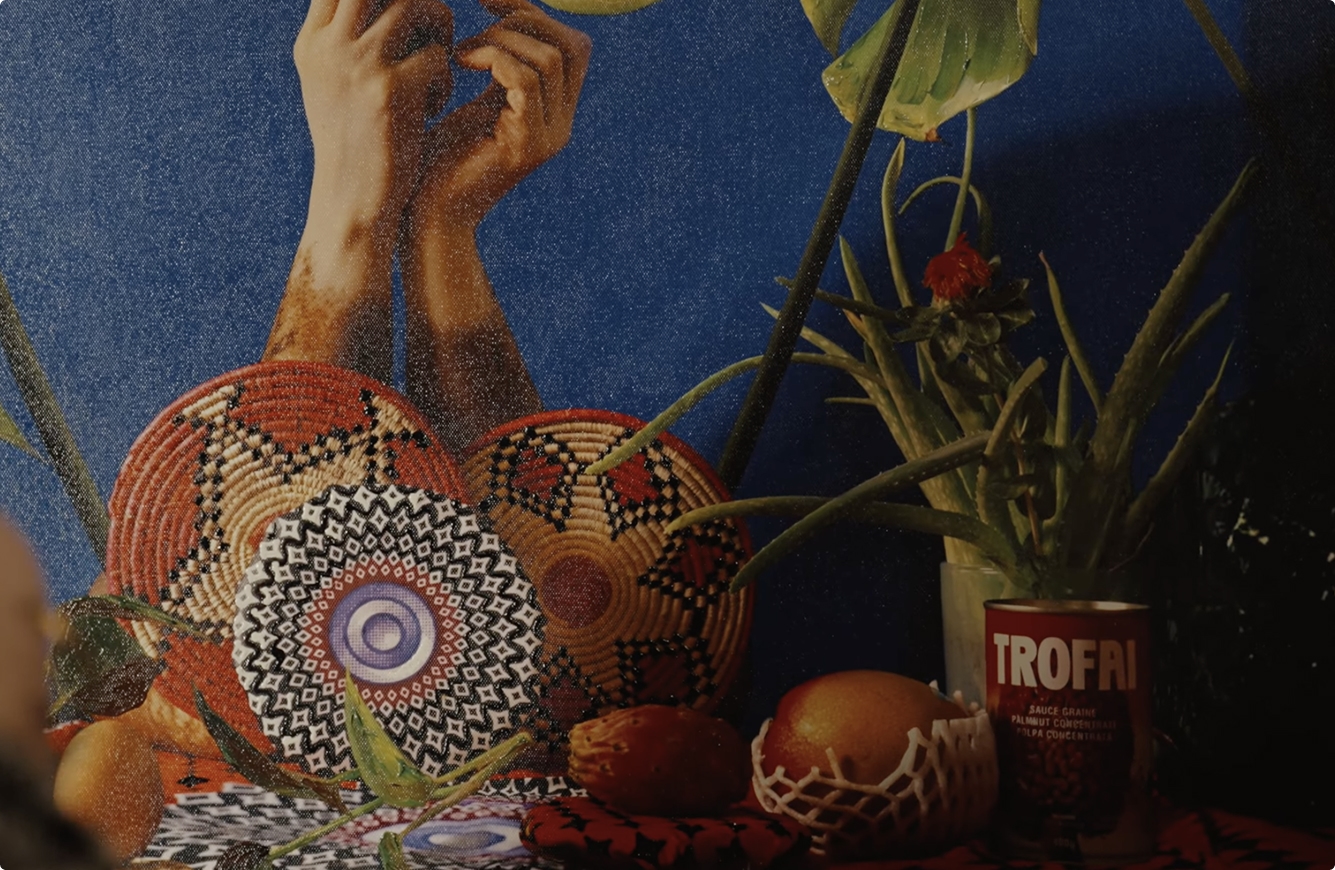
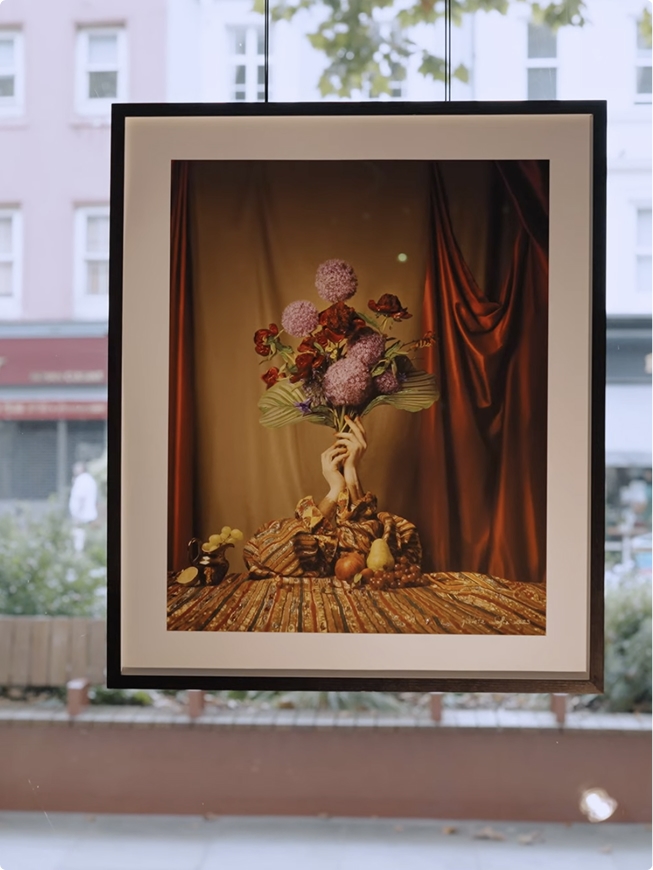
So my hands are actually flowers and the rest is added flowers onto it. So you've got the shirt. So this one that hasn't got a shirt but some others have shirts. And the shirt is like the vase. And then I wanted my hands to be the flowers and then add more flowers into it. So that was the. And I love flowers and is a universal language.
It's obviously very challenging because you're in the pictures. Yeah, well you have to challenge the pictures and you have to do the fixed events.
So how do you go about this?
Okay. When I start I put a vase and then I do all the arrangement and take the pictures and see how it looks and move move move move move. And when I have what I want then I put the shirts in, I have my hands and then I hide. And the bigger the shirt, the better. So I hide under. But then the problem comes because my hands are here. I have to bring them down. So I have my laptop there, I have an iPad. I have my phone in between the. And I could trigger the camera. Yeah, yeah. From all of those places.
You should do some behind the scenes, right.
So yeah, another way as well. So I could be this is the less glamorous way. So I have my phone here. I could move my hands freely, but then I will be pressing with my nose so I will be pressing with my tongue. Whatever I could find just so it doesn't look very glamorous. But yeah, but it's challenging because also the shirt has to sit in the right way. The flowers have to sit in the right way.
The hands need to look like they're holding something really light where the flowers are very heavy. That's why I was asking, because I thought as well.
But whenever you have elements like here, you know you've got your floral tattoos, as we call them, we know how you photograph, how you should have you come up with your ideas and then what happens afterwards.
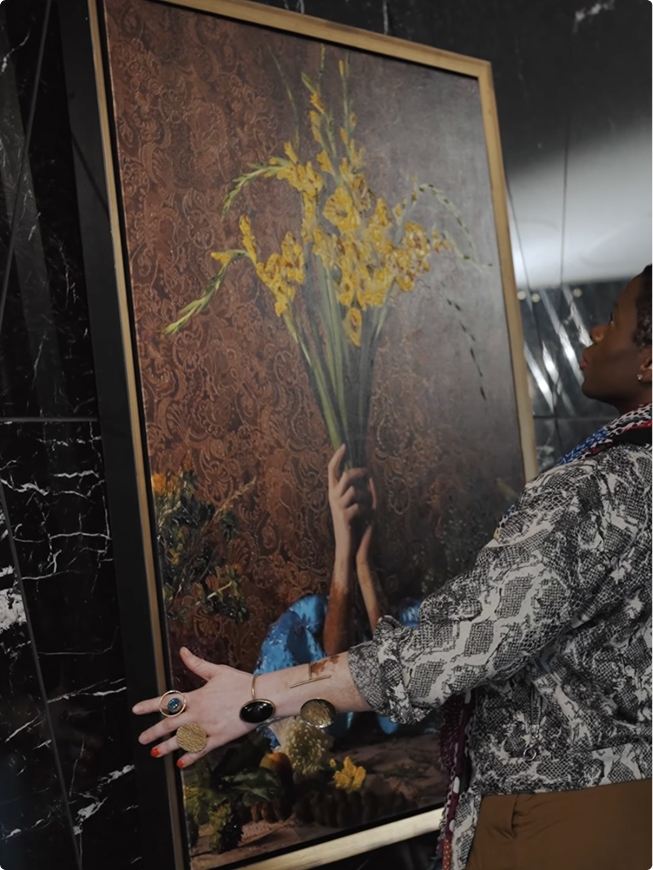
So I do the pictures and so I print them. So I do originals which is just one, and I print them on canvas, but then I paint on top of it. If I do this just as a picture, a lot of people say, oh, it's not art because it's a picture. And I was like, no, but I'm also an artist. I also paint. So where my photography ends, and that's the limitation of what I want to do with the photography. Then I add another layer of texture. It creates a little bit more confusion because even when it's just plain photography, people will ask me, how is the AI? Is it a painting? Is it? So I was like, oh, let me make it. Yeah. Let me make it more confusing. Let me have a fusion.
Do you have a very diverse background?
Yes.
And you've lived in different places and you've moved around.
How that has helped you come up with all these amazing works of art. And I will expand on this.
How has this influenced your choice of colours and vibrancy and saturation colours issues?
So I think the colour is definitely. I like to think that it's an African thing. So you need even growing up, if you were black, everyone in the family would be like, no, you can't go out in black, no one died. You need to wear colours. All my sisters is growing up in Spain. So it was all very traditional. It was all big castles and valleys and very traditional approach. So the African is my background, my heritage. Spain is my education. But when I go to the UK, I think that's what unleashed and gave me the freedom. But when I came here, I was like, yes, you could do whatever you want. You could. And even the education was a lot more open that would teach you about India.
They would teach you about Africa. They would teach you about Europe. And also you could do your own research. So I was then able to start looking into female photographers, female artists, African and bring more of that. And that was welcome, which I didn't have before. And I just enjoyed that, that I could pick what I want.
So that's how well you produce great work. And obviously you're being noticed everywhere.
Yeah. Ah that's good. Yes.
So how do you feel? You and your art are in bloom at the moment.
So I feel that. I mean, I'm not trying to sound, but I feel like ever since I started this project, like my personal, it has always it has been in bloom in my career, if that makes sense. It has. As soon as I start that, there was a really good reception. So it keeps blooming all the time. It keeps changing all the time, and I get to share more of me. And it also I get my healing through it.
For everyone watching the video, this is actually one of the projects we worked on together with Violeta. This was some time ago and there will be more of this to come to.
Yeah, I hope so, yeah.
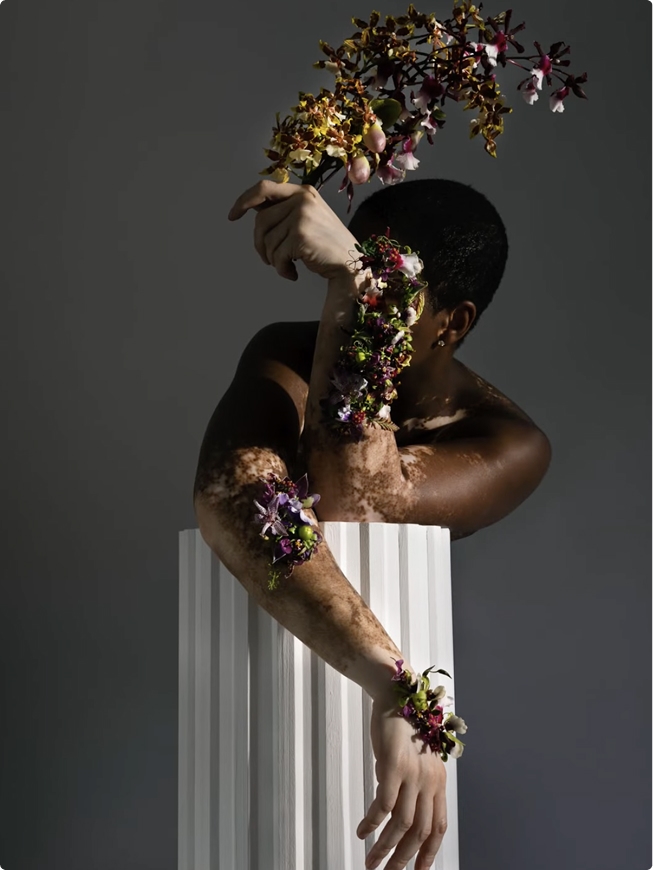
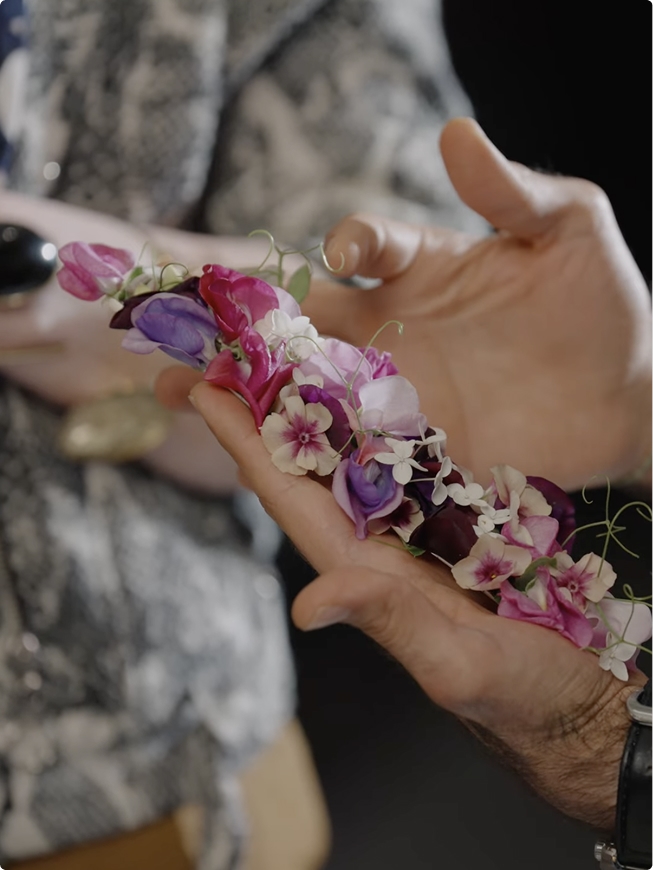
When we first met together, we had just a casual chat and let's do a project together. We had a discussion. We obviously loved your work. We found it really beautiful and very magical to us as well. We discussed your hands at that time as well, and that was essentially the source of inspiration of creating the floral tattoos. The idea behind this was to make your hands alive, so give them even more life.
You're holding beautiful living bouquets in your hands, beautiful arrangements. We thought of bringing this element and let it crawl up and let it elaborate further on it.
On this concept of your hands, replace a vase, but in this case it was more about your hands being also a vessel or support for these little flowers that could normally not be celebrated in a way that the roses are celebrated. Yes.
So it was a way to give them that support, to give them like a base where we can see them and we can appreciate their beauty. Mhm. Similar to these flower tattoos that we've done for you today. It's the same idea that I discussed earlier. So it's celebrating these little shapes and forms. Every single flower, every single stem has to be glued individually. Yes. It's a very patient very time. Time and again it's like we discussed earlier. It's very time sensitive because these flowers won't last.
Now I want people to see my art. It's very limited because I want to keep it quite the number, quite small. So I don't reproduce a lot, but I do want people to see it.
About the speaker
Violeta Sofia
Award-winning artist, photographer, and activist Violeta Sofia transforms personal vulnerability into powerful visual storytelling. In this episode, we explore her intimate "Hand Masters" self-portrait collection - a series that documents her vitiligo skin condition and chronicles her profound journey toward self-acceptance.
Born in Cameroon and raised in Spain, Violeta’s multicultural upbringing permeates her work with rich, cross-continental influences. The "Hand Masters" series places particular focus on her hands as extensions of the flowers she holds - a poetic interplay between body and bloom that challenges conventional beauty standards.
We had the distinct privilege of collaborating with Sofia on one piece from this collection at our Blooming Haus studio in Battersea, London. Our contribution highlighted her hands as living canvases, creating delicate floral tattoos that contoured gracefully with her vitiligo-patterned skin. The result was a celebration of difference as artistry.
Sofia's work has graced the walls of prestigious institutions including the National Portrait Gallery and Christie's, solidifying her place as a vital voice in contemporary photography and representation.
“Initially it was about creating something beautiful with something that was ‘not-so-beautiful’. My hands, they are actually flowers! And the rest is added flowers. I love flowers, they’re a universal language!”