
Sweet Pea: Blooming Haus’ Flower Of The Year for 2026
Sweet pea takes centre stage in 2026.
As Europe’s first B Corp and Planet Mark certified event florist, we have spent two decades reading the room – tracking flowers before they trend, sourcing from cutting-edge growers, and watching cultural shifts reshape what luxury actually means.
Not simply because sweet peas are everywhere (Burberry collaborations, soaring Pinterest searches, our own order books), but because they embody what people are genuinely craving: authenticity, seasonality, and irreplicable sensory experience.
Discover how this romantic, fragrant bloom is shaping our world – and why 2026 belongs to the flower that technology cannot fake.
Why 2026 Is the Year of the Sweet Pea
- Sweet Pea Symbolism
- Historical Significance
- Growing Season
- How to Grow
- Varieties and Colour Guide
- Events and Weddings
- Commerce
- Design
- Culture
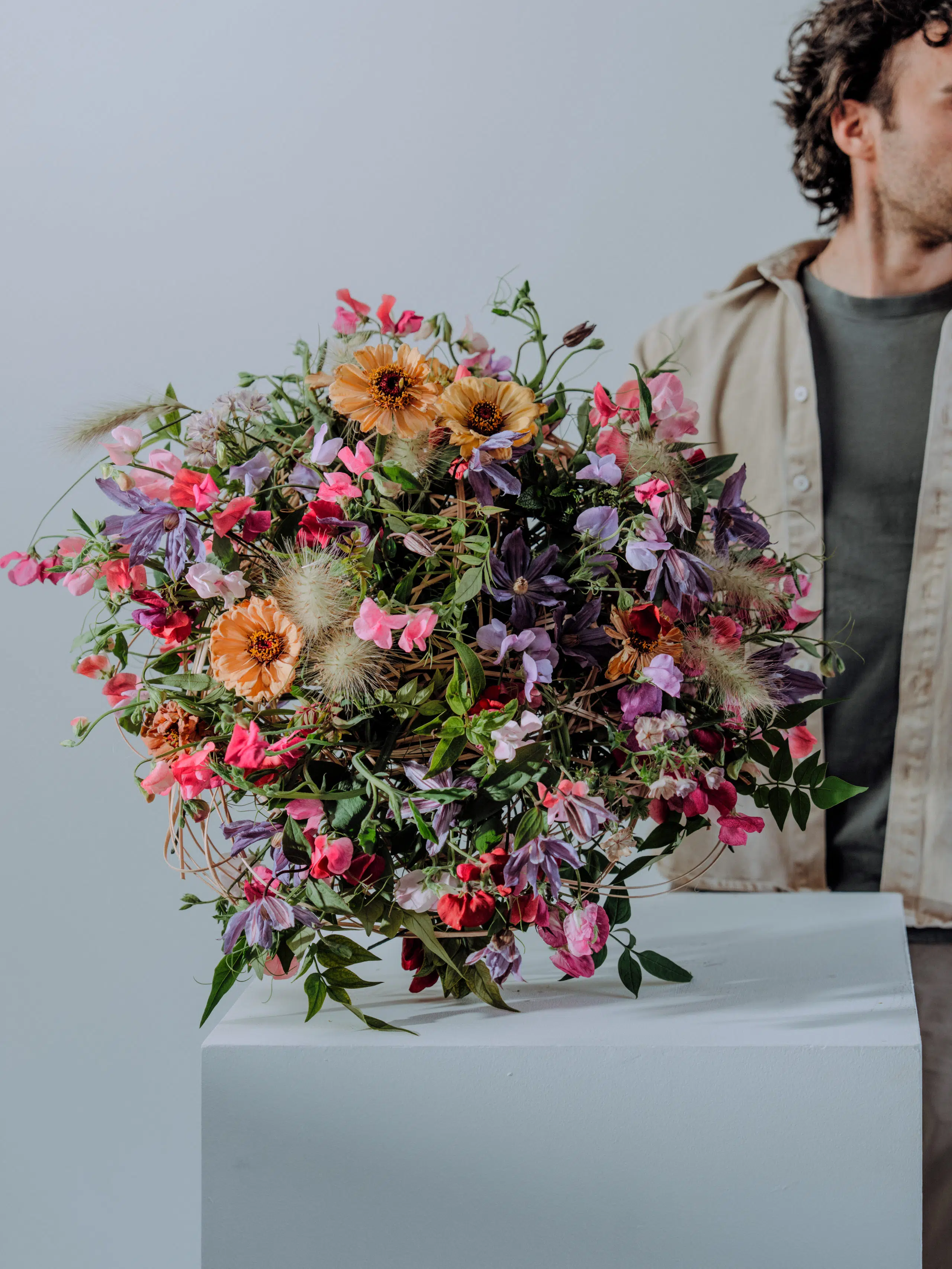
- The Flower of the Year Bouquet
1. Sweet Pea Symbolism
No apologies. No solemn occasions. No heavy emotional labour.
Sweet peas are about pleasure and bliss – those perfect, unhurried moments we are too busy to notice: sun-drenched mornings in the garden, handwritten notes from friends, the radical act of stopping to actually smell something beautiful.
In a world that is constantly rushing, these flowers remind us to slow down and feel things.
They are also the ultimate friendship flower.
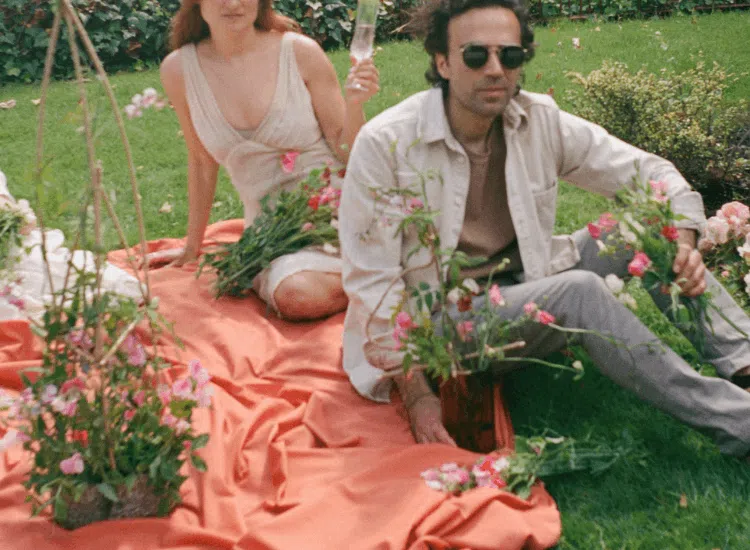
These delicate blooms symbolise gratitude, thanks, and loyalty – which is why we love using them in bridesmaid bouquets, thank-you arrangements, and “just because” gifts. They say “I’m glad you’re in my life” without tipping into overly sentimental territory.
It is the pleasure and bliss angle that truly captivates us. Sweet peas are not trying to make grand statements or demand attention. They simply invite you to lean in, breathe deeply, and find joy in something fleeting and irreplaceable.
In our events, that kind of sensory invitation is everything. It transforms a beautiful space into a felt experience – the kind guests remember not just visually, but emotionally, viscerally, deeply.
2. Historical Significance
Monastery Gardens to English Estates
Sweet peas began in Sicily, where Franciscan monk Francesco Cupani cultivated them in his monastery garden during the 1600s. When he sent seeds to England in 1699, he unknowingly sparked a floral obsession that would span centuries.
The Victorians embraced them wholeheartedly. With their language-of-flowers fixation and love of elaborate cutting gardens, these flowers – with that intoxicating fragrance – became essential. By the late 1800s, no proper English garden was complete without them.
The Spencer Revolution
1901. Althorp Estate. Princess Diana’s ancestral home. Head gardener Silas Cole discovered something extraordinary: a sweet pea mutation with larger, dramatically ruffled petals unlike anything seen before.
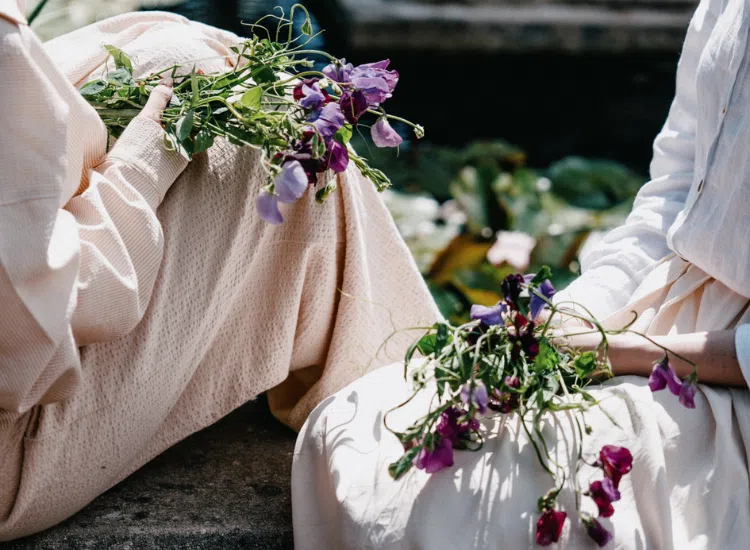
These “Spencer” varieties transformed the bloom from garden staple to aristocratic showstopper overnight. That heritage connection still resonates – they manage to feel both cottagecore-romantic and properly elegant, a rare combination that bridges traditional luxury and contemporary aesthetic.
The Scientific Legacy
Sweet peas were not simply admired – they were advancing science. Pioneering geneticist Reginald Punnett used them as model organisms in his groundbreaking heredity experiments. Their easily observable traits – flower colour, plant height, petal shape – made them ideal for studying how characteristics pass from generation to generation.
This positions sweet peas as intellectually significant, not merely decorative. They helped establish fundamental principles of genetics that changed our understanding of heredity itself.
3. When Are Sweet Peas in Season?
In a world where roses appear in February and peonies in October – flown from the other side of the planet – sweet peas refuse to play along. They like it cool.
In the UK, they bloom from late spring through midsummer, roughly May to July, and that is that.
Why We Value Seasonal Flowers
When sweet pea season arrives, it feels like an event. Our studio is suddenly filled with fragrance. Clients get genuinely excited. There is a collective anticipation that simply does not happen with year-round flowers.
Britain’s cool, temperate climate is well suited to these blooms – they thrive here in ways they struggle in warmer regions. While growers in hotter climates might coax brief spring blooms before the heat shuts them down, our longer, cooler UK summers mean extended flowering and stronger fragrance.
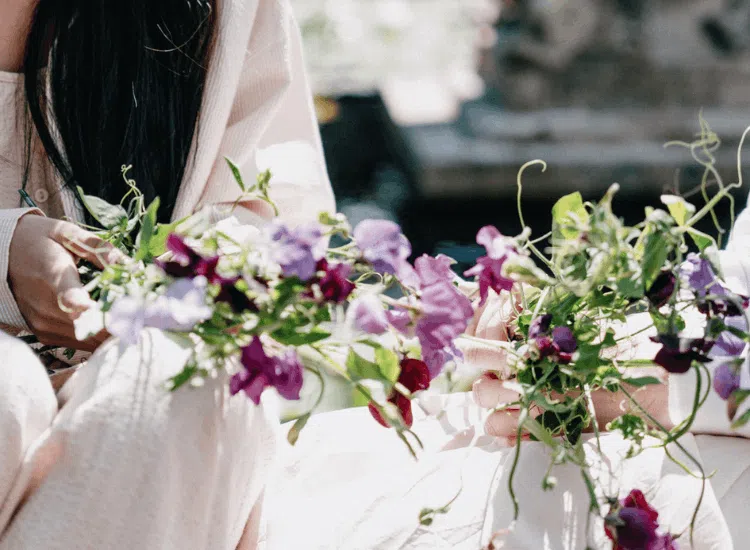
This seasonality makes sweet peas inherently more sustainable. They are grown locally during their natural season – often just miles from where they are used – rather than shipped halfway around the world in refrigerated cargo. A British-grown sweet pea picked at dawn and in your vase by afternoon smells fundamentally different from anything that has survived a twelve-hour flight.
Scarcity creates value, yes – but more importantly, it creates appreciation. When you can only have something for a few precious months each year, you savour it. You plan for it. You celebrate its arrival and mourn its departure. That is not limitation – that is luxury redefined.
4. How to Grow Sweet Peas
Sweet peas are surprisingly forgiving – as long as you understand what they actually need. They ask for cool weather, decent soil, and regular attention during their growing season.
Start With Quality Seeds
Source matters. Look for reputable suppliers who specialise in heritage and fragrant varieties:
Sarah Raven – Excellent selection including scented heritage types
Thompson & Morgan – Wide range including new introductions
A note on saving seeds: when the season ends, let a few flowers go to seed in their pods. Harvest them when dry, store in paper envelopes somewhere cool and dark, and you will have seeds for the following year. They can be passed down through generations – part of their heritage charm.
Timing
Sweet peas are cool-weather flowers, so your planting schedule matters:
- Autumn sowing (October–November) develops strong root systems over winter and gives the earliest, longest flowering season come spring.
- Early spring planting (February–March) works well if you have harsh winters or simply missed the autumn window. You will still get gorgeous flowers, just a little later.
- Mild climates allow sweet peas to be grown as a winter or early spring crop.
Getting Started
Sweet pea seeds have hard coats: soak them overnight in room-temperature water before planting. Some people nick them with a nail file first, but soaking works well for most varieties.
Plant them about 2.5cm deep in good quality compost – either in small pots (root trainers are excellent) or directly in the ground if your soil is workable. They do not love being transplanted multiple times, so try to minimise disruption.
What They Need
- Location: Full sun to partial shade. They will cope with some shade but flower more prolifically in sun.
- Soil: Rich, well-drained, and ideally slightly alkaline. Dig in plenty of compost or well-rotted manure before planting.
- Support: Sweet peas are climbers and need something to scramble up – canes, netting, obelisks, or a rustic twig structure. They can reach six to eight feet tall.
- Water: Keep them consistently moist, especially once they are flowering. Stressed sweet peas produce fewer flowers and less scent.
The golden rule: pick them constantly. The more you cut, the more they flower. If you let seed pods develop, the plant considers its job done and stops producing blooms. Pick every few days, even if you are simply giving bunches to neighbours. Your plants will reward you with weeks more flowering.
Feeding
Once they start flowering, a weekly feed with liquid fertiliser (we favour eco-friendly seaweed-based options) keeps them going strong. Sweet peas are hungry plants when they are putting on a show.
Common Problems
- Leggy seedlings: Too warm or not enough light. Keep them cool and bright.
- Powdery mildew: Good air circulation and watering at the base rather than the leaves helps prevent this.
- Aphids: They are drawn to sweet peas. Check regularly and remove with water or an organic spray.
Growing your own is one of life’s genuine pleasures. There is something deeply satisfying about cutting armfuls of flowers you have grown from seed – and the scent in your garden on a warm June evening is extraordinary.
5. Varieties and Colour Guide
Older varieties smell extraordinary but have smaller flowers. Newer varieties offer large, dramatic blooms but often sacrifice scent. Choosing the right balance depends entirely on the effect you are after.
Heritage Varieties (For Fragrance)
If scent is the priority – and for us, it usually is – these are the ones to know:
- ‘Cupani’: The original. Deep purple and maroon bi-colour with an intoxicating scent. Smaller flowers but extraordinary fragrance and historical significance.
- ‘Matucana’: Similar to Cupani with intense purple-maroon colouring and powerful fragrance. Slightly larger flowers.
- ‘Painted Lady’: Pink and white bi-colour from the 1700s. Charming, delicate, and beautifully scented.
These heritage varieties are particularly suited to intimate events where that overwhelming sweet pea fragrance becomes part of the experience itself.
Spencer Varieties
The frilly, dramatically ruffled sweet peas with larger flowers:
- ‘Spencer Mixed’: A full spectrum of colours with gorgeous waved petals. Good scent, though not as strong as heritage types.
- ‘King Size Navy Blue’: Deep, velvety purple-blue. Stunning in arrangements and still pleasantly fragrant.
- ‘Winston Churchill’: Rich crimson-red. Bold and beautiful.
For Maximum Fragrance
For the best balance of flower size and scent:
- ‘Perfume Delight’: Bred specifically to combine modern flower size with old-fashioned fragrance. Deep purple.
- ‘Old Spice Mix’: Gorgeous range of colours with reliably strong scent.
- ‘High Scent’: Developed expressly for fragrance, and it delivers.
Colour Ranges
Sweet peas come in almost every colour except true yellow and bright orange:
- Whites and creams: ‘Jilly’, ‘White Supreme’, ‘Cream Southbourne’
- Pinks: From shell pink (‘Anniversary’) to deep rose (‘Gwendoline’)
- Purples and blues: ‘Noel Sutton’ (mid-blue), ‘Oxford Blue’ (deep navy), ‘Wiltshire Ripple’ (purple-maroon)
- Reds and burgundy: ‘Red Arrow’, ‘Beaujolais’, ‘Midnight’
- Bi-colours: ‘Prince Edward of York’ (scarlet and cream), ‘Watermelon’ (pink and cream)
Our Design Approach
We often mix heritage and Spencer varieties in the same arrangement – using the smaller heritage blooms for fragrance and the larger Spencer blooms for visual impact. It is the ideal marriage of scent and style.
For Growing in Containers
For those with limited space, dwarf varieties such as the ‘Patio Mix’ or ‘Cupid’ series reach only about 30cm tall while still delivering that unmistakable sweet pea character.
The variety you choose genuinely matters – it will affect the mood, scent, and visual impact of your arrangements or garden.
6. Events and Weddings
Spring and summer 2026 events belong to sweet peas – and the timing could not be better.
Sustainability Becomes Non-Negotiable
Clients are demanding locally sourced flowers with genuine environmental credentials. Sweet peas deliver: nitrogen-fixing legumes that actually improve soil while growing, available at peak season from British farms. No air miles. No hothouse energy. Simply regenerative luxury that looks and smells extraordinary.
Scent Becomes a Design Principle
We are moving beyond visual-only experiences. When guests enter a space filled with sweet peas, the fragrance registers immediately – honeyed, complex, impossible to replicate. That olfactory dimension creates instant emotional response and lasting memory. Wellness is no longer confined to retreats; it is about designing spaces that make people feel something.
Organic Architecture Replaces Rigid Formality
Sweet peas have natural, slightly wild movement – tendrils curl, stems arch gracefully, ruffled petals catch light beautifully. This creates installations that feel romantic and architectural simultaneously, offering visual interest without the stiffness of traditional event florals. In 2026, immersive does not mean overwhelming; it means thoughtful, sensory, present.
The Micro-Season Luxury Market
Sweet peas’ limited April-through-June window creates natural exclusivity. Events during peak sweet pea season become premium calendar moments – you cannot manufacture it, extend it, or replicate it out of season. The fleeting nature makes each event genuinely unrepeatable.
Versatility Across Aesthetics
Despite their romantic reputation, sweet peas adapt beautifully: English garden, soft romanticism, vintage-inspired elegance, even contemporary minimalism with strong colour editing. They bridge traditional and modern luxury effortlessly – heritage craftsmanship meeting experiential design.
Expect cascading installations that prioritise scent-scaping over pure visual spectacle, monochromatic arrangements showcasing sweet peas’ natural tonal variations, garden-party aesthetics replacing stark minimalism, and couples specifically timing weddings around sweet pea season rather than fighting it.
7. In Commerce
Across fashion, fragrance, and interiors, brands are drawn to what sweet peas represent – and to the challenge of capturing an essence that remains stubbornly irreplicable.
The Fashion Connection
The garden aesthetic has taken hold in fashion, and sweet peas sit at its centre. Burberry’s Highgrove collection, inspired by King Charles’s gardens, channels precisely that romantic, cultivated sensibility. “Avant gardener” aesthetics are appearing on runways, and brands are gravitating toward softer, more nature-inspired design.
Pinterest reflects this – searches for “garden aesthetic” are up 34% month-on-month. The appetite for that connection to nature, that sense of cultivated yet uncontrived beauty, continues to grow. Sweet peas embody all of it.
Fragrance Industry
Sweet pea fragrance cannot be truly replicated synthetically. Perfumers have tried for years, but the complexity of the living flower resists recreation. The natural scent combines honeyed warmth with rose-like facets, hints of orange blossom and hyacinth, and a distinctive “bluish” note that fragrance experts recognise but cannot quite capture in a laboratory.
This makes live sweet peas uniquely valuable. The experience simply cannot be sourced elsewhere – the floral equivalent of fresh truffles versus truffle oil.
Sweet pea notes do appear in fine perfumery (Jour d’Hermès being a notable example), but these are interpretations rather than replications. The living flower remains irreplaceable.
Interior Design and Homeware
Sweet pea aesthetics are influencing interiors in sophisticated ways. The sweet pea colour palette – soft lavenders, blushed pinks, creamy whites, deep mauves – translates beautifully into paint collections, textile ranges, and homeware lines.
Liberty London has featured sweet pea prints in their iconic fabric collections, while independent designers are creating wallpapers, linens, and ceramics inspired by sweet pea forms and gradients. The bi-colour ombré effect that appears naturally in sweet pea petals is particularly influential – demonstrating how contrasting colours can blend harmoniously without digital manipulation.
The “soft power” aesthetic emerging in interiors – gentle colours with depth, organic forms, natural textures – is essentially sweet pea philosophy translated into living spaces: curved furniture silhouettes echoing tendrils, layered pastels that create complexity rather than flat sweetness, and an emphasis on sensory experience beyond the purely visual.
Homeware brands focused on sustainability are also drawn to sweet pea narratives. The flower’s nitrogen-fixing properties, local growing potential, and seasonal nature align with eco-conscious branding. Expect to see more paint collections featuring sweet pea-inspired palettes, textiles that capture the ruffled organic movement of the blooms, ceramics in sophisticated gradient tones, and scented candles attempting – however imperfectly – to capture that elusive fragrance.
The commercial opportunity lies in sweet pea’s ability to communicate multiple desirable qualities simultaneously: romantic but sophisticated, traditional but fresh, beautiful but meaningful, indulgent but sustainable.
8. In Design
From colour theory to the “soft power” aesthetic, sweet pea’s creative influence extends well beyond the vase.
Visual Characteristics
Sweet peas possess a naturally romantic aesthetic:
- Ruffled, layered petals that catch light beautifully
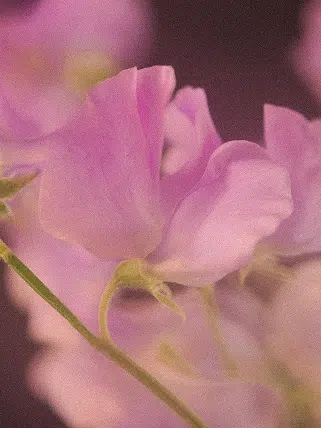
- Soft, graduated colour including stunning bi-colours and subtle ombré effects
- Delicate curly tendrils that add movement and organic line
- Natural gradients within single flowers – often darker at the centre, fading to paler edges
The “soft romanticism” trend – dappled light, gentle colours, natural textures – is sweet pea aesthetic translated into visual language.
Colour Theory
Sweet peas offer masterclasses in sophisticated colour use:
- Bi-colour gradients: Natural lessons in how contrasting colours can blend harmoniously
- Tonal depth: How multiple shades of one colour create richness without contrast
- Unexpected combinations: Purple and cream, pink and burgundy, blue and white – sweet peas demonstrate colour pairings that should not work but absolutely do
Designers studying colour relationships can learn a great deal from simply observing sweet pea blooms.
The “Soft Power” Aesthetic
A design philosophy is emerging that might best be described as “soft power” – designs that are beautiful, sophisticated, and compelling without being loud or aggressive.
Sweet peas embody this perfectly. They are not demanding or confrontational, yet they are absolutely memorable and create strong emotional responses. This aesthetic feels increasingly relevant as a counterpoint to maximalist, high-contrast trends. Sweet peas offer an alternative: gentle strength, quiet luxury, understated sophistication.
9. In Culture
Ephemeral experiences are becoming the defining luxury – and sweet peas, with their fleeting season and irreplicable fragrance, sit at the centre of that shift.
Literature and Poetry
Sweet peas appear throughout English poetry and literature, often symbolising delicate beauty, fleeting pleasure, or nostalgic longing. Their brief season and ephemeral nature make them ideal metaphors for transient joy and the importance of appreciating beauty while it lasts.
John Keats captured their essence with characteristic precision:
“Here are sweet peas, on tiptoe for a flight,
With wings of gentle flush o’er delicate white,
And taper fingers catching at all things,
To bind them all about with tiny rings.”
— John Keats, from “I Stood Tip-toe Upon a Little Hill” (1816)
Keats uses sweet peas to represent fleeting beauty and gentle ambition. The flowers “on tiptoe for a flight” suggest something delicate yet eager, reaching upward and outward – aspiring without aggression. The tendrils “catching at all things” and binding them with “tiny rings” symbolise connection, gentle persistence, and quiet strength.
It is beauty that climbs, connects, and holds on softly – not through force, but through delicate, persistent embrace. The imagery captures aspiration and the ephemeral nature of beautiful things that are always on the verge of flight, never quite grounded, always reaching.
The Language of Flowers
During the Victorian era, when floriography was at its peak, sweet peas carried specific meanings that people used to communicate feelings they could not speak aloud. Sending sweet peas meant “thank you for the lovely time” or “blissful pleasure” – a way of expressing gratitude or acknowledging a wonderful shared experience.
This coded communication may seem quaint now, but it speaks to how seriously people took floral symbolism – and sweet peas were firmly part of that cultural vocabulary.
In Art
Sweet peas appear frequently in still-life paintings, particularly from the Edwardian and Victorian periods. Artists were drawn to their complex forms, subtle colour gradations, and the challenge of capturing their delicate translucency.
Botanical illustrators and watercolour artists continue to gravitate toward sweet peas for the same reasons – they are both beautiful and technically demanding to paint.
Garden Shows and Competitions
Sweet peas have their own competitive world. The National Sweet Pea Society runs competitions where growers showcase their finest blooms, judging not just size or colour but also scent, form, and the skill required to grow exhibition-quality specimens.
The dedication involved – serious time and expertise directed at growing the perfect sweet pea – reflects the kind of craft-focused pursuit that resonates with a culture increasingly drawn to mastery and authenticity.
Film and Television
Sweet peas appear frequently in period dramas as set dressing that immediately evokes a particular time, place, and social milieu. They are visual shorthand for English country estates, garden parties, and a certain refined, traditional sensibility.
Cultural Associations
Sweet peas carry distinctive cultural connotations:
- Englishness: Deeply associated with English gardens, English summers, and a particularly English approach to beauty – cultivated yet natural, structured but romantic.
- Nostalgia: They evoke a slightly old-fashioned, innocent romanticism – grandmother’s gardens, afternoon tea, handwritten correspondence.
- Celebration of seasons: Growing and appreciating sweet peas means paying attention to natural cycles, which feels increasingly meaningful as we become more disconnected from seasonal rhythms.
- Slow living: They take time to grow, have a brief season, and need to be picked frequently. They demand attention and presence, aligning beautifully with mindfulness and slow living movements.
The Modern Cultural Moment
Sweet peas occupy a rare cultural position right now:
- The move toward sustainable, local, seasonal living positions them as exemplars of this philosophy.
- The wellness industry’s focus on sensory experiences – aromatherapy, mindfulness, presence – aligns with sweet pea cultivation and appreciation.
- The “soft aesthetic” emerging across visual culture – muted colours, natural light, romantic imagery – draws directly on the sweet pea palette.
Sweet peas feel simultaneously timeless and entirely of this moment, which is a rare and valuable cultural position for any flower to occupy.
10. The Flower of the Year Bouquet
Secure your limited-edition sweet pea bouquet – each arrangement arrives with an exclusive collectible print commemorating 2026’s Flower of the Year.
You may also like: