

A Guide to Wedding Corsages
Corsage dos and don’ts
Do:
Match corsage flowers to the rest of your wedding flower arrangements where possible — it ties the wearable flowers to the wider design.
Order corsages two weeks to a month in advance to give your florist sufficient time to source and prepare the flowers.
Don’t:
Choose flowers that are too large — oversized blooms are prone to drooping and twisting throughout the day.
Discard corsages after the wedding. They can be preserved alongside the rest of your wedding flowers.
Forget to consider the boutonnières alongside the corsages — the two should read as part of the same design. Discuss both with your florist at the same time.
Match corsage flowers to the rest of your wedding flower arrangements where possible — it ties the wearable flowers to the wider design.
Order corsages two weeks to a month in advance to give your florist sufficient time to source and prepare the flowers.
Don’t:
Choose flowers that are too large — oversized blooms are prone to drooping and twisting throughout the day.
Discard corsages after the wedding. They can be preserved alongside the rest of your wedding flowers.
Forget to consider the boutonnières alongside the corsages — the two should read as part of the same design. Discuss both with your florist at the same time.
For more wedding inspiration, visit our Pinterest page.
How to choose a corsage
Orchids, carnations and roses are among the most popular corsage flowers, valued for their durability through a long day. The most important consideration is that the corsage colours sit comfortably within the outfit and the overall palette of the wedding.
For a wrist corsage, a larger bloom — gardenia, orchid, or garden rose — on a wide ribbon base tends to work best. For a dress corsage, smaller blooms give a neater, less obtrusive result. You can use a single flower variety or combine several for a more layered design.
For a wrist corsage, a larger bloom — gardenia, orchid, or garden rose — on a wide ribbon base tends to work best. For a dress corsage, smaller blooms give a neater, less obtrusive result. You can use a single flower variety or combine several for a more layered design.
Corsage dos and don’ts
Do:
Match corsage flowers to the rest of your wedding flower arrangements where possible — it ties the wearable flowers to the wider design.
Order corsages two weeks to a month in advance to give your florist sufficient time to source and prepare the flowers.
Don’t:
Choose flowers that are too large — oversized blooms are prone to drooping and twisting throughout the day.
Discard corsages after the wedding. They can be preserved alongside the rest of your wedding flowers.
Forget to consider the boutonnières alongside the corsages — the two should read as part of the same design. Discuss both with your florist at the same time.
Match corsage flowers to the rest of your wedding flower arrangements where possible — it ties the wearable flowers to the wider design.
Order corsages two weeks to a month in advance to give your florist sufficient time to source and prepare the flowers.
Don’t:
Choose flowers that are too large — oversized blooms are prone to drooping and twisting throughout the day.
Discard corsages after the wedding. They can be preserved alongside the rest of your wedding flowers.
Forget to consider the boutonnières alongside the corsages — the two should read as part of the same design. Discuss both with your florist at the same time.
For more wedding inspiration, visit our Pinterest page.
How to wear a corsage
The traditional position is pinned below the right shoulder with a pearl-headed pin. Whether pinning is appropriate depends on the fabric: soft, delicate materials like silk or lace can be pulled out of shape by the weight of flowers or permanently marked by a pin. In those cases, a magnetic attachment is the safer option — it holds the corsage securely without any contact with the fabric.
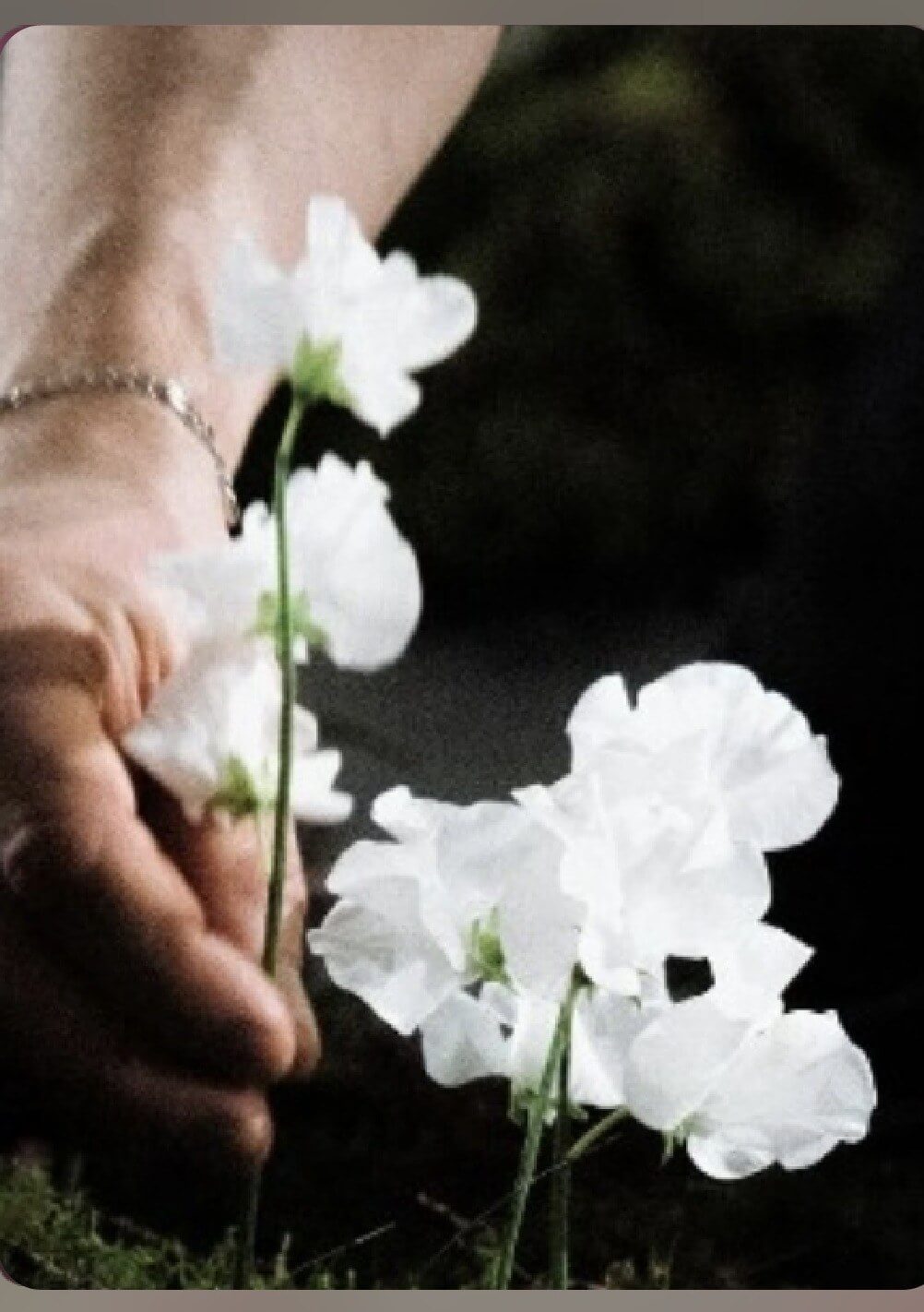
The wrist is the other common option, usually worn on the non-dominant arm. For something less conventional, small flower rings and flower anklets are both worth considering.
The wrist is the other common option, usually worn on the non-dominant arm. For something less conventional, small flower rings and flower anklets are both worth considering.
How to choose a corsage
Orchids, carnations and roses are among the most popular corsage flowers, valued for their durability through a long day. The most important consideration is that the corsage colours sit comfortably within the outfit and the overall palette of the wedding.
For a wrist corsage, a larger bloom — gardenia, orchid, or garden rose — on a wide ribbon base tends to work best. For a dress corsage, smaller blooms give a neater, less obtrusive result. You can use a single flower variety or combine several for a more layered design.
For a wrist corsage, a larger bloom — gardenia, orchid, or garden rose — on a wide ribbon base tends to work best. For a dress corsage, smaller blooms give a neater, less obtrusive result. You can use a single flower variety or combine several for a more layered design.
Corsage dos and don’ts
Do:
Match corsage flowers to the rest of your wedding flower arrangements where possible — it ties the wearable flowers to the wider design.
Order corsages two weeks to a month in advance to give your florist sufficient time to source and prepare the flowers.
Don’t:
Choose flowers that are too large — oversized blooms are prone to drooping and twisting throughout the day.
Discard corsages after the wedding. They can be preserved alongside the rest of your wedding flowers.
Forget to consider the boutonnières alongside the corsages — the two should read as part of the same design. Discuss both with your florist at the same time.
Match corsage flowers to the rest of your wedding flower arrangements where possible — it ties the wearable flowers to the wider design.
Order corsages two weeks to a month in advance to give your florist sufficient time to source and prepare the flowers.
Don’t:
Choose flowers that are too large — oversized blooms are prone to drooping and twisting throughout the day.
Discard corsages after the wedding. They can be preserved alongside the rest of your wedding flowers.
Forget to consider the boutonnières alongside the corsages — the two should read as part of the same design. Discuss both with your florist at the same time.
For more wedding inspiration, visit our Pinterest page.

How to wear a corsage
The traditional position is pinned below the right shoulder with a pearl-headed pin. Whether pinning is appropriate depends on the fabric: soft, delicate materials like silk or lace can be pulled out of shape by the weight of flowers or permanently marked by a pin. In those cases, a magnetic attachment is the safer option — it holds the corsage securely without any contact with the fabric.
The wrist is the other common option, usually worn on the non-dominant arm. For something less conventional, small flower rings and flower anklets are both worth considering.
The wrist is the other common option, usually worn on the non-dominant arm. For something less conventional, small flower rings and flower anklets are both worth considering.
How to choose a corsage
Orchids, carnations and roses are among the most popular corsage flowers, valued for their durability through a long day. The most important consideration is that the corsage colours sit comfortably within the outfit and the overall palette of the wedding.
For a wrist corsage, a larger bloom — gardenia, orchid, or garden rose — on a wide ribbon base tends to work best. For a dress corsage, smaller blooms give a neater, less obtrusive result. You can use a single flower variety or combine several for a more layered design.
For a wrist corsage, a larger bloom — gardenia, orchid, or garden rose — on a wide ribbon base tends to work best. For a dress corsage, smaller blooms give a neater, less obtrusive result. You can use a single flower variety or combine several for a more layered design.
Corsage dos and don’ts
Do:
Match corsage flowers to the rest of your wedding flower arrangements where possible — it ties the wearable flowers to the wider design.
Order corsages two weeks to a month in advance to give your florist sufficient time to source and prepare the flowers.
Don’t:
Choose flowers that are too large — oversized blooms are prone to drooping and twisting throughout the day.
Discard corsages after the wedding. They can be preserved alongside the rest of your wedding flowers.
Forget to consider the boutonnières alongside the corsages — the two should read as part of the same design. Discuss both with your florist at the same time.
Match corsage flowers to the rest of your wedding flower arrangements where possible — it ties the wearable flowers to the wider design.
Order corsages two weeks to a month in advance to give your florist sufficient time to source and prepare the flowers.
Don’t:
Choose flowers that are too large — oversized blooms are prone to drooping and twisting throughout the day.
Discard corsages after the wedding. They can be preserved alongside the rest of your wedding flowers.
Forget to consider the boutonnières alongside the corsages — the two should read as part of the same design. Discuss both with your florist at the same time.
For more wedding inspiration, visit our Pinterest page.
What are wedding corsages?
A corsage is a small arrangement of flowers traditionally worn by members of the bridal party. The word derives from the French “bouquet de corsage” — a bunch of flowers for the bodice. Corsages can be pinned to a dress or tied around the wrist, and are generally larger than boutonnières.
Corsages are most commonly worn by the mothers and grandmothers of the couple, and by sisters, bridesmaids and flower girls. There is no fixed rule about who wears one — some couples extend corsages to all their guests.
Corsages are most commonly worn by the mothers and grandmothers of the couple, and by sisters, bridesmaids and flower girls. There is no fixed rule about who wears one — some couples extend corsages to all their guests.
How to wear a corsage
The traditional position is pinned below the right shoulder with a pearl-headed pin. Whether pinning is appropriate depends on the fabric: soft, delicate materials like silk or lace can be pulled out of shape by the weight of flowers or permanently marked by a pin. In those cases, a magnetic attachment is the safer option — it holds the corsage securely without any contact with the fabric.
The wrist is the other common option, usually worn on the non-dominant arm. For something less conventional, small flower rings and flower anklets are both worth considering.
The wrist is the other common option, usually worn on the non-dominant arm. For something less conventional, small flower rings and flower anklets are both worth considering.
How to choose a corsage
Orchids, carnations and roses are among the most popular corsage flowers, valued for their durability through a long day. The most important consideration is that the corsage colours sit comfortably within the outfit and the overall palette of the wedding.
For a wrist corsage, a larger bloom — gardenia, orchid, or garden rose — on a wide ribbon base tends to work best. For a dress corsage, smaller blooms give a neater, less obtrusive result. You can use a single flower variety or combine several for a more layered design.
For a wrist corsage, a larger bloom — gardenia, orchid, or garden rose — on a wide ribbon base tends to work best. For a dress corsage, smaller blooms give a neater, less obtrusive result. You can use a single flower variety or combine several for a more layered design.
Corsage dos and don’ts
Do:
Match corsage flowers to the rest of your wedding flower arrangements where possible — it ties the wearable flowers to the wider design.
Order corsages two weeks to a month in advance to give your florist sufficient time to source and prepare the flowers.
Don’t:
Choose flowers that are too large — oversized blooms are prone to drooping and twisting throughout the day.
Discard corsages after the wedding. They can be preserved alongside the rest of your wedding flowers.
Forget to consider the boutonnières alongside the corsages — the two should read as part of the same design. Discuss both with your florist at the same time.
Match corsage flowers to the rest of your wedding flower arrangements where possible — it ties the wearable flowers to the wider design.
Order corsages two weeks to a month in advance to give your florist sufficient time to source and prepare the flowers.
Don’t:
Choose flowers that are too large — oversized blooms are prone to drooping and twisting throughout the day.
Discard corsages after the wedding. They can be preserved alongside the rest of your wedding flowers.
Forget to consider the boutonnières alongside the corsages — the two should read as part of the same design. Discuss both with your florist at the same time.
For more wedding inspiration, visit our Pinterest page.
Every element of a wedding’s floral design has a role — from the arrangements dressing the venue to the wedding flower arrangements, the bouquet, the floral crown, and the boutonnières worn by the groom and groomsmen. The corsage sits within this same family of wearable flowers, typically worn by members of the wedding party beyond the bridal couple. Here is what you need to know about choosing and wearing one.
What are wedding corsages?
A corsage is a small arrangement of flowers traditionally worn by members of the bridal party. The word derives from the French “bouquet de corsage” — a bunch of flowers for the bodice. Corsages can be pinned to a dress or tied around the wrist, and are generally larger than boutonnières.
Corsages are most commonly worn by the mothers and grandmothers of the couple, and by sisters, bridesmaids and flower girls. There is no fixed rule about who wears one — some couples extend corsages to all their guests.
Corsages are most commonly worn by the mothers and grandmothers of the couple, and by sisters, bridesmaids and flower girls. There is no fixed rule about who wears one — some couples extend corsages to all their guests.
How to wear a corsage
The traditional position is pinned below the right shoulder with a pearl-headed pin. Whether pinning is appropriate depends on the fabric: soft, delicate materials like silk or lace can be pulled out of shape by the weight of flowers or permanently marked by a pin. In those cases, a magnetic attachment is the safer option — it holds the corsage securely without any contact with the fabric.
The wrist is the other common option, usually worn on the non-dominant arm. For something less conventional, small flower rings and flower anklets are both worth considering.
The wrist is the other common option, usually worn on the non-dominant arm. For something less conventional, small flower rings and flower anklets are both worth considering.
How to choose a corsage
Orchids, carnations and roses are among the most popular corsage flowers, valued for their durability through a long day. The most important consideration is that the corsage colours sit comfortably within the outfit and the overall palette of the wedding.
For a wrist corsage, a larger bloom — gardenia, orchid, or garden rose — on a wide ribbon base tends to work best. For a dress corsage, smaller blooms give a neater, less obtrusive result. You can use a single flower variety or combine several for a more layered design.
For a wrist corsage, a larger bloom — gardenia, orchid, or garden rose — on a wide ribbon base tends to work best. For a dress corsage, smaller blooms give a neater, less obtrusive result. You can use a single flower variety or combine several for a more layered design.
Corsage dos and don’ts
Do:
Match corsage flowers to the rest of your wedding flower arrangements where possible — it ties the wearable flowers to the wider design.
Order corsages two weeks to a month in advance to give your florist sufficient time to source and prepare the flowers.
Don’t:
Choose flowers that are too large — oversized blooms are prone to drooping and twisting throughout the day.
Discard corsages after the wedding. They can be preserved alongside the rest of your wedding flowers.
Forget to consider the boutonnières alongside the corsages — the two should read as part of the same design. Discuss both with your florist at the same time.
Match corsage flowers to the rest of your wedding flower arrangements where possible — it ties the wearable flowers to the wider design.
Order corsages two weeks to a month in advance to give your florist sufficient time to source and prepare the flowers.
Don’t:
Choose flowers that are too large — oversized blooms are prone to drooping and twisting throughout the day.
Discard corsages after the wedding. They can be preserved alongside the rest of your wedding flowers.
Forget to consider the boutonnières alongside the corsages — the two should read as part of the same design. Discuss both with your florist at the same time.
For more wedding inspiration, visit our Pinterest page.
You may also like: