

Blooming Champions: The Storied History and Floral Favourites of Wimbledon
Beyond the pristine green lawn courts and thrilling matches, another aspect of Wimbledon quietly commands attention: the floral displays. From their royal connections to the carefully chosen blooms that grace the grounds each July, flowers have been integral to Wimbledon’s identity since the tournament’s earliest days.
This guide explores the history of florals at Wimbledon, the signature blooms of the tournament, and the birth and national flowers associated with the top-seeded players.
This guide explores the history of florals at Wimbledon, the signature blooms of the tournament, and the birth and national flowers associated with the top-seeded players.
The Floral History and Favourites of Wimbledon
1. History of Flowers at Wimbledon
2. Flora of Wimbledon
3. Royal Connections
4. Top-Seeded Players & Their Floral Associations
5. Create a Wimbledon-Inspired Garden at Home
6. Celebrate Wimbledon With a Bouquet
7. Related Reading
2. Flora of Wimbledon
3. Royal Connections
4. Top-Seeded Players & Their Floral Associations
5. Create a Wimbledon-Inspired Garden at Home
6. Celebrate Wimbledon With a Bouquet
7. Related Reading
1. The History of Flowers at Wimbledon
Flowers have been part of the Wimbledon Championships since the late 19th century. What began as simple arrangements to dress the grounds has become one of the tournament’s defining visual traditions – as much a part of the experience as the grass courts themselves.
Over the decades, the displays have grown in scale and sophistication, reflecting advances in horticulture and floral design. Today, the All England Club’s grounds are meticulously planted and styled each year, with arrangements greeting spectators from the entrance courts through to Centre Court.
Royal patronage has played a part in shaping this tradition. The tournament’s long association with the British royal family has influenced both the selection and presentation of flowers, maintaining a standard of refinement consistent with the event’s character.
Over the decades, the displays have grown in scale and sophistication, reflecting advances in horticulture and floral design. Today, the All England Club’s grounds are meticulously planted and styled each year, with arrangements greeting spectators from the entrance courts through to Centre Court.
Royal patronage has played a part in shaping this tradition. The tournament’s long association with the British royal family has influenced both the selection and presentation of flowers, maintaining a standard of refinement consistent with the event’s character.

2. Flora of Wimbledon
Three blooms define Wimbledon’s floral identity above all others: the rose, hydrangea, and petunia.
Roses
White roses are among the most prominent flowers at Wimbledon, appearing in arrangements around the courts and key areas of the grounds. Traditionally associated with honour and reverence, they set a restrained, classical tone that complements the green of the lawns.

Hydrangeas
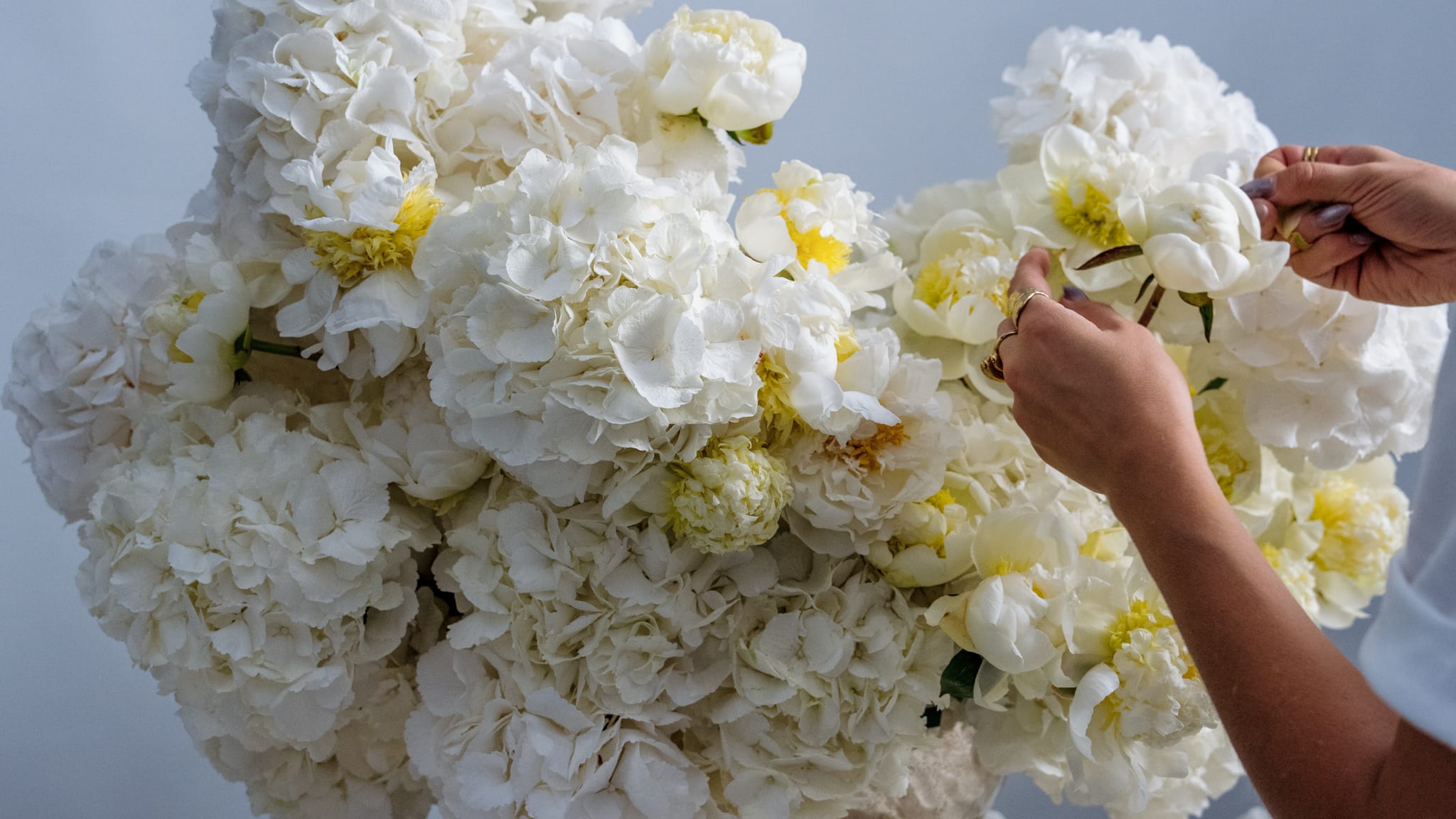
Hydrangeas are a consistent feature of the displays, valued for their generous clusters of bloom in shades of blue, pink, and white. They appear in garden beds and decorative pots throughout the grounds.
Their suitability is partly practical: hydrangeas thrive in the British summer climate and hold their colour well through the fortnight of the Championships. They also align naturally with Wimbledon’s purple-and-green palette.
Their suitability is partly practical: hydrangeas thrive in the British summer climate and hold their colour well through the fortnight of the Championships. They also align naturally with Wimbledon’s purple-and-green palette.

Petunias
Petunias provide much of the colour that connects the tournament’s branding to its grounds. Their trumpet-shaped blooms in vivid purples, pinks, reds, and whites appear in hanging baskets, flower beds, and containers across the site – a direct echo of the purple that has defined Wimbledon’s visual identity since the 1990s.

Among the wider array of blooms found at Wimbledon:
- Lavender: Valued for its fragrance and soft purple spikes.
- Lilies: Large blooms in white, pink, and yellow.
- Geraniums: Hardy and reliable in shades of red, pink, and white.
- Dahlias: Bold, symmetrical flowers in vibrant oranges, reds, and softer tones.
- Pansies: Low-growing with distinctive markings, suited to borders and containers.
- Iris: Upright blooms with sword-shaped leaves, often in blue and violet.
The planting scheme tends towards purples and blues, reinforcing Wimbledon’s branding while maintaining the feel of a well-kept English garden.
3. Royal Connections
Wimbledon has long enjoyed the patronage of the British royal family. Members of the royal household regularly attend matches and present trophies, and their presence has shaped the character of the event over generations.
This connection extends to the floral displays. The choice and arrangement of flowers at the All England Club reflect a level of care consistent with royal occasions, and certain blooms carry associations with individual members of the royal family.
This connection extends to the floral displays. The choice and arrangement of flowers at the All England Club reflect a level of care consistent with royal occasions, and certain blooms carry associations with individual members of the royal family.

The Princess of Wales has been photographed with bouquets of white flowers on several occasions at Wimbledon, typically featuring white lilies and roses – consistent with her well-documented preference for classic, understated arrangements. As patron of the All England Lawn Tennis Club since 2016, she is closely associated with the tournament and frequently presents trophies to the winners.
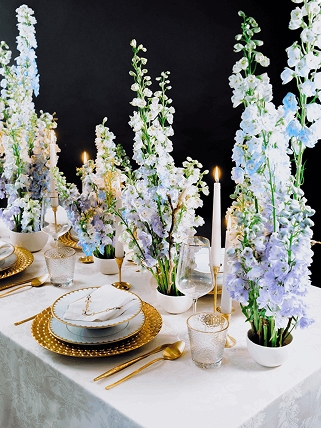
King Charles is a known admirer of delphiniums, the tall, spire-forming perennials that appear in Wimbledon’s planting scheme. His broader advocacy for horticulture and organic gardening has helped raise the profile of floral traditions across British institutions.
The British Royal Family’s Favourite Flowers
King Charles is a known admirer of delphiniums, the tall, spire-forming perennials that appear in Wimbledon’s planting scheme. His broader advocacy for horticulture and organic gardening has helped raise the profile of floral traditions across British institutions.
The British Royal Family’s Favourite Flowers

Notable royal moments at Wimbledon include:
- Queen Elizabeth II: Made several visits to Wimbledon throughout her reign, most notably in 2010 when she attended for the first time in 33 years, watching matches on Centre Court and meeting players and officials.
- Diana, Princess of Wales: A frequent and high-profile presence at the Championships, known for her elegant outfits courtside.
- The Princess of Wales: Patron of the All England Lawn Tennis Club since 2016 and a regular attendee who frequently presents trophies to the winners.
- Prince William and Prince Harry: Both regular spectators at the Championships, often seen in the Royal Box on Centre Court.
4. Top-Seeded Players & Their Floral Associations
Each top-seeded player carries their own floral associations through birth flowers and national blooms. Here are the connections for the current top seeds.
Men’s Top Seeds
The top three men’s seeds are: 1. Jannik Sinner, 2. Novak Djokovic, and 3. Carlos Alcaraz. This section is updated annually before the tournament to reflect the current top 3 seeds.
World #1 Jannik Sinner
Born in August, Sinner’s birth month flowers are poppies and gladioli. Poppies are associated with imagination and success, while gladioli – with their tall, upright spikes – represent strength and integrity.
Italy’s national flower is the lily (Lilium), a bloom associated with purity and rebirth that has deep roots in the country’s art and heraldic traditions.
Italy’s national flower is the lily (Lilium), a bloom associated with purity and rebirth that has deep roots in the country’s art and heraldic traditions.

World #2 Novak Djokovic
Djokovic’s connection to the natural world is well documented. A committed advocate of plant-based living, he is known for his appreciation of white roses – a flower traditionally associated with reverence and respect. Born in May, his birth month flower is the lily of the valley.
Serbia’s national flower is the Serbian Bluebell (Scilla serbica), a vibrant blue wildflower native to the Balkan Peninsula that represents the natural heritage of the region.
Serbia’s national flower is the Serbian Bluebell (Scilla serbica), a vibrant blue wildflower native to the Balkan Peninsula that represents the natural heritage of the region.

World #3 Carlos Alcaraz
Born in May, Alcaraz shares his birth month with the lily of the valley and hawthorn. Lily of the valley holds particular significance in British floral tradition – it was a favourite of Queen Elizabeth II and has featured in royal bouquets for generations.
Spain’s national flower is the red carnation (Dianthus caryophyllus), a bloom with deep cultural roots in Spanish life, traditionally associated with love and admiration.
Spain’s national flower is the red carnation (Dianthus caryophyllus), a bloom with deep cultural roots in Spanish life, traditionally associated with love and admiration.

Women’s Top Seeds
The top three women’s seeds are: 1. Iga Swiatek, 2. Coco Gauff, and 3. Aryna Sabalenka. This section is updated annually before the tournament to reflect the current top 3 seeds.
World #1 Iga Swiatek
Born in May, Swiatek shares her birth month with the lily of the valley – a delicate flower with small, bell-shaped blooms that symbolise humility and purity.
Poland’s national flower is the corn poppy (Papaver rhoeas), a vivid red wildflower that grows across Polish fields and is traditionally associated with remembrance and resilience.
Poland’s national flower is the corn poppy (Papaver rhoeas), a vivid red wildflower that grows across Polish fields and is traditionally associated with remembrance and resilience.

World #2 Coco Gauff
Born in March, Gauff’s birth month flower is the daffodil (Narcissus) – one of the first flowers of spring, associated with rebirth and new beginnings.
The United States’ national flower is the rose (Rosa). As one of the signature flowers of Wimbledon itself, the connection is a fitting one.
The United States’ national flower is the rose (Rosa). As one of the signature flowers of Wimbledon itself, the connection is a fitting one.

World #3 Aryna Sabalenka
Also born in May, Sabalenka shares the lily of the valley as her birth month flower – as do Djokovic, Alcaraz, and Swiatek, making it one of the most recurring floral associations among the current top seeds.
Belarus’s national flower is the flax flower (Linum usitatissimum), known for its delicate blue blooms. Flax has both historical and economic significance in the country, and its soft blue tones happen to sit comfortably within Wimbledon’s purple-and-green colour scheme.
Belarus’s national flower is the flax flower (Linum usitatissimum), known for its delicate blue blooms. Flax has both historical and economic significance in the country, and its soft blue tones happen to sit comfortably within Wimbledon’s purple-and-green colour scheme.

5. Create Your Own Wimbledon Garden
For those looking to bring the Wimbledon palette into their own outdoor space, July is the ideal time. Martyn Falconer, Head Gardener at the All England Club, has shared guidance on growing the tournament’s signature blooms at home – from hydrangeas and roses to the petunias that provide so much of Wimbledon’s colour.
Read more: Wimbledon Flowers at Home
Read more: Wimbledon Flowers at Home

6. Celebrate Wimbledon With a Bouquet
When the Championships are underway and July is at its finest, fresh-cut flowers are a natural way to bring that seasonal energy indoors.
While our principal focus is event floristry, our online shop offers a curated selection of seasonal and classic bouquets – each designed with the same attention to detail we bring to our events.
As Europe’s first B Corp events florist, sustainability is woven into every aspect of our operations. When you choose flowers from us, you are making a considered and environmentally responsible choice.
As featured in Vogue, Tatler, Elle, Harper’s Bazaar, and more.
While our principal focus is event floristry, our online shop offers a curated selection of seasonal and classic bouquets – each designed with the same attention to detail we bring to our events.
As Europe’s first B Corp events florist, sustainability is woven into every aspect of our operations. When you choose flowers from us, you are making a considered and environmentally responsible choice.
As featured in Vogue, Tatler, Elle, Harper’s Bazaar, and more.

7. Related Reading
You may also like: