Emma Bass & Aaron Fry, Artist & Design Academic
Back to all videos
What does being "In Bloom" mean to Emma Bass & Aaron Fry?
"For me, it’s all about flowers connecting us to ourselves, and giving us hope and resilience. And they’re just joyful. Flowers matter."
Transcript
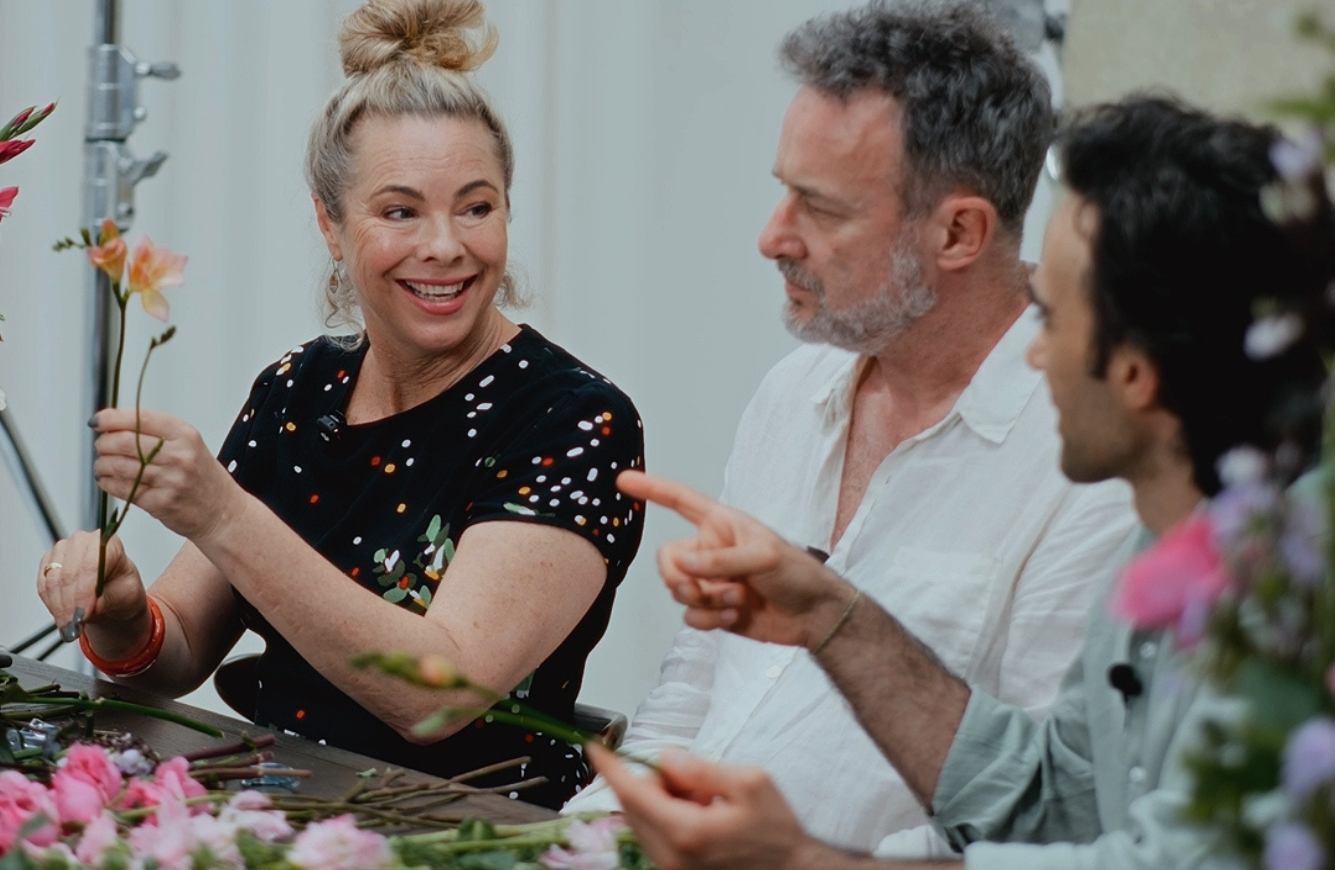
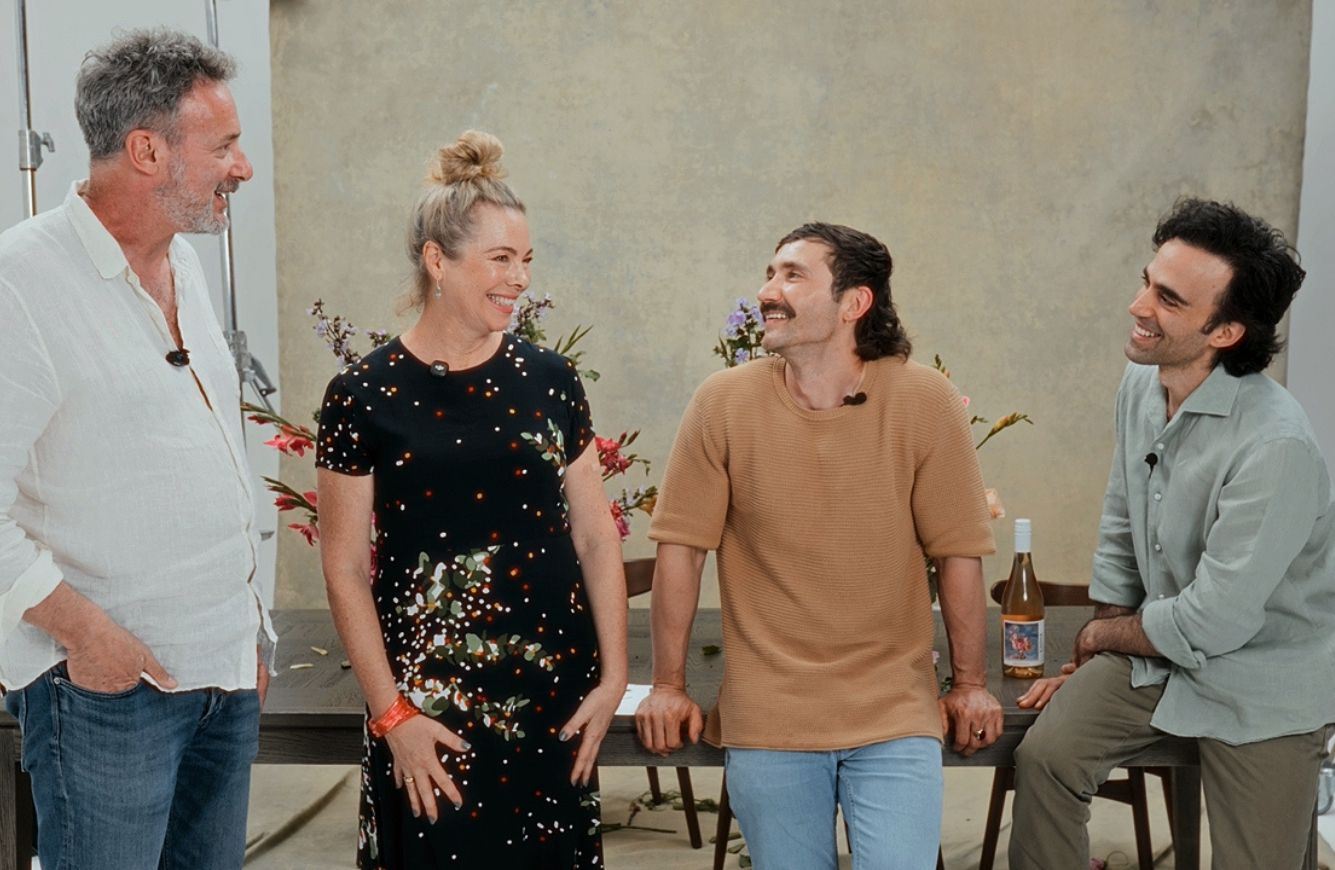
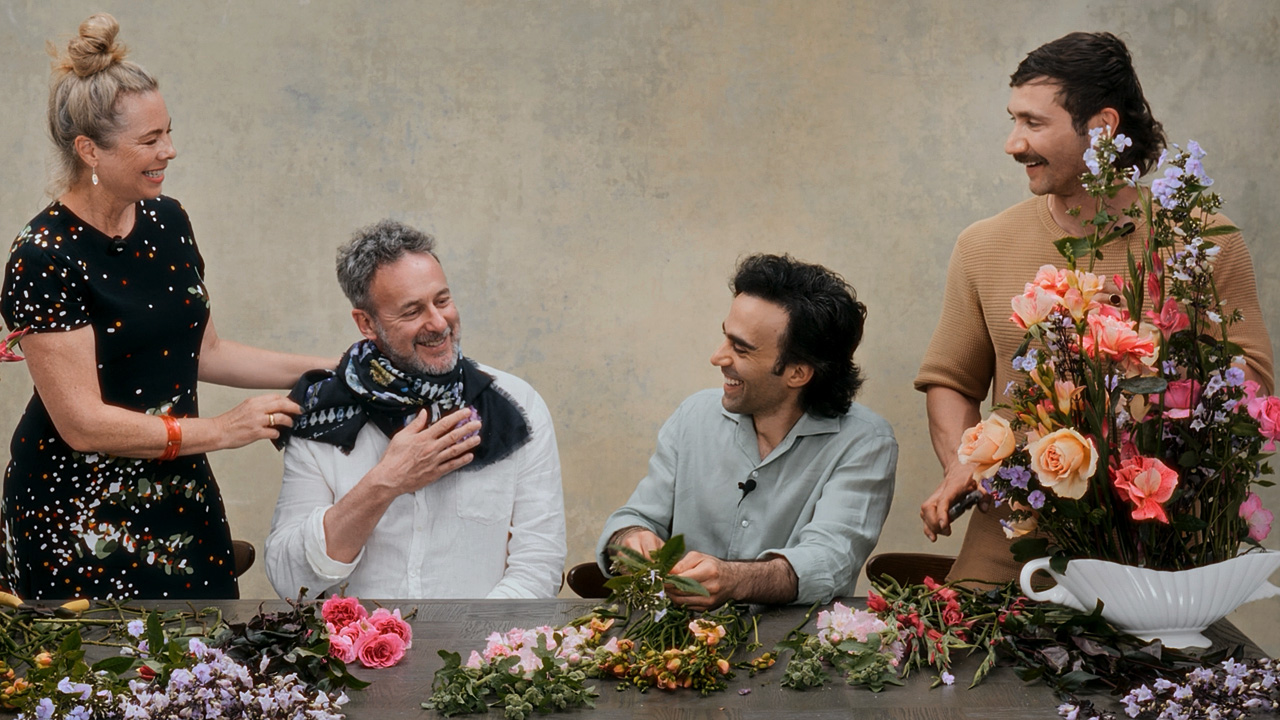
This is In Bloom. I’m Michal. I’m Michael. I’m Aaron. And I’m Emma, and we are from New Zealand. Today we’re doing something a little different. Same vases, same flowers, same brief, two different artists. Let’s see what comes out of it.
Aaron, Emma, can you tell us more about yourselves?
I’m an artist and I work with flowers in New Zealand. I also have a history as a nurse, so I have an interesting little journey to get to this point of being an artist working with flowers.
And I’m Aaron. I’m actually a design academic, but I’m also an artist, and my medium is painting. My work is very abstract, quite different from Emma’s, although we may be collaborating even today.
So how did you go from being a nurse to now being a floral artist?
Well, I started my first career as a nurse in my late teens. I worked in hospitals here, but I found them very, very depressing spaces to be in, because clinical spaces have got pretty bad lighting and are generally very sterile.
Synaesthesia is when your brain has got a different type of wiring. I just thought that everybody saw letters and numbers as a colour. I just thought that everybody did, but they don’t. And I feel like environments give me a sense of a feeling. So for me, working in the hospitals, I would respond quite intensely to the environments that I was working in. And I got a little bit depressed, and I just felt that I needed to have a change.
So I ended up becoming an editorial photographer, over 22 years, which I loved. It was like travelling.
So what type of photography were you doing?
I was doing mostly editorial, because I’m a control freak and I like to have control. And I always loved working with flowers. I had quite a traumatic personal experience about ten, twelve years ago, and so I used the flowers to help me heal and to work through that time. I started making these compositions.
And finally, it was an accident. I was photographing a cover of a magazine and we needed to fill in the background because it was too white, and I just gathered a whole lot of blossoms and magnolias from outside in the garden, on the street, and they were quite damaged because there had been a hailstorm. But I didn’t care, because it was going to be out of focus. So I quickly assembled something, and we put it in the background on a beautiful vase like this, and it was brilliant. Did the trick.
And they looked so perfect, and the light was falling on them so beautifully, that I felt compelled to photograph them, which I did. And then I showed my neighbour and she said, “I love that.” And I said, “But it’s not perfect.” And she said, “Well, that’s why I love it.” Because it’s not perfect. When I first started making them, I called my first exhibition Imperfect.
What’s this one?
I’m not sure yet. I’m trying to multitask. I’m just not quite sure. It’s looking a little bit conventional, it feels.
Personality is coming into it for you.
Yeah. It’s just, yeah.
So basically, among the four of us, there are a lot of memories, of places and of people, that every single one of these flowers carry. Because every one of us will associate roses to different people, or to different places, or to childhood memories, right?
Yes. There’s a flower that takes me to a very specific place. I spent three years as a student in Hawaii. So the frangipani is less of a visual thing for me, but much more of a scent of the tropics, and of the person I was in my mid twenties, as an art student in Honolulu.
And what about you?
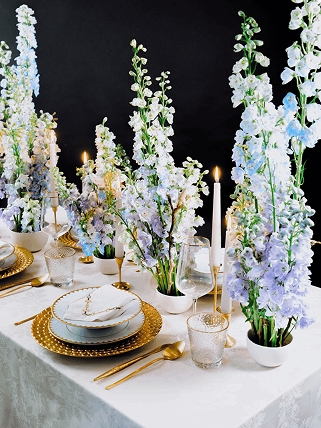
I’m not so sure about the memory thing, but I would like to say that my favourite flower is the delphinium. I love all the nuances of the blues and the purples. And actually, I used delphiniums to, I do a lot of work with Breast Cancer Cure, and this year I’ve designed a beautiful scarf. It’s quite lovely to be able to put it around you.
It looks good. There you are. To wear the flowers.
So do you do a different one every year, and then the proceeds go to?
Yeah. One hundred per cent of the proceeds go to Breast Cancer Cure. As the ex-nurse, I guess that’s me coming full circle, so I’m helping people with my work.
We wanted to talk about something you’re working on together. The Floral Effect. Can you tell us more about this?
The Floral Effect is a project that we’ve started together, and it’s really the first time that we formally work together on something, particularly around the power of flowers and healing spaces. And we’re actually really interested in whether the effect is simply visual, whether you can get that effect through a photograph. You can’t bring a composition of flowers into a hospital like this and have it available for everybody because of hygiene or pollen or whatever. And so the idea that the visual, and even dare I say it the artificial, might have a role in those environments.
Do you think the effect changes depending on who is in the room with them?
There might be somebody having chemotherapy. And these people’s stories seem to validate the idea that this is giving them comfort in this really acutely distressing moment. Now, that’s really different from somebody getting married, right? That’s a joyful experience.
Last year I had an email from a woman who was stage four, and I had placed one in the waiting room where she was about to get her chemotherapy. She emailed me and said she was at the end of her life, basically, it was her last treatment, and she said she looked up and she saw this big arrangement of dahlias, and she said it just filled her with joy. It was a really difficult time. She felt hope and joy and it just filled her heart. And that just resonated. I’ve got goosebumps just thinking about it. So to me, to know that my work is out there doing a job is a wonderful thing.
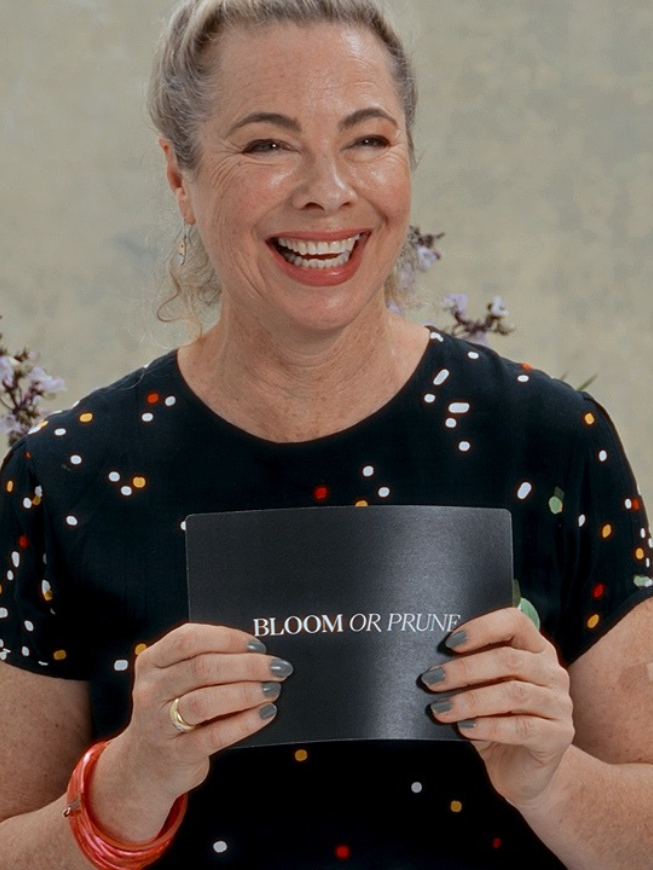
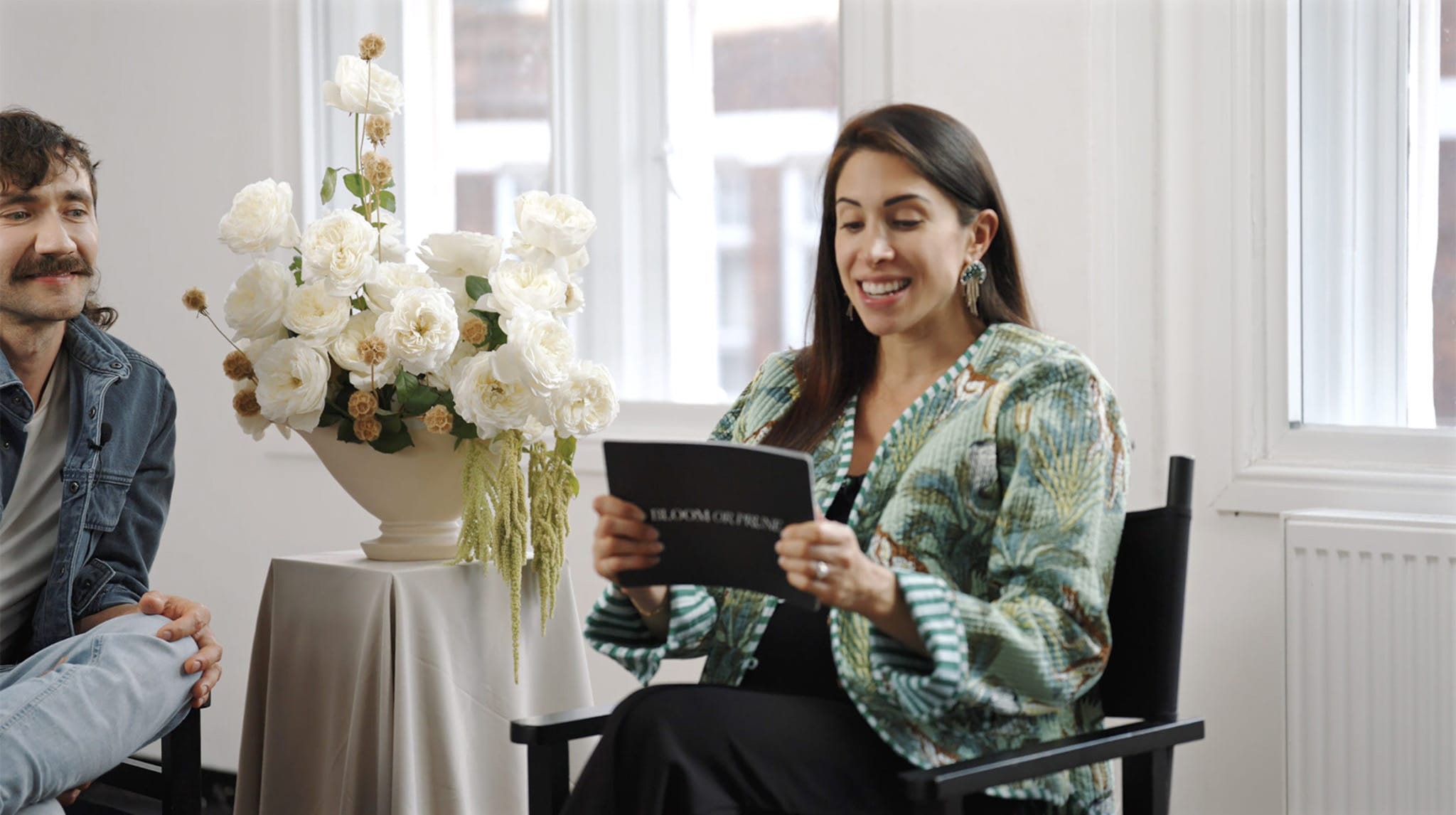
So, our usual tradition. Bloom or Prune. We have a set of cards. We’ll read the idea that’s on them, and then it’s up to you to decide whether to bloom it, to keep it and nurture it, or prune it, get rid of it. Ready?
Ready.
Imperfection.
Absolutely bloom. Perfectly imperfect, I always say. I love flowers on the turn.
The idea that flowers are feminine.
Flowers don’t have a gender, and enjoying flowers does not have a gender. Absolutely prune that one.
Photographing flowers after they turn.
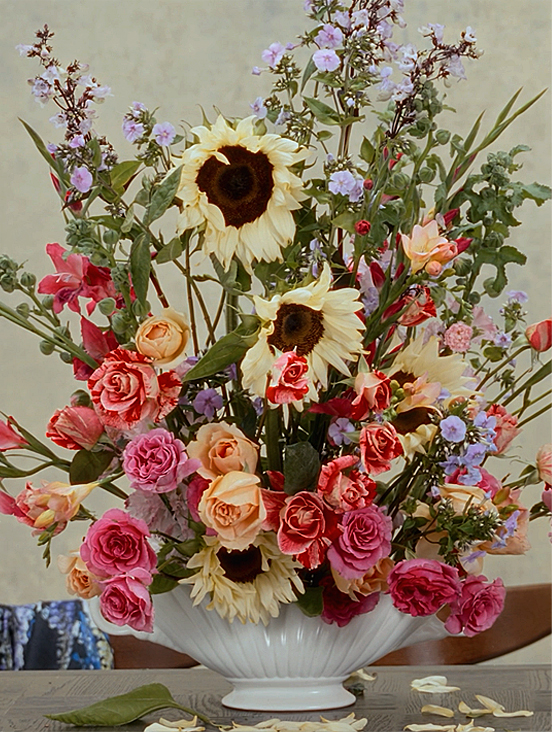
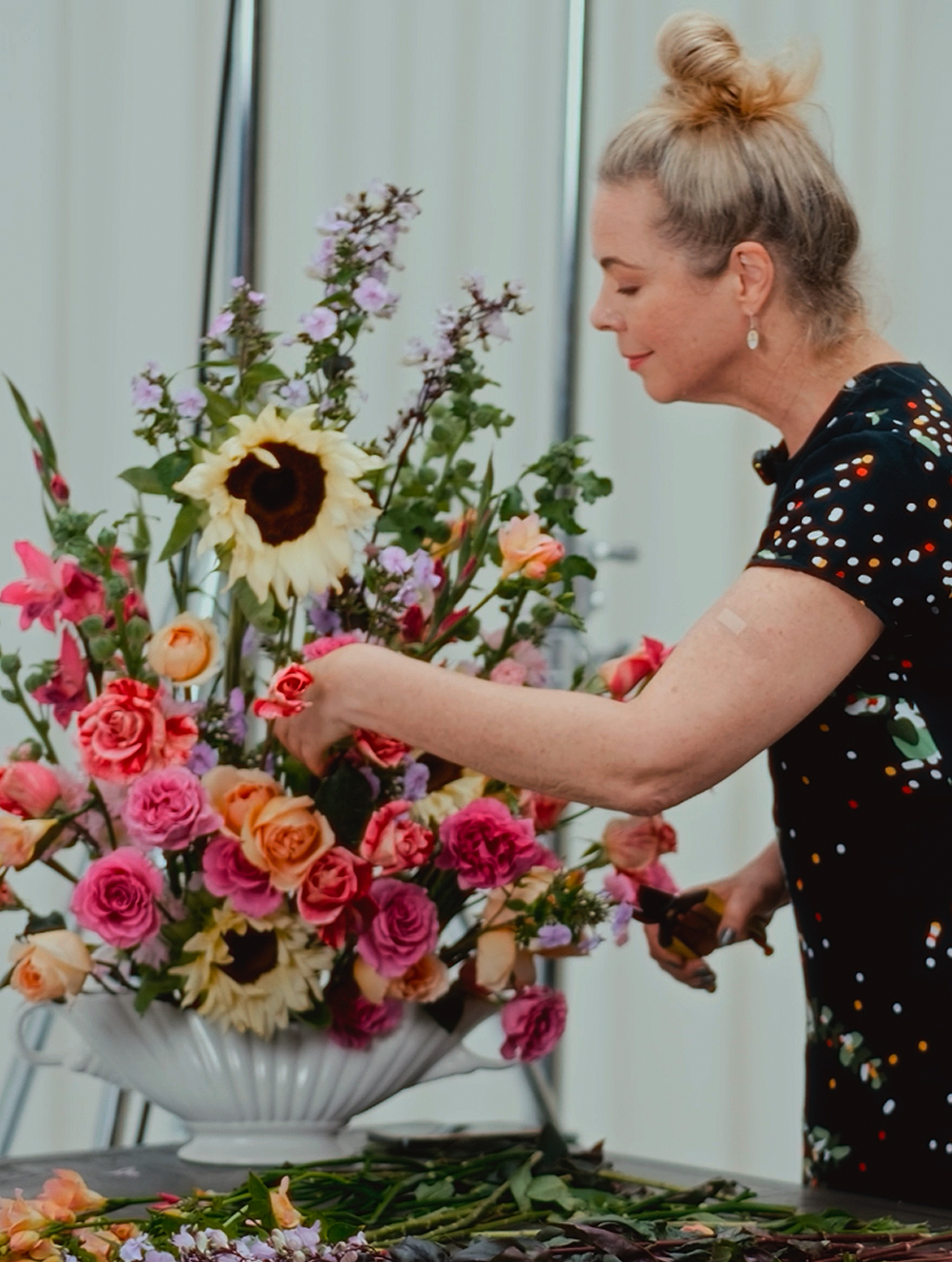
Imperfection, absolutely. You’ll notice I gravitated towards these sunflowers, which look like they’ve had it at the end of the day, but to me that’s what makes it a little bit real. So that was bloom.
Working with whatever is in season.
I say bloom to that. Absolutely. And that’s the way I work.
The art world favouring trends.
I think prune.
Making work nobody commissioned.
Bloom. Yeah, absolutely. Make it for yourself, make it for your friends. Give it to your friends.
Emma, Aaron, we always give our guests the last word. What do you leave with?
That flowers connect us with each other.
And for me, it’s all about flowers connecting us to ourselves, and giving us hope and resilience. And they’re just joyful. Flowers matter.
Well, Aaron, please comment on my arrangement.
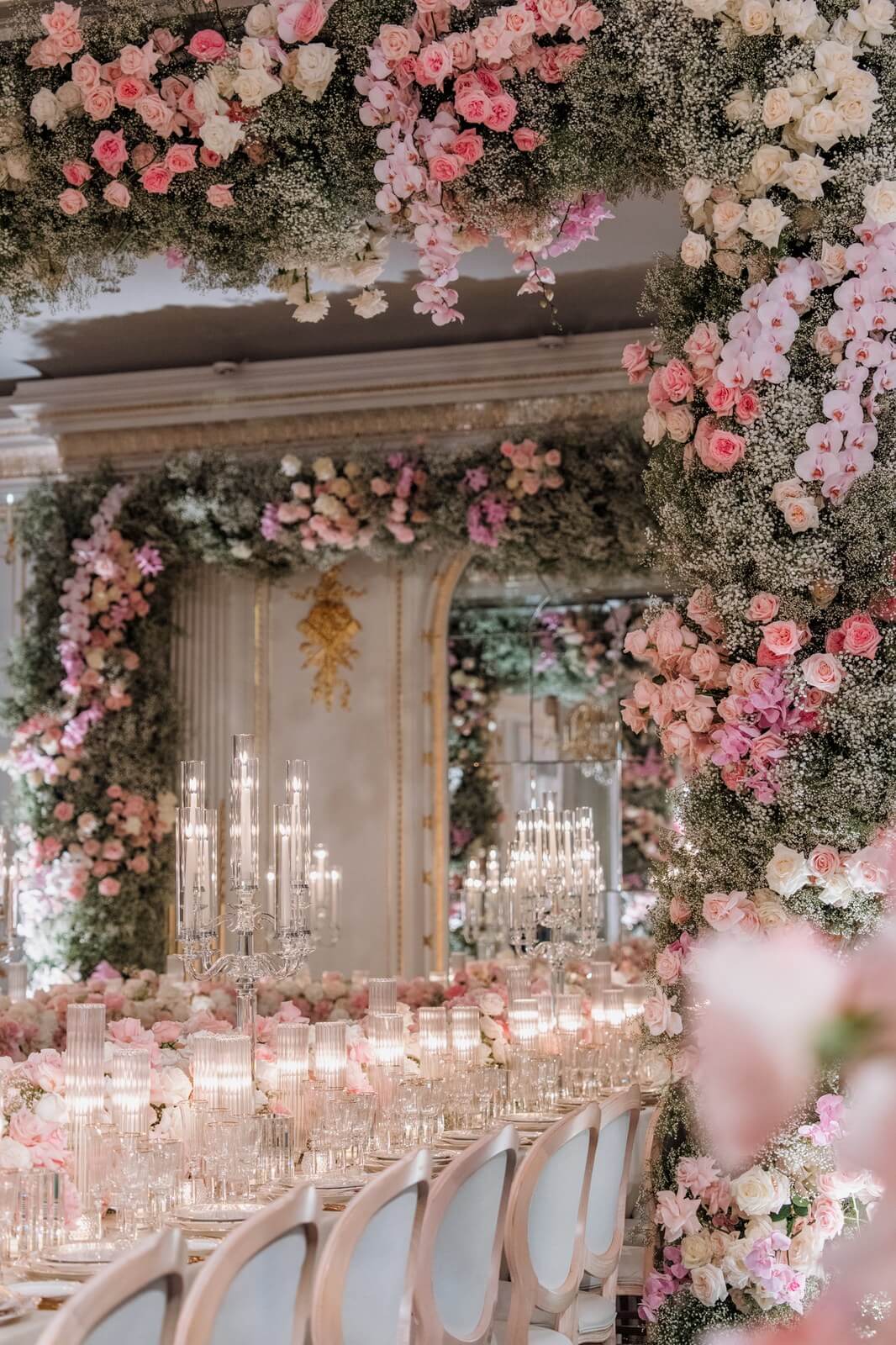
Michal’s composition, on the right. I can see that there’s a lot going on in terms of balance and counterbalance, and clusters of visual activity. And so as a composition there’s a formality and intentionality around that, which I think probably reflects his training and many years of studying floral design. His composition is a much more three-dimensional experience, that it’s really composed with the intention of being looked at from multiple points of view.
Emma’s work reflects her perspective as a photographer, where there’s an optimal single point of view on the image. So the images are often very, very frontal. So very, very different. And I think we see a much more maximalist kind of presentation. We also see a very trademark thing with the decay of the petals, and the fallen petals around the vase, which reflects the sensibility in her photography.
Thank you for spending the afternoon with us.
You’re welcome. Thank you. We loved it, and I loved making a bit of a hot mess.
And I would like to say it’s been the hottest week ever in June. So this actually does reflect the week that we’ve had here. We’ve come from winter in New Zealand to the blazing heat. So yeah, it does look a little bit tired. And hot.
Thank you. Thank you.
About the speaker
Emma Bass & Aaron Fry
Blooming Haus co-founders Michal and Michael have long been interested in what flowers do beyond decoration, and in the places where that question is asked seriously rather than sentimentally.
They first met Emma Bass and Aaron Fry in a lecture hall at the University of Surrey, at a workshop on the research into how flowers change us. An unusual place for artists and a floristry studio to cross paths, and the beginning of this conversation.
We spent the afternoon making as we talked. Same stems, same vases, one brief, work with flowers on instinct. Emma through her lens, Michal through his, with Aaron reading both pieces at the end.
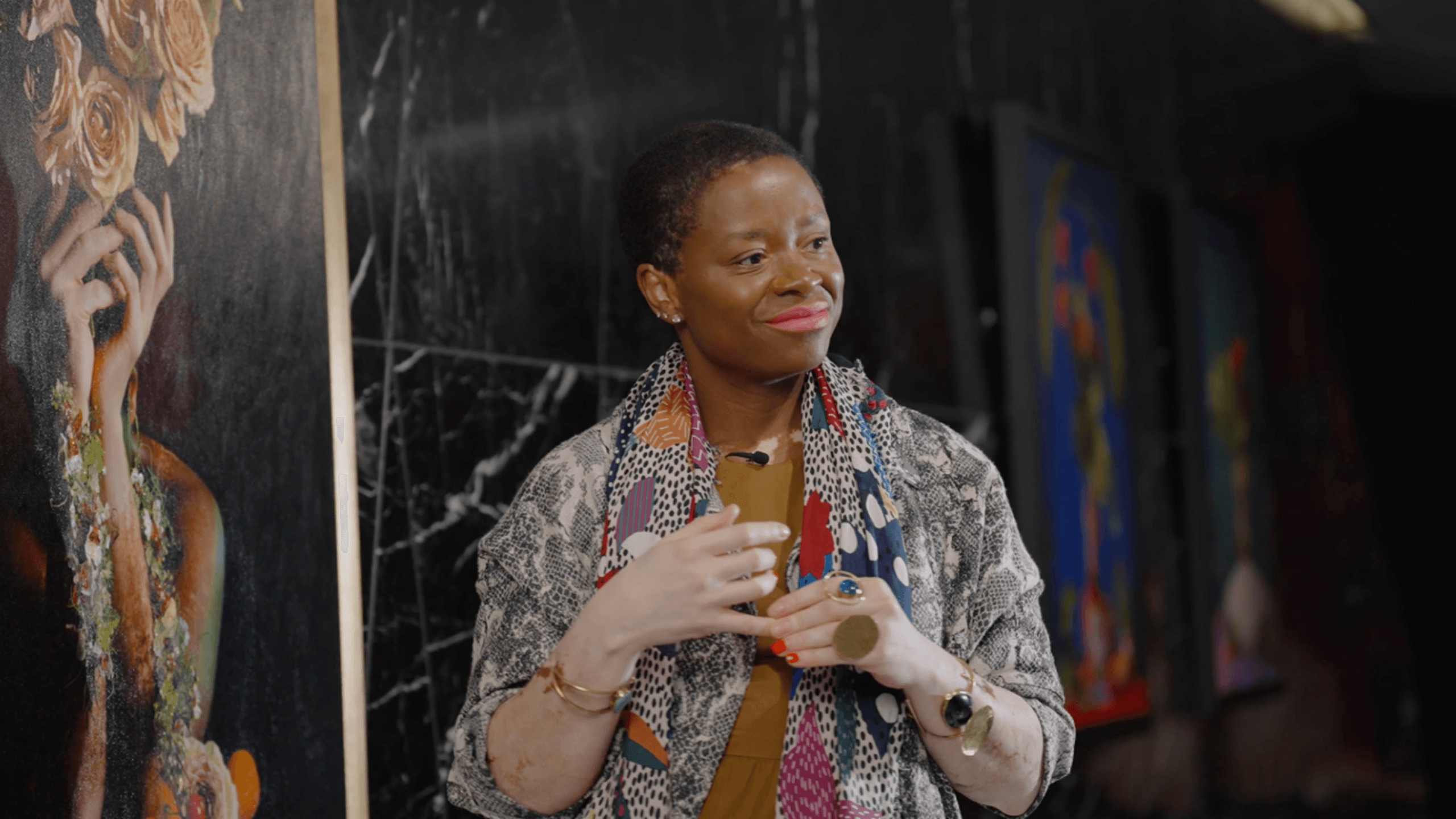
Emma is an Auckland-based artist working in floral still life, who came to the healing question through her own life long before she came to it through research. Born in Liberia and raised partly in England, she moved to New Zealand at six, trained as a nurse, and spent twenty-two years in editorial photography. After a traumatic experience around twelve years ago she began making floral compositions to work through it, and has been making them ever since. Her Floral Portraits and Imperfect series began in 2010 and continues, alongside Interrupted Eden and Florassemblage. She was selected for the Royal Academy Summer Exhibition in 2016 and 2022, and shortlisted in 2019. Her work now hangs in hospitals, hospices, oncology units and aged care facilities, as well as homes and restaurants, and she has designed scarves for Breast Cancer Cure, with all proceeds going to the charity. She describes it as her work being out there doing a job.
Aaron Fry is a design researcher, academic and painter. He is Senior Lecturer and Director of the Master of Design at the University of Auckland, and is completing a PhD in Design at Swinburne University of Technology. He studied at the University of Hawaii at Manoa and Parsons School of Design. His own practice is abstract painting, which he describes as quite different from Emma’s work, though the two are now collaborating.
That collaboration is The Floral Effect, a design-led research project asking how floral art works in clinical and care settings. It runs across three lines of inquiry: how scale and placement affect stress in clinical spaces, whether showing the full life cycle of a flower supports acceptance in palliative care, and whether imagery can support the wellbeing of healthcare staff. It grew out of fourteen years of Emma placing work in hospices, hospitals and aged care facilities, and it asks a question her own practice had already started answering. If a photograph of flowers can do what flowers do, it can go where flowers cannot.
Emma’s answer to why any of it matters came in a letter, from a woman at the end of her treatment who looked up in a waiting room and saw dahlias.
"You’ll notice I gravitated towards these sunflowers, which look like they’ve had it at the end of the day, but to me that’s what makes it a little bit real.”