





How Dutch Master-Growers Extend the Sweet Pea Season Beyond the UK
No perfumer has ever managed to bottle a sweet pea. The molecule breaks down the moment you try to extract it, which is why the smell only exists on the plant itself, for the few weeks it chooses to bloom. Our Flower of the Year 2026 is built on that stubbornness. Then we found a grower who’d found a way to stretch sweet pea flower season from a few weeks into twelve months.
A first-hand trip report from Blooming Haus founders Michal and Michael.
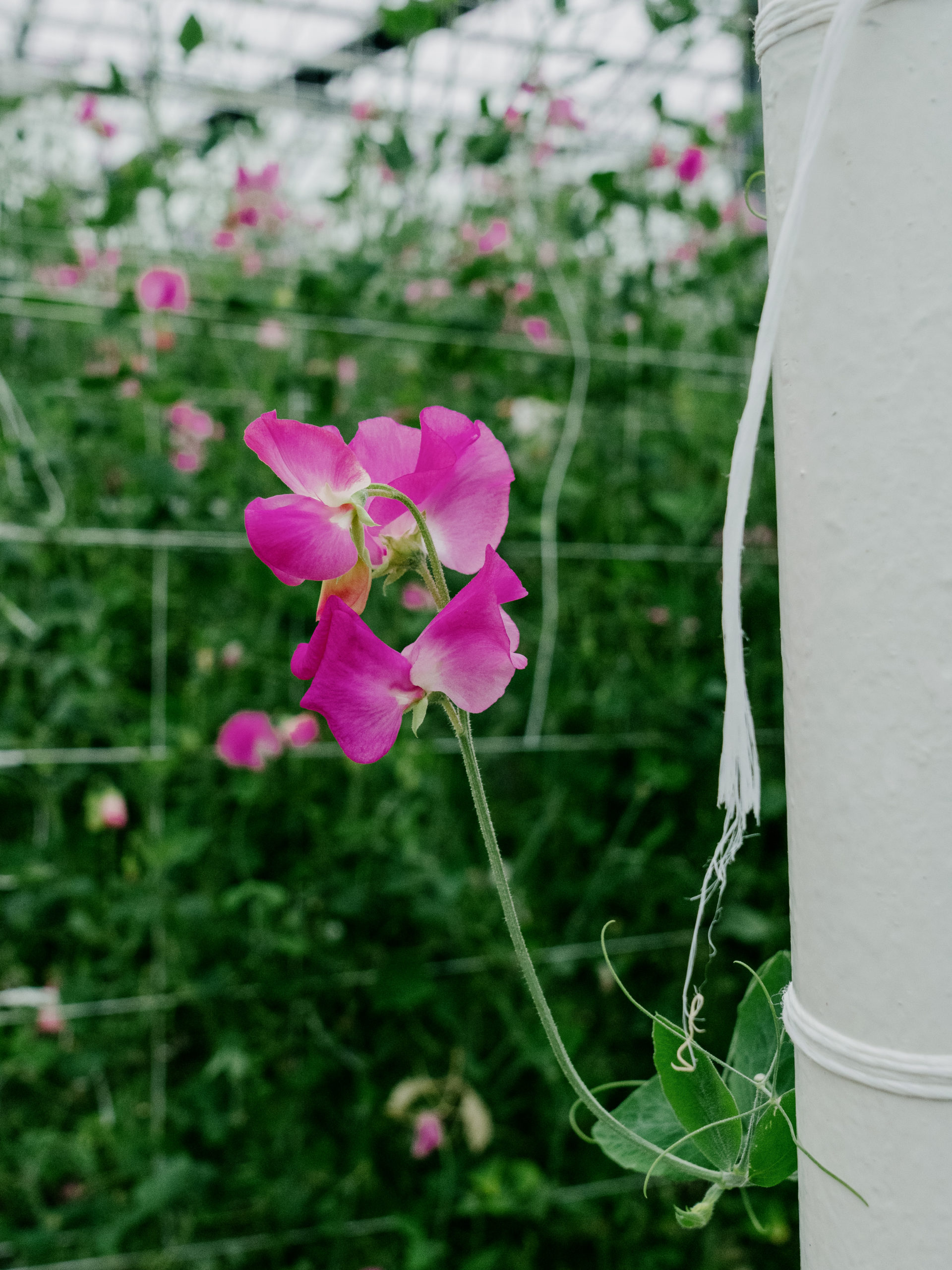
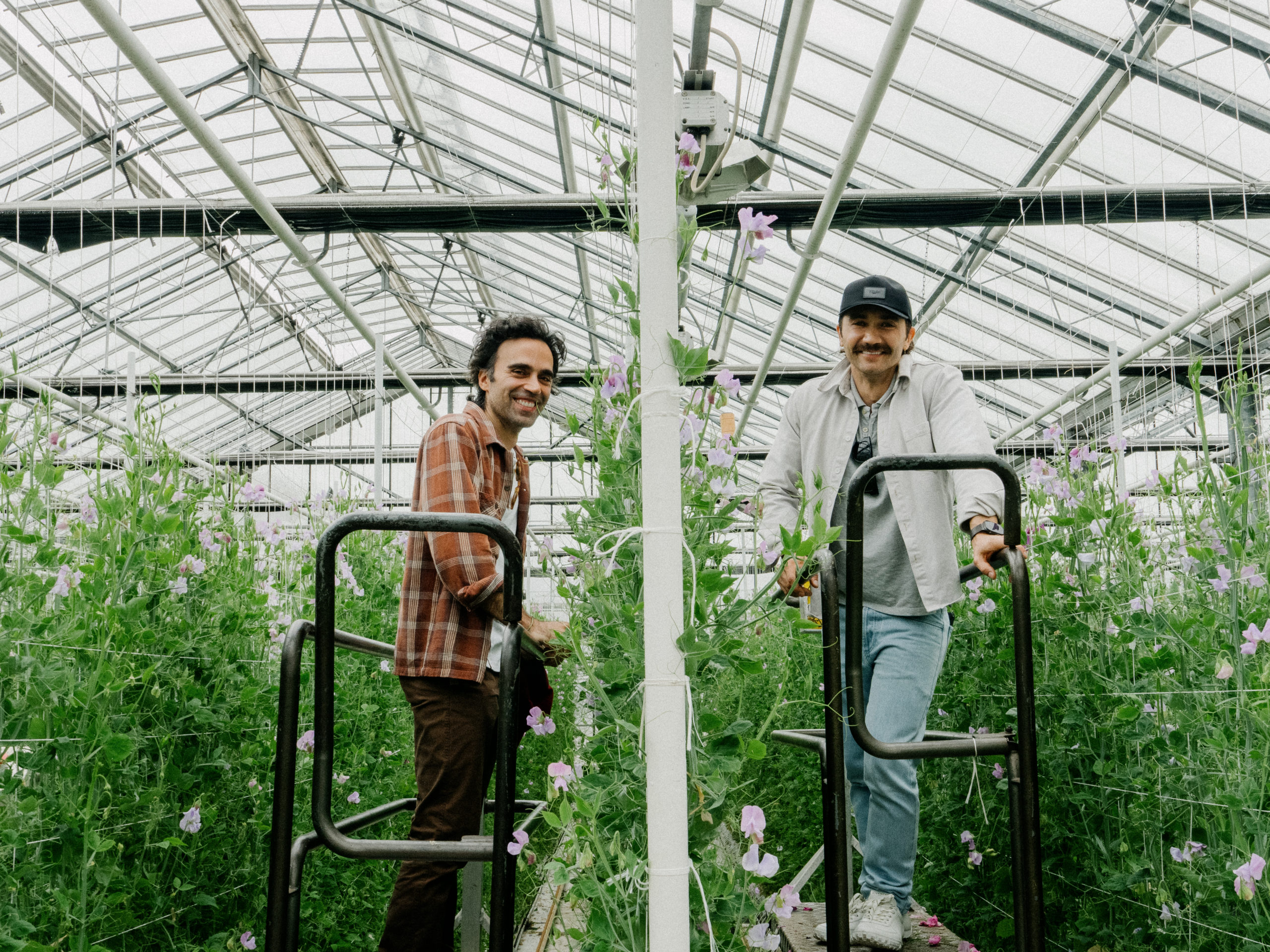
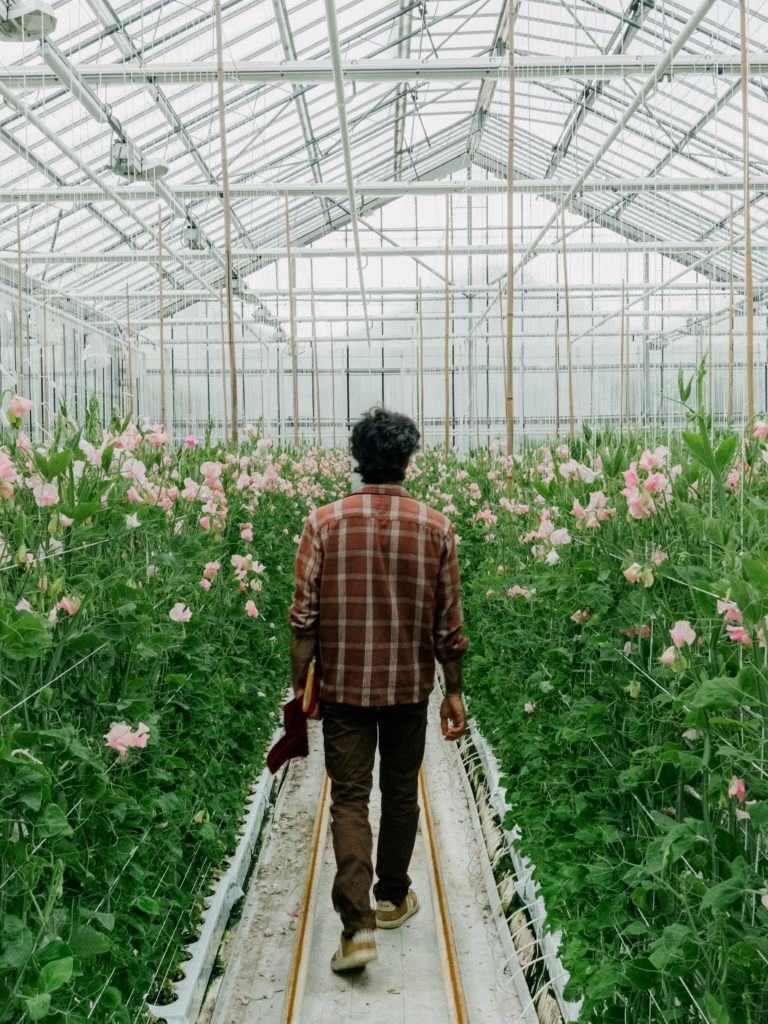
There’s a smell that hits you before you’re even through the door of the glasshouse: honeyed, a little green, faintly of orange blossom. We’ve chased that smell before, back home, in the short window of English sweet pea flower season. But we wanted to know: when the British season was over, where did they come from? That’s what brought us to Kudelstaart, an hour outside Amsterdam, to spend a morning with Jarek at Lathyrus.nl.
In the UK, sweet pea is still largely a garden and field crop, sown in autumn or early spring, flowering through June and July, and finished not long after British summer really gets going. We wanted to know how a flower this fleeting could still be in front of us months later, fragrance intact.
By the end of our visit, we understood. What we found wasn’t a shortcut. It was countless plants’ worth of patience, producing nine million stems a year, and as far as we can tell, they are the only grower in the world doing this on a genuinely year-round basis.
The hand work, stem by stem
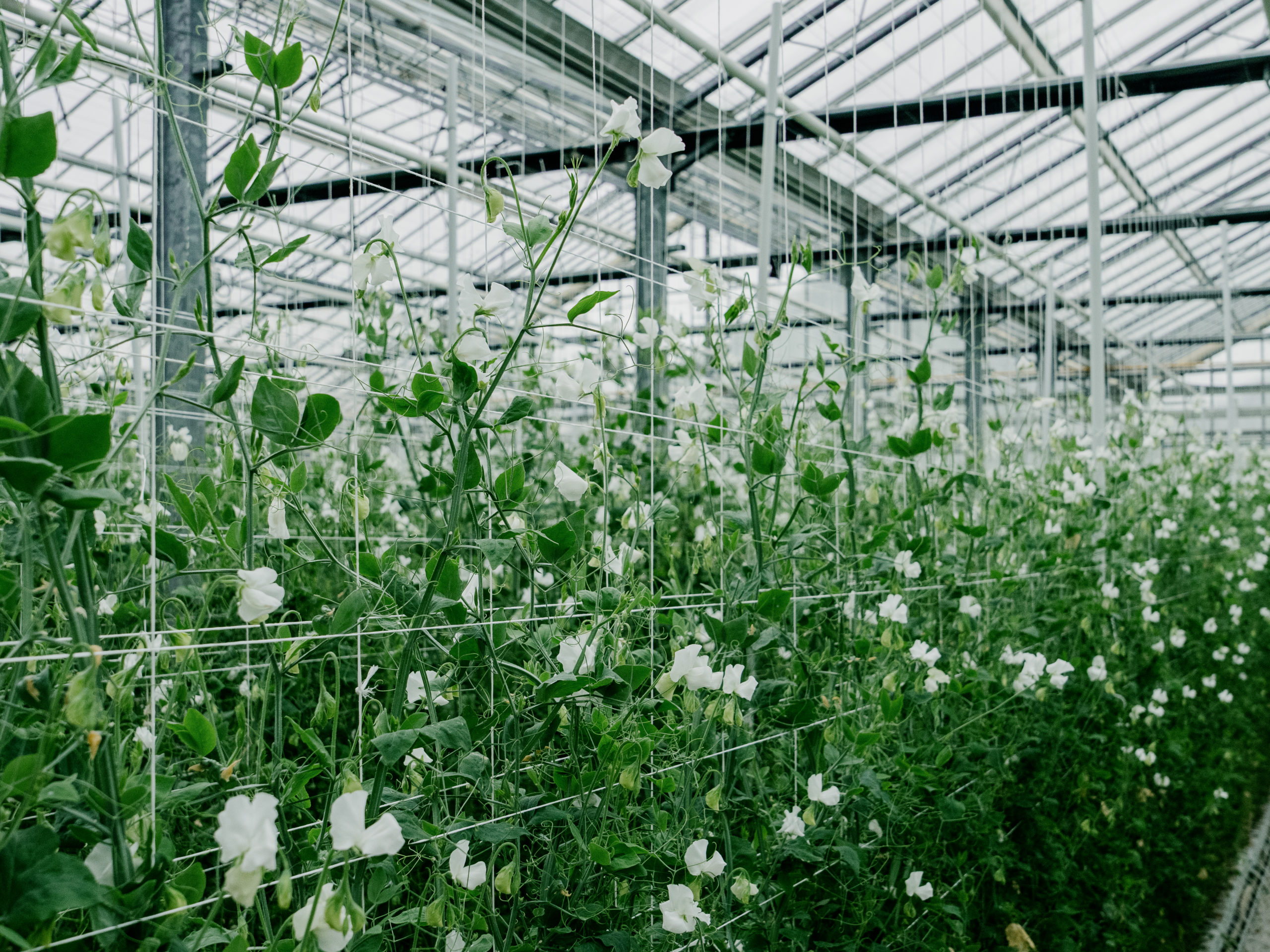
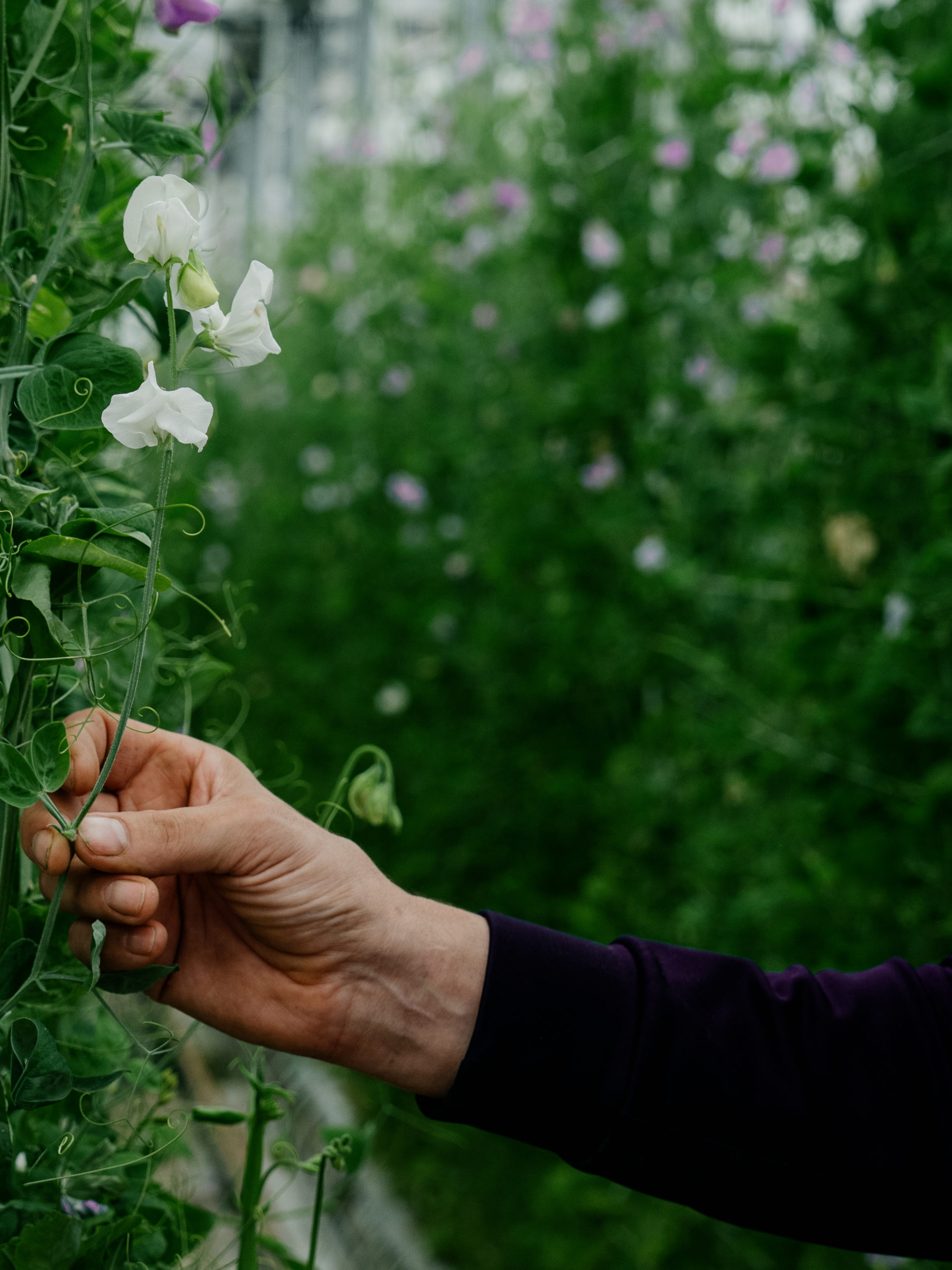
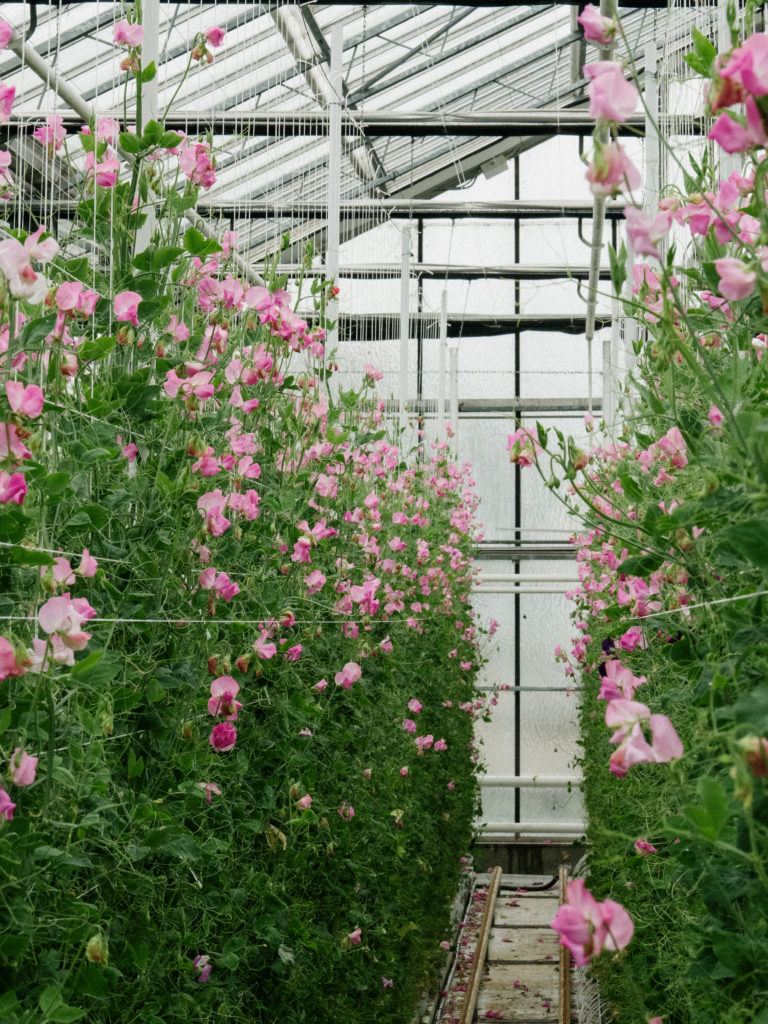
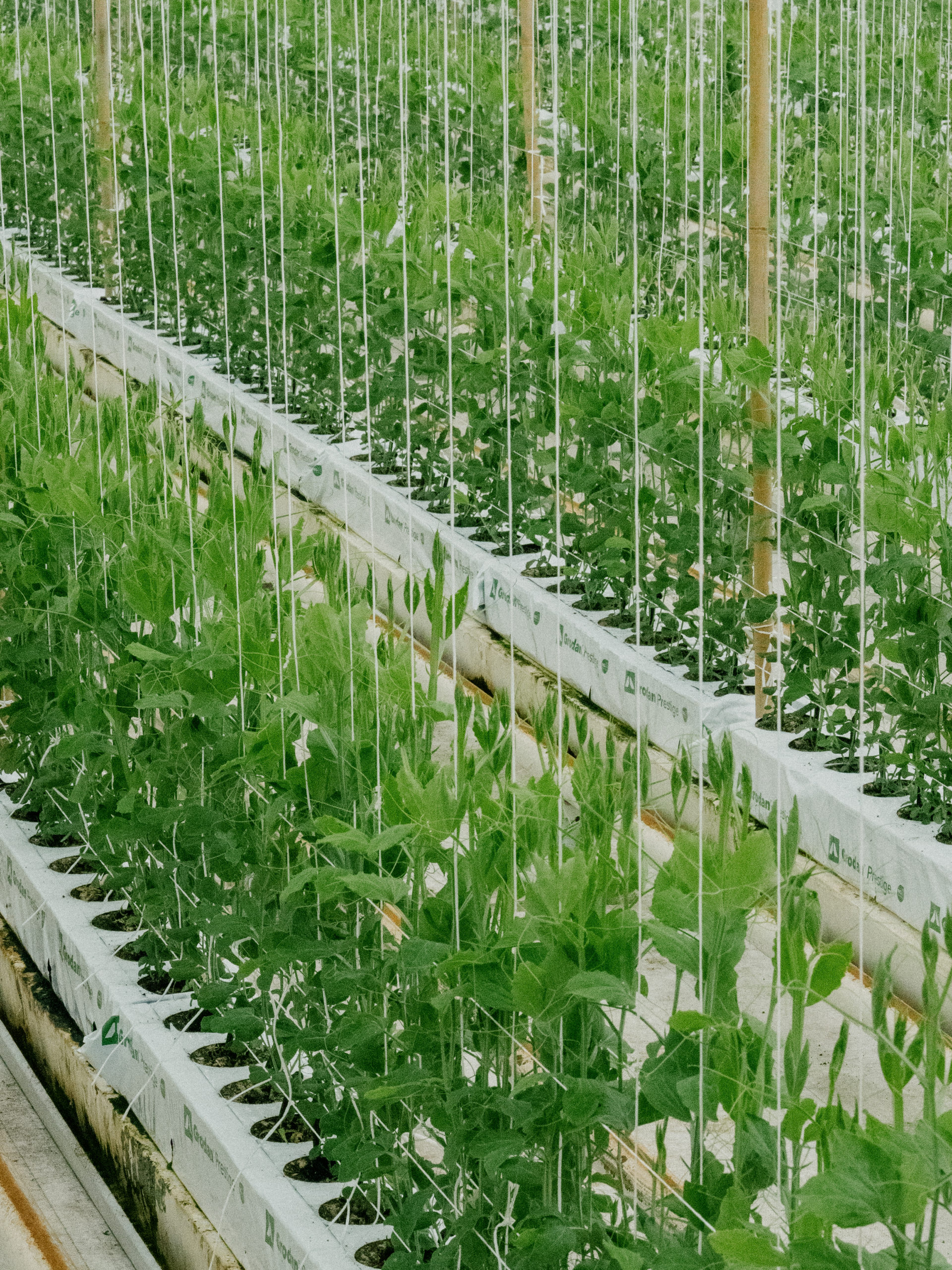
The first thing you notice walking the rows is the strings. Every single plant packed onto just 1.5 hectares of glasshouse and spanning 20 natural colours and 10 dyed ones, is trained by hand up a support line as it climbs. Nobody mechanises this part; you can’t. It’s a small act of attention, repeated across an entire crop, and it’s the reason the stems coming out of here are so perfect. We stood there doing the maths on the hours that must represent and gave up somewhere in the millions. It’s also the first proof of something we’d only had a theory about until now: that this flower’s stubbornness isn’t a flaw to engineer around, it’s the whole point.
A 24-hour discipline
What surprised us more was the harvest philosophy. Everything is cut, bunched, and shipped inside a single 24-hour window, because sweet pea fragrance and vase life start fading the moment a flower sits in cold storage. During peak periods, that means cutting six days a week. There’s no letting the crop stack up and catching up later.
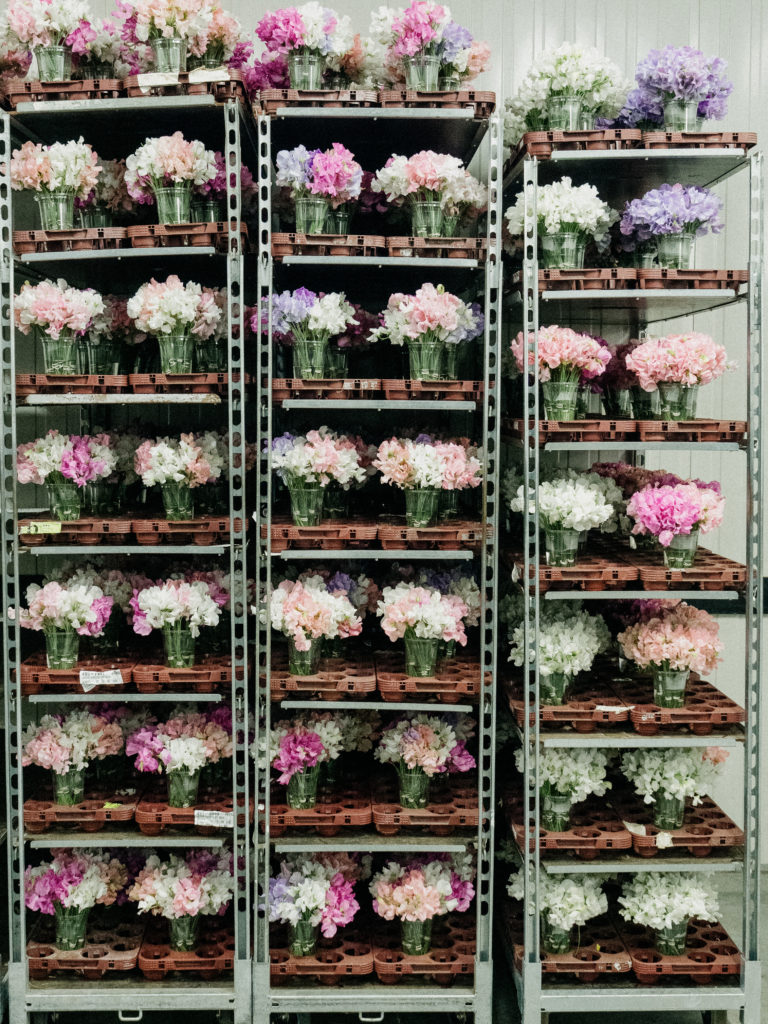
Nothing gets cut early either: a stem must be carrying at least three open flowers before it’s allowed off the plant, which is its own kind of discipline when the temptation in cut flowers is usually to pick sooner rather than later. It’s a slower, more exacting way to run a cut-flower farm, and the opposite of how most cut-flower supply chains are built.
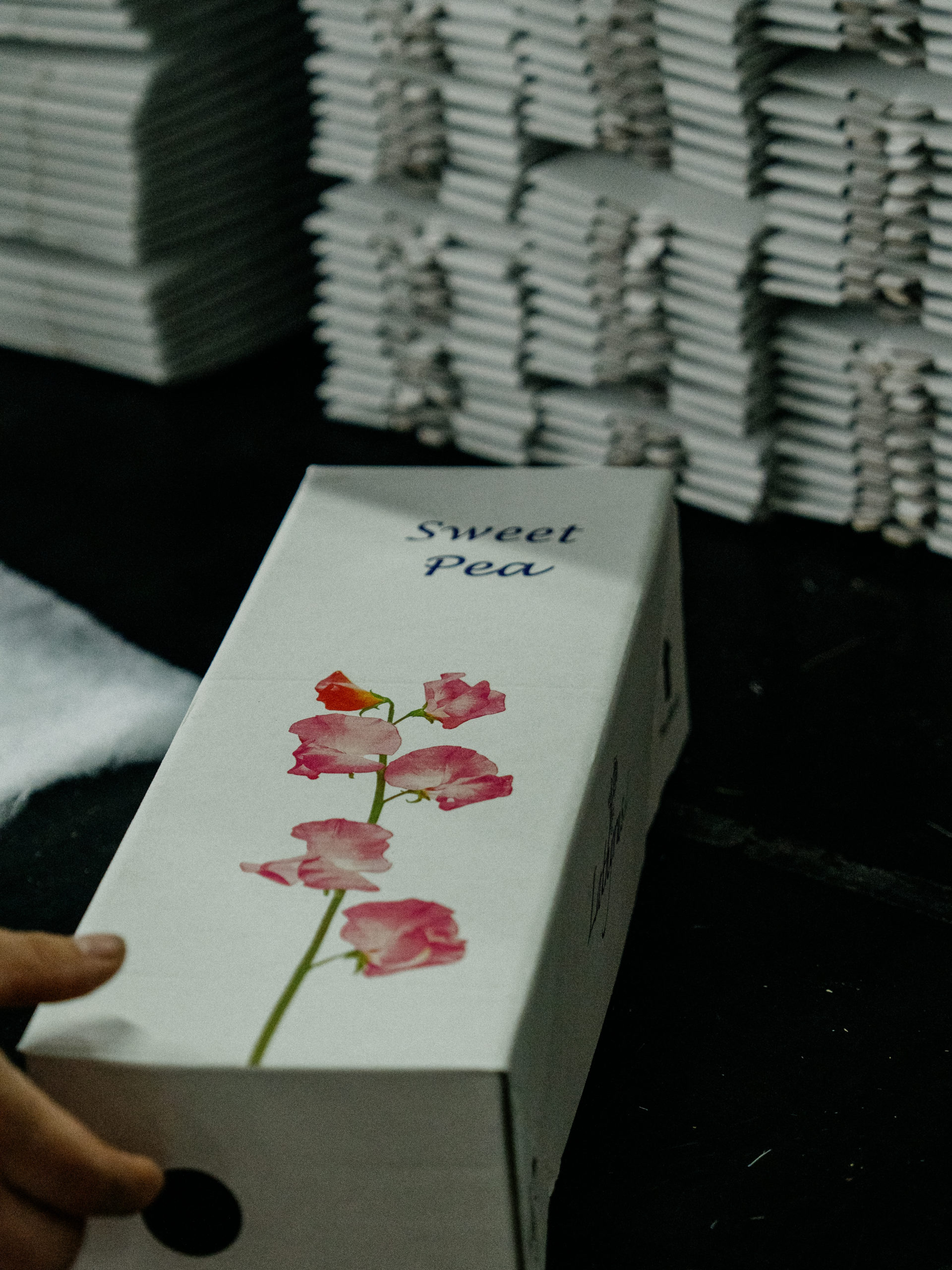
Around 60% of what leaves Lathyrus.nl goes to the US, where the market favours the longest stems; the rest goes mostly to Asia, the UK and France. But wherever it’s headed, the same rule applies: get a flower this delicate travelling fast enough that it still smells like something when it arrives. Every stem that reaches us this year, for every arrangement we build around it, has made that journey inside that same window.
Every stage, all at once
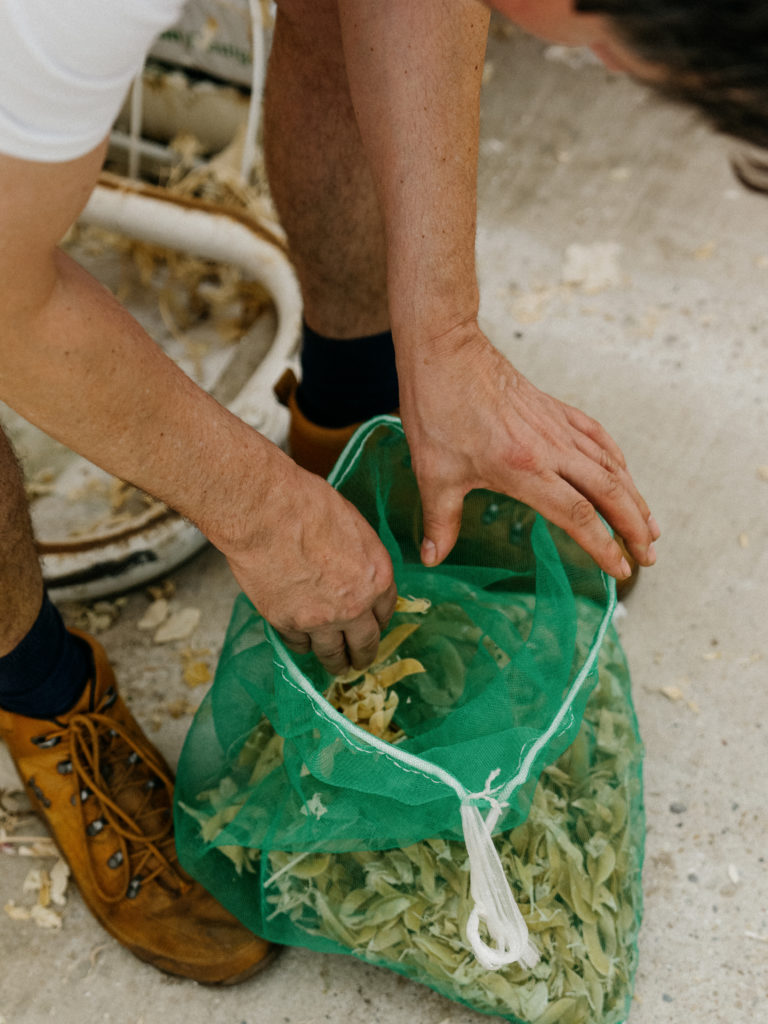
What we didn’t expect was to see the entire life of the crop in a single walk. Jarek didn’t show us one field at one stage. He walked us past all of them at once: trays of just-sown seed, threadlike shoots breaking the surface, seedlings being lifted into the glasshouse, plants at every height up to full bloom, and at the far end, a section left to dry out completely so its seed can be gathered for the next sowing. It isn’t one harvest a year for sweet pea flower season here, but dozens of these cycles running in parallel, deliberately out of step with one another.
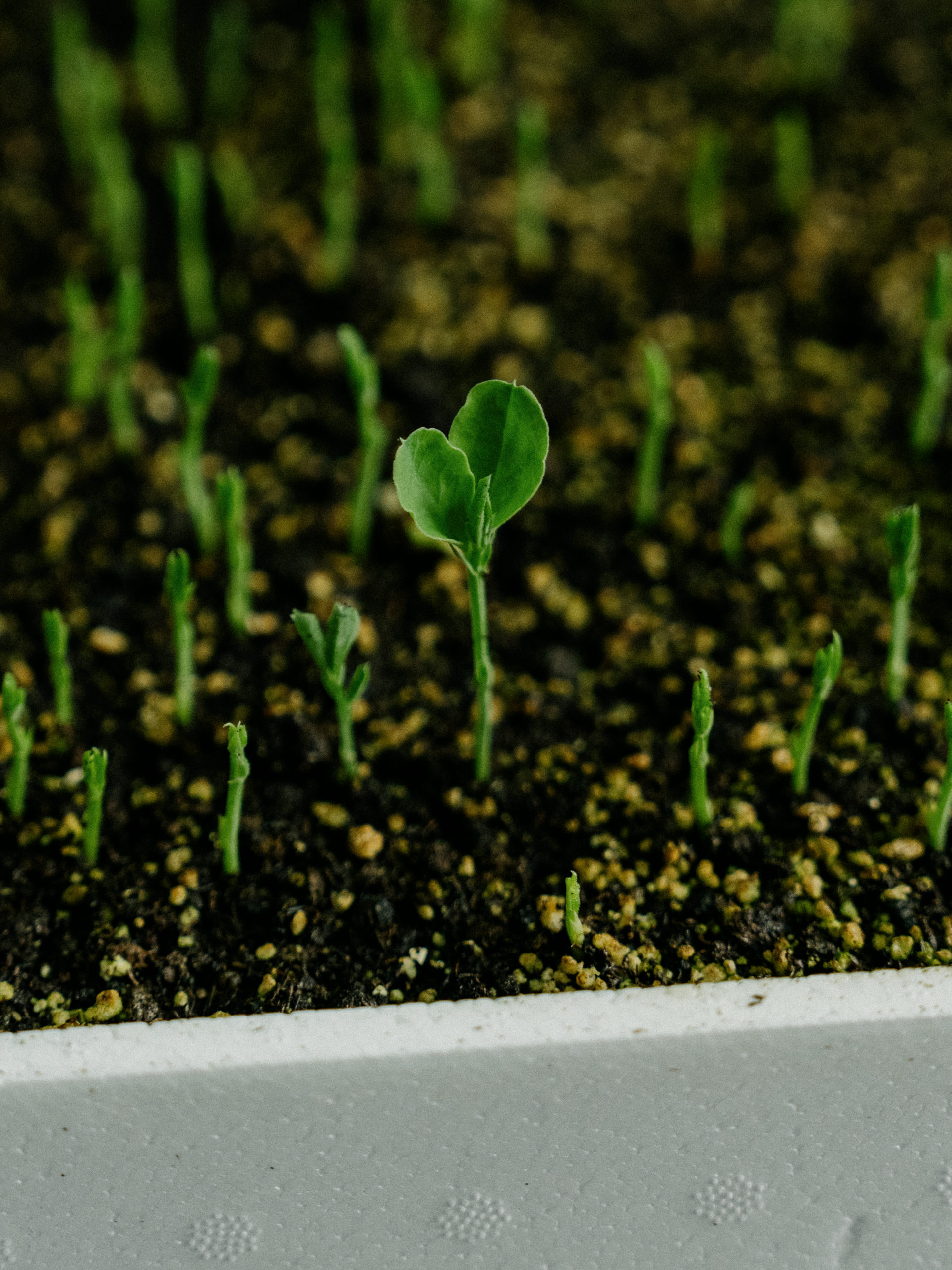
Age and climate are constantly working against any one of those cycles, too. The older a plant gets, the shorter its flower stems become, and warm nights wear it out fast: two to three months and it’s spent, versus up to six months when the nights stay cool. That’s why nothing here can rely on a single planting; new benches always have to be coming up behind the old ones. It’s also why the flower farm runs on four staff through winter and closer to thirty-five through the summer surge, which is how sweet pea from Lathyrus.nl exists on a calendar this flower was never built for.
The science behind the craft
None of this scales without the piece of engineering underneath it: rockwool. A few years back, Lathyrus.nl moved from open-soil growing to rockwool slabs inside climate-controlled glasshouses, which lets them dial in nutrients and water with real precision. No more fumigating the soil the way growers once had to, and the rockwool itself is compostable.
Watering runs through drip irrigation, and whatever the plants don’t take up is collected and fed straight back into the system rather than left to drain away. It’s an unglamorous-sounding thing to get excited about until you realise it’s the reason this artistry can happen at this scale, sustainably, twelve months a year, and the reason sweet pea flower season doesn’t have to end when the British season did.
Why this matters for our Flower of the Year 2026
We came to Kudelstaart to understand how their sweet pea flower season could outlast the British one. We left with something better than an answer: a genuine reason to believe it’s being done properly. Hand-trained stems, a rockwool system built for less water and less disease, and a growing cycle staggered so there’s always a bench in bloom. Nothing here is a workaround.
It’s a small, international supply chain built on one idea we recognised immediately, because it’s the same one behind our own studio: that some things are worth the extra care it takes to keep them going a little longer.
You may also like: