

Restaurant Flowers: How Weekly Florals Shape the Guest Experience
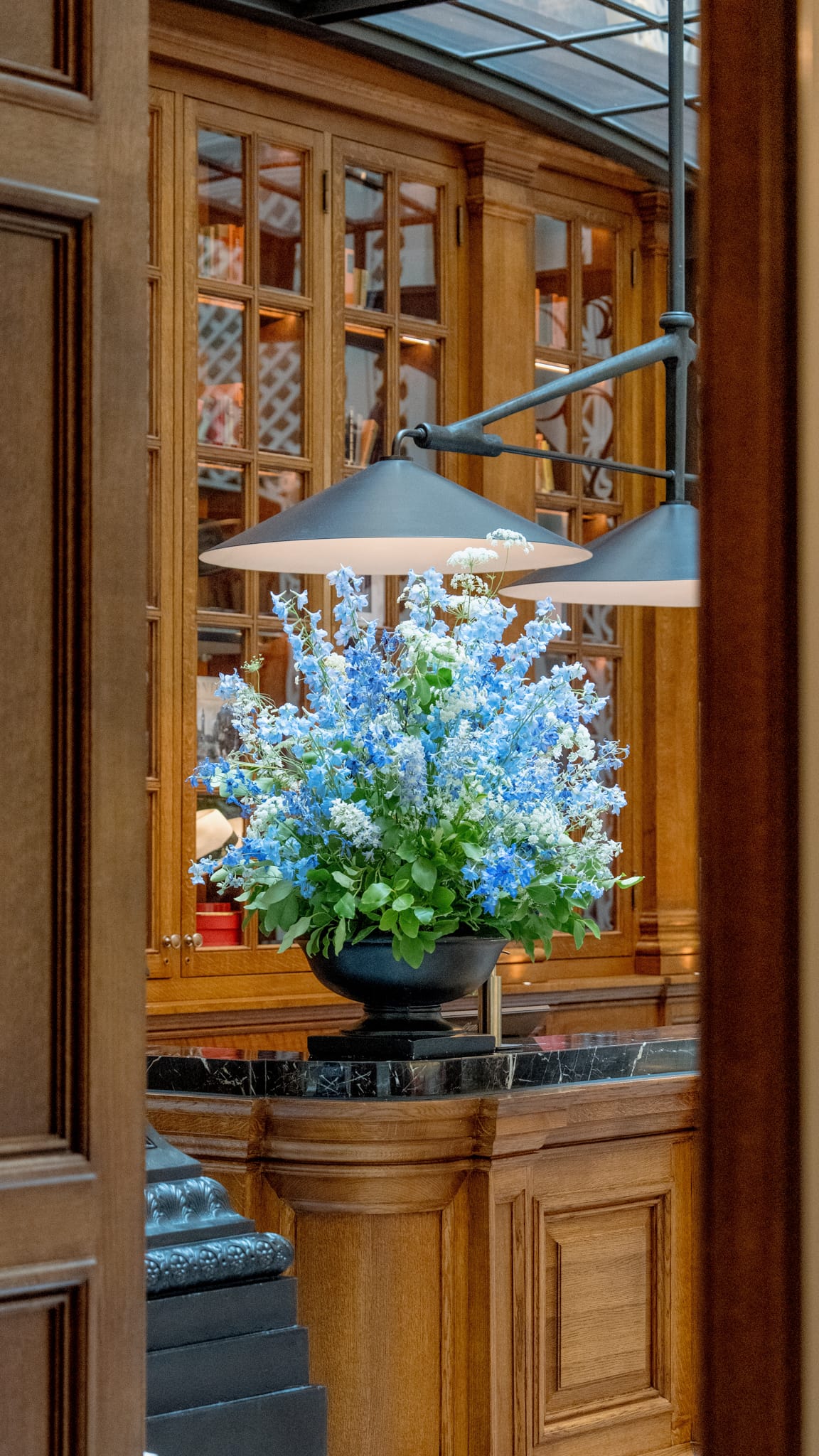
A low bowl of garden roses on the host stand. A branch of blossom doubled in the mirror behind the bar. A run of small compositions down the length of a communal table. Guests rarely mention any of it, but take the flowers away for a fortnight and somebody asks. Restaurant flowers in London are one of the few details a dining room can change every week without closing for a refit. This is how the contracts behind those arrangements work, and what they cost.
Why restaurants pay for flowers
Restaurateurs watch every line of their overheads, so anything on that line has to earn its keep. Flowers earn theirs in three places: the door, the room and the photographs.
The door
A guest walks past the host stand before they’ve tasted a thing. Whatever sits on it tells them what kind of evening to expect. In early spring that might be a loose gathering of ranunculus and hellebores in a stone vessel; it says someone here thinks about what you see as well as what you eat. The impression forms before the wine list arrives, and it’s hard to shift afterwards.
The room
Restaurants are designed spaces. Lighting, tableware, music, the grain of the tabletops: all chosen. Flowers sit inside that composition and have to answer to it. A neighbourhood Italian with bare wood and candlelight wants something different from a Mayfair dining room with white linen and silver, and the same stems would look wrong in both. A contract is not a vase dropped at the back door on a Monday morning. It’s a florist who knows the ceiling height, the colour of the joinery and how the light changes between lunch and evening service.
The photographs
Guests photograph their tables, usually before the first course lands, and whatever sits in the frame travels with the dish. For restaurants that care about their social presence, the arrangement on the bar counter is part of what their feed looks like. Stand near the pass on a Saturday evening and count the phones.
What a restaurant flowers contract in London looks like
Restaurant flower work of this kind runs on a contract: a standing weekly or fortnightly arrangement where the florist designs, installs and maintains the flowers on a fixed schedule.
The weekly rhythm
Monday or Tuesday delivery. We design at the studio in Battersea using whatever is best that week from our specialist growers and the Dutch auction markets, and deliver before the first service. Installation. A single host stand piece takes minutes. A full restaurant, from entrance and bar through to private dining room and washrooms, takes the better part of a morning and needs planning. Midweek check. Arrangements near kitchens, radiators or a sunny window drop faster. Where that’s a risk, a second visit is written into the contract: tired stems replaced, water topped up, anything that hasn’t lasted swapped out. The weekend. The flowers are designed to carry through to the following Monday, when the cycle starts again.

What changes week to week
Good restaurant floristry moves with the seasons. In January the palette might be monochrome: whites, creams and greens, hellebores, ranunculus, forced narcissi. By April it opens up. Tulips, fritillaria, early sweet peas from British growers. Summer brings garden roses, foxgloves, cornflowers. Autumn shifts to dahlias, amaranthus and foraged branches. Guests notice the room feels different in October than it did in June: the colours have moved, something alive in the space answers the weather outside.
The practical details
Cost
A small neighbourhood restaurant with a single host stand arrangement and a few small table compositions spends around £150–300 a week. A larger restaurant with a bar, a private dining room and washroom flowers might range from £500–1,200 per week. A high-profile destination restaurant or members’ club with a full installation across entrance, reception and several dining areas could be considerably more. Beyond the flowers, what a contract buys is predictability. The restaurant knows its monthly budget line, and we can plan sourcing, design and logistics weeks ahead.
Vessels
Vessels come with the contract, and we choose them to sit with the interiors: handmade ceramics for a relaxed neighbourhood place, heavy glass cylinders for somewhere more formal. Over time each client builds up a vessel library of their own, and we rotate pieces through it as the seasons turn.
Briefs and collaboration
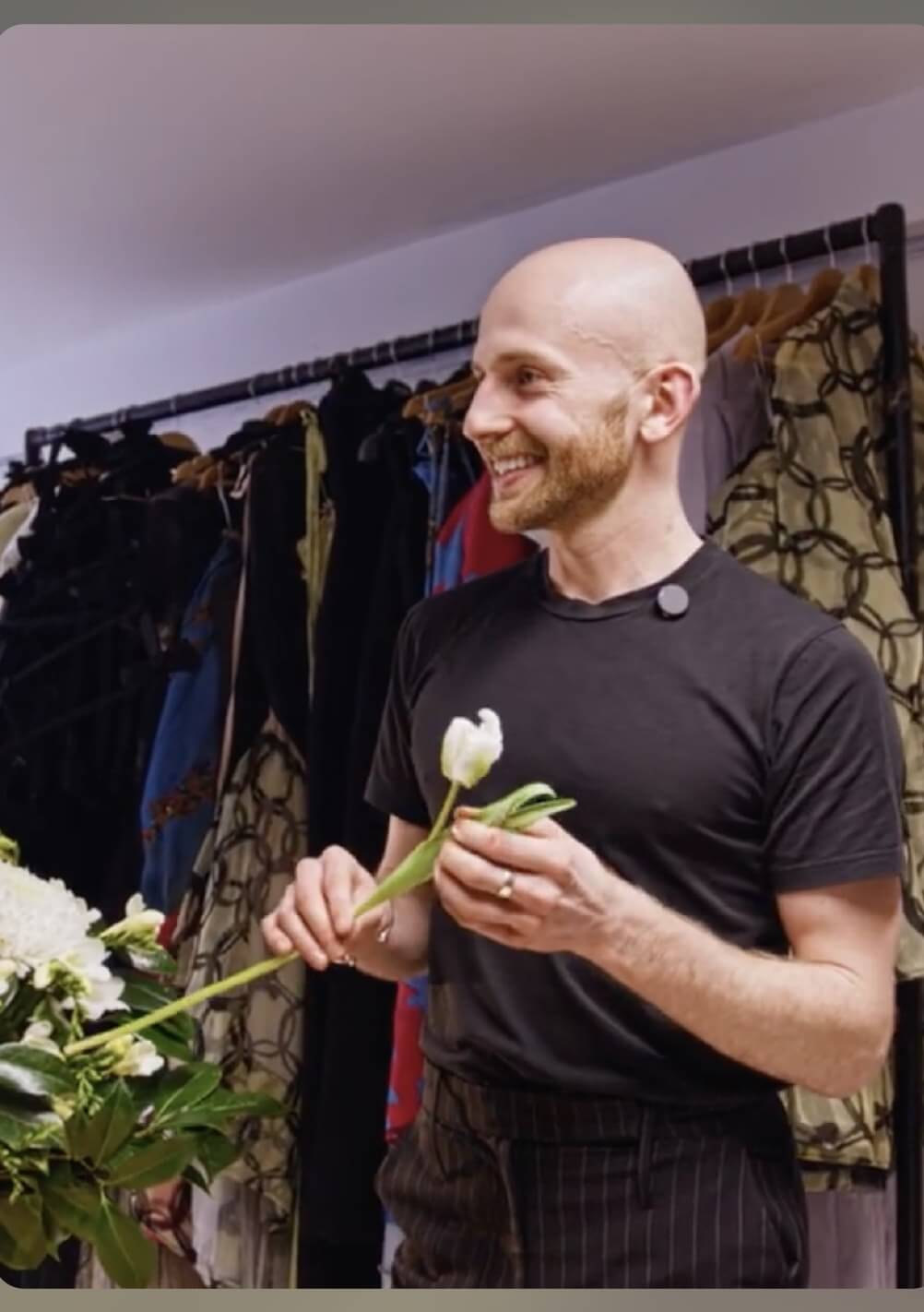
The best contracts start with a walk around the space. Michal Kowalski, the creative director, leads that first conversation on the design side: the brand, the palette of the interiors, the atmosphere the team wants at lunch and by candlelight. From there we build a seasonal framework, a palette, the shapes that suit the space, the stems that will hold in it, and let it flex month to month. Michael runs the operational half: delivery windows, service schedules, the logistics that keep Monday mornings uneventful. The work gets better each season, because by then both sides know the room.

Where the flowers work hardest
The host stand
The first arrangement a guest sees and often the last thing they pass on the way out. It gets the most generous, sculptural composition in the building.
The bar
Bar flowers have to stay clear of service and still register from across the room. A low, textured piece, seasonal foliage with a few accent blooms, usually does it.
Private dining rooms
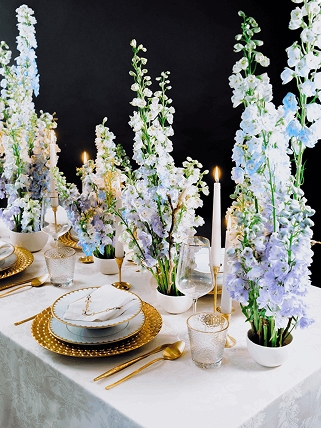
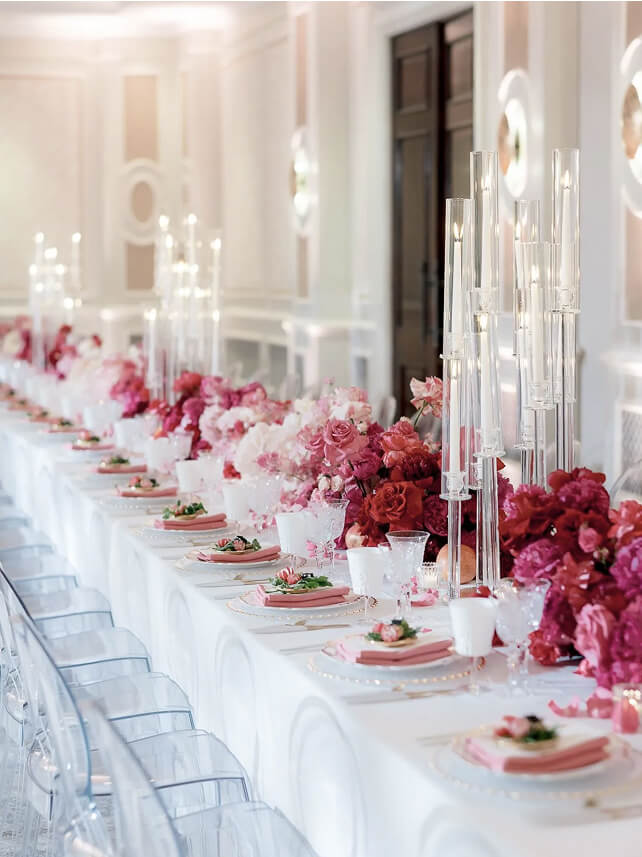
The room booked for birthday dinners, business entertaining and anniversaries. Flowers here can be taller and more expressive, and we design them around the actual table plan.
Washrooms
A small, quiet arrangement by the basin. It’s unexpected. And it tells the guest that every corner of the space has been thought about.
Members’ clubs and hotels
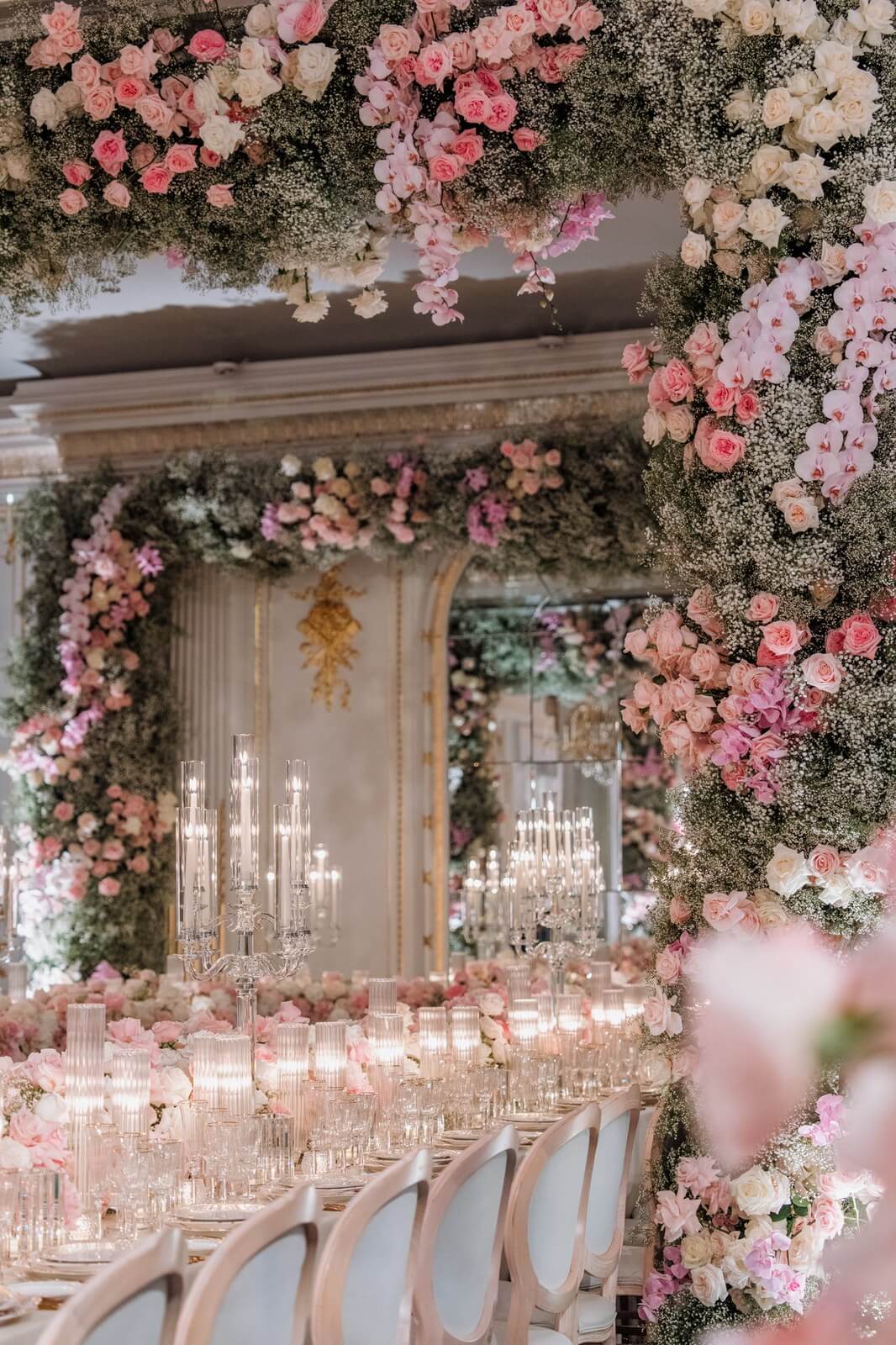
The same logic scales up in the hotels, private members’ clubs and commercial properties we look after across London, where flowers might run from the lobby through the drawing room, dining room, library, bar and bedrooms. That usually means several installations a week, full seasonal changeovers, and one contract covering the whole property. We hold the floristry contract at Raffles London at The OWO, and at that scale the weekly rhythm stays the same while everything around it multiplies: more rooms, more hands, tighter delivery windows, and a look that has to hold together from the front door to the furthest dining room. A forty-cover neighbourhood restaurant runs on the same clock. It just needs fewer buckets.
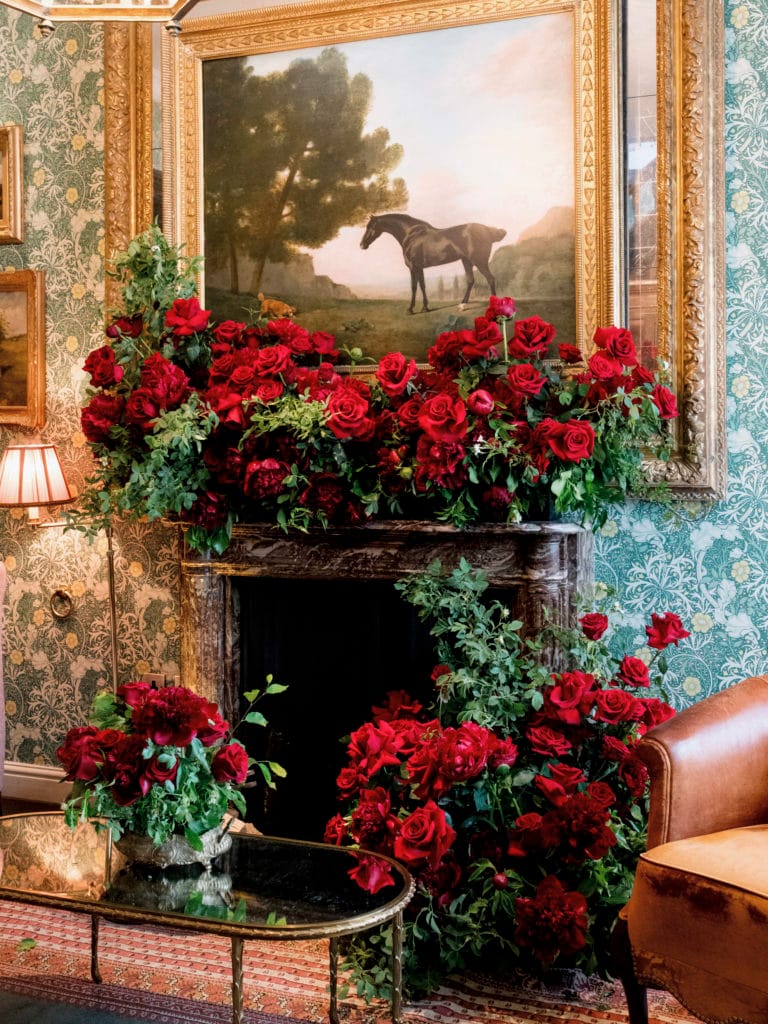
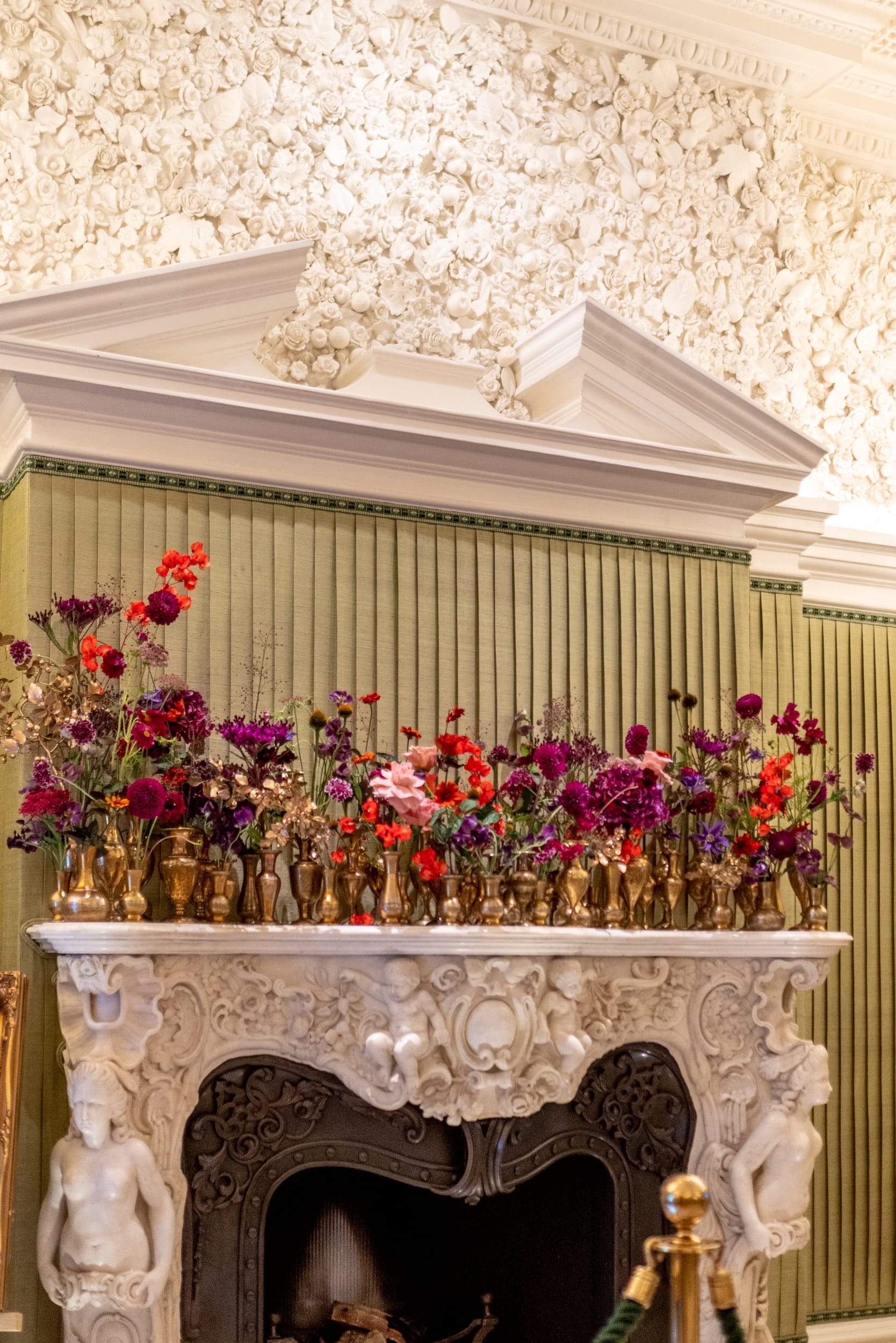
Luxury floral fireplace installation by Blooming Haus.
The waste question
Weekly fresh flowers raise an obvious question about waste. Cut flowers have a finite life. Seasonal sourcing. Stems cut in season from growers we know arrive fresher and hold longer than anything airfreighted out of season. Foam-free mechanics. Every arrangement we build, restaurant work included, is constructed on chicken wire, kenzan or other reusable mechanics. No floral foam, in any project; the Sustainable Floristry Network has the detail on why. Composting. Restaurants that already compost food waste barely notice the addition of spent stems. We’re a certified B Corporation, verified by B Lab, and Planet Mark certified, and these practices run across everything the studio does. There’s more detail on our sustainable florist page.
How to start
It starts with a visit. We come to the space, look at the light and the sight lines, talk through the brand and the budget, and propose a seasonal approach with a contract structure to match. Many clients begin with a trial period and commit to a year once the fit is proven. If you run a restaurant, hotel or members’ club and you’re considering flowers, get in touch and tell us about your space.
You may also like: