

10 Reasons King Charles III Is Our Most Green-Fingered Monarch to Date
King Charles III is well-known for his love of flowers, gardening, and nature.
He has brought that passion to sustainable gardening projects, wildlife initiatives, and organic farming since the 1980s — long before either was fashionable in public life.
Below are ten reasons why King Charles III stands apart as Britain’s most green-fingered monarch.
He has brought that passion to sustainable gardening projects, wildlife initiatives, and organic farming since the 1980s — long before either was fashionable in public life.
Below are ten reasons why King Charles III stands apart as Britain’s most green-fingered monarch.
King Charles III — The Green-Fingered Monarch
1. A Love of Flowers
2. Request for Sustainable Blooms at First State Banquet
3. The Gardens at Highgrove
4. Hands-On Garden Design
5. Influence on the Design of Clarence House Gardens
6. Promotion of Organic Growing
7. Enhancement of Birkhall, a Garden From Childhood
8. Early Years Gardening
9. Coronation Meadows Initiative
10. Involvement in Tree Planting
2. Request for Sustainable Blooms at First State Banquet
3. The Gardens at Highgrove
4. Hands-On Garden Design
5. Influence on the Design of Clarence House Gardens
6. Promotion of Organic Growing
7. Enhancement of Birkhall, a Garden From Childhood
8. Early Years Gardening
9. Coronation Meadows Initiative
10. Involvement in Tree Planting
1. A Love of Flowers
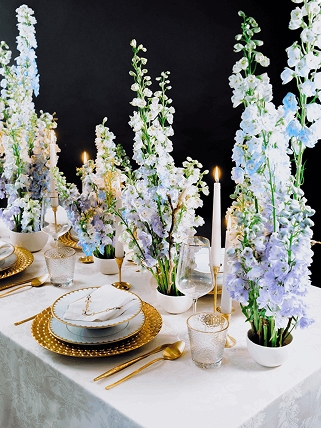
When the Chelsea Flower Show moved online during the pandemic, members of the Royal Family shared their favourite blooms. King Charles III, then still Prince Charles, named the delphinium.
He said: “For me, the magnificent, gloriously appareled delphinium, with its impeccable bearing and massed in platoons, holds pride of place in my botanical affections.”
The delphiniums at Highgrove House reflect that preference — they are a consistent feature of the garden he has tended for over four decades.
He said: “For me, the magnificent, gloriously appareled delphinium, with its impeccable bearing and massed in platoons, holds pride of place in my botanical affections.”
The delphiniums at Highgrove House reflect that preference — they are a consistent feature of the garden he has tended for over four decades.

His interest extends to wildflowers. He included a wildflower meadow — Meadow Gatefold — on the Highgrove grounds. His particular interest in native species includes rare varieties such as the Lady’s slipper orchid and spreading bellflower, alongside more common flowers such as the bluebell.

This love of flowers is something King Charles III shares with Queen Camilla, who has spoken of her preference for alchemilla mollis.
For a closer look at the flowers associated with King Charles III:
What Flowers Did We See at King Charles III’s Coronation?
For a closer look at the flowers associated with King Charles III:
What Flowers Did We See at King Charles III’s Coronation?
2. Request for Sustainable Blooms at First State Banquet
For his first state banquet as monarch, King Charles III requested that the ballroom be decorated with flowers from the gardens of Buckingham Palace and Windsor Castle.
160 guests attended, including President Cyril Ramaphosa of South Africa.
160 guests attended, including President Cyril Ramaphosa of South Africa.

It was the first time flowers from the Royal gardens had been used for a state banquet. Using seasonal, locally grown blooms reduced the carbon footprint of the occasion — no long-distance transport was required.
The display included cyclamen, nerines, rosehips, anemones, chrysanthemum, hydrangea, and amaryllis.
The display included cyclamen, nerines, rosehips, anemones, chrysanthemum, hydrangea, and amaryllis.

The decision was consistent with a reputation King Charles had built over decades as the most sustainability-minded member of the Royal Family.
3. The Gardens at Highgrove
In 2002, then Prince Charles became patron of the National Gardens Scheme — a role that reflected a commitment to gardens he had already demonstrated through his work at Highgrove.
King Charles III purchased Highgrove House and Gardens in 1980 and has been developing the 15-acre grounds ever since, working with designers including Molly Salisbury and Rosemary Verey.
The gardens are now divided into distinct spaces — among them the Sundial Garden, Wildflower Meadow, Cottage Garden, and Arboretum — all designed, as the King has put it, to “please the eye and sit in harmony with nature.” The gardens are open to the public between April and October.
King Charles III purchased Highgrove House and Gardens in 1980 and has been developing the 15-acre grounds ever since, working with designers including Molly Salisbury and Rosemary Verey.
The gardens are now divided into distinct spaces — among them the Sundial Garden, Wildflower Meadow, Cottage Garden, and Arboretum — all designed, as the King has put it, to “please the eye and sit in harmony with nature.” The gardens are open to the public between April and October.

Image: highgrovegardens.com

Image: highgrovegardens.com
4. Hands-On Garden Design
King Charles III has been directly involved in the design of his gardens rather than simply commissioning them.
The Cottage Garden at Highgrove is the clearest example. He worked with Rosemary Verey on the design, which includes an oak summerhouse and seasonal flowering borders. Speaking to Bunny Guinness in 2014, then still heir to the throne, he said he never had a fixed plan — he worked his way around the space slowly, wanting it to unfold in compartments that visitors could discover for themselves.
The result is a garden that reflects his interests across plants, trees, wildlife, and ecology rather than following a single imposed vision.
The Cottage Garden at Highgrove is the clearest example. He worked with Rosemary Verey on the design, which includes an oak summerhouse and seasonal flowering borders. Speaking to Bunny Guinness in 2014, then still heir to the throne, he said he never had a fixed plan — he worked his way around the space slowly, wanting it to unfold in compartments that visitors could discover for themselves.
The result is a garden that reflects his interests across plants, trees, wildlife, and ecology rather than following a single imposed vision.

Image: highgrovegardens.com
The wider grounds also include specimen trees such as the black mulberry.

5. Influence on the Design of Clarence House Gardens
King Charles III took a leading role in the redesign of the garden at Clarence House when it became his London residence.
Several mature trees were already in place, including a mulberry thought to date from the reign of James I. He designed around these existing features, adding a small vegetable garden, unmown lawn areas to encourage wildlife, a foxglove tree, and a handkerchief tree.
Several mature trees were already in place, including a mulberry thought to date from the reign of James I. He designed around these existing features, adding a small vegetable garden, unmown lawn areas to encourage wildlife, a foxglove tree, and a handkerchief tree.

Image: rct.uk

He also added a formal parterre near the main entrance in memory of the Queen Mother, planted with lavender, salvias, and roses.
6. Promotion of Organic Growing
King Charles III introduced organic gardening and farming practices to his Highgrove estate in the 1980s — at a time when organic methods were widely regarded as eccentric, including by some of his neighbours.

Those early practices eventually led to the creation of the Duchy Organic business, which sells produce through Waitrose.

All profits from Duchy Organic sales go to charitable causes through the King’s foundation. Since 2009, £30 million has been distributed to good causes.
7. Enhancement of Birkhall, a Garden From Childhood
King Charles III also maintains a garden at Birkhall on the Balmoral Estate — less well-known than Highgrove, but no less personally significant.
Birkhall belonged to the Queen Mother until her death in 2002, when it passed to the King. He spent time there during childhood and has spoken of the particular meaning it holds for him. Since inheriting the estate, he has continued to develop it — the south-facing garden slopes down to a terrace and incorporates a large vegetable and cutting garden.
Birkhall belonged to the Queen Mother until her death in 2002, when it passed to the King. He spent time there during childhood and has spoken of the particular meaning it holds for him. Since inheriting the estate, he has continued to develop it — the south-facing garden slopes down to a terrace and incorporates a large vegetable and cutting garden.

Image: clivenichols.com

The Queen Mother at Birkhall
8. Early Years Gardening
The King’s interest in gardening began in childhood. He and his younger sister Princess Anne had a plot at Buckingham Palace where they grew vegetables.
He has also spoken of the formative influence of the Queen Mother’s garden at the Royal Lodge in Windsor Great Park — describing being captivated by the plants as a child, and saying that it was there his love of trees first began.
He has also spoken of the formative influence of the Queen Mother’s garden at the Royal Lodge in Windsor Great Park — describing being captivated by the plants as a child, and saying that it was there his love of trees first began.


Image: europeupclose.com
9. Coronation Meadows Initiative
In 2013, marking the 60th anniversary of Queen Elizabeth’s coronation, then Prince Charles founded the Coronation Meadows campaign — an initiative to establish 60 new wildflower meadows across the UK, one in each county.
He has since spoken about wildflower meadows in an interview with BBC Radio 4’s On Your Farm, describing the relationship between wildflower habitats and pollinators including butterflies. Wildflower meadows provide food, shelter, and breeding grounds for insects and pollinators — the kind of biodiversity that has declined sharply in the UK over the past century.
He has since spoken about wildflower meadows in an interview with BBC Radio 4’s On Your Farm, describing the relationship between wildflower habitats and pollinators including butterflies. Wildflower meadows provide food, shelter, and breeding grounds for insects and pollinators — the kind of biodiversity that has declined sharply in the UK over the past century.


10. Involvement in Tree Planting
The King’s interest in plants extends to trees. Among the 70 facts released for his 70th birthday was the detail that he shakes a branch of every tree he plants to wish it well.
He was also closely involved in the Queen’s Green Canopy initiative — launched to mark the Queen’s jubilee, it encouraged people across the UK to plant a tree in her honour.
He was also closely involved in the Queen’s Green Canopy initiative — launched to mark the Queen’s jubilee, it encouraged people across the UK to plant a tree in her honour.


Each time we complete a project — a wedding, a corporate event, a brand installation — we arrange for a tree to be planted in the client’s name within the National Forest.
King Charles III’s Love of Sustainable Blooms
At Blooming Haus, sustainability is built into how we work — not an add-on.

Flowers by Blooming Haus
Our practices include green energy, daylight sensors, low-flow water fittings, recycled packaging, and sourcing from local suppliers where possible.

Flowers by Blooming Haus
Further Reading
You may also like: