

The 10 Most Popular Wedding Flowers
10. Anemones
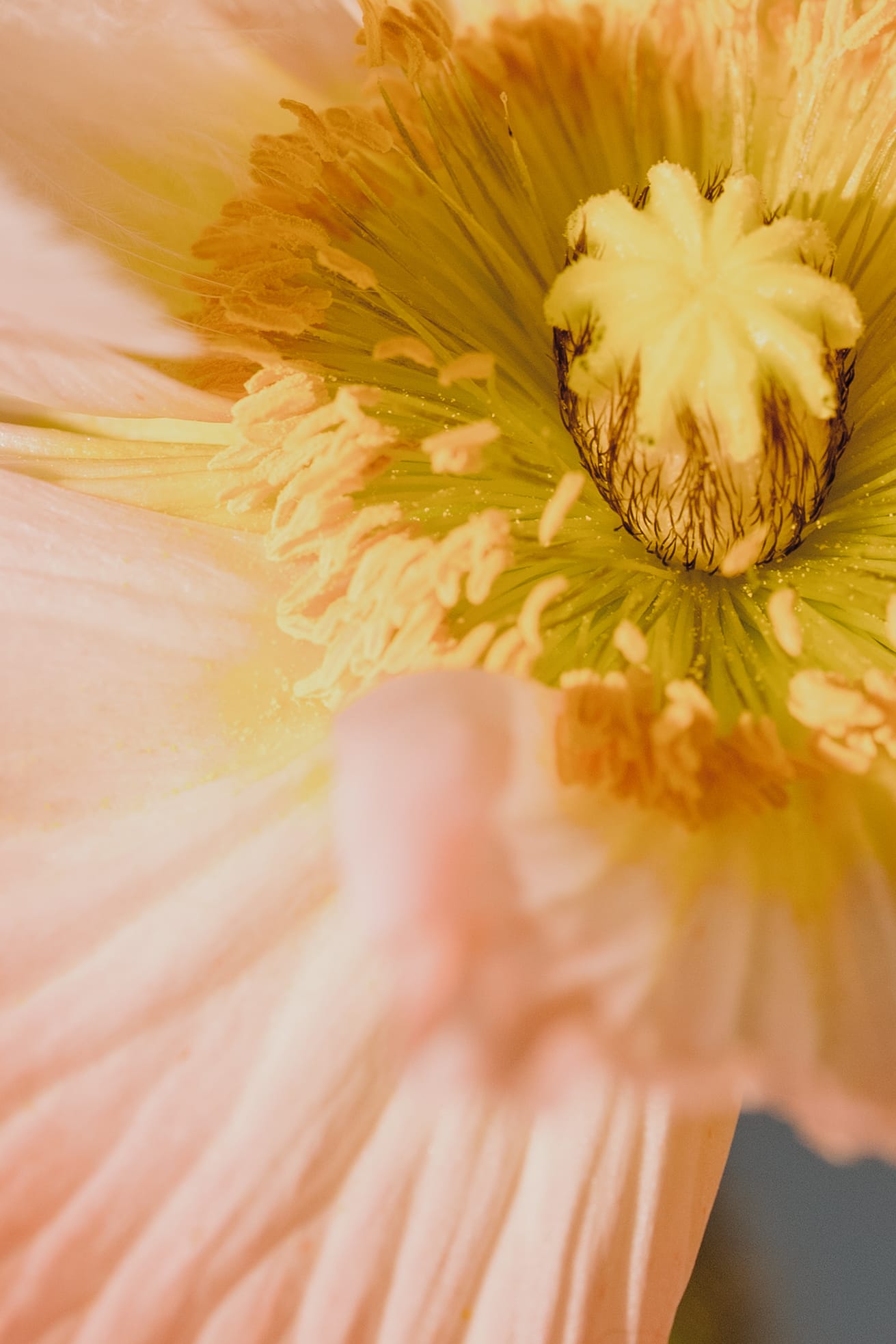
Anemones are defined by their papery petals and bold, dark centres — a contrast that gives them immediate graphic presence. The most common varieties have bright white petals and jet-black centres, though they can also be found in blush pink, cherry red, burgundy and bright blue. White and black anemones paired with burgundy-leaved foliage make a striking combination; with fresh greenery, the result is softer and more naturalistic. For a summer wedding, deep pink-purple anemones alongside yellow-centred poppies bring a strong seasonal colour story.
9. Calla lily
Native to southern Africa, the calla lily is a trumpet-shaped bloom with a clean, architectural profile that works particularly well in spring and summer weddings. It ranges from large-headed varieties on long, smooth stems to a compact miniature that suits smaller arrangements. Creamy ivory and white are the most common colours, though varieties are also available in yellow, orange, mauve pink and deep purple. White calla lilies with fresh greenery make for a pure, unfussy arrangement; red or dark purple varieties take the same form in a richer, more dramatic direction.
10. Anemones
Anemones are defined by their papery petals and bold, dark centres — a contrast that gives them immediate graphic presence. The most common varieties have bright white petals and jet-black centres, though they can also be found in blush pink, cherry red, burgundy and bright blue. White and black anemones paired with burgundy-leaved foliage make a striking combination; with fresh greenery, the result is softer and more naturalistic. For a summer wedding, deep pink-purple anemones alongside yellow-centred poppies bring a strong seasonal colour story.
Visit our Pinterest for wedding flowers inspiration.
8. Sweet peas
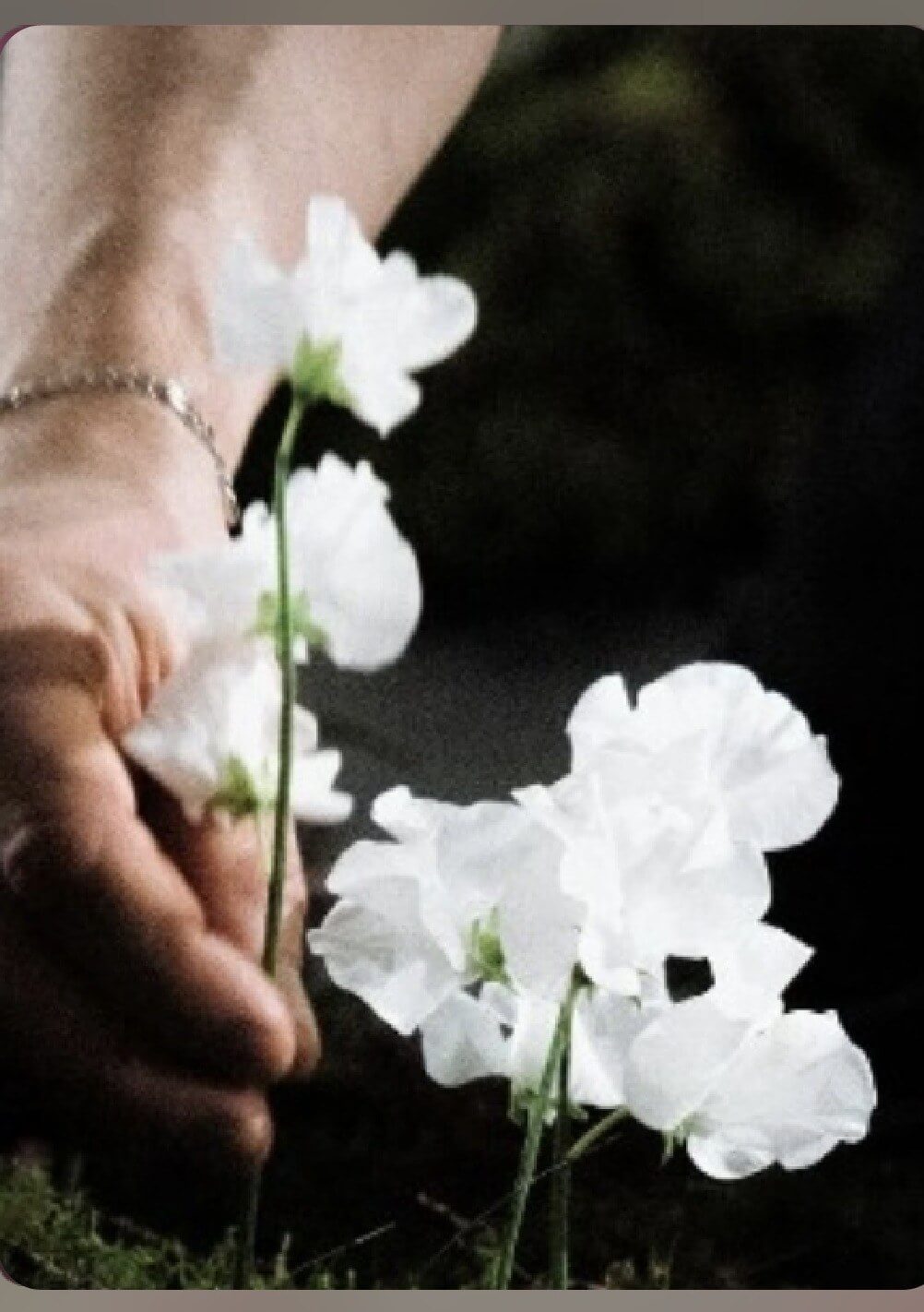
Sweet peas were brought to England from Sicily in 1699, and in France the flower was considered a good omen. Their candy-like scent, ruffled blossoms and almost translucent petals make them a perennial wedding favourite. They range in colour from white through intense pink, purple, burgundy and blue, with bicolour varieties available too.
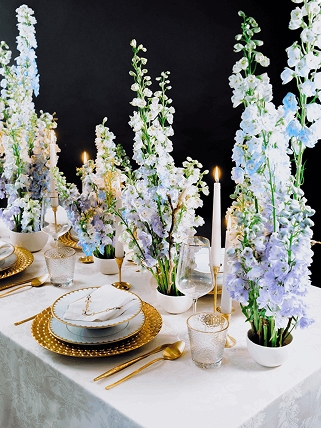
Sweet peas work beautifully on their own — a cluster tied with silk ribbon has a particularly romantic quality — and they also add texture and lightness when combined with other flowers. Pairing them with calla lilies is visually striking. As a spring flower, they pair naturally with seasonal companions such as hellebores, hyacinths, ranunculus, lilacs and delphinium in soft shades of blue and purple.
Sweet peas work beautifully on their own — a cluster tied with silk ribbon has a particularly romantic quality — and they also add texture and lightness when combined with other flowers. Pairing them with calla lilies is visually striking. As a spring flower, they pair naturally with seasonal companions such as hellebores, hyacinths, ranunculus, lilacs and delphinium in soft shades of blue and purple.
9. Calla lily
Native to southern Africa, the calla lily is a trumpet-shaped bloom with a clean, architectural profile that works particularly well in spring and summer weddings. It ranges from large-headed varieties on long, smooth stems to a compact miniature that suits smaller arrangements. Creamy ivory and white are the most common colours, though varieties are also available in yellow, orange, mauve pink and deep purple. White calla lilies with fresh greenery make for a pure, unfussy arrangement; red or dark purple varieties take the same form in a richer, more dramatic direction.
10. Anemones
Anemones are defined by their papery petals and bold, dark centres — a contrast that gives them immediate graphic presence. The most common varieties have bright white petals and jet-black centres, though they can also be found in blush pink, cherry red, burgundy and bright blue. White and black anemones paired with burgundy-leaved foliage make a striking combination; with fresh greenery, the result is softer and more naturalistic. For a summer wedding, deep pink-purple anemones alongside yellow-centred poppies bring a strong seasonal colour story.
Visit our Pinterest for wedding flowers inspiration.
8. Sweet peas
Sweet peas were brought to England from Sicily in 1699, and in France the flower was considered a good omen. Their candy-like scent, ruffled blossoms and almost translucent petals make them a perennial wedding favourite. They range in colour from white through intense pink, purple, burgundy and blue, with bicolour varieties available too.
Sweet peas work beautifully on their own — a cluster tied with silk ribbon has a particularly romantic quality — and they also add texture and lightness when combined with other flowers. Pairing them with calla lilies is visually striking. As a spring flower, they pair naturally with seasonal companions such as hellebores, hyacinths, ranunculus, lilacs and delphinium in soft shades of blue and purple.
Sweet peas work beautifully on their own — a cluster tied with silk ribbon has a particularly romantic quality — and they also add texture and lightness when combined with other flowers. Pairing them with calla lilies is visually striking. As a spring flower, they pair naturally with seasonal companions such as hellebores, hyacinths, ranunculus, lilacs and delphinium in soft shades of blue and purple.
9. Calla lily
Native to southern Africa, the calla lily is a trumpet-shaped bloom with a clean, architectural profile that works particularly well in spring and summer weddings. It ranges from large-headed varieties on long, smooth stems to a compact miniature that suits smaller arrangements. Creamy ivory and white are the most common colours, though varieties are also available in yellow, orange, mauve pink and deep purple. White calla lilies with fresh greenery make for a pure, unfussy arrangement; red or dark purple varieties take the same form in a richer, more dramatic direction.
10. Anemones
Anemones are defined by their papery petals and bold, dark centres — a contrast that gives them immediate graphic presence. The most common varieties have bright white petals and jet-black centres, though they can also be found in blush pink, cherry red, burgundy and bright blue. White and black anemones paired with burgundy-leaved foliage make a striking combination; with fresh greenery, the result is softer and more naturalistic. For a summer wedding, deep pink-purple anemones alongside yellow-centred poppies bring a strong seasonal colour story.
Visit our Pinterest for wedding flowers inspiration.
7. Tulips
The national flower of the Netherlands, tulips are available for most of the year and come in a wide range of colours, from white and pastel through to magenta, red, orange and purple. Standard tulips are sleek, with one bloom per stem and a clean cupped shape. Dutch, French and parrot tulips are widely available and well-priced, while rarer species command a premium. Tulips work well alone — a single-variety bunch is quietly confident — or alongside other blooms. Mixed with yellow daffodils, they bring a fresh, springtime feel to a bridal bouquet.
8. Sweet peas
Sweet peas were brought to England from Sicily in 1699, and in France the flower was considered a good omen. Their candy-like scent, ruffled blossoms and almost translucent petals make them a perennial wedding favourite. They range in colour from white through intense pink, purple, burgundy and blue, with bicolour varieties available too.
Sweet peas work beautifully on their own — a cluster tied with silk ribbon has a particularly romantic quality — and they also add texture and lightness when combined with other flowers. Pairing them with calla lilies is visually striking. As a spring flower, they pair naturally with seasonal companions such as hellebores, hyacinths, ranunculus, lilacs and delphinium in soft shades of blue and purple.
Sweet peas work beautifully on their own — a cluster tied with silk ribbon has a particularly romantic quality — and they also add texture and lightness when combined with other flowers. Pairing them with calla lilies is visually striking. As a spring flower, they pair naturally with seasonal companions such as hellebores, hyacinths, ranunculus, lilacs and delphinium in soft shades of blue and purple.
9. Calla lily
Native to southern Africa, the calla lily is a trumpet-shaped bloom with a clean, architectural profile that works particularly well in spring and summer weddings. It ranges from large-headed varieties on long, smooth stems to a compact miniature that suits smaller arrangements. Creamy ivory and white are the most common colours, though varieties are also available in yellow, orange, mauve pink and deep purple. White calla lilies with fresh greenery make for a pure, unfussy arrangement; red or dark purple varieties take the same form in a richer, more dramatic direction.
10. Anemones
Anemones are defined by their papery petals and bold, dark centres — a contrast that gives them immediate graphic presence. The most common varieties have bright white petals and jet-black centres, though they can also be found in blush pink, cherry red, burgundy and bright blue. White and black anemones paired with burgundy-leaved foliage make a striking combination; with fresh greenery, the result is softer and more naturalistic. For a summer wedding, deep pink-purple anemones alongside yellow-centred poppies bring a strong seasonal colour story.
Visit our Pinterest for wedding flowers inspiration.
6. Orchids
Though best known as houseplants, orchids make a striking wedding flower. They are available in many colours and sizes, and bring an architectural quality to arrangements that most blooms cannot match. The most common variety is the moth orchid, whose petals flare outward in a way that photographs exceptionally well. An all-white orchid bouquet is clean and sculptural; for the opposite effect, cascading mini orchids arranged with velvety roses, chocolate cosmos, ranunculus and amaranthus creates something altogether more dramatic.
7. Tulips
The national flower of the Netherlands, tulips are available for most of the year and come in a wide range of colours, from white and pastel through to magenta, red, orange and purple. Standard tulips are sleek, with one bloom per stem and a clean cupped shape. Dutch, French and parrot tulips are widely available and well-priced, while rarer species command a premium. Tulips work well alone — a single-variety bunch is quietly confident — or alongside other blooms. Mixed with yellow daffodils, they bring a fresh, springtime feel to a bridal bouquet.
8. Sweet peas
Sweet peas were brought to England from Sicily in 1699, and in France the flower was considered a good omen. Their candy-like scent, ruffled blossoms and almost translucent petals make them a perennial wedding favourite. They range in colour from white through intense pink, purple, burgundy and blue, with bicolour varieties available too.
Sweet peas work beautifully on their own — a cluster tied with silk ribbon has a particularly romantic quality — and they also add texture and lightness when combined with other flowers. Pairing them with calla lilies is visually striking. As a spring flower, they pair naturally with seasonal companions such as hellebores, hyacinths, ranunculus, lilacs and delphinium in soft shades of blue and purple.
Sweet peas work beautifully on their own — a cluster tied with silk ribbon has a particularly romantic quality — and they also add texture and lightness when combined with other flowers. Pairing them with calla lilies is visually striking. As a spring flower, they pair naturally with seasonal companions such as hellebores, hyacinths, ranunculus, lilacs and delphinium in soft shades of blue and purple.
9. Calla lily
Native to southern Africa, the calla lily is a trumpet-shaped bloom with a clean, architectural profile that works particularly well in spring and summer weddings. It ranges from large-headed varieties on long, smooth stems to a compact miniature that suits smaller arrangements. Creamy ivory and white are the most common colours, though varieties are also available in yellow, orange, mauve pink and deep purple. White calla lilies with fresh greenery make for a pure, unfussy arrangement; red or dark purple varieties take the same form in a richer, more dramatic direction.
10. Anemones
Anemones are defined by their papery petals and bold, dark centres — a contrast that gives them immediate graphic presence. The most common varieties have bright white petals and jet-black centres, though they can also be found in blush pink, cherry red, burgundy and bright blue. White and black anemones paired with burgundy-leaved foliage make a striking combination; with fresh greenery, the result is softer and more naturalistic. For a summer wedding, deep pink-purple anemones alongside yellow-centred poppies bring a strong seasonal colour story.
Visit our Pinterest for wedding flowers inspiration.
5. Ranunculus
A relative of the buttercup, ranunculus originates from Europe and South East Asia. Its tissue-thin layered petals give it a delicate, ruffled quality, and it carries a mild scent. In Victorian times, ranunculi were given as tokens of admiration — they symbolise charm and attraction. The fern-like foliage adds movement to arrangements and is commonly used as an accent in bridal bouquets. Pastel shades work beautifully alongside garden roses, dahlias and seeded eucalyptus; the more vibrant tones introduce bold colour without overwhelming the overall palette.
6. Orchids
Though best known as houseplants, orchids make a striking wedding flower. They are available in many colours and sizes, and bring an architectural quality to arrangements that most blooms cannot match. The most common variety is the moth orchid, whose petals flare outward in a way that photographs exceptionally well. An all-white orchid bouquet is clean and sculptural; for the opposite effect, cascading mini orchids arranged with velvety roses, chocolate cosmos, ranunculus and amaranthus creates something altogether more dramatic.
7. Tulips
The national flower of the Netherlands, tulips are available for most of the year and come in a wide range of colours, from white and pastel through to magenta, red, orange and purple. Standard tulips are sleek, with one bloom per stem and a clean cupped shape. Dutch, French and parrot tulips are widely available and well-priced, while rarer species command a premium. Tulips work well alone — a single-variety bunch is quietly confident — or alongside other blooms. Mixed with yellow daffodils, they bring a fresh, springtime feel to a bridal bouquet.
8. Sweet peas
Sweet peas were brought to England from Sicily in 1699, and in France the flower was considered a good omen. Their candy-like scent, ruffled blossoms and almost translucent petals make them a perennial wedding favourite. They range in colour from white through intense pink, purple, burgundy and blue, with bicolour varieties available too.
Sweet peas work beautifully on their own — a cluster tied with silk ribbon has a particularly romantic quality — and they also add texture and lightness when combined with other flowers. Pairing them with calla lilies is visually striking. As a spring flower, they pair naturally with seasonal companions such as hellebores, hyacinths, ranunculus, lilacs and delphinium in soft shades of blue and purple.
Sweet peas work beautifully on their own — a cluster tied with silk ribbon has a particularly romantic quality — and they also add texture and lightness when combined with other flowers. Pairing them with calla lilies is visually striking. As a spring flower, they pair naturally with seasonal companions such as hellebores, hyacinths, ranunculus, lilacs and delphinium in soft shades of blue and purple.
9. Calla lily
Native to southern Africa, the calla lily is a trumpet-shaped bloom with a clean, architectural profile that works particularly well in spring and summer weddings. It ranges from large-headed varieties on long, smooth stems to a compact miniature that suits smaller arrangements. Creamy ivory and white are the most common colours, though varieties are also available in yellow, orange, mauve pink and deep purple. White calla lilies with fresh greenery make for a pure, unfussy arrangement; red or dark purple varieties take the same form in a richer, more dramatic direction.
10. Anemones
Anemones are defined by their papery petals and bold, dark centres — a contrast that gives them immediate graphic presence. The most common varieties have bright white petals and jet-black centres, though they can also be found in blush pink, cherry red, burgundy and bright blue. White and black anemones paired with burgundy-leaved foliage make a striking combination; with fresh greenery, the result is softer and more naturalistic. For a summer wedding, deep pink-purple anemones alongside yellow-centred poppies bring a strong seasonal colour story.
Visit our Pinterest for wedding flowers inspiration.
4. Hydrangeas
Hydrangeas have a fluffy, cloud-like head in intense shades of pink, blue, burgundy and purple. One of the most popular varieties shifts colour from bubblegum pink to sky blue as it matures. They are very versatile, suitable for bouquet styles ranging from romantic and formal to loose and modern. They are also available year-round, moderately priced, and voluminous enough that you will need fewer stems than you might expect. The one drawback is that most varieties are scentless — the exception being Annabelle hydrangeas, which carry a light fragrance. Pale pink hydrangeas work well in soft, romantic arrangements, while white ones are well-suited to clean, minimal designs and large round centrepieces.
5. Ranunculus
A relative of the buttercup, ranunculus originates from Europe and South East Asia. Its tissue-thin layered petals give it a delicate, ruffled quality, and it carries a mild scent. In Victorian times, ranunculi were given as tokens of admiration — they symbolise charm and attraction. The fern-like foliage adds movement to arrangements and is commonly used as an accent in bridal bouquets. Pastel shades work beautifully alongside garden roses, dahlias and seeded eucalyptus; the more vibrant tones introduce bold colour without overwhelming the overall palette.
6. Orchids
Though best known as houseplants, orchids make a striking wedding flower. They are available in many colours and sizes, and bring an architectural quality to arrangements that most blooms cannot match. The most common variety is the moth orchid, whose petals flare outward in a way that photographs exceptionally well. An all-white orchid bouquet is clean and sculptural; for the opposite effect, cascading mini orchids arranged with velvety roses, chocolate cosmos, ranunculus and amaranthus creates something altogether more dramatic.
7. Tulips
The national flower of the Netherlands, tulips are available for most of the year and come in a wide range of colours, from white and pastel through to magenta, red, orange and purple. Standard tulips are sleek, with one bloom per stem and a clean cupped shape. Dutch, French and parrot tulips are widely available and well-priced, while rarer species command a premium. Tulips work well alone — a single-variety bunch is quietly confident — or alongside other blooms. Mixed with yellow daffodils, they bring a fresh, springtime feel to a bridal bouquet.
8. Sweet peas
Sweet peas were brought to England from Sicily in 1699, and in France the flower was considered a good omen. Their candy-like scent, ruffled blossoms and almost translucent petals make them a perennial wedding favourite. They range in colour from white through intense pink, purple, burgundy and blue, with bicolour varieties available too.
Sweet peas work beautifully on their own — a cluster tied with silk ribbon has a particularly romantic quality — and they also add texture and lightness when combined with other flowers. Pairing them with calla lilies is visually striking. As a spring flower, they pair naturally with seasonal companions such as hellebores, hyacinths, ranunculus, lilacs and delphinium in soft shades of blue and purple.
Sweet peas work beautifully on their own — a cluster tied with silk ribbon has a particularly romantic quality — and they also add texture and lightness when combined with other flowers. Pairing them with calla lilies is visually striking. As a spring flower, they pair naturally with seasonal companions such as hellebores, hyacinths, ranunculus, lilacs and delphinium in soft shades of blue and purple.
9. Calla lily
Native to southern Africa, the calla lily is a trumpet-shaped bloom with a clean, architectural profile that works particularly well in spring and summer weddings. It ranges from large-headed varieties on long, smooth stems to a compact miniature that suits smaller arrangements. Creamy ivory and white are the most common colours, though varieties are also available in yellow, orange, mauve pink and deep purple. White calla lilies with fresh greenery make for a pure, unfussy arrangement; red or dark purple varieties take the same form in a richer, more dramatic direction.
10. Anemones
Anemones are defined by their papery petals and bold, dark centres — a contrast that gives them immediate graphic presence. The most common varieties have bright white petals and jet-black centres, though they can also be found in blush pink, cherry red, burgundy and bright blue. White and black anemones paired with burgundy-leaved foliage make a striking combination; with fresh greenery, the result is softer and more naturalistic. For a summer wedding, deep pink-purple anemones alongside yellow-centred poppies bring a strong seasonal colour story.
Visit our Pinterest for wedding flowers inspiration.
3. Dahlias
Dahlias have symmetrical round heads with unusually pointed petals that create real visual impact. They are available in almost every colour throughout summer, including the popular café au lait variety — a warm, pale coffee brown — as well as species with striped petals or tips in a contrasting hue.
For a quieter look, pair white dahlias with a loose bundle of greenery. For something bolder, café au lait dahlias with pink and burgundy tulips and fillers like baby’s fern and Queen Anne’s lace work beautifully together. Orange, red and pink dahlias also complement one another well, and hold their own when blended with darker blooms such as chocolate cosmos.
For a quieter look, pair white dahlias with a loose bundle of greenery. For something bolder, café au lait dahlias with pink and burgundy tulips and fillers like baby’s fern and Queen Anne’s lace work beautifully together. Orange, red and pink dahlias also complement one another well, and hold their own when blended with darker blooms such as chocolate cosmos.
4. Hydrangeas
Hydrangeas have a fluffy, cloud-like head in intense shades of pink, blue, burgundy and purple. One of the most popular varieties shifts colour from bubblegum pink to sky blue as it matures. They are very versatile, suitable for bouquet styles ranging from romantic and formal to loose and modern. They are also available year-round, moderately priced, and voluminous enough that you will need fewer stems than you might expect. The one drawback is that most varieties are scentless — the exception being Annabelle hydrangeas, which carry a light fragrance. Pale pink hydrangeas work well in soft, romantic arrangements, while white ones are well-suited to clean, minimal designs and large round centrepieces.
5. Ranunculus
A relative of the buttercup, ranunculus originates from Europe and South East Asia. Its tissue-thin layered petals give it a delicate, ruffled quality, and it carries a mild scent. In Victorian times, ranunculi were given as tokens of admiration — they symbolise charm and attraction. The fern-like foliage adds movement to arrangements and is commonly used as an accent in bridal bouquets. Pastel shades work beautifully alongside garden roses, dahlias and seeded eucalyptus; the more vibrant tones introduce bold colour without overwhelming the overall palette.
6. Orchids
Though best known as houseplants, orchids make a striking wedding flower. They are available in many colours and sizes, and bring an architectural quality to arrangements that most blooms cannot match. The most common variety is the moth orchid, whose petals flare outward in a way that photographs exceptionally well. An all-white orchid bouquet is clean and sculptural; for the opposite effect, cascading mini orchids arranged with velvety roses, chocolate cosmos, ranunculus and amaranthus creates something altogether more dramatic.
7. Tulips
The national flower of the Netherlands, tulips are available for most of the year and come in a wide range of colours, from white and pastel through to magenta, red, orange and purple. Standard tulips are sleek, with one bloom per stem and a clean cupped shape. Dutch, French and parrot tulips are widely available and well-priced, while rarer species command a premium. Tulips work well alone — a single-variety bunch is quietly confident — or alongside other blooms. Mixed with yellow daffodils, they bring a fresh, springtime feel to a bridal bouquet.
8. Sweet peas
Sweet peas were brought to England from Sicily in 1699, and in France the flower was considered a good omen. Their candy-like scent, ruffled blossoms and almost translucent petals make them a perennial wedding favourite. They range in colour from white through intense pink, purple, burgundy and blue, with bicolour varieties available too.
Sweet peas work beautifully on their own — a cluster tied with silk ribbon has a particularly romantic quality — and they also add texture and lightness when combined with other flowers. Pairing them with calla lilies is visually striking. As a spring flower, they pair naturally with seasonal companions such as hellebores, hyacinths, ranunculus, lilacs and delphinium in soft shades of blue and purple.
Sweet peas work beautifully on their own — a cluster tied with silk ribbon has a particularly romantic quality — and they also add texture and lightness when combined with other flowers. Pairing them with calla lilies is visually striking. As a spring flower, they pair naturally with seasonal companions such as hellebores, hyacinths, ranunculus, lilacs and delphinium in soft shades of blue and purple.
9. Calla lily
Native to southern Africa, the calla lily is a trumpet-shaped bloom with a clean, architectural profile that works particularly well in spring and summer weddings. It ranges from large-headed varieties on long, smooth stems to a compact miniature that suits smaller arrangements. Creamy ivory and white are the most common colours, though varieties are also available in yellow, orange, mauve pink and deep purple. White calla lilies with fresh greenery make for a pure, unfussy arrangement; red or dark purple varieties take the same form in a richer, more dramatic direction.
10. Anemones
Anemones are defined by their papery petals and bold, dark centres — a contrast that gives them immediate graphic presence. The most common varieties have bright white petals and jet-black centres, though they can also be found in blush pink, cherry red, burgundy and bright blue. White and black anemones paired with burgundy-leaved foliage make a striking combination; with fresh greenery, the result is softer and more naturalistic. For a summer wedding, deep pink-purple anemones alongside yellow-centred poppies bring a strong seasonal colour story.
Visit our Pinterest for wedding flowers inspiration.
2. Peonies
Cultivated in Asia for over a thousand years, peonies are highly sought after for their full, ruffled shape, strong scent, and vibrant colours. There are two types — the herbaceous and the tree peony, the latter of which has woody stems that remain above ground all year, while the stems of the herbaceous die back each winter. Despite being one of the more expensive wedding flowers, they remain a firm favourite. A bouquet of peonies alone makes a strong statement; a classic posy with clean lines works particularly well, though pairing them with roses gives a softer, more traditional result.
3. Dahlias
Dahlias have symmetrical round heads with unusually pointed petals that create real visual impact. They are available in almost every colour throughout summer, including the popular café au lait variety — a warm, pale coffee brown — as well as species with striped petals or tips in a contrasting hue.
For a quieter look, pair white dahlias with a loose bundle of greenery. For something bolder, café au lait dahlias with pink and burgundy tulips and fillers like baby’s fern and Queen Anne’s lace work beautifully together. Orange, red and pink dahlias also complement one another well, and hold their own when blended with darker blooms such as chocolate cosmos.
For a quieter look, pair white dahlias with a loose bundle of greenery. For something bolder, café au lait dahlias with pink and burgundy tulips and fillers like baby’s fern and Queen Anne’s lace work beautifully together. Orange, red and pink dahlias also complement one another well, and hold their own when blended with darker blooms such as chocolate cosmos.
4. Hydrangeas
Hydrangeas have a fluffy, cloud-like head in intense shades of pink, blue, burgundy and purple. One of the most popular varieties shifts colour from bubblegum pink to sky blue as it matures. They are very versatile, suitable for bouquet styles ranging from romantic and formal to loose and modern. They are also available year-round, moderately priced, and voluminous enough that you will need fewer stems than you might expect. The one drawback is that most varieties are scentless — the exception being Annabelle hydrangeas, which carry a light fragrance. Pale pink hydrangeas work well in soft, romantic arrangements, while white ones are well-suited to clean, minimal designs and large round centrepieces.
5. Ranunculus
A relative of the buttercup, ranunculus originates from Europe and South East Asia. Its tissue-thin layered petals give it a delicate, ruffled quality, and it carries a mild scent. In Victorian times, ranunculi were given as tokens of admiration — they symbolise charm and attraction. The fern-like foliage adds movement to arrangements and is commonly used as an accent in bridal bouquets. Pastel shades work beautifully alongside garden roses, dahlias and seeded eucalyptus; the more vibrant tones introduce bold colour without overwhelming the overall palette.
6. Orchids
Though best known as houseplants, orchids make a striking wedding flower. They are available in many colours and sizes, and bring an architectural quality to arrangements that most blooms cannot match. The most common variety is the moth orchid, whose petals flare outward in a way that photographs exceptionally well. An all-white orchid bouquet is clean and sculptural; for the opposite effect, cascading mini orchids arranged with velvety roses, chocolate cosmos, ranunculus and amaranthus creates something altogether more dramatic.
7. Tulips
The national flower of the Netherlands, tulips are available for most of the year and come in a wide range of colours, from white and pastel through to magenta, red, orange and purple. Standard tulips are sleek, with one bloom per stem and a clean cupped shape. Dutch, French and parrot tulips are widely available and well-priced, while rarer species command a premium. Tulips work well alone — a single-variety bunch is quietly confident — or alongside other blooms. Mixed with yellow daffodils, they bring a fresh, springtime feel to a bridal bouquet.
8. Sweet peas
Sweet peas were brought to England from Sicily in 1699, and in France the flower was considered a good omen. Their candy-like scent, ruffled blossoms and almost translucent petals make them a perennial wedding favourite. They range in colour from white through intense pink, purple, burgundy and blue, with bicolour varieties available too.
Sweet peas work beautifully on their own — a cluster tied with silk ribbon has a particularly romantic quality — and they also add texture and lightness when combined with other flowers. Pairing them with calla lilies is visually striking. As a spring flower, they pair naturally with seasonal companions such as hellebores, hyacinths, ranunculus, lilacs and delphinium in soft shades of blue and purple.
Sweet peas work beautifully on their own — a cluster tied with silk ribbon has a particularly romantic quality — and they also add texture and lightness when combined with other flowers. Pairing them with calla lilies is visually striking. As a spring flower, they pair naturally with seasonal companions such as hellebores, hyacinths, ranunculus, lilacs and delphinium in soft shades of blue and purple.
9. Calla lily
Native to southern Africa, the calla lily is a trumpet-shaped bloom with a clean, architectural profile that works particularly well in spring and summer weddings. It ranges from large-headed varieties on long, smooth stems to a compact miniature that suits smaller arrangements. Creamy ivory and white are the most common colours, though varieties are also available in yellow, orange, mauve pink and deep purple. White calla lilies with fresh greenery make for a pure, unfussy arrangement; red or dark purple varieties take the same form in a richer, more dramatic direction.
10. Anemones
Anemones are defined by their papery petals and bold, dark centres — a contrast that gives them immediate graphic presence. The most common varieties have bright white petals and jet-black centres, though they can also be found in blush pink, cherry red, burgundy and bright blue. White and black anemones paired with burgundy-leaved foliage make a striking combination; with fresh greenery, the result is softer and more naturalistic. For a summer wedding, deep pink-purple anemones alongside yellow-centred poppies bring a strong seasonal colour story.
Visit our Pinterest for wedding flowers inspiration.

2. Peonies
Cultivated in Asia for over a thousand years, peonies are highly sought after for their full, ruffled shape, strong scent, and vibrant colours. There are two types — the herbaceous and the tree peony, the latter of which has woody stems that remain above ground all year, while the stems of the herbaceous die back each winter. Despite being one of the more expensive wedding flowers, they remain a firm favourite. A bouquet of peonies alone makes a strong statement; a classic posy with clean lines works particularly well, though pairing them with roses gives a softer, more traditional result.
3. Dahlias
Dahlias have symmetrical round heads with unusually pointed petals that create real visual impact. They are available in almost every colour throughout summer, including the popular café au lait variety — a warm, pale coffee brown — as well as species with striped petals or tips in a contrasting hue.
For a quieter look, pair white dahlias with a loose bundle of greenery. For something bolder, café au lait dahlias with pink and burgundy tulips and fillers like baby’s fern and Queen Anne’s lace work beautifully together. Orange, red and pink dahlias also complement one another well, and hold their own when blended with darker blooms such as chocolate cosmos.
For a quieter look, pair white dahlias with a loose bundle of greenery. For something bolder, café au lait dahlias with pink and burgundy tulips and fillers like baby’s fern and Queen Anne’s lace work beautifully together. Orange, red and pink dahlias also complement one another well, and hold their own when blended with darker blooms such as chocolate cosmos.
4. Hydrangeas
Hydrangeas have a fluffy, cloud-like head in intense shades of pink, blue, burgundy and purple. One of the most popular varieties shifts colour from bubblegum pink to sky blue as it matures. They are very versatile, suitable for bouquet styles ranging from romantic and formal to loose and modern. They are also available year-round, moderately priced, and voluminous enough that you will need fewer stems than you might expect. The one drawback is that most varieties are scentless — the exception being Annabelle hydrangeas, which carry a light fragrance. Pale pink hydrangeas work well in soft, romantic arrangements, while white ones are well-suited to clean, minimal designs and large round centrepieces.
5. Ranunculus
A relative of the buttercup, ranunculus originates from Europe and South East Asia. Its tissue-thin layered petals give it a delicate, ruffled quality, and it carries a mild scent. In Victorian times, ranunculi were given as tokens of admiration — they symbolise charm and attraction. The fern-like foliage adds movement to arrangements and is commonly used as an accent in bridal bouquets. Pastel shades work beautifully alongside garden roses, dahlias and seeded eucalyptus; the more vibrant tones introduce bold colour without overwhelming the overall palette.
6. Orchids
Though best known as houseplants, orchids make a striking wedding flower. They are available in many colours and sizes, and bring an architectural quality to arrangements that most blooms cannot match. The most common variety is the moth orchid, whose petals flare outward in a way that photographs exceptionally well. An all-white orchid bouquet is clean and sculptural; for the opposite effect, cascading mini orchids arranged with velvety roses, chocolate cosmos, ranunculus and amaranthus creates something altogether more dramatic.
7. Tulips
The national flower of the Netherlands, tulips are available for most of the year and come in a wide range of colours, from white and pastel through to magenta, red, orange and purple. Standard tulips are sleek, with one bloom per stem and a clean cupped shape. Dutch, French and parrot tulips are widely available and well-priced, while rarer species command a premium. Tulips work well alone — a single-variety bunch is quietly confident — or alongside other blooms. Mixed with yellow daffodils, they bring a fresh, springtime feel to a bridal bouquet.
8. Sweet peas
Sweet peas were brought to England from Sicily in 1699, and in France the flower was considered a good omen. Their candy-like scent, ruffled blossoms and almost translucent petals make them a perennial wedding favourite. They range in colour from white through intense pink, purple, burgundy and blue, with bicolour varieties available too.
Sweet peas work beautifully on their own — a cluster tied with silk ribbon has a particularly romantic quality — and they also add texture and lightness when combined with other flowers. Pairing them with calla lilies is visually striking. As a spring flower, they pair naturally with seasonal companions such as hellebores, hyacinths, ranunculus, lilacs and delphinium in soft shades of blue and purple.
Sweet peas work beautifully on their own — a cluster tied with silk ribbon has a particularly romantic quality — and they also add texture and lightness when combined with other flowers. Pairing them with calla lilies is visually striking. As a spring flower, they pair naturally with seasonal companions such as hellebores, hyacinths, ranunculus, lilacs and delphinium in soft shades of blue and purple.
9. Calla lily
Native to southern Africa, the calla lily is a trumpet-shaped bloom with a clean, architectural profile that works particularly well in spring and summer weddings. It ranges from large-headed varieties on long, smooth stems to a compact miniature that suits smaller arrangements. Creamy ivory and white are the most common colours, though varieties are also available in yellow, orange, mauve pink and deep purple. White calla lilies with fresh greenery make for a pure, unfussy arrangement; red or dark purple varieties take the same form in a richer, more dramatic direction.
10. Anemones
Anemones are defined by their papery petals and bold, dark centres — a contrast that gives them immediate graphic presence. The most common varieties have bright white petals and jet-black centres, though they can also be found in blush pink, cherry red, burgundy and bright blue. White and black anemones paired with burgundy-leaved foliage make a striking combination; with fresh greenery, the result is softer and more naturalistic. For a summer wedding, deep pink-purple anemones alongside yellow-centred poppies bring a strong seasonal colour story.
Visit our Pinterest for wedding flowers inspiration.
1. Roses
A symbol of beauty and love, roses are arguably the most popular wedding flower, with around 120 varieties in many colours to choose from, including solid hues, bicolours and even striped roses. Classic roses have tightly cupped blooms with overlapping petals, while garden roses have a denser petal count. Smaller spray roses work well as fillers and in more delicate arrangements.
Roses suit almost any arrangement style. Soft white roses pair beautifully with freesias or lilac for a classic bouquet, or take a less expected direction by introducing leafy foliage or dark twigs for contrast. Large, multi-petaled varieties make strong centrepieces, while smaller blooms add detail without competing for attention.
Roses suit almost any arrangement style. Soft white roses pair beautifully with freesias or lilac for a classic bouquet, or take a less expected direction by introducing leafy foliage or dark twigs for contrast. Large, multi-petaled varieties make strong centrepieces, while smaller blooms add detail without competing for attention.
2. Peonies
Cultivated in Asia for over a thousand years, peonies are highly sought after for their full, ruffled shape, strong scent, and vibrant colours. There are two types — the herbaceous and the tree peony, the latter of which has woody stems that remain above ground all year, while the stems of the herbaceous die back each winter. Despite being one of the more expensive wedding flowers, they remain a firm favourite. A bouquet of peonies alone makes a strong statement; a classic posy with clean lines works particularly well, though pairing them with roses gives a softer, more traditional result.
3. Dahlias
Dahlias have symmetrical round heads with unusually pointed petals that create real visual impact. They are available in almost every colour throughout summer, including the popular café au lait variety — a warm, pale coffee brown — as well as species with striped petals or tips in a contrasting hue.
For a quieter look, pair white dahlias with a loose bundle of greenery. For something bolder, café au lait dahlias with pink and burgundy tulips and fillers like baby’s fern and Queen Anne’s lace work beautifully together. Orange, red and pink dahlias also complement one another well, and hold their own when blended with darker blooms such as chocolate cosmos.
For a quieter look, pair white dahlias with a loose bundle of greenery. For something bolder, café au lait dahlias with pink and burgundy tulips and fillers like baby’s fern and Queen Anne’s lace work beautifully together. Orange, red and pink dahlias also complement one another well, and hold their own when blended with darker blooms such as chocolate cosmos.
4. Hydrangeas
Hydrangeas have a fluffy, cloud-like head in intense shades of pink, blue, burgundy and purple. One of the most popular varieties shifts colour from bubblegum pink to sky blue as it matures. They are very versatile, suitable for bouquet styles ranging from romantic and formal to loose and modern. They are also available year-round, moderately priced, and voluminous enough that you will need fewer stems than you might expect. The one drawback is that most varieties are scentless — the exception being Annabelle hydrangeas, which carry a light fragrance. Pale pink hydrangeas work well in soft, romantic arrangements, while white ones are well-suited to clean, minimal designs and large round centrepieces.
5. Ranunculus
A relative of the buttercup, ranunculus originates from Europe and South East Asia. Its tissue-thin layered petals give it a delicate, ruffled quality, and it carries a mild scent. In Victorian times, ranunculi were given as tokens of admiration — they symbolise charm and attraction. The fern-like foliage adds movement to arrangements and is commonly used as an accent in bridal bouquets. Pastel shades work beautifully alongside garden roses, dahlias and seeded eucalyptus; the more vibrant tones introduce bold colour without overwhelming the overall palette.
6. Orchids
Though best known as houseplants, orchids make a striking wedding flower. They are available in many colours and sizes, and bring an architectural quality to arrangements that most blooms cannot match. The most common variety is the moth orchid, whose petals flare outward in a way that photographs exceptionally well. An all-white orchid bouquet is clean and sculptural; for the opposite effect, cascading mini orchids arranged with velvety roses, chocolate cosmos, ranunculus and amaranthus creates something altogether more dramatic.
7. Tulips
The national flower of the Netherlands, tulips are available for most of the year and come in a wide range of colours, from white and pastel through to magenta, red, orange and purple. Standard tulips are sleek, with one bloom per stem and a clean cupped shape. Dutch, French and parrot tulips are widely available and well-priced, while rarer species command a premium. Tulips work well alone — a single-variety bunch is quietly confident — or alongside other blooms. Mixed with yellow daffodils, they bring a fresh, springtime feel to a bridal bouquet.
8. Sweet peas
Sweet peas were brought to England from Sicily in 1699, and in France the flower was considered a good omen. Their candy-like scent, ruffled blossoms and almost translucent petals make them a perennial wedding favourite. They range in colour from white through intense pink, purple, burgundy and blue, with bicolour varieties available too.
Sweet peas work beautifully on their own — a cluster tied with silk ribbon has a particularly romantic quality — and they also add texture and lightness when combined with other flowers. Pairing them with calla lilies is visually striking. As a spring flower, they pair naturally with seasonal companions such as hellebores, hyacinths, ranunculus, lilacs and delphinium in soft shades of blue and purple.
Sweet peas work beautifully on their own — a cluster tied with silk ribbon has a particularly romantic quality — and they also add texture and lightness when combined with other flowers. Pairing them with calla lilies is visually striking. As a spring flower, they pair naturally with seasonal companions such as hellebores, hyacinths, ranunculus, lilacs and delphinium in soft shades of blue and purple.
9. Calla lily
Native to southern Africa, the calla lily is a trumpet-shaped bloom with a clean, architectural profile that works particularly well in spring and summer weddings. It ranges from large-headed varieties on long, smooth stems to a compact miniature that suits smaller arrangements. Creamy ivory and white are the most common colours, though varieties are also available in yellow, orange, mauve pink and deep purple. White calla lilies with fresh greenery make for a pure, unfussy arrangement; red or dark purple varieties take the same form in a richer, more dramatic direction.
10. Anemones
Anemones are defined by their papery petals and bold, dark centres — a contrast that gives them immediate graphic presence. The most common varieties have bright white petals and jet-black centres, though they can also be found in blush pink, cherry red, burgundy and bright blue. White and black anemones paired with burgundy-leaved foliage make a striking combination; with fresh greenery, the result is softer and more naturalistic. For a summer wedding, deep pink-purple anemones alongside yellow-centred poppies bring a strong seasonal colour story.
Visit our Pinterest for wedding flowers inspiration.
Most popular wedding flowers
1. Roses
A symbol of beauty and love, roses are arguably the most popular wedding flower, with around 120 varieties in many colours to choose from, including solid hues, bicolours and even striped roses. Classic roses have tightly cupped blooms with overlapping petals, while garden roses have a denser petal count. Smaller spray roses work well as fillers and in more delicate arrangements.
Roses suit almost any arrangement style. Soft white roses pair beautifully with freesias or lilac for a classic bouquet, or take a less expected direction by introducing leafy foliage or dark twigs for contrast. Large, multi-petaled varieties make strong centrepieces, while smaller blooms add detail without competing for attention.
Roses suit almost any arrangement style. Soft white roses pair beautifully with freesias or lilac for a classic bouquet, or take a less expected direction by introducing leafy foliage or dark twigs for contrast. Large, multi-petaled varieties make strong centrepieces, while smaller blooms add detail without competing for attention.
2. Peonies
Cultivated in Asia for over a thousand years, peonies are highly sought after for their full, ruffled shape, strong scent, and vibrant colours. There are two types — the herbaceous and the tree peony, the latter of which has woody stems that remain above ground all year, while the stems of the herbaceous die back each winter. Despite being one of the more expensive wedding flowers, they remain a firm favourite. A bouquet of peonies alone makes a strong statement; a classic posy with clean lines works particularly well, though pairing them with roses gives a softer, more traditional result.
3. Dahlias
Dahlias have symmetrical round heads with unusually pointed petals that create real visual impact. They are available in almost every colour throughout summer, including the popular café au lait variety — a warm, pale coffee brown — as well as species with striped petals or tips in a contrasting hue.
For a quieter look, pair white dahlias with a loose bundle of greenery. For something bolder, café au lait dahlias with pink and burgundy tulips and fillers like baby’s fern and Queen Anne’s lace work beautifully together. Orange, red and pink dahlias also complement one another well, and hold their own when blended with darker blooms such as chocolate cosmos.
For a quieter look, pair white dahlias with a loose bundle of greenery. For something bolder, café au lait dahlias with pink and burgundy tulips and fillers like baby’s fern and Queen Anne’s lace work beautifully together. Orange, red and pink dahlias also complement one another well, and hold their own when blended with darker blooms such as chocolate cosmos.
4. Hydrangeas
Hydrangeas have a fluffy, cloud-like head in intense shades of pink, blue, burgundy and purple. One of the most popular varieties shifts colour from bubblegum pink to sky blue as it matures. They are very versatile, suitable for bouquet styles ranging from romantic and formal to loose and modern. They are also available year-round, moderately priced, and voluminous enough that you will need fewer stems than you might expect. The one drawback is that most varieties are scentless — the exception being Annabelle hydrangeas, which carry a light fragrance. Pale pink hydrangeas work well in soft, romantic arrangements, while white ones are well-suited to clean, minimal designs and large round centrepieces.
5. Ranunculus
A relative of the buttercup, ranunculus originates from Europe and South East Asia. Its tissue-thin layered petals give it a delicate, ruffled quality, and it carries a mild scent. In Victorian times, ranunculi were given as tokens of admiration — they symbolise charm and attraction. The fern-like foliage adds movement to arrangements and is commonly used as an accent in bridal bouquets. Pastel shades work beautifully alongside garden roses, dahlias and seeded eucalyptus; the more vibrant tones introduce bold colour without overwhelming the overall palette.
6. Orchids
Though best known as houseplants, orchids make a striking wedding flower. They are available in many colours and sizes, and bring an architectural quality to arrangements that most blooms cannot match. The most common variety is the moth orchid, whose petals flare outward in a way that photographs exceptionally well. An all-white orchid bouquet is clean and sculptural; for the opposite effect, cascading mini orchids arranged with velvety roses, chocolate cosmos, ranunculus and amaranthus creates something altogether more dramatic.
7. Tulips
The national flower of the Netherlands, tulips are available for most of the year and come in a wide range of colours, from white and pastel through to magenta, red, orange and purple. Standard tulips are sleek, with one bloom per stem and a clean cupped shape. Dutch, French and parrot tulips are widely available and well-priced, while rarer species command a premium. Tulips work well alone — a single-variety bunch is quietly confident — or alongside other blooms. Mixed with yellow daffodils, they bring a fresh, springtime feel to a bridal bouquet.
8. Sweet peas
Sweet peas were brought to England from Sicily in 1699, and in France the flower was considered a good omen. Their candy-like scent, ruffled blossoms and almost translucent petals make them a perennial wedding favourite. They range in colour from white through intense pink, purple, burgundy and blue, with bicolour varieties available too.
Sweet peas work beautifully on their own — a cluster tied with silk ribbon has a particularly romantic quality — and they also add texture and lightness when combined with other flowers. Pairing them with calla lilies is visually striking. As a spring flower, they pair naturally with seasonal companions such as hellebores, hyacinths, ranunculus, lilacs and delphinium in soft shades of blue and purple.
Sweet peas work beautifully on their own — a cluster tied with silk ribbon has a particularly romantic quality — and they also add texture and lightness when combined with other flowers. Pairing them with calla lilies is visually striking. As a spring flower, they pair naturally with seasonal companions such as hellebores, hyacinths, ranunculus, lilacs and delphinium in soft shades of blue and purple.
9. Calla lily
Native to southern Africa, the calla lily is a trumpet-shaped bloom with a clean, architectural profile that works particularly well in spring and summer weddings. It ranges from large-headed varieties on long, smooth stems to a compact miniature that suits smaller arrangements. Creamy ivory and white are the most common colours, though varieties are also available in yellow, orange, mauve pink and deep purple. White calla lilies with fresh greenery make for a pure, unfussy arrangement; red or dark purple varieties take the same form in a richer, more dramatic direction.
10. Anemones
Anemones are defined by their papery petals and bold, dark centres — a contrast that gives them immediate graphic presence. The most common varieties have bright white petals and jet-black centres, though they can also be found in blush pink, cherry red, burgundy and bright blue. White and black anemones paired with burgundy-leaved foliage make a striking combination; with fresh greenery, the result is softer and more naturalistic. For a summer wedding, deep pink-purple anemones alongside yellow-centred poppies bring a strong seasonal colour story.
Visit our Pinterest for wedding flowers inspiration.
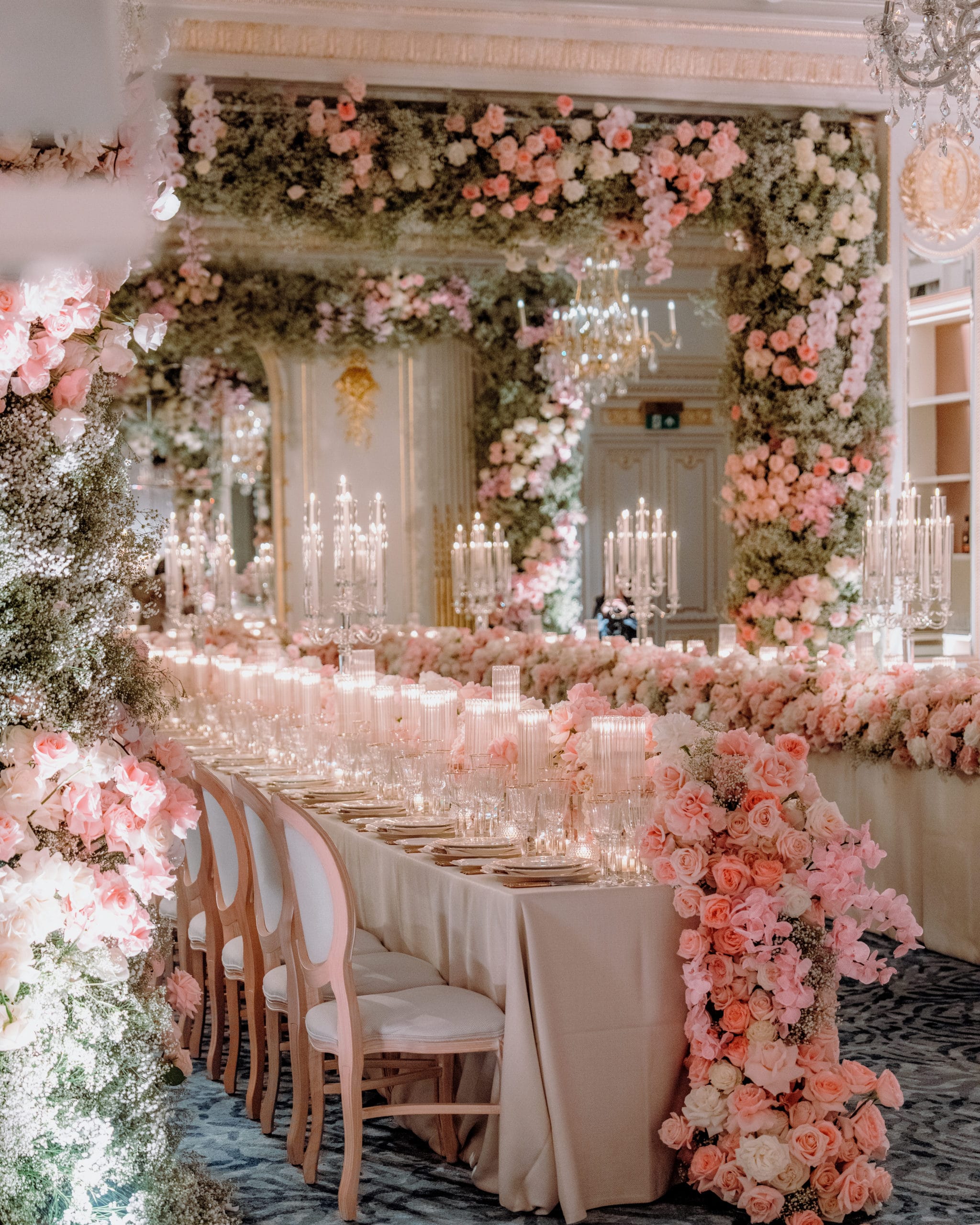
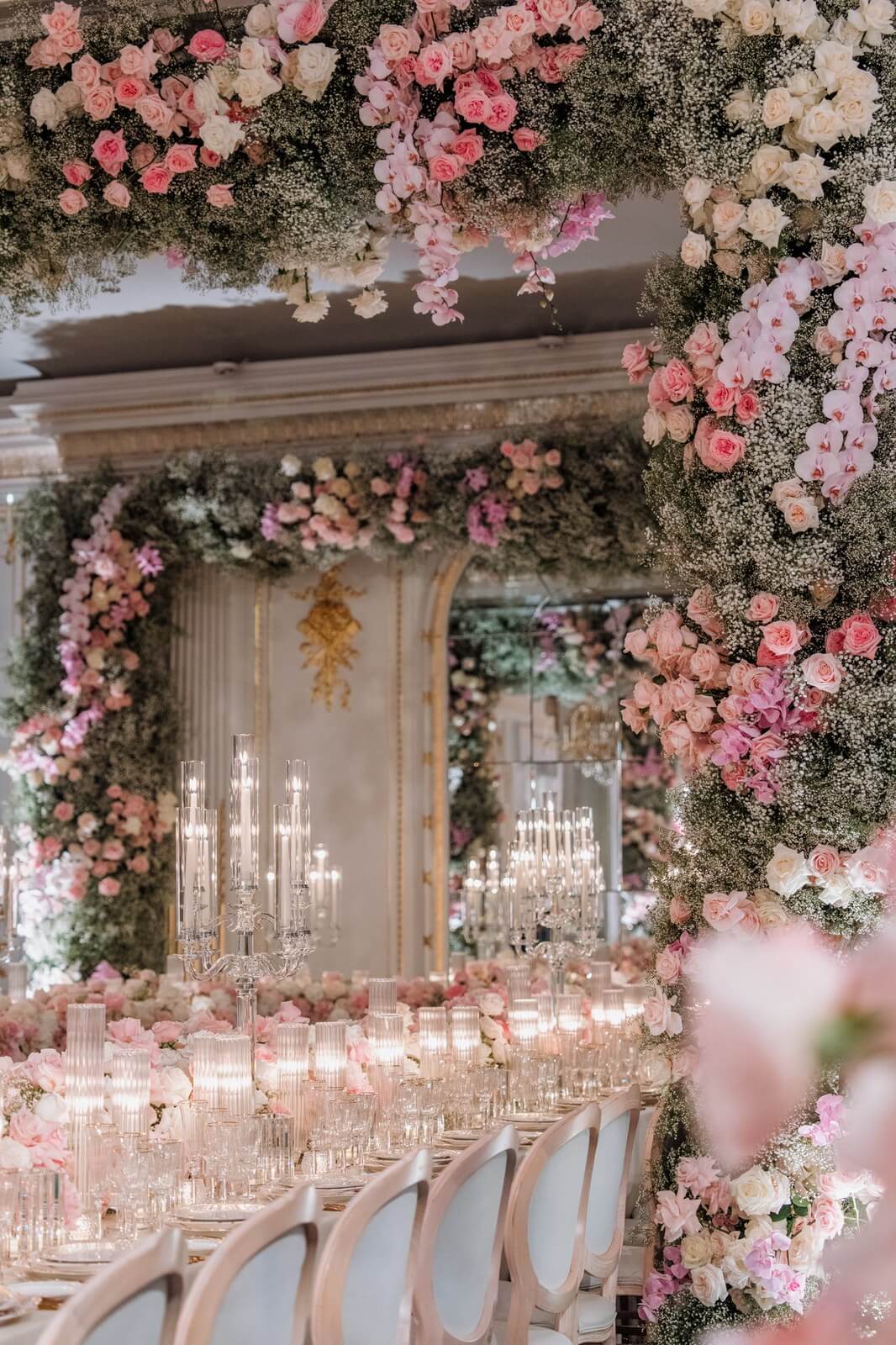
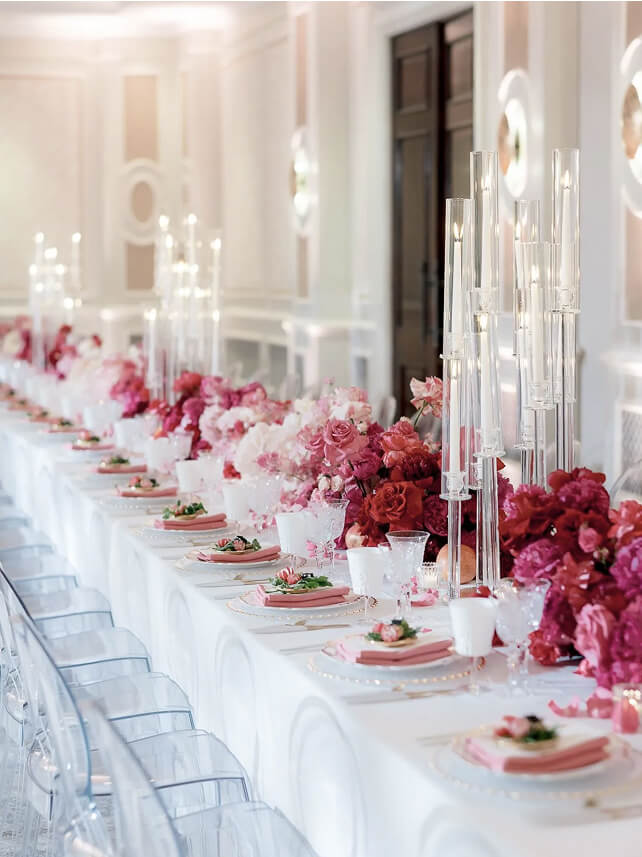
Flowers shape the atmosphere of a wedding more than almost any other element — the scent when guests arrive, the colour at the table, the weight of what you carry down the aisle. A lot of thought will go into choosing your wedding flowers, from the varieties themselves to the style of each arrangement — bridal bouquets, boutonnieres, centrepieces, and beyond. Here is a guide to the ten most popular wedding flowers we work with, and what makes each one worth considering.
Most popular wedding flowers
1. Roses
A symbol of beauty and love, roses are arguably the most popular wedding flower, with around 120 varieties in many colours to choose from, including solid hues, bicolours and even striped roses. Classic roses have tightly cupped blooms with overlapping petals, while garden roses have a denser petal count. Smaller spray roses work well as fillers and in more delicate arrangements.
Roses suit almost any arrangement style. Soft white roses pair beautifully with freesias or lilac for a classic bouquet, or take a less expected direction by introducing leafy foliage or dark twigs for contrast. Large, multi-petaled varieties make strong centrepieces, while smaller blooms add detail without competing for attention.
Roses suit almost any arrangement style. Soft white roses pair beautifully with freesias or lilac for a classic bouquet, or take a less expected direction by introducing leafy foliage or dark twigs for contrast. Large, multi-petaled varieties make strong centrepieces, while smaller blooms add detail without competing for attention.
2. Peonies
Cultivated in Asia for over a thousand years, peonies are highly sought after for their full, ruffled shape, strong scent, and vibrant colours. There are two types — the herbaceous and the tree peony, the latter of which has woody stems that remain above ground all year, while the stems of the herbaceous die back each winter. Despite being one of the more expensive wedding flowers, they remain a firm favourite. A bouquet of peonies alone makes a strong statement; a classic posy with clean lines works particularly well, though pairing them with roses gives a softer, more traditional result.
3. Dahlias
Dahlias have symmetrical round heads with unusually pointed petals that create real visual impact. They are available in almost every colour throughout summer, including the popular café au lait variety — a warm, pale coffee brown — as well as species with striped petals or tips in a contrasting hue.
For a quieter look, pair white dahlias with a loose bundle of greenery. For something bolder, café au lait dahlias with pink and burgundy tulips and fillers like baby’s fern and Queen Anne’s lace work beautifully together. Orange, red and pink dahlias also complement one another well, and hold their own when blended with darker blooms such as chocolate cosmos.
For a quieter look, pair white dahlias with a loose bundle of greenery. For something bolder, café au lait dahlias with pink and burgundy tulips and fillers like baby’s fern and Queen Anne’s lace work beautifully together. Orange, red and pink dahlias also complement one another well, and hold their own when blended with darker blooms such as chocolate cosmos.
4. Hydrangeas
Hydrangeas have a fluffy, cloud-like head in intense shades of pink, blue, burgundy and purple. One of the most popular varieties shifts colour from bubblegum pink to sky blue as it matures. They are very versatile, suitable for bouquet styles ranging from romantic and formal to loose and modern. They are also available year-round, moderately priced, and voluminous enough that you will need fewer stems than you might expect. The one drawback is that most varieties are scentless — the exception being Annabelle hydrangeas, which carry a light fragrance. Pale pink hydrangeas work well in soft, romantic arrangements, while white ones are well-suited to clean, minimal designs and large round centrepieces.
5. Ranunculus
A relative of the buttercup, ranunculus originates from Europe and South East Asia. Its tissue-thin layered petals give it a delicate, ruffled quality, and it carries a mild scent. In Victorian times, ranunculi were given as tokens of admiration — they symbolise charm and attraction. The fern-like foliage adds movement to arrangements and is commonly used as an accent in bridal bouquets. Pastel shades work beautifully alongside garden roses, dahlias and seeded eucalyptus; the more vibrant tones introduce bold colour without overwhelming the overall palette.
6. Orchids
Though best known as houseplants, orchids make a striking wedding flower. They are available in many colours and sizes, and bring an architectural quality to arrangements that most blooms cannot match. The most common variety is the moth orchid, whose petals flare outward in a way that photographs exceptionally well. An all-white orchid bouquet is clean and sculptural; for the opposite effect, cascading mini orchids arranged with velvety roses, chocolate cosmos, ranunculus and amaranthus creates something altogether more dramatic.
7. Tulips
The national flower of the Netherlands, tulips are available for most of the year and come in a wide range of colours, from white and pastel through to magenta, red, orange and purple. Standard tulips are sleek, with one bloom per stem and a clean cupped shape. Dutch, French and parrot tulips are widely available and well-priced, while rarer species command a premium. Tulips work well alone — a single-variety bunch is quietly confident — or alongside other blooms. Mixed with yellow daffodils, they bring a fresh, springtime feel to a bridal bouquet.
8. Sweet peas
Sweet peas were brought to England from Sicily in 1699, and in France the flower was considered a good omen. Their candy-like scent, ruffled blossoms and almost translucent petals make them a perennial wedding favourite. They range in colour from white through intense pink, purple, burgundy and blue, with bicolour varieties available too.
Sweet peas work beautifully on their own — a cluster tied with silk ribbon has a particularly romantic quality — and they also add texture and lightness when combined with other flowers. Pairing them with calla lilies is visually striking. As a spring flower, they pair naturally with seasonal companions such as hellebores, hyacinths, ranunculus, lilacs and delphinium in soft shades of blue and purple.
Sweet peas work beautifully on their own — a cluster tied with silk ribbon has a particularly romantic quality — and they also add texture and lightness when combined with other flowers. Pairing them with calla lilies is visually striking. As a spring flower, they pair naturally with seasonal companions such as hellebores, hyacinths, ranunculus, lilacs and delphinium in soft shades of blue and purple.
9. Calla lily
Native to southern Africa, the calla lily is a trumpet-shaped bloom with a clean, architectural profile that works particularly well in spring and summer weddings. It ranges from large-headed varieties on long, smooth stems to a compact miniature that suits smaller arrangements. Creamy ivory and white are the most common colours, though varieties are also available in yellow, orange, mauve pink and deep purple. White calla lilies with fresh greenery make for a pure, unfussy arrangement; red or dark purple varieties take the same form in a richer, more dramatic direction.
10. Anemones
Anemones are defined by their papery petals and bold, dark centres — a contrast that gives them immediate graphic presence. The most common varieties have bright white petals and jet-black centres, though they can also be found in blush pink, cherry red, burgundy and bright blue. White and black anemones paired with burgundy-leaved foliage make a striking combination; with fresh greenery, the result is softer and more naturalistic. For a summer wedding, deep pink-purple anemones alongside yellow-centred poppies bring a strong seasonal colour story.
Visit our Pinterest for wedding flowers inspiration.
You may also like: