

How to Choose Wedding Flowers
Where to look for ideas
Flower markets are worth visiting in person. London’s New Covent Garden Flower Market gives you a direct sense of what is in season, at what scale, and in what colours — often more useful than any mood board. Pinterest and Instagram are effective tools for building a visual reference to share with your florist, while specialist wedding publications can help you understand how different flowers translate across different venue types and styles. The Blooming Haus journal includes photo galleries from previous weddings and more detailed guides to specific flowers and arrangements.
For more wedding inspiration, visit our Pinterest page.
Work with your colour palette
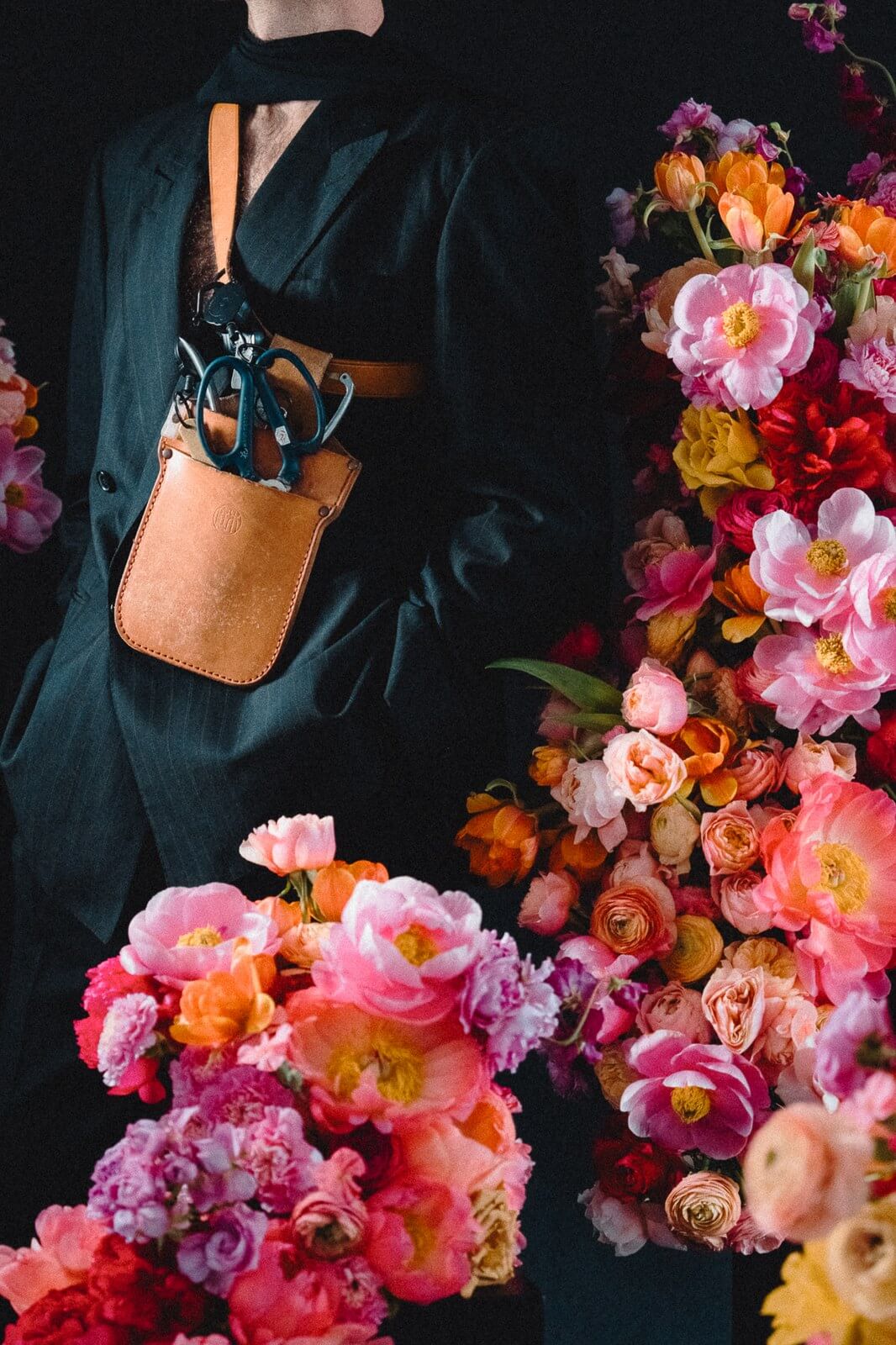
Your colour scheme should run consistently through the ceremony and reception — the flowers, the table dressing, and the bridal party all reading as part of the same palette. For seasonal weddings, the flowers can lead: oranges, deep reds and purples suit an autumn wedding naturally; vibrant, saturated colours work well in summer.
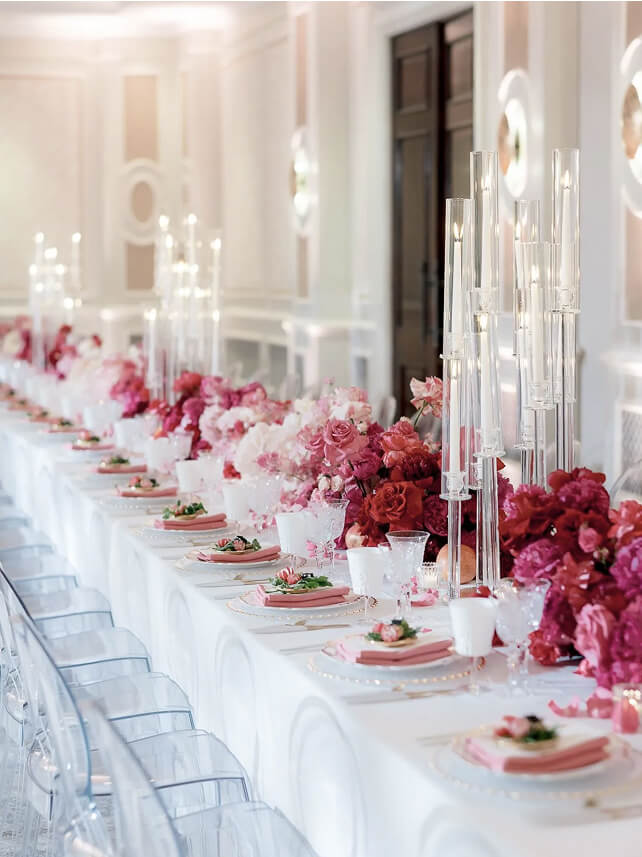
When working with colour, tonal variation is more interesting than exact matching — a wedding dressed in one flat colour tends to look uniform rather than considered. Think in complementary pairs: green foliage reads well against red blooms; purple flowers sit naturally alongside a yellow palette. Extend the same thinking to your table centrepieces and venue dressing, which should sit within the same colour logic as the bouquets.
When working with colour, tonal variation is more interesting than exact matching — a wedding dressed in one flat colour tends to look uniform rather than considered. Think in complementary pairs: green foliage reads well against red blooms; purple flowers sit naturally alongside a yellow palette. Extend the same thinking to your table centrepieces and venue dressing, which should sit within the same colour logic as the bouquets.
Where to look for ideas
Flower markets are worth visiting in person. London’s New Covent Garden Flower Market gives you a direct sense of what is in season, at what scale, and in what colours — often more useful than any mood board. Pinterest and Instagram are effective tools for building a visual reference to share with your florist, while specialist wedding publications can help you understand how different flowers translate across different venue types and styles. The Blooming Haus journal includes photo galleries from previous weddings and more detailed guides to specific flowers and arrangements.
For more wedding inspiration, visit our Pinterest page.

Work with your colour palette
Your colour scheme should run consistently through the ceremony and reception — the flowers, the table dressing, and the bridal party all reading as part of the same palette. For seasonal weddings, the flowers can lead: oranges, deep reds and purples suit an autumn wedding naturally; vibrant, saturated colours work well in summer.
When working with colour, tonal variation is more interesting than exact matching — a wedding dressed in one flat colour tends to look uniform rather than considered. Think in complementary pairs: green foliage reads well against red blooms; purple flowers sit naturally alongside a yellow palette. Extend the same thinking to your table centrepieces and venue dressing, which should sit within the same colour logic as the bouquets.
When working with colour, tonal variation is more interesting than exact matching — a wedding dressed in one flat colour tends to look uniform rather than considered. Think in complementary pairs: green foliage reads well against red blooms; purple flowers sit naturally alongside a yellow palette. Extend the same thinking to your table centrepieces and venue dressing, which should sit within the same colour logic as the bouquets.
Where to look for ideas
Flower markets are worth visiting in person. London’s New Covent Garden Flower Market gives you a direct sense of what is in season, at what scale, and in what colours — often more useful than any mood board. Pinterest and Instagram are effective tools for building a visual reference to share with your florist, while specialist wedding publications can help you understand how different flowers translate across different venue types and styles. The Blooming Haus journal includes photo galleries from previous weddings and more detailed guides to specific flowers and arrangements.
For more wedding inspiration, visit our Pinterest page.
Your wedding theme and your flowers should be working from the same brief. White roses and dahlias suit a romantic or formal setting; lush ferns, eucalyptus and autumnal blooms in burnt orange and deep red feel at home in a rustic or countryside venue. A country garden theme calls for bright or pastel spring and summer flowers; a winter wedding suits rich jewel tones and pine foliage. Letting the season guide the theme — and the theme guide the flowers — tends to produce the most coherent result. Your florist can help you translate a mood or reference point into specific flower choices.
Work with your colour palette
Your colour scheme should run consistently through the ceremony and reception — the flowers, the table dressing, and the bridal party all reading as part of the same palette. For seasonal weddings, the flowers can lead: oranges, deep reds and purples suit an autumn wedding naturally; vibrant, saturated colours work well in summer.
When working with colour, tonal variation is more interesting than exact matching — a wedding dressed in one flat colour tends to look uniform rather than considered. Think in complementary pairs: green foliage reads well against red blooms; purple flowers sit naturally alongside a yellow palette. Extend the same thinking to your table centrepieces and venue dressing, which should sit within the same colour logic as the bouquets.
When working with colour, tonal variation is more interesting than exact matching — a wedding dressed in one flat colour tends to look uniform rather than considered. Think in complementary pairs: green foliage reads well against red blooms; purple flowers sit naturally alongside a yellow palette. Extend the same thinking to your table centrepieces and venue dressing, which should sit within the same colour logic as the bouquets.
Where to look for ideas
Flower markets are worth visiting in person. London’s New Covent Garden Flower Market gives you a direct sense of what is in season, at what scale, and in what colours — often more useful than any mood board. Pinterest and Instagram are effective tools for building a visual reference to share with your florist, while specialist wedding publications can help you understand how different flowers translate across different venue types and styles. The Blooming Haus journal includes photo galleries from previous weddings and more detailed guides to specific flowers and arrangements.
For more wedding inspiration, visit our Pinterest page.
Match your theme
Your wedding theme and your flowers should be working from the same brief. White roses and dahlias suit a romantic or formal setting; lush ferns, eucalyptus and autumnal blooms in burnt orange and deep red feel at home in a rustic or countryside venue. A country garden theme calls for bright or pastel spring and summer flowers; a winter wedding suits rich jewel tones and pine foliage. Letting the season guide the theme — and the theme guide the flowers — tends to produce the most coherent result. Your florist can help you translate a mood or reference point into specific flower choices.
Work with your colour palette
Your colour scheme should run consistently through the ceremony and reception — the flowers, the table dressing, and the bridal party all reading as part of the same palette. For seasonal weddings, the flowers can lead: oranges, deep reds and purples suit an autumn wedding naturally; vibrant, saturated colours work well in summer.
When working with colour, tonal variation is more interesting than exact matching — a wedding dressed in one flat colour tends to look uniform rather than considered. Think in complementary pairs: green foliage reads well against red blooms; purple flowers sit naturally alongside a yellow palette. Extend the same thinking to your table centrepieces and venue dressing, which should sit within the same colour logic as the bouquets.
When working with colour, tonal variation is more interesting than exact matching — a wedding dressed in one flat colour tends to look uniform rather than considered. Think in complementary pairs: green foliage reads well against red blooms; purple flowers sit naturally alongside a yellow palette. Extend the same thinking to your table centrepieces and venue dressing, which should sit within the same colour logic as the bouquets.
Where to look for ideas
Flower markets are worth visiting in person. London’s New Covent Garden Flower Market gives you a direct sense of what is in season, at what scale, and in what colours — often more useful than any mood board. Pinterest and Instagram are effective tools for building a visual reference to share with your florist, while specialist wedding publications can help you understand how different flowers translate across different venue types and styles. The Blooming Haus journal includes photo galleries from previous weddings and more detailed guides to specific flowers and arrangements.
For more wedding inspiration, visit our Pinterest page.
Your wedding date will shape your flower options as much as your taste does. Different varieties peak at different points in the year, and in-season flowers are both better quality and more affordable than those that need to be sourced from abroad.
Peonies, for example, are in season in the UK from mid-May to early July — which goes some way to explaining their status as a summer wedding staple. Amaryllis and carnations, by contrast, suit winter weddings far better. If a particular flower is important to you but falls outside your season, your florist can advise on sourcing options and what the additional cost and lead time is likely to be.
Peonies, for example, are in season in the UK from mid-May to early July — which goes some way to explaining their status as a summer wedding staple. Amaryllis and carnations, by contrast, suit winter weddings far better. If a particular flower is important to you but falls outside your season, your florist can advise on sourcing options and what the additional cost and lead time is likely to be.
Match your theme
Your wedding theme and your flowers should be working from the same brief. White roses and dahlias suit a romantic or formal setting; lush ferns, eucalyptus and autumnal blooms in burnt orange and deep red feel at home in a rustic or countryside venue. A country garden theme calls for bright or pastel spring and summer flowers; a winter wedding suits rich jewel tones and pine foliage. Letting the season guide the theme — and the theme guide the flowers — tends to produce the most coherent result. Your florist can help you translate a mood or reference point into specific flower choices.
Work with your colour palette
Your colour scheme should run consistently through the ceremony and reception — the flowers, the table dressing, and the bridal party all reading as part of the same palette. For seasonal weddings, the flowers can lead: oranges, deep reds and purples suit an autumn wedding naturally; vibrant, saturated colours work well in summer.
When working with colour, tonal variation is more interesting than exact matching — a wedding dressed in one flat colour tends to look uniform rather than considered. Think in complementary pairs: green foliage reads well against red blooms; purple flowers sit naturally alongside a yellow palette. Extend the same thinking to your table centrepieces and venue dressing, which should sit within the same colour logic as the bouquets.
When working with colour, tonal variation is more interesting than exact matching — a wedding dressed in one flat colour tends to look uniform rather than considered. Think in complementary pairs: green foliage reads well against red blooms; purple flowers sit naturally alongside a yellow palette. Extend the same thinking to your table centrepieces and venue dressing, which should sit within the same colour logic as the bouquets.
Where to look for ideas
Flower markets are worth visiting in person. London’s New Covent Garden Flower Market gives you a direct sense of what is in season, at what scale, and in what colours — often more useful than any mood board. Pinterest and Instagram are effective tools for building a visual reference to share with your florist, while specialist wedding publications can help you understand how different flowers translate across different venue types and styles. The Blooming Haus journal includes photo galleries from previous weddings and more detailed guides to specific flowers and arrangements.
For more wedding inspiration, visit our Pinterest page.
Pick seasonal flowers
Your wedding date will shape your flower options as much as your taste does. Different varieties peak at different points in the year, and in-season flowers are both better quality and more affordable than those that need to be sourced from abroad.
Peonies, for example, are in season in the UK from mid-May to early July — which goes some way to explaining their status as a summer wedding staple. Amaryllis and carnations, by contrast, suit winter weddings far better. If a particular flower is important to you but falls outside your season, your florist can advise on sourcing options and what the additional cost and lead time is likely to be.
Peonies, for example, are in season in the UK from mid-May to early July — which goes some way to explaining their status as a summer wedding staple. Amaryllis and carnations, by contrast, suit winter weddings far better. If a particular flower is important to you but falls outside your season, your florist can advise on sourcing options and what the additional cost and lead time is likely to be.
Match your theme
Your wedding theme and your flowers should be working from the same brief. White roses and dahlias suit a romantic or formal setting; lush ferns, eucalyptus and autumnal blooms in burnt orange and deep red feel at home in a rustic or countryside venue. A country garden theme calls for bright or pastel spring and summer flowers; a winter wedding suits rich jewel tones and pine foliage. Letting the season guide the theme — and the theme guide the flowers — tends to produce the most coherent result. Your florist can help you translate a mood or reference point into specific flower choices.
Work with your colour palette
Your colour scheme should run consistently through the ceremony and reception — the flowers, the table dressing, and the bridal party all reading as part of the same palette. For seasonal weddings, the flowers can lead: oranges, deep reds and purples suit an autumn wedding naturally; vibrant, saturated colours work well in summer.
When working with colour, tonal variation is more interesting than exact matching — a wedding dressed in one flat colour tends to look uniform rather than considered. Think in complementary pairs: green foliage reads well against red blooms; purple flowers sit naturally alongside a yellow palette. Extend the same thinking to your table centrepieces and venue dressing, which should sit within the same colour logic as the bouquets.
When working with colour, tonal variation is more interesting than exact matching — a wedding dressed in one flat colour tends to look uniform rather than considered. Think in complementary pairs: green foliage reads well against red blooms; purple flowers sit naturally alongside a yellow palette. Extend the same thinking to your table centrepieces and venue dressing, which should sit within the same colour logic as the bouquets.
Where to look for ideas
Flower markets are worth visiting in person. London’s New Covent Garden Flower Market gives you a direct sense of what is in season, at what scale, and in what colours — often more useful than any mood board. Pinterest and Instagram are effective tools for building a visual reference to share with your florist, while specialist wedding publications can help you understand how different flowers translate across different venue types and styles. The Blooming Haus journal includes photo galleries from previous weddings and more detailed guides to specific flowers and arrangements.
For more wedding inspiration, visit our Pinterest page.

Pick seasonal flowers
Your wedding date will shape your flower options as much as your taste does. Different varieties peak at different points in the year, and in-season flowers are both better quality and more affordable than those that need to be sourced from abroad.
Peonies, for example, are in season in the UK from mid-May to early July — which goes some way to explaining their status as a summer wedding staple. Amaryllis and carnations, by contrast, suit winter weddings far better. If a particular flower is important to you but falls outside your season, your florist can advise on sourcing options and what the additional cost and lead time is likely to be.
Peonies, for example, are in season in the UK from mid-May to early July — which goes some way to explaining their status as a summer wedding staple. Amaryllis and carnations, by contrast, suit winter weddings far better. If a particular flower is important to you but falls outside your season, your florist can advise on sourcing options and what the additional cost and lead time is likely to be.
Match your theme
Your wedding theme and your flowers should be working from the same brief. White roses and dahlias suit a romantic or formal setting; lush ferns, eucalyptus and autumnal blooms in burnt orange and deep red feel at home in a rustic or countryside venue. A country garden theme calls for bright or pastel spring and summer flowers; a winter wedding suits rich jewel tones and pine foliage. Letting the season guide the theme — and the theme guide the flowers — tends to produce the most coherent result. Your florist can help you translate a mood or reference point into specific flower choices.
Work with your colour palette
Your colour scheme should run consistently through the ceremony and reception — the flowers, the table dressing, and the bridal party all reading as part of the same palette. For seasonal weddings, the flowers can lead: oranges, deep reds and purples suit an autumn wedding naturally; vibrant, saturated colours work well in summer.
When working with colour, tonal variation is more interesting than exact matching — a wedding dressed in one flat colour tends to look uniform rather than considered. Think in complementary pairs: green foliage reads well against red blooms; purple flowers sit naturally alongside a yellow palette. Extend the same thinking to your table centrepieces and venue dressing, which should sit within the same colour logic as the bouquets.
When working with colour, tonal variation is more interesting than exact matching — a wedding dressed in one flat colour tends to look uniform rather than considered. Think in complementary pairs: green foliage reads well against red blooms; purple flowers sit naturally alongside a yellow palette. Extend the same thinking to your table centrepieces and venue dressing, which should sit within the same colour logic as the bouquets.
Where to look for ideas
Flower markets are worth visiting in person. London’s New Covent Garden Flower Market gives you a direct sense of what is in season, at what scale, and in what colours — often more useful than any mood board. Pinterest and Instagram are effective tools for building a visual reference to share with your florist, while specialist wedding publications can help you understand how different flowers translate across different venue types and styles. The Blooming Haus journal includes photo galleries from previous weddings and more detailed guides to specific flowers and arrangements.
For more wedding inspiration, visit our Pinterest page.
Decide on your flower budget before your first florist meeting. The standard guidance is to reserve 5–10% of your overall wedding budget for flowers, and to be honest with your florist about what that figure is — it allows them to make the best possible recommendations within your means. A well-designed display of wedding flowers is achievable at most price points.
Ask for a price list early. Larger flowers like hydrangeas and peonies cost more per stem, but because they are voluminous they fill arrangements quickly — meaning you may need fewer stems overall, which can help bring costs down rather than push them up.
A useful approach is to give your florist a list divided into “must haves” and “nice to haves”. The former will typically cover the bridal party and principal venue dressing; corsages, boutonnieres and accessories for guests outside the immediate wedding party fall into the latter. If the budget is under pressure, flowers used at the ceremony can often be repositioned for the reception — halving the quantity required without halving the impact.
Ask for a price list early. Larger flowers like hydrangeas and peonies cost more per stem, but because they are voluminous they fill arrangements quickly — meaning you may need fewer stems overall, which can help bring costs down rather than push them up.
A useful approach is to give your florist a list divided into “must haves” and “nice to haves”. The former will typically cover the bridal party and principal venue dressing; corsages, boutonnieres and accessories for guests outside the immediate wedding party fall into the latter. If the budget is under pressure, flowers used at the ceremony can often be repositioned for the reception — halving the quantity required without halving the impact.
Pick seasonal flowers
Your wedding date will shape your flower options as much as your taste does. Different varieties peak at different points in the year, and in-season flowers are both better quality and more affordable than those that need to be sourced from abroad.
Peonies, for example, are in season in the UK from mid-May to early July — which goes some way to explaining their status as a summer wedding staple. Amaryllis and carnations, by contrast, suit winter weddings far better. If a particular flower is important to you but falls outside your season, your florist can advise on sourcing options and what the additional cost and lead time is likely to be.
Peonies, for example, are in season in the UK from mid-May to early July — which goes some way to explaining their status as a summer wedding staple. Amaryllis and carnations, by contrast, suit winter weddings far better. If a particular flower is important to you but falls outside your season, your florist can advise on sourcing options and what the additional cost and lead time is likely to be.
Match your theme
Your wedding theme and your flowers should be working from the same brief. White roses and dahlias suit a romantic or formal setting; lush ferns, eucalyptus and autumnal blooms in burnt orange and deep red feel at home in a rustic or countryside venue. A country garden theme calls for bright or pastel spring and summer flowers; a winter wedding suits rich jewel tones and pine foliage. Letting the season guide the theme — and the theme guide the flowers — tends to produce the most coherent result. Your florist can help you translate a mood or reference point into specific flower choices.
Work with your colour palette
Your colour scheme should run consistently through the ceremony and reception — the flowers, the table dressing, and the bridal party all reading as part of the same palette. For seasonal weddings, the flowers can lead: oranges, deep reds and purples suit an autumn wedding naturally; vibrant, saturated colours work well in summer.
When working with colour, tonal variation is more interesting than exact matching — a wedding dressed in one flat colour tends to look uniform rather than considered. Think in complementary pairs: green foliage reads well against red blooms; purple flowers sit naturally alongside a yellow palette. Extend the same thinking to your table centrepieces and venue dressing, which should sit within the same colour logic as the bouquets.
When working with colour, tonal variation is more interesting than exact matching — a wedding dressed in one flat colour tends to look uniform rather than considered. Think in complementary pairs: green foliage reads well against red blooms; purple flowers sit naturally alongside a yellow palette. Extend the same thinking to your table centrepieces and venue dressing, which should sit within the same colour logic as the bouquets.
Where to look for ideas
Flower markets are worth visiting in person. London’s New Covent Garden Flower Market gives you a direct sense of what is in season, at what scale, and in what colours — often more useful than any mood board. Pinterest and Instagram are effective tools for building a visual reference to share with your florist, while specialist wedding publications can help you understand how different flowers translate across different venue types and styles. The Blooming Haus journal includes photo galleries from previous weddings and more detailed guides to specific flowers and arrangements.
For more wedding inspiration, visit our Pinterest page.
Consider your budget
Decide on your flower budget before your first florist meeting. The standard guidance is to reserve 5–10% of your overall wedding budget for flowers, and to be honest with your florist about what that figure is — it allows them to make the best possible recommendations within your means. A well-designed display of wedding flowers is achievable at most price points.
Ask for a price list early. Larger flowers like hydrangeas and peonies cost more per stem, but because they are voluminous they fill arrangements quickly — meaning you may need fewer stems overall, which can help bring costs down rather than push them up.
A useful approach is to give your florist a list divided into “must haves” and “nice to haves”. The former will typically cover the bridal party and principal venue dressing; corsages, boutonnieres and accessories for guests outside the immediate wedding party fall into the latter. If the budget is under pressure, flowers used at the ceremony can often be repositioned for the reception — halving the quantity required without halving the impact.
Ask for a price list early. Larger flowers like hydrangeas and peonies cost more per stem, but because they are voluminous they fill arrangements quickly — meaning you may need fewer stems overall, which can help bring costs down rather than push them up.
A useful approach is to give your florist a list divided into “must haves” and “nice to haves”. The former will typically cover the bridal party and principal venue dressing; corsages, boutonnieres and accessories for guests outside the immediate wedding party fall into the latter. If the budget is under pressure, flowers used at the ceremony can often be repositioned for the reception — halving the quantity required without halving the impact.
Pick seasonal flowers
Your wedding date will shape your flower options as much as your taste does. Different varieties peak at different points in the year, and in-season flowers are both better quality and more affordable than those that need to be sourced from abroad.
Peonies, for example, are in season in the UK from mid-May to early July — which goes some way to explaining their status as a summer wedding staple. Amaryllis and carnations, by contrast, suit winter weddings far better. If a particular flower is important to you but falls outside your season, your florist can advise on sourcing options and what the additional cost and lead time is likely to be.
Peonies, for example, are in season in the UK from mid-May to early July — which goes some way to explaining their status as a summer wedding staple. Amaryllis and carnations, by contrast, suit winter weddings far better. If a particular flower is important to you but falls outside your season, your florist can advise on sourcing options and what the additional cost and lead time is likely to be.
Match your theme
Your wedding theme and your flowers should be working from the same brief. White roses and dahlias suit a romantic or formal setting; lush ferns, eucalyptus and autumnal blooms in burnt orange and deep red feel at home in a rustic or countryside venue. A country garden theme calls for bright or pastel spring and summer flowers; a winter wedding suits rich jewel tones and pine foliage. Letting the season guide the theme — and the theme guide the flowers — tends to produce the most coherent result. Your florist can help you translate a mood or reference point into specific flower choices.
Work with your colour palette
Your colour scheme should run consistently through the ceremony and reception — the flowers, the table dressing, and the bridal party all reading as part of the same palette. For seasonal weddings, the flowers can lead: oranges, deep reds and purples suit an autumn wedding naturally; vibrant, saturated colours work well in summer.
When working with colour, tonal variation is more interesting than exact matching — a wedding dressed in one flat colour tends to look uniform rather than considered. Think in complementary pairs: green foliage reads well against red blooms; purple flowers sit naturally alongside a yellow palette. Extend the same thinking to your table centrepieces and venue dressing, which should sit within the same colour logic as the bouquets.
When working with colour, tonal variation is more interesting than exact matching — a wedding dressed in one flat colour tends to look uniform rather than considered. Think in complementary pairs: green foliage reads well against red blooms; purple flowers sit naturally alongside a yellow palette. Extend the same thinking to your table centrepieces and venue dressing, which should sit within the same colour logic as the bouquets.
Where to look for ideas
Flower markets are worth visiting in person. London’s New Covent Garden Flower Market gives you a direct sense of what is in season, at what scale, and in what colours — often more useful than any mood board. Pinterest and Instagram are effective tools for building a visual reference to share with your florist, while specialist wedding publications can help you understand how different flowers translate across different venue types and styles. The Blooming Haus journal includes photo galleries from previous weddings and more detailed guides to specific flowers and arrangements.
For more wedding inspiration, visit our Pinterest page.
How to Choose Wedding Flowers
Consider your budget
Decide on your flower budget before your first florist meeting. The standard guidance is to reserve 5–10% of your overall wedding budget for flowers, and to be honest with your florist about what that figure is — it allows them to make the best possible recommendations within your means. A well-designed display of wedding flowers is achievable at most price points.
Ask for a price list early. Larger flowers like hydrangeas and peonies cost more per stem, but because they are voluminous they fill arrangements quickly — meaning you may need fewer stems overall, which can help bring costs down rather than push them up.
A useful approach is to give your florist a list divided into “must haves” and “nice to haves”. The former will typically cover the bridal party and principal venue dressing; corsages, boutonnieres and accessories for guests outside the immediate wedding party fall into the latter. If the budget is under pressure, flowers used at the ceremony can often be repositioned for the reception — halving the quantity required without halving the impact.
Ask for a price list early. Larger flowers like hydrangeas and peonies cost more per stem, but because they are voluminous they fill arrangements quickly — meaning you may need fewer stems overall, which can help bring costs down rather than push them up.
A useful approach is to give your florist a list divided into “must haves” and “nice to haves”. The former will typically cover the bridal party and principal venue dressing; corsages, boutonnieres and accessories for guests outside the immediate wedding party fall into the latter. If the budget is under pressure, flowers used at the ceremony can often be repositioned for the reception — halving the quantity required without halving the impact.
Pick seasonal flowers
Your wedding date will shape your flower options as much as your taste does. Different varieties peak at different points in the year, and in-season flowers are both better quality and more affordable than those that need to be sourced from abroad.
Peonies, for example, are in season in the UK from mid-May to early July — which goes some way to explaining their status as a summer wedding staple. Amaryllis and carnations, by contrast, suit winter weddings far better. If a particular flower is important to you but falls outside your season, your florist can advise on sourcing options and what the additional cost and lead time is likely to be.
Peonies, for example, are in season in the UK from mid-May to early July — which goes some way to explaining their status as a summer wedding staple. Amaryllis and carnations, by contrast, suit winter weddings far better. If a particular flower is important to you but falls outside your season, your florist can advise on sourcing options and what the additional cost and lead time is likely to be.
Match your theme
Your wedding theme and your flowers should be working from the same brief. White roses and dahlias suit a romantic or formal setting; lush ferns, eucalyptus and autumnal blooms in burnt orange and deep red feel at home in a rustic or countryside venue. A country garden theme calls for bright or pastel spring and summer flowers; a winter wedding suits rich jewel tones and pine foliage. Letting the season guide the theme — and the theme guide the flowers — tends to produce the most coherent result. Your florist can help you translate a mood or reference point into specific flower choices.
Work with your colour palette
Your colour scheme should run consistently through the ceremony and reception — the flowers, the table dressing, and the bridal party all reading as part of the same palette. For seasonal weddings, the flowers can lead: oranges, deep reds and purples suit an autumn wedding naturally; vibrant, saturated colours work well in summer.
When working with colour, tonal variation is more interesting than exact matching — a wedding dressed in one flat colour tends to look uniform rather than considered. Think in complementary pairs: green foliage reads well against red blooms; purple flowers sit naturally alongside a yellow palette. Extend the same thinking to your table centrepieces and venue dressing, which should sit within the same colour logic as the bouquets.
When working with colour, tonal variation is more interesting than exact matching — a wedding dressed in one flat colour tends to look uniform rather than considered. Think in complementary pairs: green foliage reads well against red blooms; purple flowers sit naturally alongside a yellow palette. Extend the same thinking to your table centrepieces and venue dressing, which should sit within the same colour logic as the bouquets.
Where to look for ideas
Flower markets are worth visiting in person. London’s New Covent Garden Flower Market gives you a direct sense of what is in season, at what scale, and in what colours — often more useful than any mood board. Pinterest and Instagram are effective tools for building a visual reference to share with your florist, while specialist wedding publications can help you understand how different flowers translate across different venue types and styles. The Blooming Haus journal includes photo galleries from previous weddings and more detailed guides to specific flowers and arrangements.
For more wedding inspiration, visit our Pinterest page.
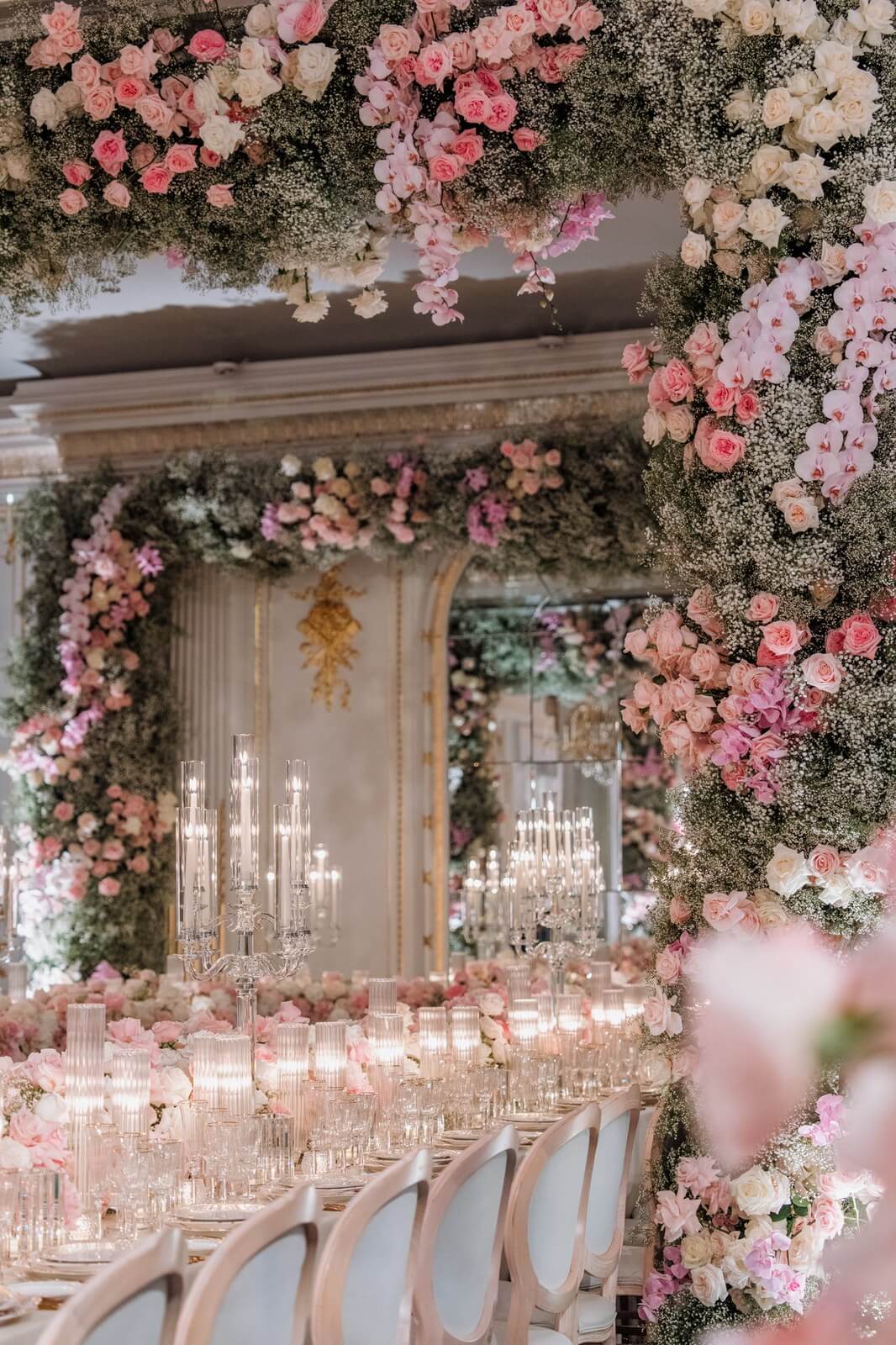
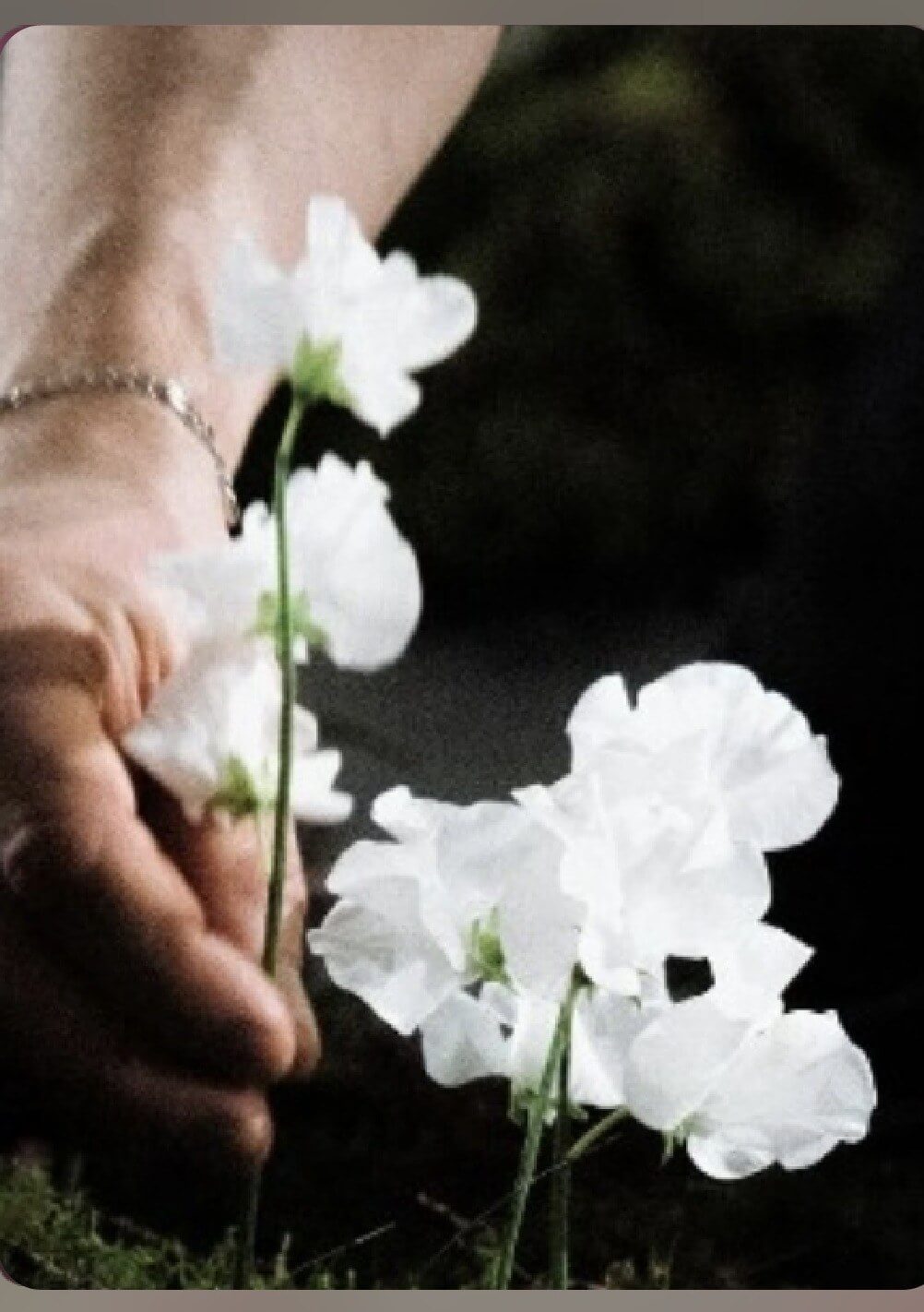
Your choice of wedding flowers will shape the atmosphere of the day more than almost any other decision — from the ceremony space to the reception tables, the bouquet you carry, and the buttonholes on your guests. Get them right and they will connect every element of the day into a single visual narrative. And if you choose to preserve them afterwards, they become something you return to for years. Aesthetics, seasonality and budget all play a part in the decision. Here is a guide to working through each one.
How to Choose Wedding Flowers
Consider your budget
Decide on your flower budget before your first florist meeting. The standard guidance is to reserve 5–10% of your overall wedding budget for flowers, and to be honest with your florist about what that figure is — it allows them to make the best possible recommendations within your means. A well-designed display of wedding flowers is achievable at most price points.
Ask for a price list early. Larger flowers like hydrangeas and peonies cost more per stem, but because they are voluminous they fill arrangements quickly — meaning you may need fewer stems overall, which can help bring costs down rather than push them up.
A useful approach is to give your florist a list divided into “must haves” and “nice to haves”. The former will typically cover the bridal party and principal venue dressing; corsages, boutonnieres and accessories for guests outside the immediate wedding party fall into the latter. If the budget is under pressure, flowers used at the ceremony can often be repositioned for the reception — halving the quantity required without halving the impact.
Ask for a price list early. Larger flowers like hydrangeas and peonies cost more per stem, but because they are voluminous they fill arrangements quickly — meaning you may need fewer stems overall, which can help bring costs down rather than push them up.
A useful approach is to give your florist a list divided into “must haves” and “nice to haves”. The former will typically cover the bridal party and principal venue dressing; corsages, boutonnieres and accessories for guests outside the immediate wedding party fall into the latter. If the budget is under pressure, flowers used at the ceremony can often be repositioned for the reception — halving the quantity required without halving the impact.
Pick seasonal flowers
Your wedding date will shape your flower options as much as your taste does. Different varieties peak at different points in the year, and in-season flowers are both better quality and more affordable than those that need to be sourced from abroad.
Peonies, for example, are in season in the UK from mid-May to early July — which goes some way to explaining their status as a summer wedding staple. Amaryllis and carnations, by contrast, suit winter weddings far better. If a particular flower is important to you but falls outside your season, your florist can advise on sourcing options and what the additional cost and lead time is likely to be.
Peonies, for example, are in season in the UK from mid-May to early July — which goes some way to explaining their status as a summer wedding staple. Amaryllis and carnations, by contrast, suit winter weddings far better. If a particular flower is important to you but falls outside your season, your florist can advise on sourcing options and what the additional cost and lead time is likely to be.
Match your theme
Your wedding theme and your flowers should be working from the same brief. White roses and dahlias suit a romantic or formal setting; lush ferns, eucalyptus and autumnal blooms in burnt orange and deep red feel at home in a rustic or countryside venue. A country garden theme calls for bright or pastel spring and summer flowers; a winter wedding suits rich jewel tones and pine foliage. Letting the season guide the theme — and the theme guide the flowers — tends to produce the most coherent result. Your florist can help you translate a mood or reference point into specific flower choices.
Work with your colour palette
Your colour scheme should run consistently through the ceremony and reception — the flowers, the table dressing, and the bridal party all reading as part of the same palette. For seasonal weddings, the flowers can lead: oranges, deep reds and purples suit an autumn wedding naturally; vibrant, saturated colours work well in summer.
When working with colour, tonal variation is more interesting than exact matching — a wedding dressed in one flat colour tends to look uniform rather than considered. Think in complementary pairs: green foliage reads well against red blooms; purple flowers sit naturally alongside a yellow palette. Extend the same thinking to your table centrepieces and venue dressing, which should sit within the same colour logic as the bouquets.
When working with colour, tonal variation is more interesting than exact matching — a wedding dressed in one flat colour tends to look uniform rather than considered. Think in complementary pairs: green foliage reads well against red blooms; purple flowers sit naturally alongside a yellow palette. Extend the same thinking to your table centrepieces and venue dressing, which should sit within the same colour logic as the bouquets.
Where to look for ideas
Flower markets are worth visiting in person. London’s New Covent Garden Flower Market gives you a direct sense of what is in season, at what scale, and in what colours — often more useful than any mood board. Pinterest and Instagram are effective tools for building a visual reference to share with your florist, while specialist wedding publications can help you understand how different flowers translate across different venue types and styles. The Blooming Haus journal includes photo galleries from previous weddings and more detailed guides to specific flowers and arrangements.
For more wedding inspiration, visit our Pinterest page.
You may also like: