

Corporate Event Flowers in London: What to Expect
Flowers at a corporate event do more work than most people realise. They establish tone. They direct movement. They communicate something about the brand that commissioned them without saying a word. Done well, corporate event flowers become an integrated element of the design. Done carelessly, they are an expensive afterthought. The difference is almost always in the process.
What Corporate Event Flowers Actually Do
A floral installation at a product launch is not the same as a vase on a conference table. Both have a place. The role of each is different, and the design process behind them is different. At the most fundamental level, flowers at corporate events serve three purposes.
Setting the Atmosphere
Walk into a room with no flowers. Walk into the same room with a considered floral installation at the entrance. The shift is immediate. Flowers introduce warmth, texture, and a sense of care that lighting, furniture, and signage cannot achieve alone. For a gala dinner or a brand reception, flowers are part of how guests read the space. They signal the level of thought that has gone into the event. They set expectations before the first speech or the first course.
Reinforcing Brand Identity
Corporate florals increasingly serve a brand function. The palette, the style, the degree of restraint or abundance all communicate something. A tech company launching a new product might want something minimal and architectural. Clean lines, structural stems, a limited colour palette that echoes the product design language. A heritage fashion house hosting a press dinner will want something altogether different. Lush, seasonal, romantic, with a sense of place and history. The flowers should feel like they belong to the brand. Not literally. Nobody needs a logo made of roses. Tonally. The composition should sit naturally alongside the other visual elements of the event.
Guiding the Experience
Flowers direct attention. A large arrangement at the entrance establishes arrival. Arrangements at the bar create a gathering point. Table compositions encourage conversation. An installation above a stage or a podium draws the eye to where it needs to be. This is spatial design, and it requires understanding the event flow. Where do guests arrive? Where do they congregate during drinks? Where do they sit? Where is the focal moment? The floral plan should map to these movements.
Types of Corporate Events We Design For
Product Launches
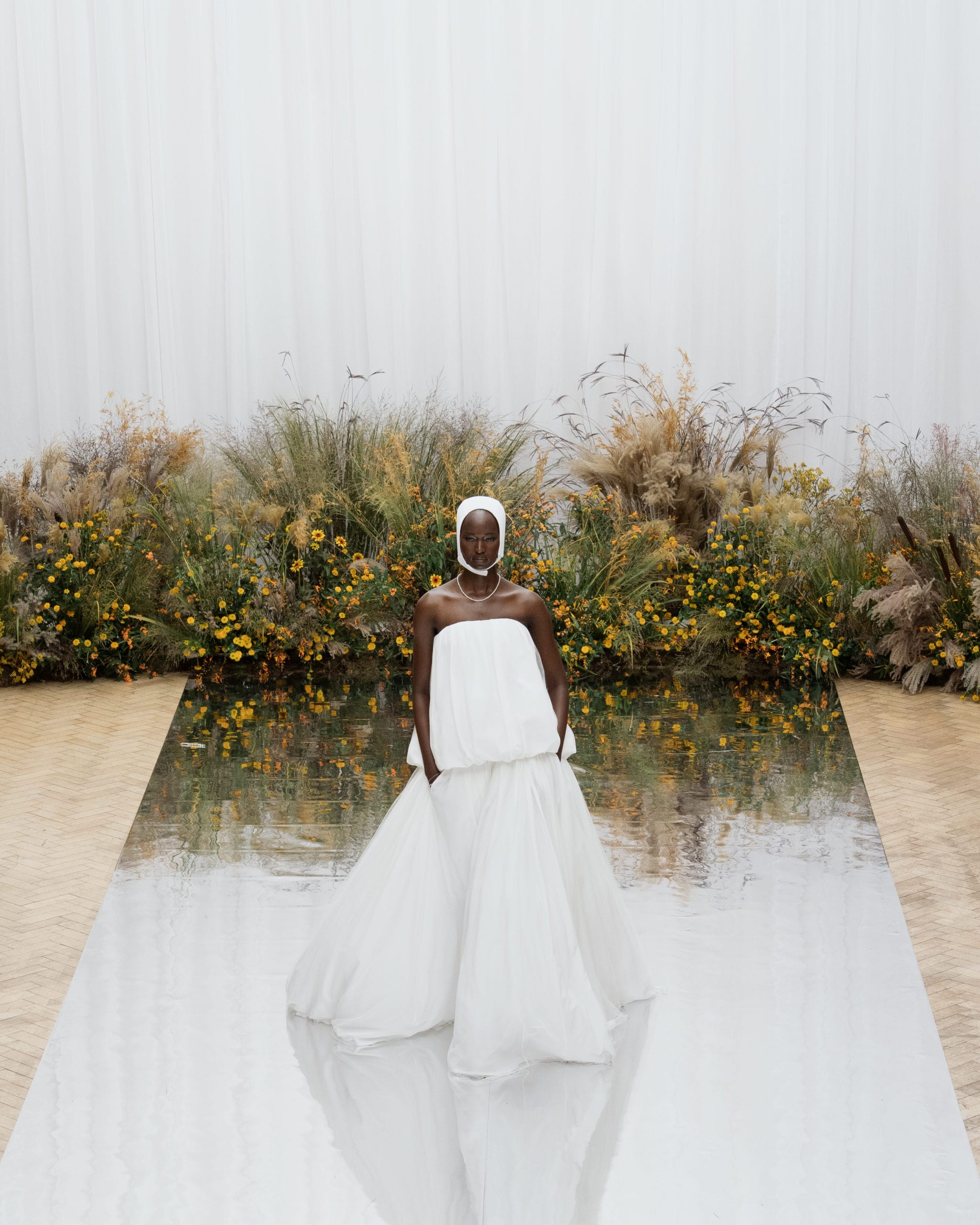
Product launches are about creating a moment. The flowers need to support the reveal without competing with it. This often means restraint in the product display area and impact at the entrance or in the wider reception space. Floral work at a launch is typically a single, large-scale installation: a wall, a suspended piece, a ground-level landscape, positioned so that guests move through or past it as they arrive. The flowers create the first impression. The product delivers the second. Our work for Cartier on the Festival of Love and Light at The Dorchester is an example of this logic applied at scale: a singular floral architecture framing the brand moment, in a palette drawn directly from the house.
Gala Dinners and Awards
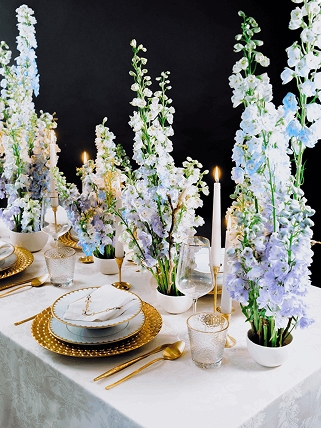
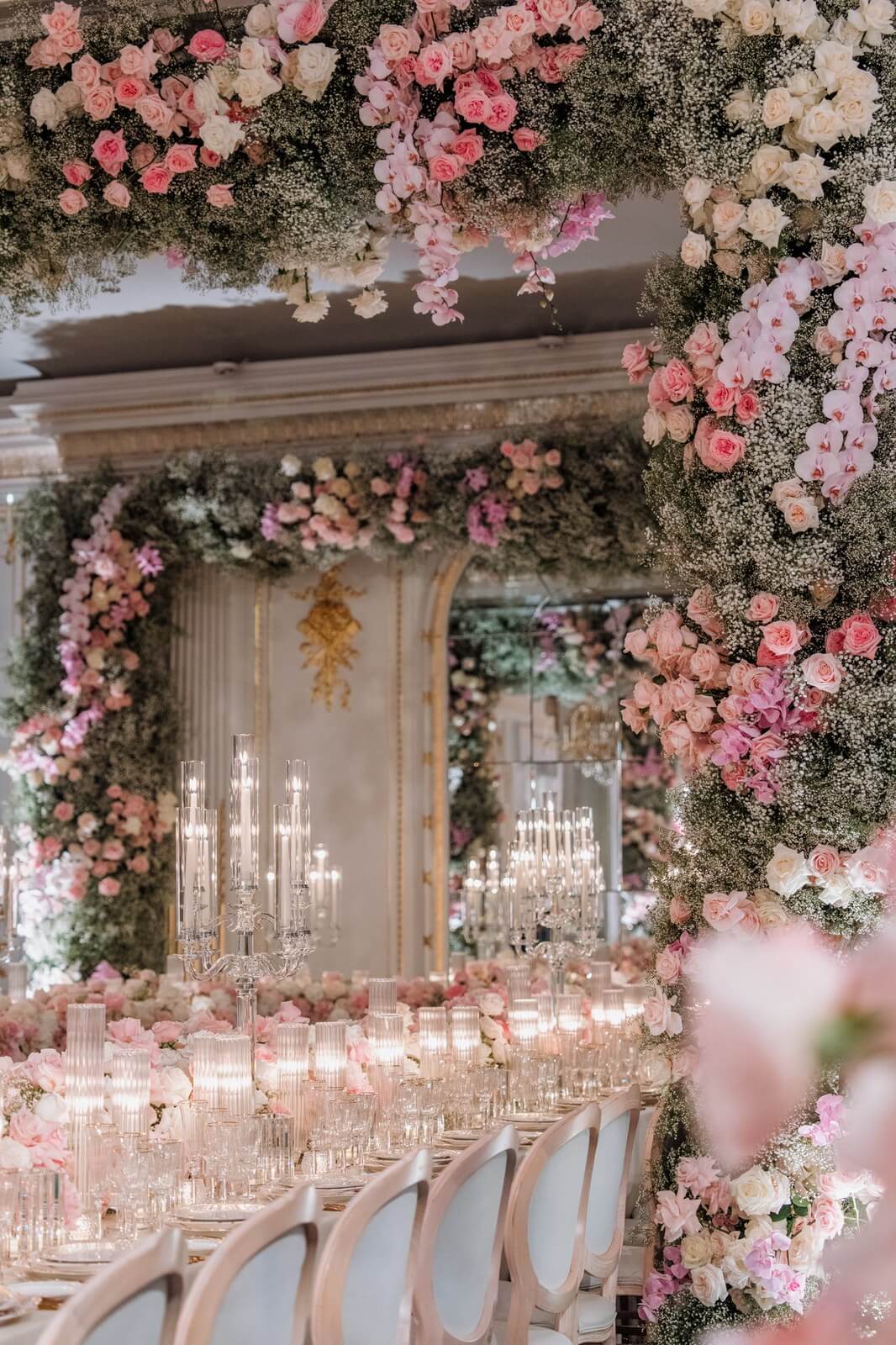
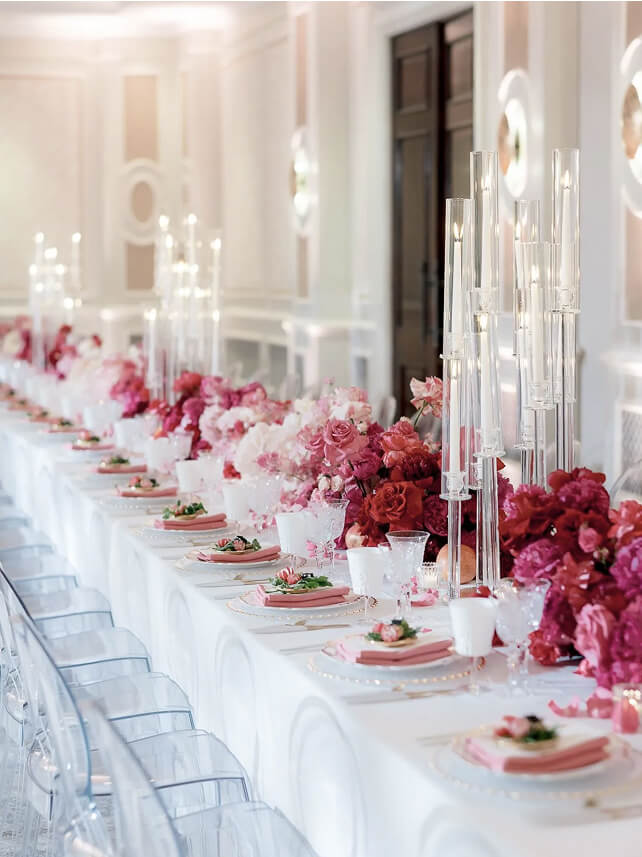
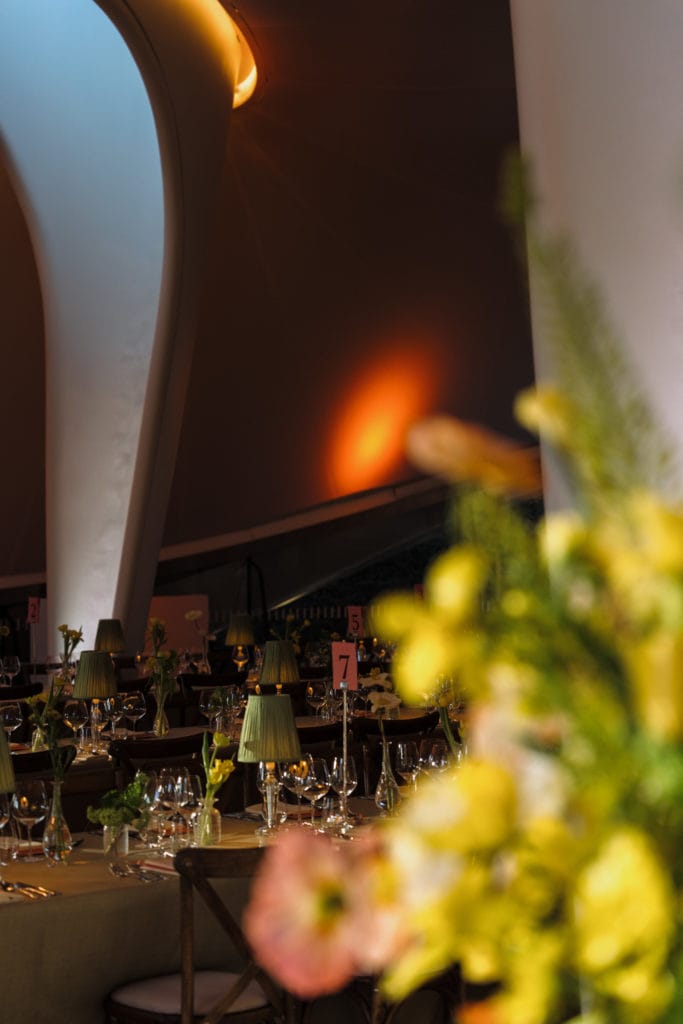
Seated dinners present specific design challenges. Table arrangements need to work at eye level when guests are seated. They cannot obstruct sightlines to the stage. They need to look good from every angle, not just the front. And they need to survive three or four hours of warm room temperature, candlelight, and occasional contact. For gala dinners in grand heritage spaces, the scale of the room demands larger arrangements, but the table surface demands precision. The balance between architectural impact and practical restraint is where the design skill lives. We work regularly with Artfarm, the hospitality group behind some of London’s most considered restaurant interiors, on dinners where the flowers have to hold their own alongside serious interior design and a sophisticated room.
Conferences and Summits
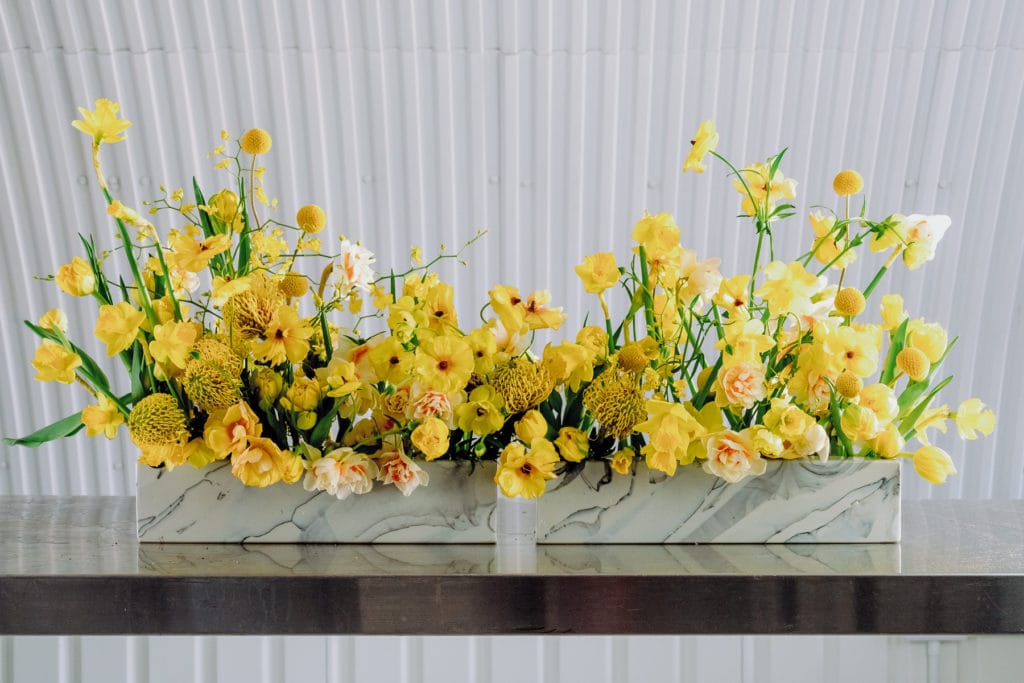
Conference florals tend toward the understated. The purpose is to bring warmth and quality to spaces that can otherwise feel clinical. Stages, podiums, registration areas, breakout rooms. A single considered arrangement on the main stage. Seasonal compositions at the registration desk. Something green and alive in the networking areas. The brief is usually simple. Make the space feel human without distracting from the content.
Serpentine Gallery Flowers
Press Events and Previews
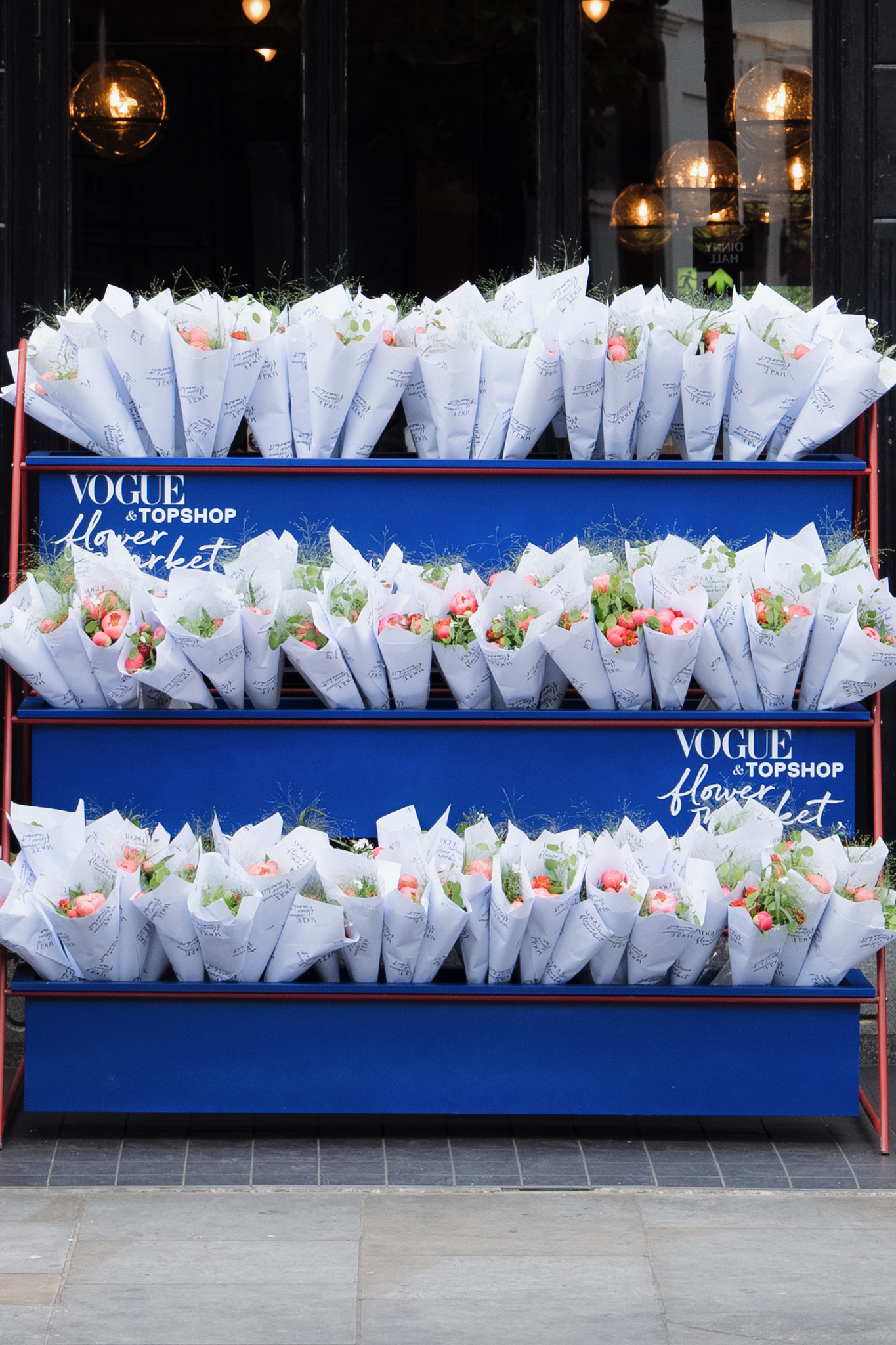
Press events need to be photogenic. The floral work will appear in editorial coverage, on social media, in photographers’ portfolios. This changes the design approach. Compositions need to read well in photographs, which means considering background, scale, and colour contrast. We design press events knowing that the flowers will be photographed from multiple angles, in varying light, often by professionals who understand composition. The British Vogue Fashion & Film Party, which we have designed for Condé Nast at Annabel’s for three consecutive years, is a useful benchmark. The flowers are read in the room by guests and simultaneously in the pages of Vogue by readers who will never attend. The work has to hold in both contexts.
Private Client Entertaining
Some of the most interesting corporate floral work happens in private settings. A bank hosting clients at a Mayfair townhouse. A law firm entertaining at a private members’ club. A family office hosting a dinner at their home. These events are intimate, and the flowers reflect that. The approach is more residential. Considered, warm, understated. The Birley Clubs, which operate Annabel’s, Mark’s Club, and George, are the natural setting for this kind of work, and we design corporate dinners and receptions there throughout the year. Often the brief is simply: make it feel like someone cared.
Choosing the Right Floral Partner
Not every florist is suited to corporate work. The design sensibility matters. So does the operational capability: the ability to deliver complex installations on time, within budget, and to a consistent standard. When evaluating a corporate floral partner, look for a studio with:
- A portfolio that demonstrates range and brand sensitivity
- Direct experience with your category of venue and event
- The operational infrastructure to manage installation and breakdown at scale
- A defensible approach to sustainability, supported by independent accreditation
- The ability to work alongside lighting designers, set builders, caterers, and event producers as part of a collaborative team
- Insurance cover at a level that matches the venues and events in question
Our Credentials
Blooming Haus is the only event florist in the world with both B Corp and Planet Mark certification. We hold £10M public liability insurance, operate an electric van fleet, and are approved floral suppliers at Raffles London, Annabel’s, Mark’s Club, George, the Serpentine Galleries, Two Temple Place, and Selfridges Duke Street. Our corporate clients include Cartier, Condé Nast, The Birley Clubs, Raffles London, and Artfarm, alongside ongoing and project work with other leading luxury, publishing, hospitality, and cultural organisations.
The Design Process
Initial Conversation
Every corporate event begins with a conversation about the brand, the space, and the purpose of the event. The question is what the event is trying to achieve, and where the flowers fit within that ambition. This is not a sales meeting. It is a design conversation. We ask about the brand’s visual identity, the guest experience the client is trying to create, the venue’s characteristics, and any constraints: load-in times, ceiling heights, rigging points, protected surfaces.
Concept and Proposal
After the initial conversation, we develop a concept that responds to the brief. This includes mood references, a proposed palette, a breakdown of floral moments across the venue, and a detailed budget. For larger commissions, we produce rendered visuals or detailed sketches. For ongoing relationships, where the client and the design language are already established, the process is more fluid.
Sourcing
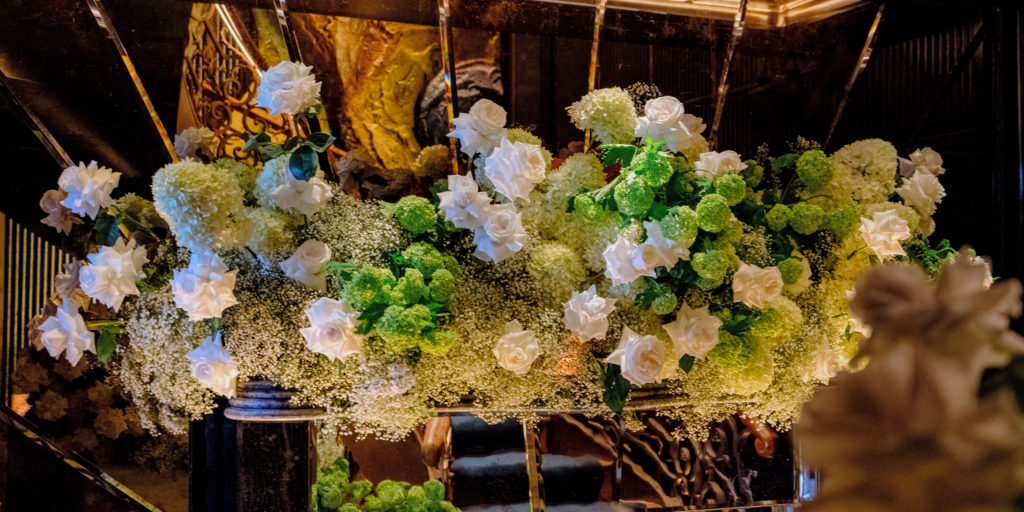
Flowers are sourced from a combination of Dutch auction houses, specialist growers, and British flower farms. The sourcing depends on the season, the brief, and the specific varieties required. For events where colour matching is critical, brand launches in particular, we source and condition stems in advance to ensure the palette is precise. This is not approximate work. A shade of pink that is slightly too warm or too cool can jar against a carefully designed brand environment.
Installation
Installation for corporate events is a logistics exercise as much as a creative one. Major London venues each have their own access requirements, load-in windows, and restrictions. We manage the full installation process: transport, load-in, build, water management, and breakdown. For large-scale installations, this can involve a team of six to eight florists working through the night. For a smaller dinner, it might be two people and a morning.
Breakdown and Sustainability
After the event, we return to break down the installation. Materials are removed. Flowers are donated through our partnerships with Confetti Club and Floral Angels, so they continue their life with hospitals, hospices, and care homes in London. Remaining green waste is composted. The foam-free approach means there is no plastic waste from the floral design itself. We are the only event florist in the world with both B Corp certification and Planet Mark accreditation. Sustainability is built into the process, not applied as a talking point.
What Shapes the Investment
Corporate event flower budgets vary significantly based on the scope of work. Four factors shape the figure.
Scale
A dinner for forty at a private club is a different commission from a launch event for three hundred at a public venue. The number of guests, the number of spaces to dress, and the physical scale of the venue all affect the budget.
Complexity
A ground-level arrangement is less complex than a suspended installation. A table centre is less complex than a floral wall. Complexity relates to the infrastructure required: rigging, structural support, water management, not just the number of stems.
Season
Seasonal sourcing affects availability and cost. A summer event has access to the widest range of British-grown flowers. A winter event may rely more heavily on imported stems and structural foliage. Neither is inherently more expensive, but the approach differs. Our seasonal guide explores which flowers lead each quarter of the year.
Logistics
Load-in times, venue access, overnight builds, early-morning deliveries are all factored into the cost. Central London venues often have restricted access windows, which can require larger teams working in shorter time frames.

Working With a Brand Over Time
Some of our most satisfying corporate relationships are ongoing. We work with brands across multiple events, developing a floral language that evolves with their programme. Our relationship with Raffles London, where we are both the approved floral supplier and the contract florist, is one example. The flowers for a private corporate dinner in the Guards Chapel, a press reception in the Spencer House suite, and the public floral presence across the hotel all sit within a shared design language developed over time. This kind of continuity produces better work. We understand the brand. We know the venues they favour. We have a shared visual vocabulary that makes the design process more efficient and the results more coherent. For brands with regular event programmes, we offer retainer arrangements that provide design continuity, preferential scheduling, and streamlined communication. This is separate from our contract flowers service, which covers permanent floral installations for commercial spaces.
Related Reading
Starting the Conversation
Corporate event florals work best when the conversation begins early. For large-scale events, eight to twelve weeks’ lead time allows for considered design development, sourcing, and logistics planning. For smaller commissions, three to six weeks is usually enough. Get in touch to discuss your event. We start with the brief: the brand, the space, the purpose, and develop a proposal from there.
You may also like: