

London Wedding Venues That Come Alive With Flowers
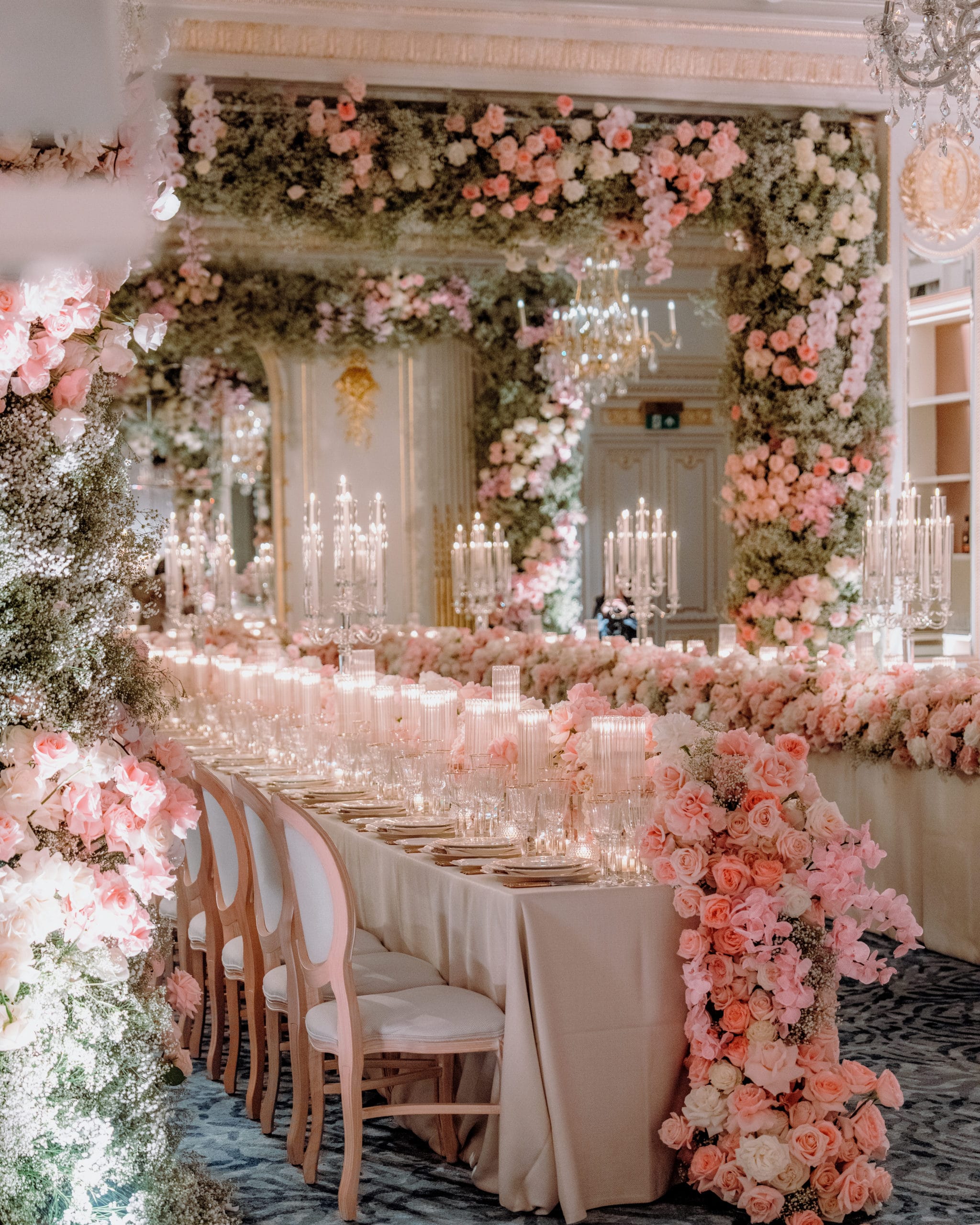
Some spaces resist flowers. Others drink them in. What follows is a view from the studio. A venue-by-venue account of how London’s most celebrated rooms take flowers: which ones reward restraint, which ones demand scale, and where the design begins long before the first stem is chosen. We have worked across most of these venues, many of them repeatedly. The notes below are written from the floor rather than the brochure.
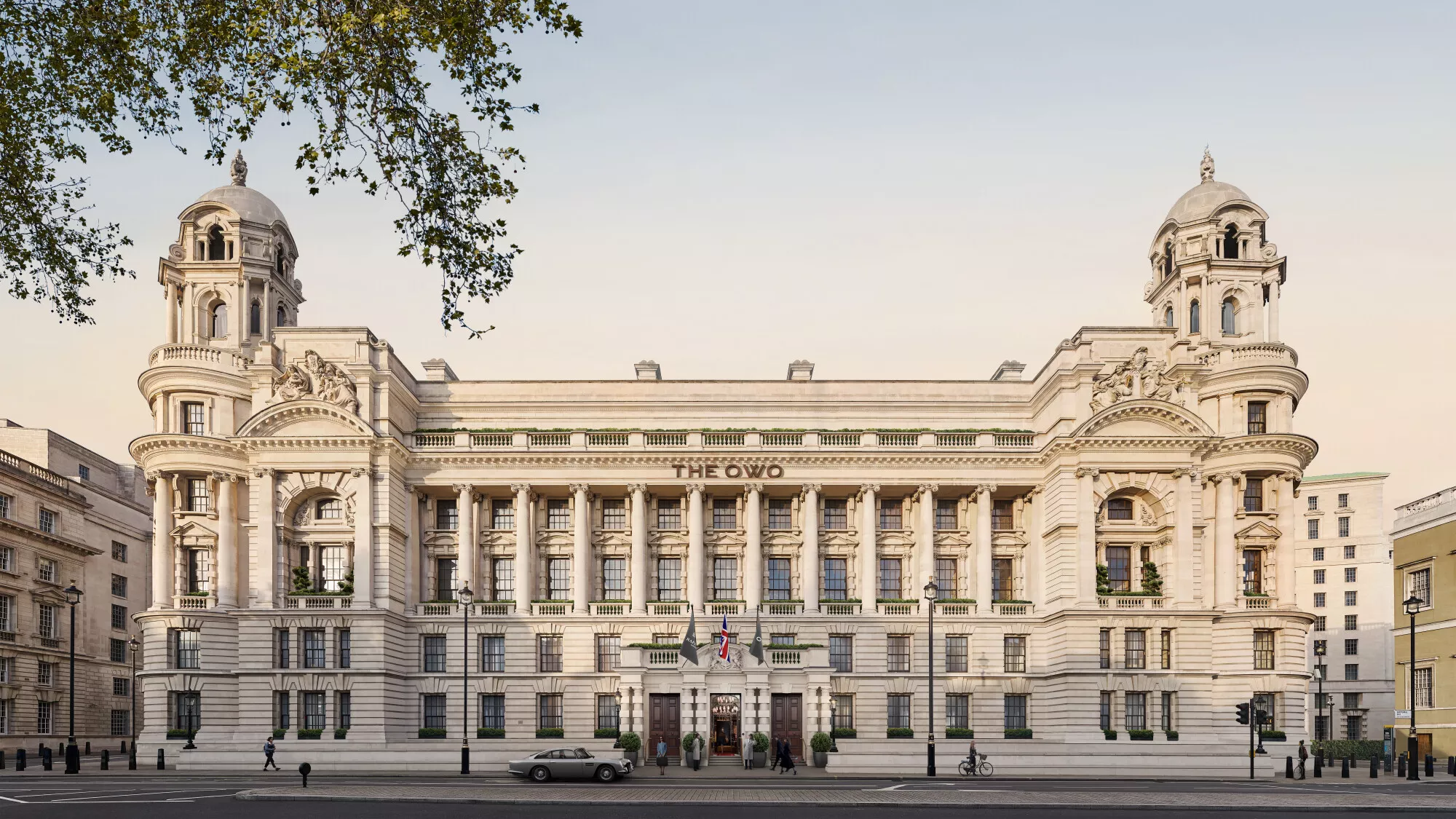
Raffles London at The OWO
The former Old War Office is a study in scale. The grand staircase, with its ironwork balustrades and soaring ceilings, was designed to impress before a single flower is placed. We are the contract florist at Raffles London, which means we know the building’s rhythms: where the light lands through the day, which corners the eye returns to, and how flowers read against restored Edwardian plasterwork.
What works. Cascading garlands down the staircase. Large-scale urn arrangements in the lobby. Table runners that echo the building’s symmetry without fighting its grandeur. Ivory, blush, and soft copper sit well against the warm stone.
What to consider. The venue is visually rich. Restraint is essential. A few considered arrangements in the right places will do more than flowers everywhere. This is not a venue that rewards volume.
Venue: raffles.com/london
Claridge’s
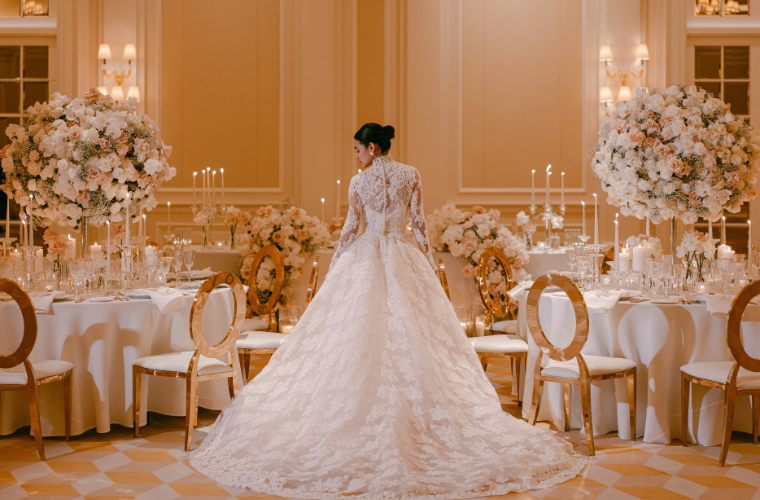
Art Deco at its most refined. The black-and-white chequerboard floor, the mirrored surfaces, the soft geometry of the ballroom: Claridge’s does not need flowers to be beautiful. But the right flowers make it unforgettable.
What works. Structured arrangements that honour the Deco lines. Monochrome palettes, masses of a single variety, all-white roses in sculptural form. Tall, columnar arrangements echo the vertical proportions of the foyer and ballroom.
What to consider. The venue team are exacting about placement and timing. Plan the logistics carefully and work with their operations team, not around them. Installations go in late and come out clean. There is no space for improvisation on the day.
Venue: claridges.co.uk
The Dorchester
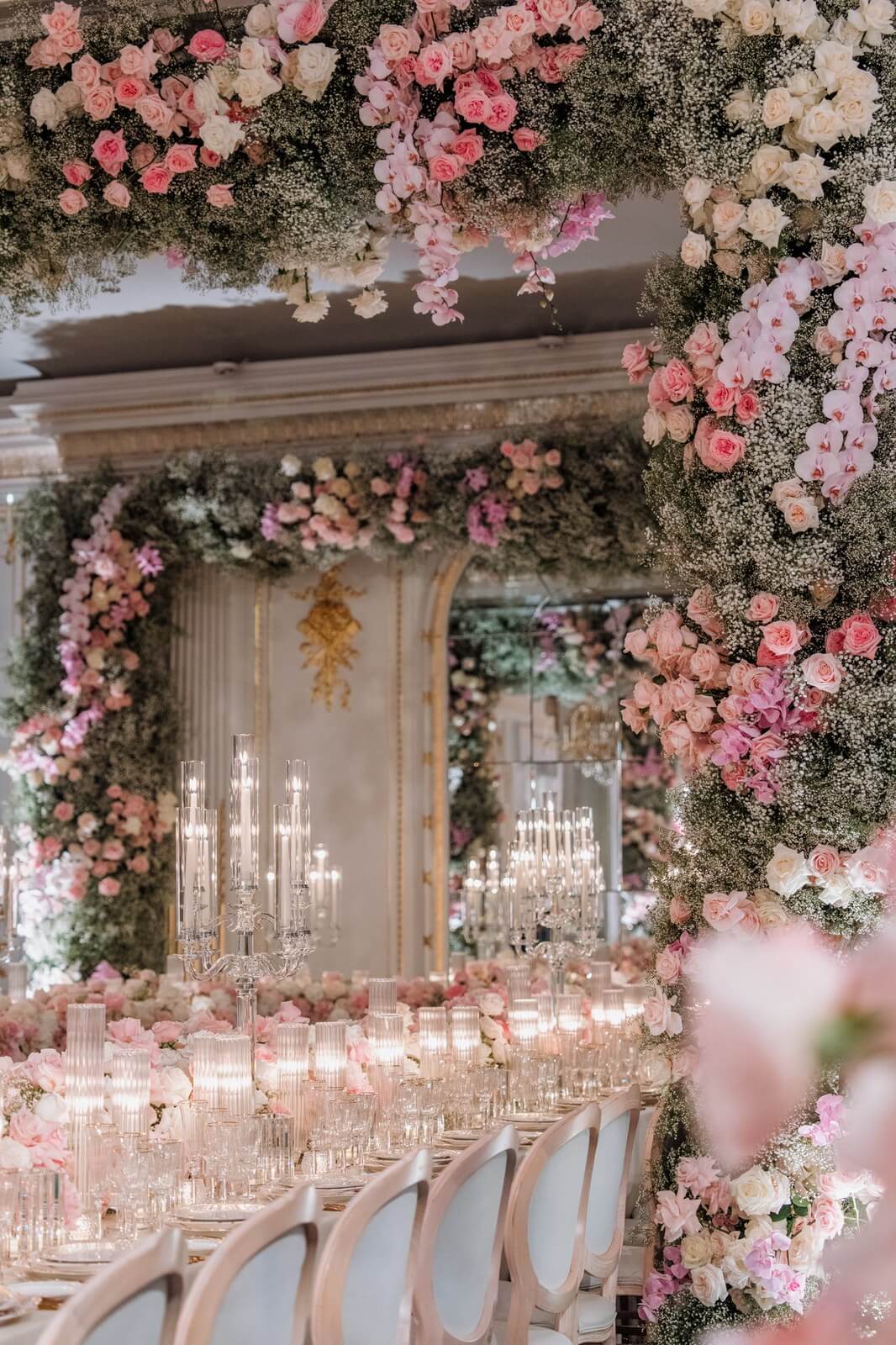
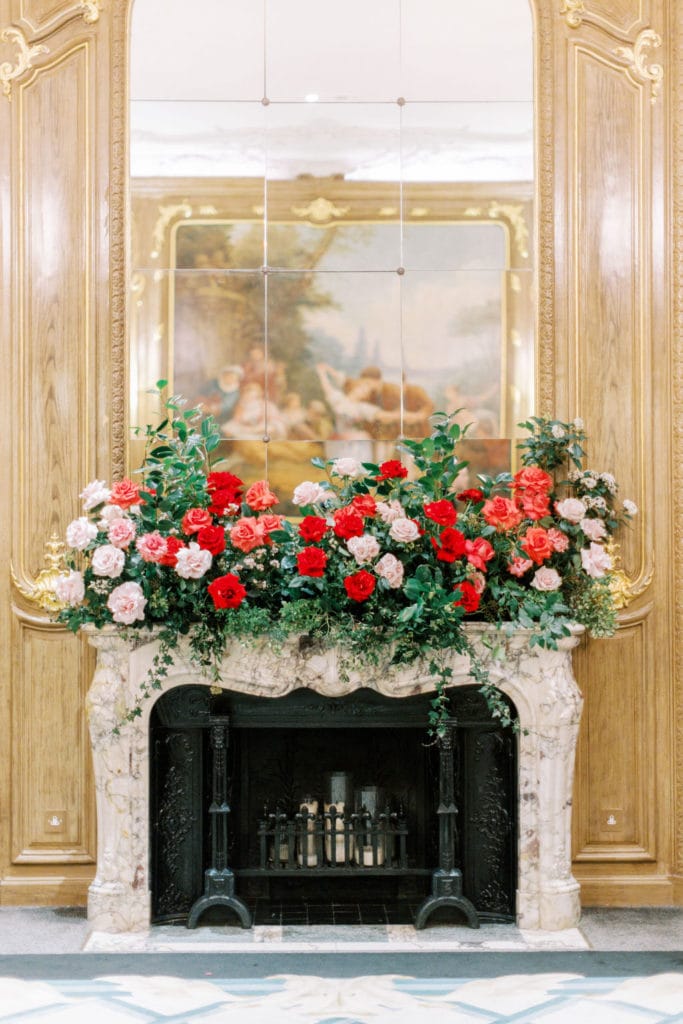
Park Lane’s most theatrical hotel. The Ballroom is one of the few rooms in London that can absorb significant scale without losing intimacy. We designed flowers for the Condé Nast Traveller x Cartier Festival of Love and Light here, which gave us a close understanding of how the space holds light and reflection.
What works. Ceiling installations over the top table or dance floor. The height is generous and the light reads warmth beautifully. Rich palettes of garden roses, ranunculus, and sweet pea read well against the gold detailing.
What to consider. The chandeliers are significant architectural features. Suspended florals need to converse with them rather than compete, which takes careful measurement and a rigging plan agreed with the venue in advance.
Venue: dorchestercollection.com

The Savoy
The Lancaster Ballroom is one of the grandest wedding rooms in London. Art Deco silver leaf, a sprung dance floor, and a stage that was designed for performance. The River Room looks out over the Thames and offers the opposite register: lighter, more intimate, more atmospheric in natural daylight.
What works. The Lancaster Ballroom rewards height and statement pieces: long elevated runners, grand pedestal arrangements framing the top table, a floral architecture that matches the room’s operatic scale. The River Room asks for something softer. Garden-style centrepieces with movement, loose bouquets on the sideboards.
What to consider. The building has separate loading access and the hotel operates a strict delivery window. Arrive late and the day compresses fast. We always plan a pre-site visit, even for rooms we know well.
Venue: thesavoylondon.com
The Ned
A vast former banking hall, Grade I listed, with soaring columns and original 1920s interiors. The scale is cinematic.
What works. The columns create natural framing for large-scale arrangements. Floor-standing urns at the base of each column, or a suspended installation above the top table. Rich autumn tones of burgundy, terracotta, and amber sit well against the warm stone and brass.
What to consider. Sound carries in the space. Visual drama needs to be concentrated rather than dispersed, or it loses impact across the room. Small florals disappear at this scale. The design brief is installation, not decoration.
Venue: thened.com
Annabel’s, Mayfair
Every room at Annabel’s is a different mood. The Nightclub is dark and immersive. The Garden is lush and light. The Restaurant is gilded and intimate. We have designed flowers for the British Vogue Fashion & Film Party at Annabel’s for three consecutive years, and the experience has taught us that this is a venue where flowers have to enter into dialogue with the existing interiors rather than overwrite them.
What works. A design that reads the room. In the Garden, lush garden-style installations that extend the existing planting. In the Restaurant, tight, jewel-toned compositions that respond to the gilding. In the Nightclub, bold, sculptural pieces that hold up against low light and strong colour.
What to consider. Plan by room, not by venue. A single palette will not work across all three spaces. The flowers should evolve as guests move through the building.
Venue: annabels.co.uk

Spencer House
One of London’s most complete 18th-century private palaces, tucked behind St James’s. The State Rooms were designed as ceremonial spaces, and they still read as such: gilded, mirrored, and formal in a way few London venues can match.
What works. Classical floral compositions that honour the period. Structured pedestal arrangements in the Palm Room. Candlelight paired with roses, peonies, and garden foliage in the Great Room. Soft, painterly palettes that echo the plasterwork.
What to consider. This is a heritage interior of the highest order. Fixings, water, and open flames are tightly controlled. Every element has to be planned, presented, and signed off in advance. No candles without approval, no fixing to walls or ceilings, nothing left to chance.
Venue: spencerhouse.co.uk
Two Temple Place
William Waldorf Astor’s late-Victorian townhouse on the Embankment. Stained glass, carved mahogany, a Great Hall with a marble floor and a hammerbeam ceiling. An unusual venue, and among the most visually generous in London.
What works. The architecture is so richly detailed that flowers should add depth rather than contrast. Seasonal, painterly arrangements in muted tones. Tall candelabra with low, loose centrepieces along long tables in the Great Hall.
What to consider. The venue is protected and historic. Loading access is narrow, installation windows are short, and timing has to be choreographed with the rest of the supplier team. Plan to install in sequence, not parallel.
Venue: twotempleplace.org
The Barbican
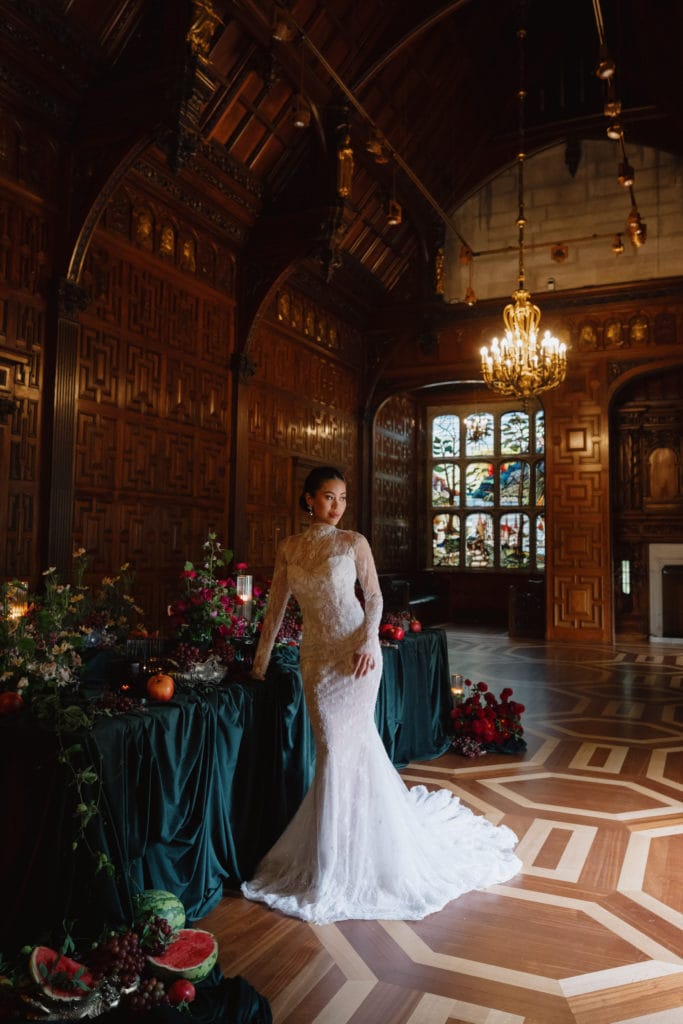
Not an obvious choice for a wedding, and that is precisely the point. The Brutalist architecture, raw concrete, geometric forms, hard angles, provides an extraordinary canvas for florals. When Roksanda Ilincic used the Barbican for her show, we anchored the runway with structural compositions that worked with the building rather than against it.
What works. Architectural flowers. Strong forms, proteas, anthurium, sculptural branches. Single-variety installations that mirror the building’s discipline. White and green against grey concrete is striking.
What to consider. The scale is significant. Small posies will be swallowed. Think in terms of installations, not arrangements. Colour needs to be chosen deliberately: too much warmth and it fights the palette; too little and the flowers disappear.
Venue: barbican.org.uk
Serpentine Gallery
The annual Serpentine Pavilion is one of the most architecturally interesting temporary structures in the world, and the two permanent galleries sit in Hyde Park, surrounded by open green space. A rare combination in London.
What works. The gallery spaces themselves are minimal and light, so flowers should be considered and specific: a single major installation rather than a dispersed set of arrangements. In summer, the landscape outside extends the design. Loose, meadow-style work in stone urns reads beautifully against the park.
What to consider. Gallery interiors have strict protocols around water, fixings, and flooring. Design around the permitted materials early rather than discovering restrictions on the day.
Venue: serpentinegalleries.org
Kew Gardens
The Temperate House and Nash Conservatory offer something no other London venue can: a living botanical backdrop. Thousands of rare plants surround your guests.
What works. Restraint. The venue is already a garden. A few carefully placed compositions, at the ceremony point and on the tables, will integrate with the existing planting. Seasonal, garden-style florals work best. Anything too polished will look out of place.
What to consider. Temperature and humidity inside the glasshouses are managed for the plants, not for cut flowers. Some varieties wilt faster in the warmth. Talk to your florist about hardier alternatives, and build in a refresh window closer to guest arrival.
Venue: kew.org
What to Ask Your Florist About a Venue
Before the design conversation begins, there are practical questions worth answering.
- Access hours. When can the team load in? How long do they have to install? Some venues allow overnight access. Others give you three hours on the morning.
- Restrictions. Are candles permitted? Can you fix to walls or ceilings? Are there protected surfaces? Is there running water on site?
- Existing florals. Some venues, particularly hotels, have their own contract florist for daily arrangements. How do your wedding flowers sit alongside their existing displays?
- Tear-down. When must everything be removed? Can vessels be collected the following morning? Is there a penalty for late strike?
- Power and rigging. Suspended installations require rig points. Some historic venues have none. Check before the design is agreed, not after.
Choosing a Venue With Flowers in Mind
If you are still choosing your venue, consider the bones of the space.
- Ceiling height determines whether suspended installations are possible, and whether they will have impact. Low ceilings compress the design. High ceilings reward scale.
- Natural light affects how colours read. Candlelit evenings favour warm tones. Daylight suits softer palettes. A room that is dark at the ceremony and bright at the breakfast needs two different palettes, or one that holds up in both.
- Architectural character tells you whether to complement or contrast. A minimal gallery space invites bold florals. An ornate ballroom calls for restraint.
- Circulation. How guests move through the venue determines where flowers have most impact. Entrances, key sightlines, the top of a staircase, the head of a dining table. These are the points that carry weight.
Related Reading
Starting the Conversation
We work across London and beyond. If you are planning a wedding and thinking about how flowers might shape the day, we would welcome a conversation.
You may also like: