


How We Achieved Zero Waste to Landfill: A Florist’s Circular Operation Explained
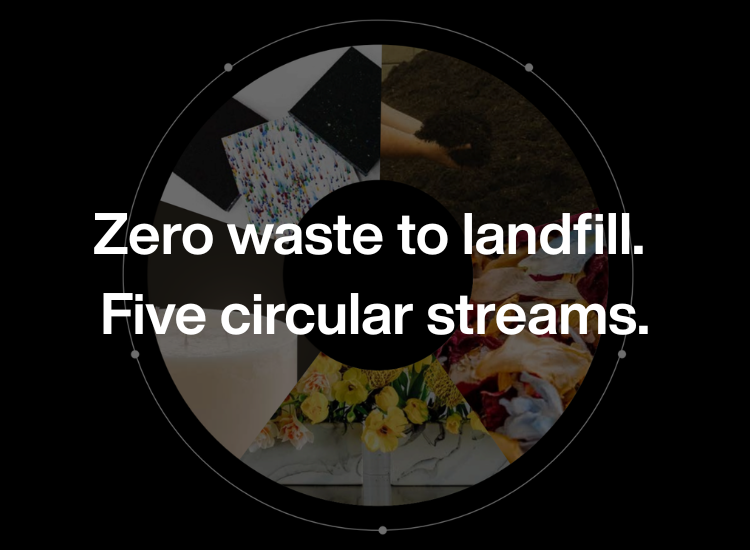
38 tonnes of waste material. Zero waste to landfill.
That’s what our operation generated and achieved between 1 July 2024 and 31 December 2025.
But how?
Stems. Petals. Cling film. Spent candles.
The materials behind every beautiful wedding or corporate event – we stopped seeing them as waste to be managed, and started seeing them as resources waiting for the right partner.
For our industry, there are no standardised recovery pathways. No benchmarks. No map.
So we built one.
At Blooming Haus – a Certified B Corp™ and Planet Mark certified floral design & events company – we’ve spent two years developing five circular waste-to-resource loops, without external funding and without an industry blueprint to follow.
Here’s how we achieved zero waste to landfill with a 78% repurposing rate.
How We Achieved Zero Waste To Landfill
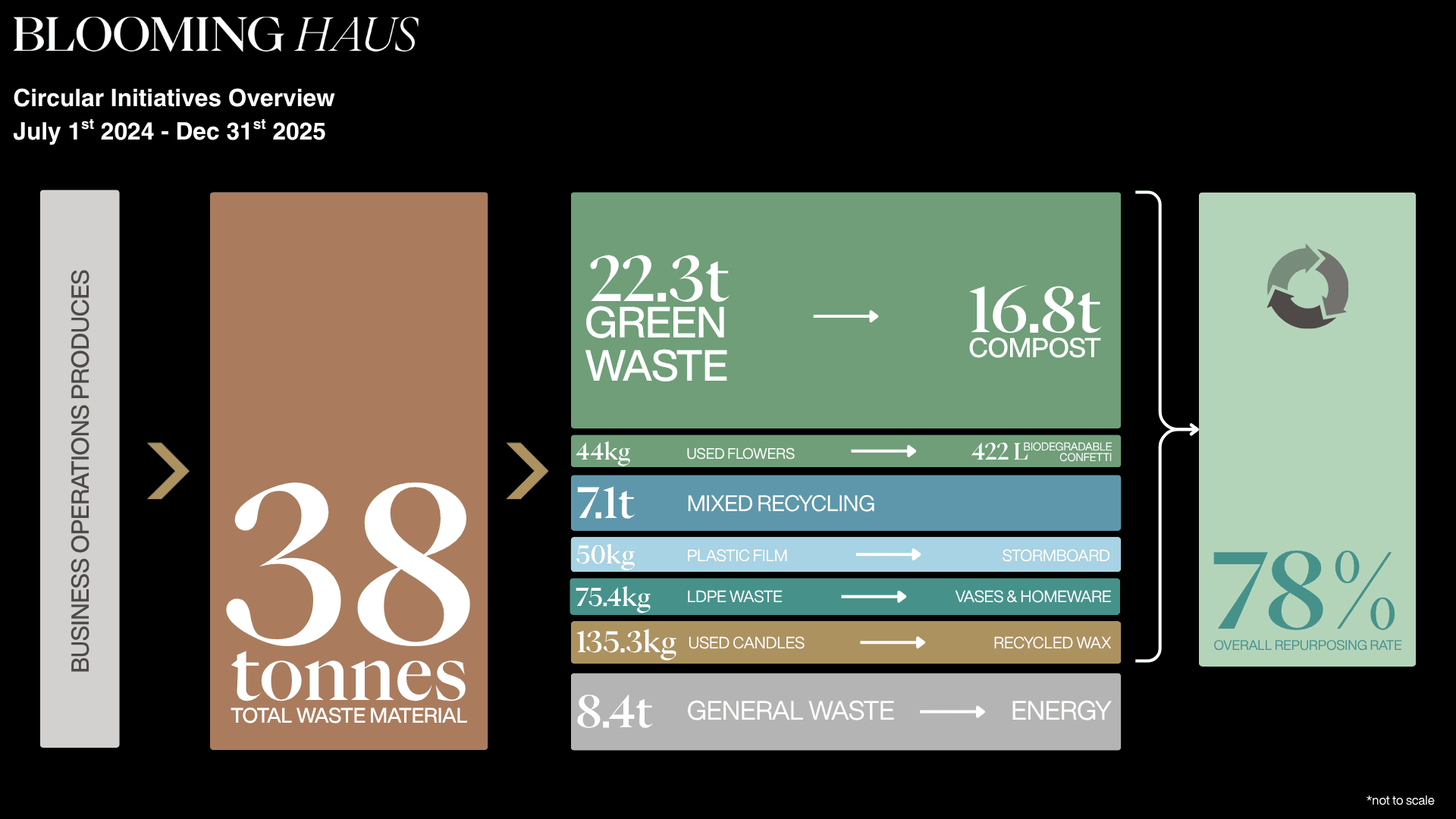
The full picture:
What does zero waste to landfill really mean?
Zero waste to landfill means no material from our operation enters landfill.
It does not mean zero waste.
The 22% of our total that sits outside the five circular loops moves through standard recycling streams or, for contaminated general waste, through municipal energy-from-waste processing.
We distinguish between the two categories because combining them is one of the ways this language gets misused.
The five loops are where we’ve done the hardest work, and they’re where the real circularity sits.
- Green waste – stems, leaves, offcuts. The organic backbone of everything we make.
- Used flowers – spent blooms that have done their job beautifully and still have more to give.
- Plastic film – the wrapping around individual flower bunches as they arrive from our suppliers.
- LDPE waste – the heavy-duty wrap securing entire trolleys in transit, keeping buckets stable on the road.
- Used candles – returned from events with more wax remaining than most people realise.
None of them had an established recovery pathway in the floristry industry when we started.
Together, they are what makes zero waste to landfill operationally possible – not as an aspiration, but as a verified outcome.
Here’s how.
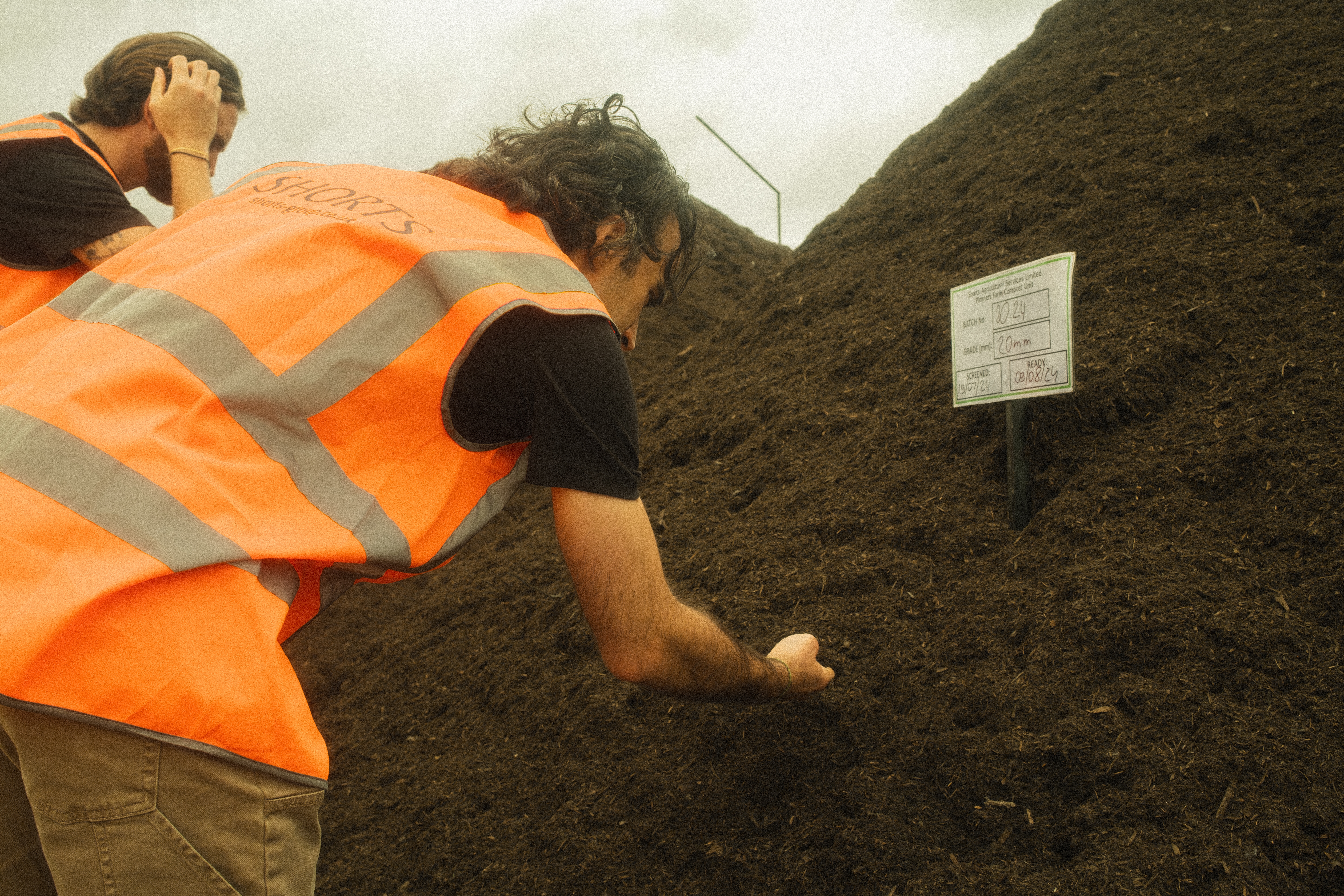
1. Green Waste > British Compost (Com:post)
Flowers are organic matter.
That much is obvious.
What is less obvious is that returning them to the earth properly takes more discipline than it sounds at scale.
We backed Com:post early, as a founding partner, because they understood the specific challenges of floral waste and had the direct sector experience to handle it properly.
But choosing the right partner was only half the work.
The other half happened inside our studio.
Composting only works if what goes in is clean.
That means every team member knowing exactly what can and cannot enter the stream – no wire, no contaminated material, etc.
We built that knowledge into onboarding from day one, and refresh it regularly so that as the team grows, the standard doesn’t slip.
The result is a composting stream our partner can actually use.
Between July 2024 and December 2025, the 22.3 tonnes we diverted produced 16.8 tonnes of compost returned to British agriculture.
Com:post has since grown into a nationwide operation – and the consistency of supply from committed commercial partners is part of what made that scale possible.
Clean inputs.
Trusted partners.
Genuine outcomes.
2. Spent Petals > Biodegradable Confetti (Confetti Club)
No one likes to see beautiful blooms go to waste.
Especially us.
So, we started looking for ways to extend their life beyond the event…
That’s when we found Confetti Club who collect petals, slowly dehydrate them to draw out moisture and preserve their colour and form.
The result?
Fully biodegradable confetti, with none of the environmental harm of conventional alternatives.
We shaped Blooming Haus’s involvement from the start and helped build a model that now runs alongside our core operations.
Our team sorts petals at collection, ensuring only the right blooms – the right colours, the right condition – enter the dehydration process.
Confetti Club donates all profits to Cancer Research UK.

Cumulatively, since this initiative began in 2023 it has generated £22,524 in revenue for Confetti Club – with all profits donated to Cancer Research UK.
Spent petals, carefully sorted by our team, funding crucial research.
A material that was waste.
A product with purpose.
A cause that compounds.
If you’re searching for beautiful confetti for your wedding or event look no further > https://www.confetticlublondon.com/shop
3. LDPE Plastic Waste > Vases & Homeware (Weez & Merl)
LDPE plastic waste is the material our delivery trolleys come wrapped in, to prevent buckets from falling off during transport.
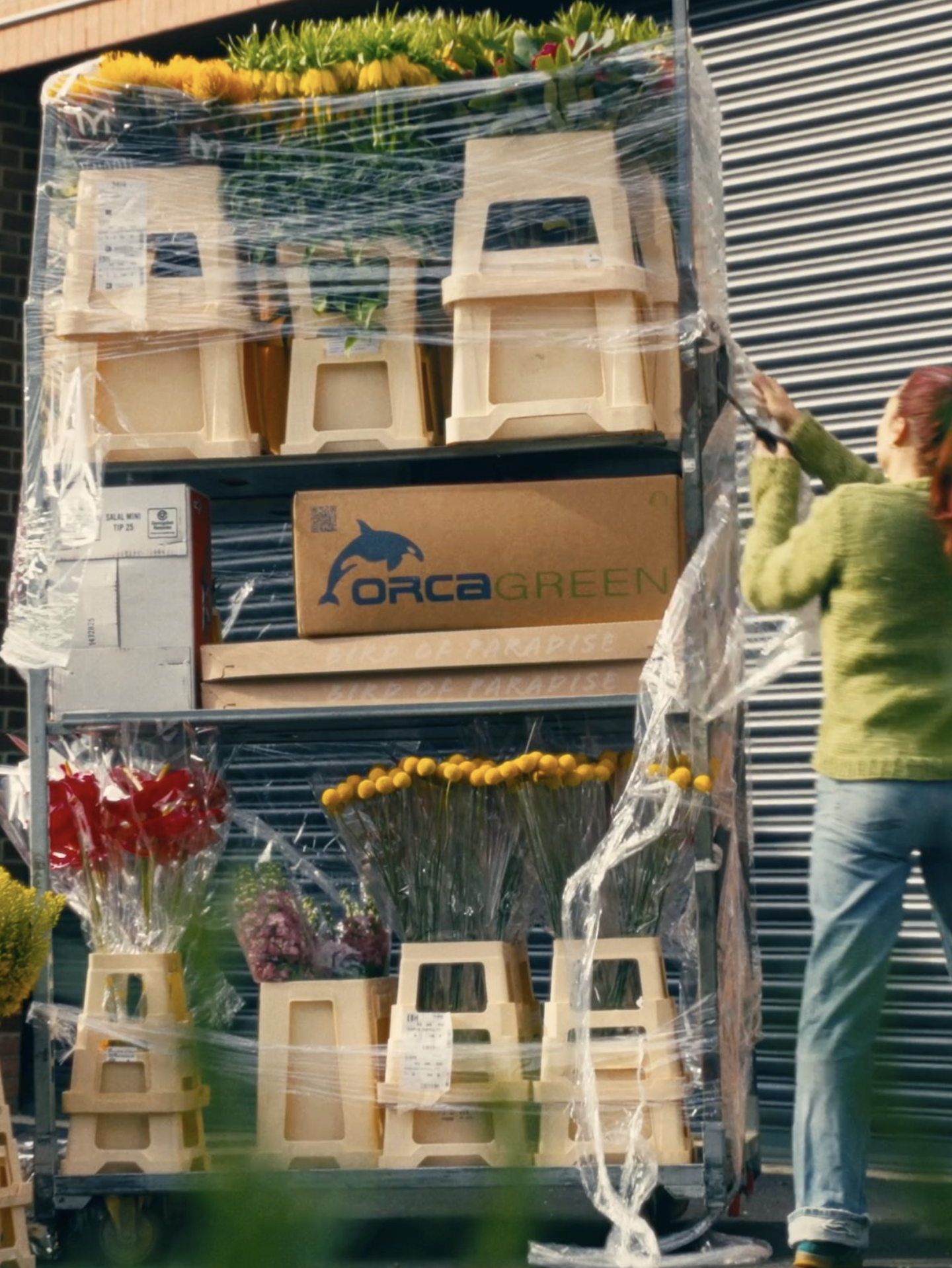
Week after week, that LDPE (low-density polyethylene) plastic accumulates.
Previous waste contractors told us they were handling it.
We investigated.
Most of it was being incinerated.
We refused to accept that as a solution.
We decided on a more creative outlook and approached Weez & Merl, visited their studio to understand their process first-hand, and built a supply arrangement that works for both sides.
We dispatch our sorted LDPE in bulk; they receive a reliable source of clean material that kerbside collections turn away; and from it they produce circular-design vases and homeware – more recently furniture for our own studio is currently in production (we’ll be sharing more on that soon)!
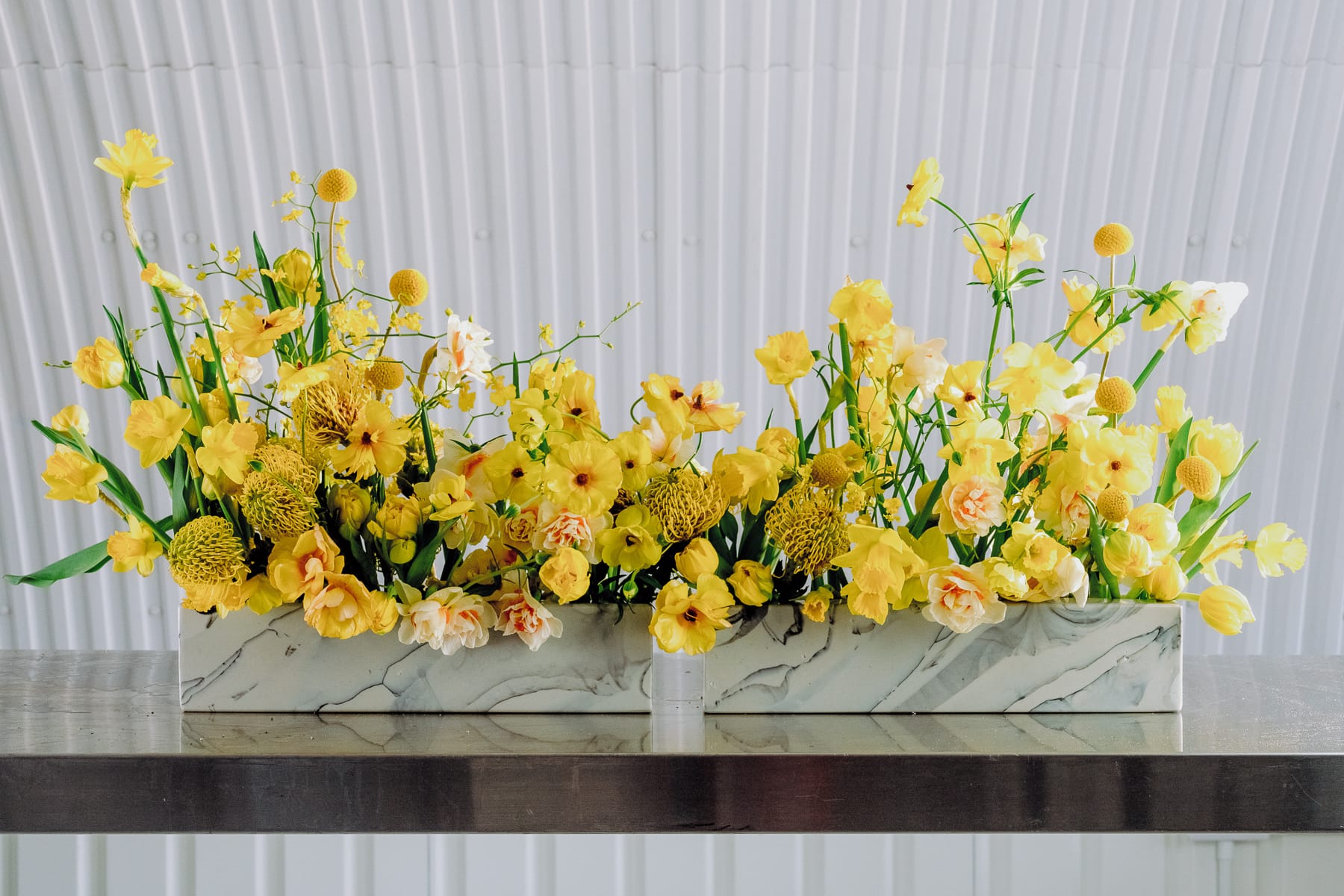
The vases shown above were created using this process.
In 18 months, 75.4kg of LDPE waste passed through this loop – material that would otherwise have been burned.
We absorb all collection and transport costs across every initiative.
That is not incidental.
It is the reason the system works in practice, rather than only on paper.
4. Film Plastics > Construction Boards (Recorra)
Film plastics is mostly what flower bunches that we order come wrapped in.
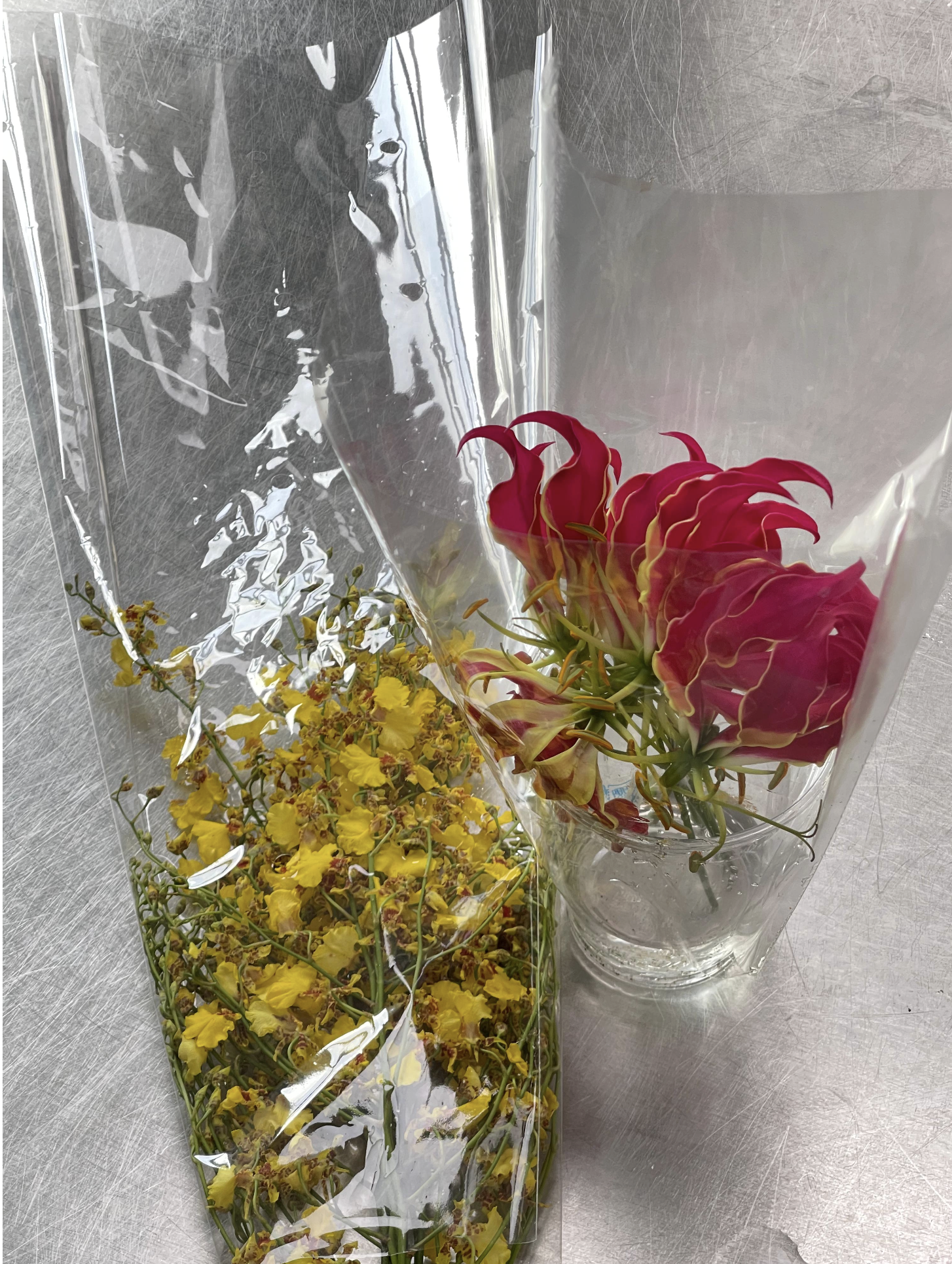
Previous contractors assured us they were handling our film plastics responsibly.
When we investigated, we found most were being incinerated.
We refused to accept that outcome.
After significant research, we found Recorra and their Circular Box service, which converts hard-to-recycle film plastics into UK-manufactured Stormboard construction boards.
Getting this loop operational required building new sorting disciplines across the whole team – understanding which materials qualify, how to separate and store them correctly, and how to make the volumes viable.
Since June 2025, 50kg of film plastic has gone through this route, becoming construction material rather than emissions.
The volumes at the time of reporting are modest.
The infrastructure to scale them is now built!
5. Spent Candles > Recycled Wax
After events, candles frequently come back with more than half their wax remaining.
For most of the industry, the default is disposal.
We saw a resource.

We began recovering event candles in mid-2024, identified a dedicated reprocessing partner at Recycled Wax, and formalised the loop in 2025.
Spent wax is now collected, reprocessed, and returned as recycled candles – a loop that required nothing more than the decision to close it.
Between July 2024 and December 2025: 135.3kg of used candles diverted from disposal, yielding 124kg of recycled wax.
A candle burns at an event.
We collect it.
It becomes a candle again.
One more loop closed. One more step toward zero waste to landfill.
Can a small business achieve zero waste to landfill?
Yes.
The system above was built inside a 12-person studio from first principles.
Every loop began the same way: identifying a material being wasted, finding the right partner to give it a second life, and absorbing the cost of making it viable.
No single initiative was complicated.
It was collaborative.
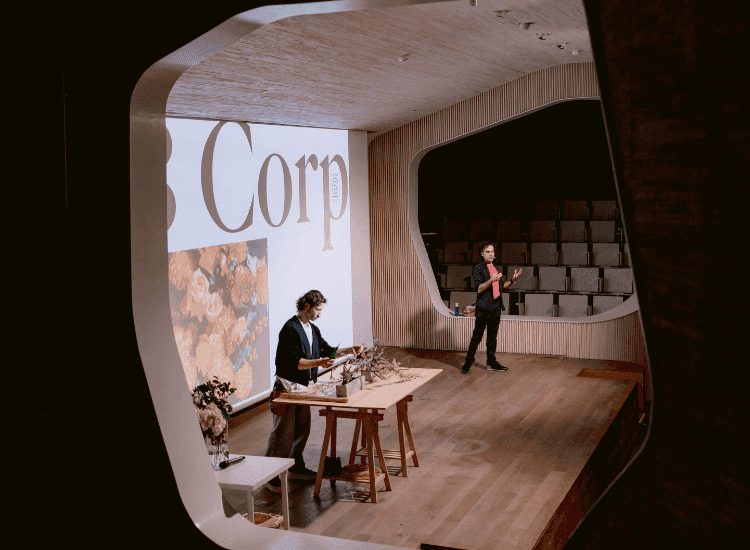
The discipline was in doing all of them consistently and measuring the results with rigor.
We share our frameworks, partner contacts, and reporting systems openly – because the point was never competitive advantage in sustainability.
It was proof that this is possible, and to lower the barrier for others to do the same.
- UK florists have adopted composting programmes we helped establish.
- Luxury hospitality clients now include circular credentials in supplier briefs because Blooming Haus demonstrated it was achievable.
- A Dutch flower wholesaler implemented FSI sustainability reporting as a direct result of conversations our team initiated during a supplier visit.
Sustainable floristry is not one big decision.
It is hundreds of small ones, made consistently, across the whole chain.
That is the formula we believe in.
And we are not done yet.
For any florist or events business asking whether zero waste to landfill is achievable without grants or external support – this is your answer.
Frequently Asked Questions
What is floral waste recycling?
Floral waste recycling involves diverting post-use plant material – stems, petals, leaves – away from landfill and into new uses such as compost or biodegradable confetti. Most floral design companies do not currently have formal floral waste recycling in place.
2. How does Blooming Haus achieve zero waste to landfill?
Through five circular waste-to-resource initiatives: composting with Com:post, petal recovery via the Confetti Club, LDPE plastic transformation with Weez & Merl, film plastic recycling through Recorra’s Circular Box, and event candle wax recovery and reprocessing. All data is independently verified by Planet Mark.
3. How does LDPE plastic recycling contribute to zero waste to landfill?
Standard kerbside collections in London don’t accept LDPE film plastic – it tangles machinery and is routinely rejected. Without an alternative destination, it goes to incineration or landfill by default. We worked with Weez & Merl to create one: our LDPE is now sorted, collected, and transformed into design-led vases and homeware rather than entering a waste stream. Building the internal sorting discipline to keep LDPE clean and separated is the main operational challenge for florists looking to do the same.
4. What is the Confetti Club?
Confetti Club recovers spent flower petals from commercial florists and transforms them into biodegradable confetti. All profits are donated to Cancer Research UK.
5. Is Blooming Haus B Corp certified?
Yes. Blooming Haus is the only floristry studio to hold B Corp and Planet Mark certification worldwide – frameworks requiring verified performance across social, environmental, and governance criteria, not just self-reported claims.
6. What is Blooming Haus’s overall repurposing rate?
78% across all waste streams – contributing to zero waste to landfill, independently verified by Planet Mark, covering the period July 2024 to December 2025.
Blooming Haus is a B Corp and Planet Mark certified luxury floral design and events studio, based in London SW8.
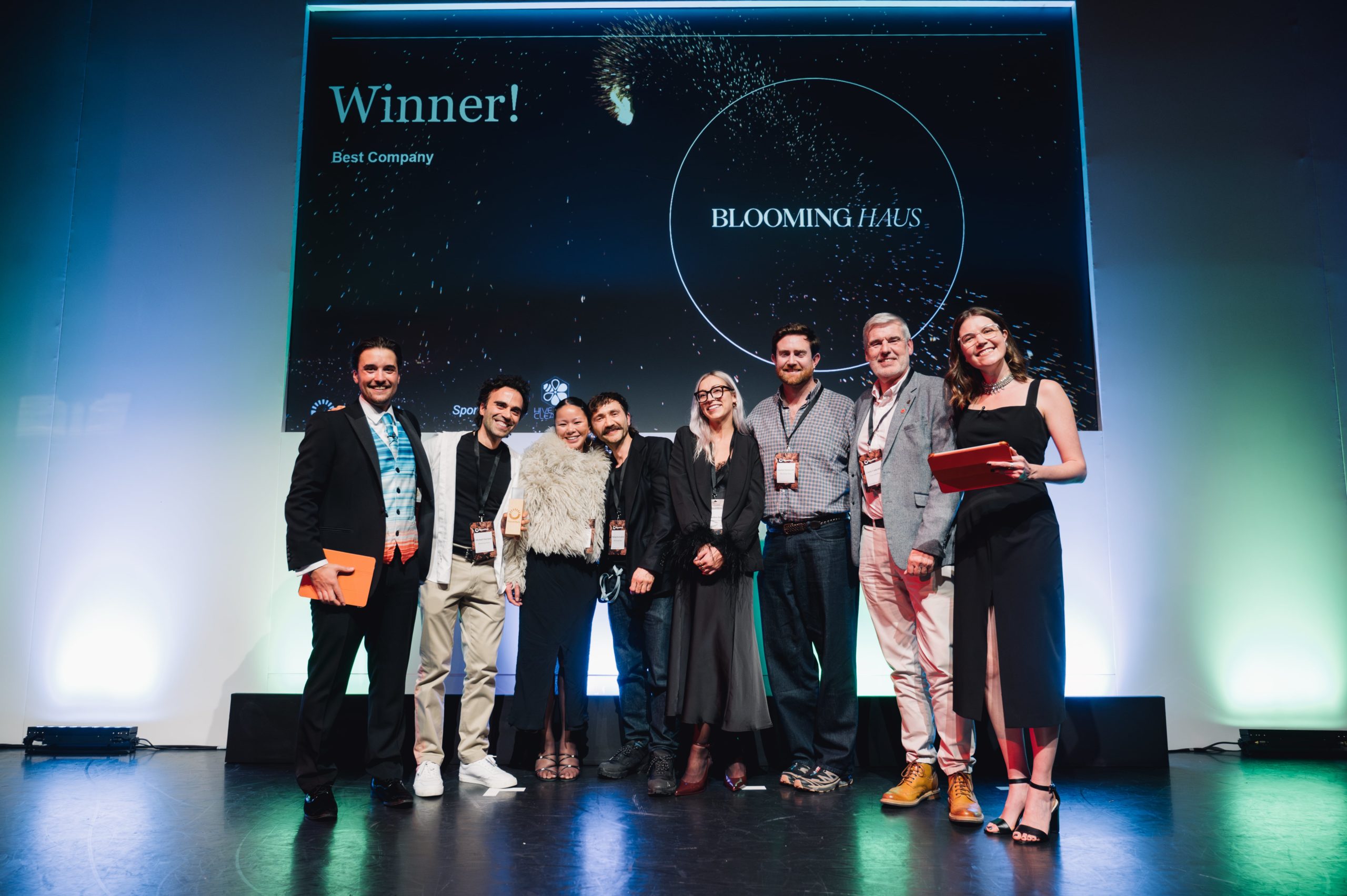
Winner of Planet Mark Best Company 2025.

Finalist of two edie Awards, 2026.
All waste data covers 1 July 2024 – 31 December 2025 and is independently verified.
Follow our sustainability journey: @bloominghaus
If you’d like to learn more about our zero waste to landfill journey we’re always keen to share and help others join the movement.
Please contact@bloominghaus.com to learn more.
Additional Journal Entries You May Enjoy: