


Contract Flowers for Hotels: A Complete Guide
Most weeks we’re carrying flowers through a hotel entrance early in the morning. Vessels cleaned, water changed, last week’s arrangement out, this week’s in, all before the first guests come down for breakfast. That’s the rhythm of contract floristry, and it’s why a well-run lobby never has a bare day. Here’s how contract flowers for hotels in London work in practice, and what they cost.
What a Flower Contract Actually Is
A contract is an agreement between a hotel and a florist to keep fresh arrangements across the property’s main spaces, week after week. A hotel that rings a florist when the lobby looks bare is buying flowers. A hotel with a contract is running a programme: agreed locations, a seasonal plan, a rotation schedule, one standard of work. The difference shows within a month. Ad hoc orders arrive looking good and decline quietly until someone remembers to reorder. A programme never has that gap.
The Scope
A typical hotel contract covers some or all of the following:
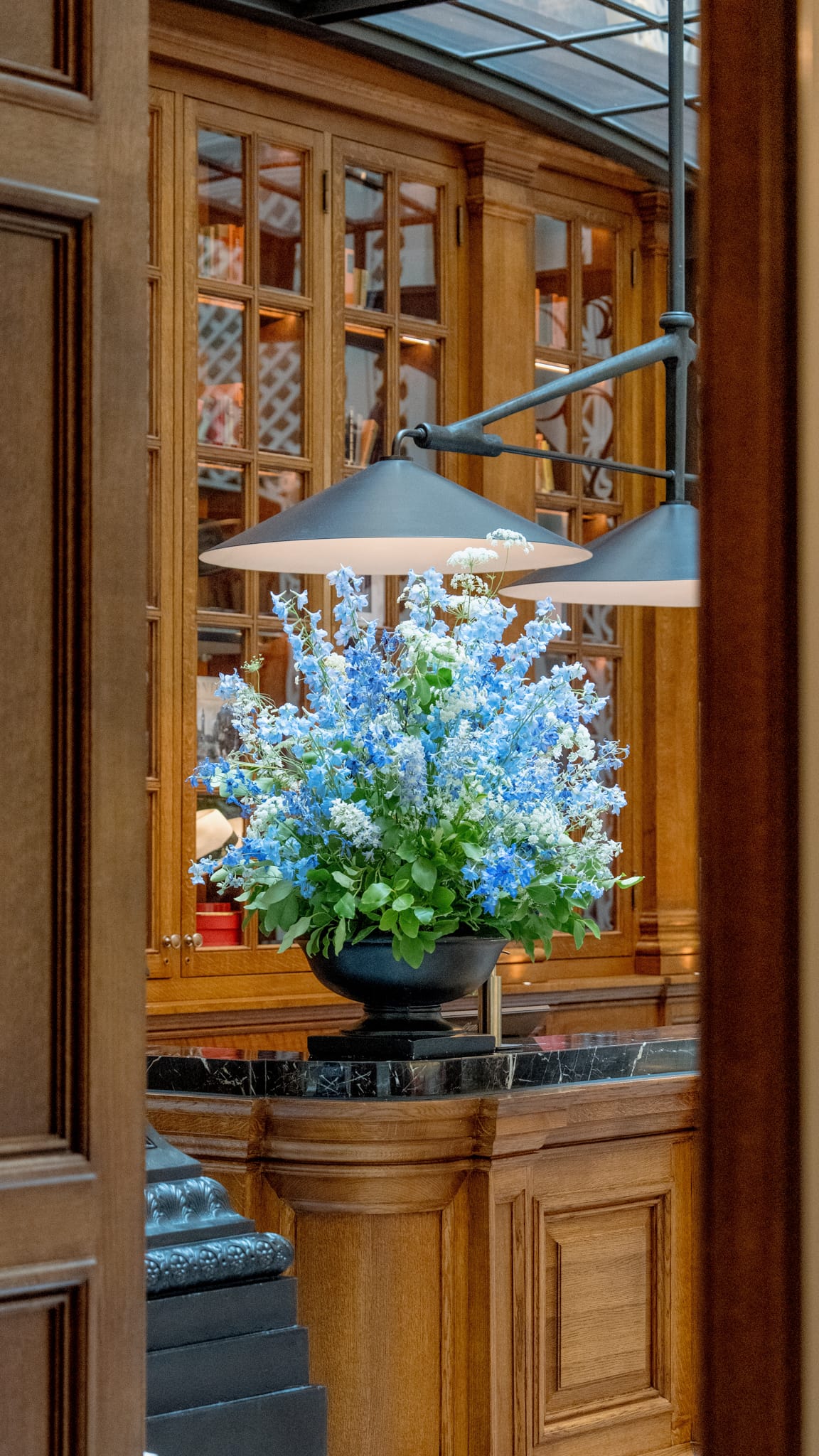
- Reception and lobby. The largest and most visible piece in the programme. Usually a statement composition on a central table or a structural piece by the entrance, sometimes visible from the street.
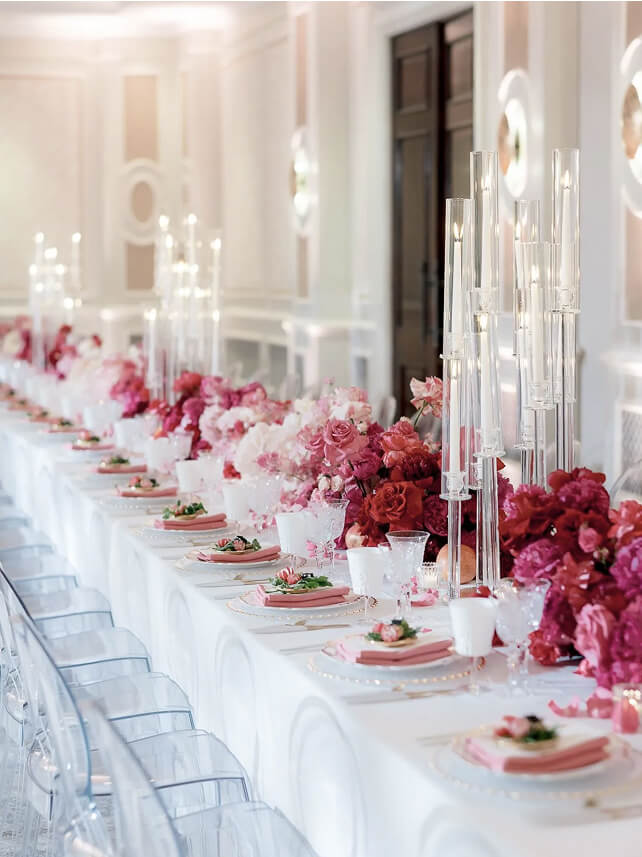
- Restaurant and bar. Table arrangements and feature pieces. No heavy scent near food, no pollen on the linen, nothing blocking a sightline.
- Corridors and lift lobbies. Smaller compositions on consoles and landings. Quieter moments that show the attention runs past the public rooms.
- Meeting and event spaces. Standing arrangements, supplemented or swapped when a room is taken for a private event.
- Washrooms. A single stem or a small posy. Noticed precisely because nobody expects it.
- Suites. Some hotels put suite and VIP arrangements in the contract. Others commission them separately.
How the Programme Works
Design Development
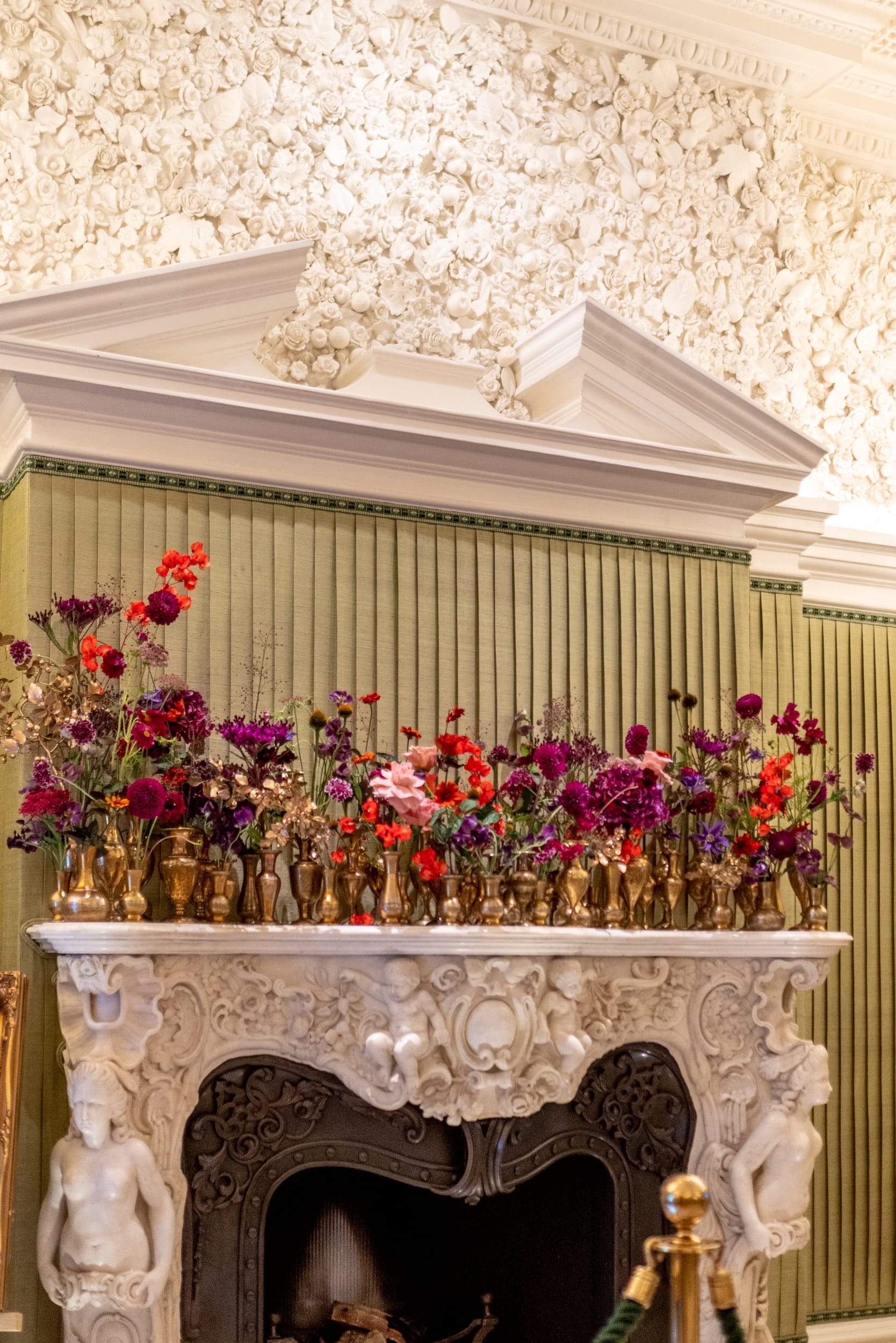
Before we design anything, we walk the building. The lobby in the morning and again at the end of the day, because the light behaves differently at each. The materials, the joinery, the palette, the way guests actually move through the space. A grand Edwardian property asks for different work from a boutique hotel with a muted, tonal interior, and the programme has to feel native to the building. From that we agree style, scale and palette for every location, with a seasonal thread running through the year so the flowers always read as the hotel’s own.
Seasonal Rotation
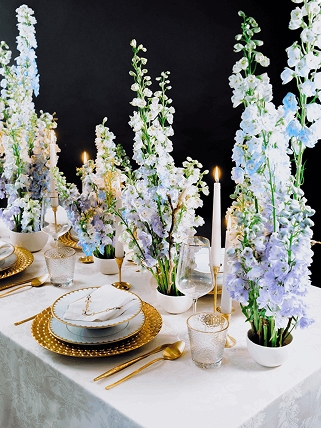
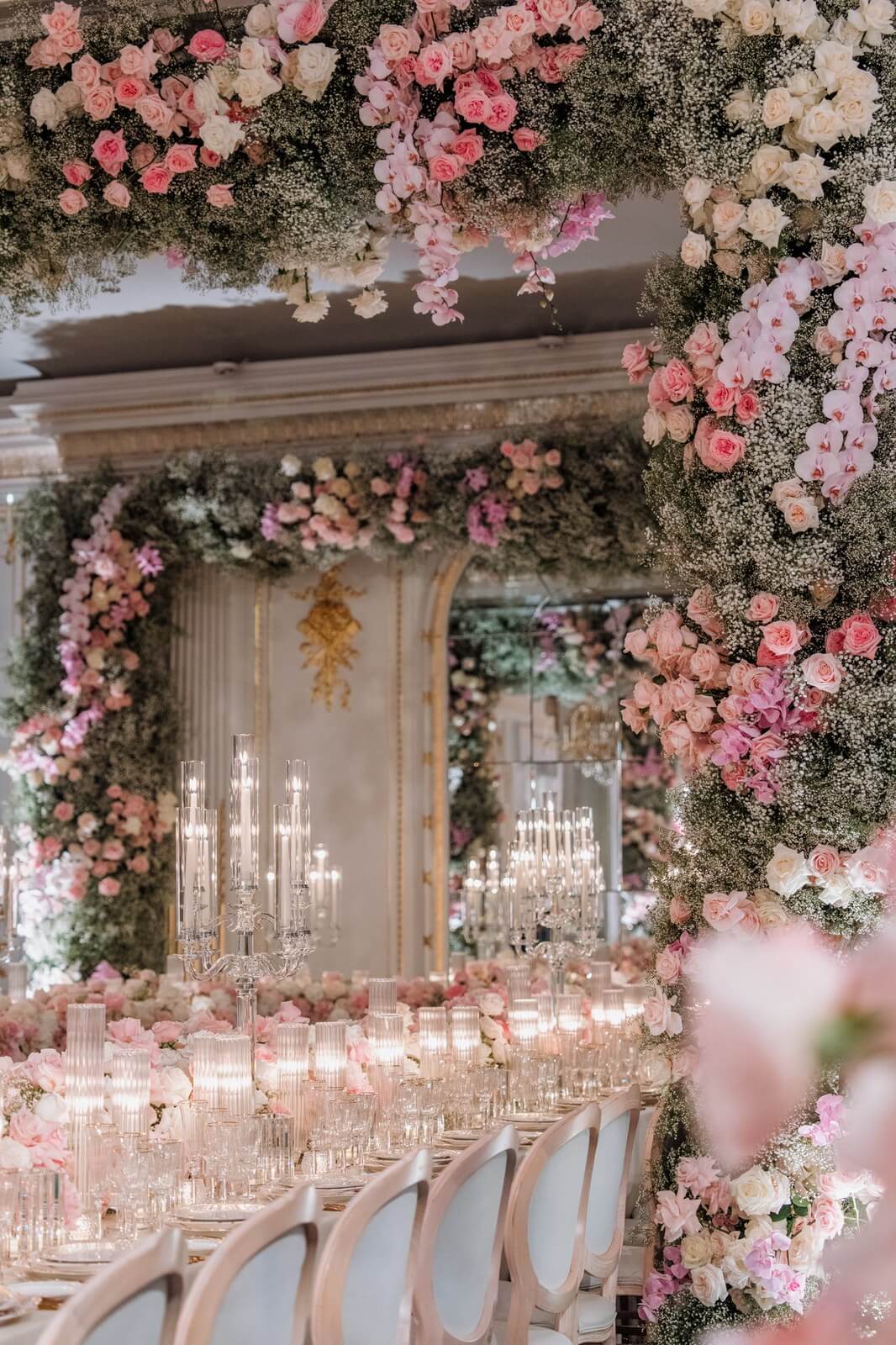
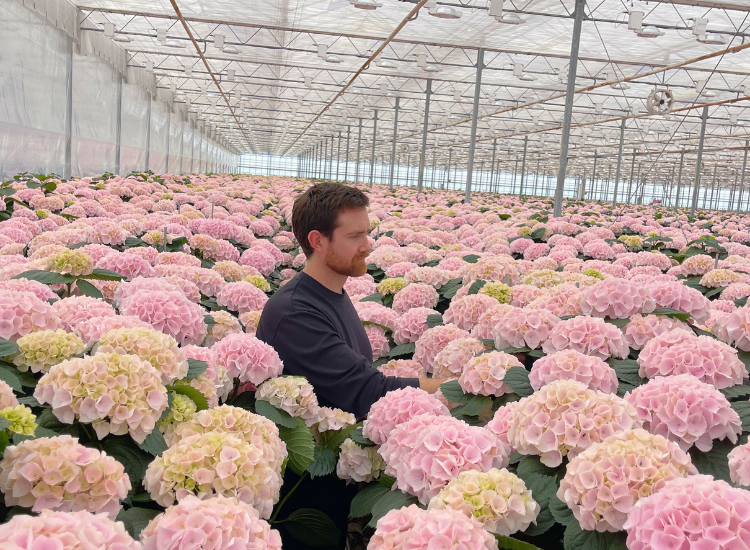
This is the part guests notice, even when they never name it. Someone who checks in during April should see different flowers from someone who checks in during October. Spring (March to May). Blossom branches, tulips, ranunculus, anemones, narcissi. Whites, creams, pale yellows, blush pinks. By May the palette starts to warm. Summer (June to August). Garden roses, sweet peas, peonies while they last, foxgloves, delphiniums. The season of abundance. Arrangements get fuller and more fragrant, and the palette is at its widest. Autumn (September to November). Dahlias, chrysanthemums, hydrangeas, seasonal berries, turning foliage. Terracotta, burgundy, warm cream, forest green. Denser, more textural, more grounded. Winter (December to February). Amaryllis, hellebores, forced branches, evergreens, wax flower. The palette narrows to whites, greens and touches of deep red or gold, and foliage carries more of the structure. We buy from specialist growers and the Dutch auction markets, so the rotation follows what’s genuinely at its best that week. The flowers change because the world outside has changed. Guests feel that.
Weekly Service
Contract flowers for hotels in London usually run on a weekly refresh. Our standard week:
- Install. We arrive early, before the lobby fills, with arrangements prepared at our Battersea studio. Vessels are cleaned, water is changed, arrangements are built or replaced.
- Mid-week check, where included. For larger installations we can come back mid-week to refresh water, pull spent stems and adjust the composition.
- Assessment. On the next visit we look at how the previous week’s flowers held up, note anything working against them (light, temperature, air conditioning) and adjust.
High-traffic spaces sometimes need more frequent attention; that’s what the mid-week visit is for. We build the schedule around the hotel’s standard and the conditions of each space.
Conditions
Hotel flowers live a hard life. Lobby arrangements sit in heated, air-conditioned air that swings through the day. Restaurant flowers sit near kitchens. Corridor pieces get almost no natural light. So we choose varieties by location and condition every stem before it leaves the studio. This is where a contract earns its fee. A well-managed programme still looks fresh on day six; a neglected one is tired by day three.

What to Look for in a Contract Florist
Design Sensibility
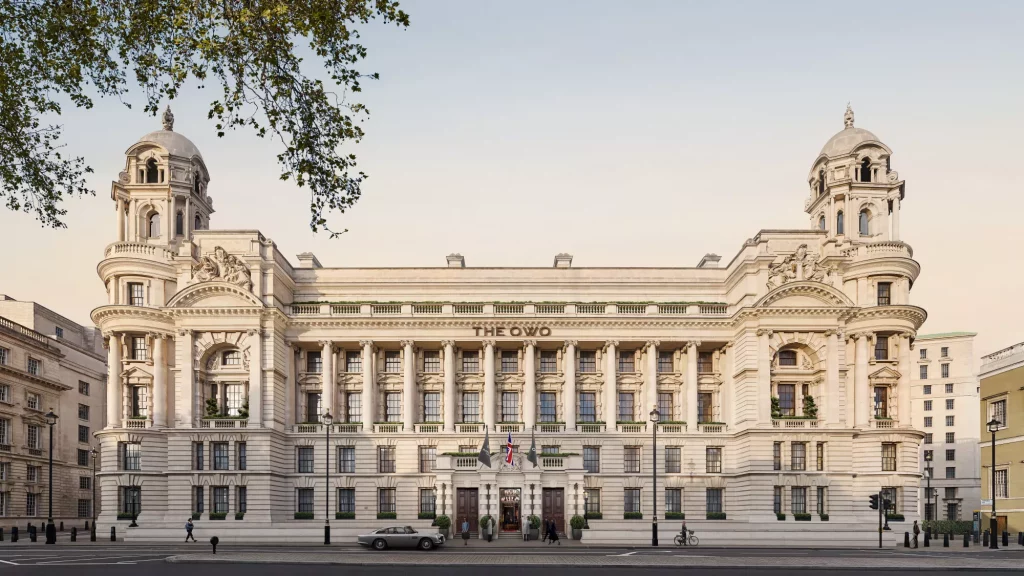
The florist’s instinct has to sit inside the hotel’s visual territory. Review the portfolio, then go further: visit properties where the florist currently holds contracts and judge whether the flowers look like they belong to the building. Ours include Raffles London at The OWO, and we’d sooner a prospective client saw the work standing in the space than read a proposal about it.
Reliability
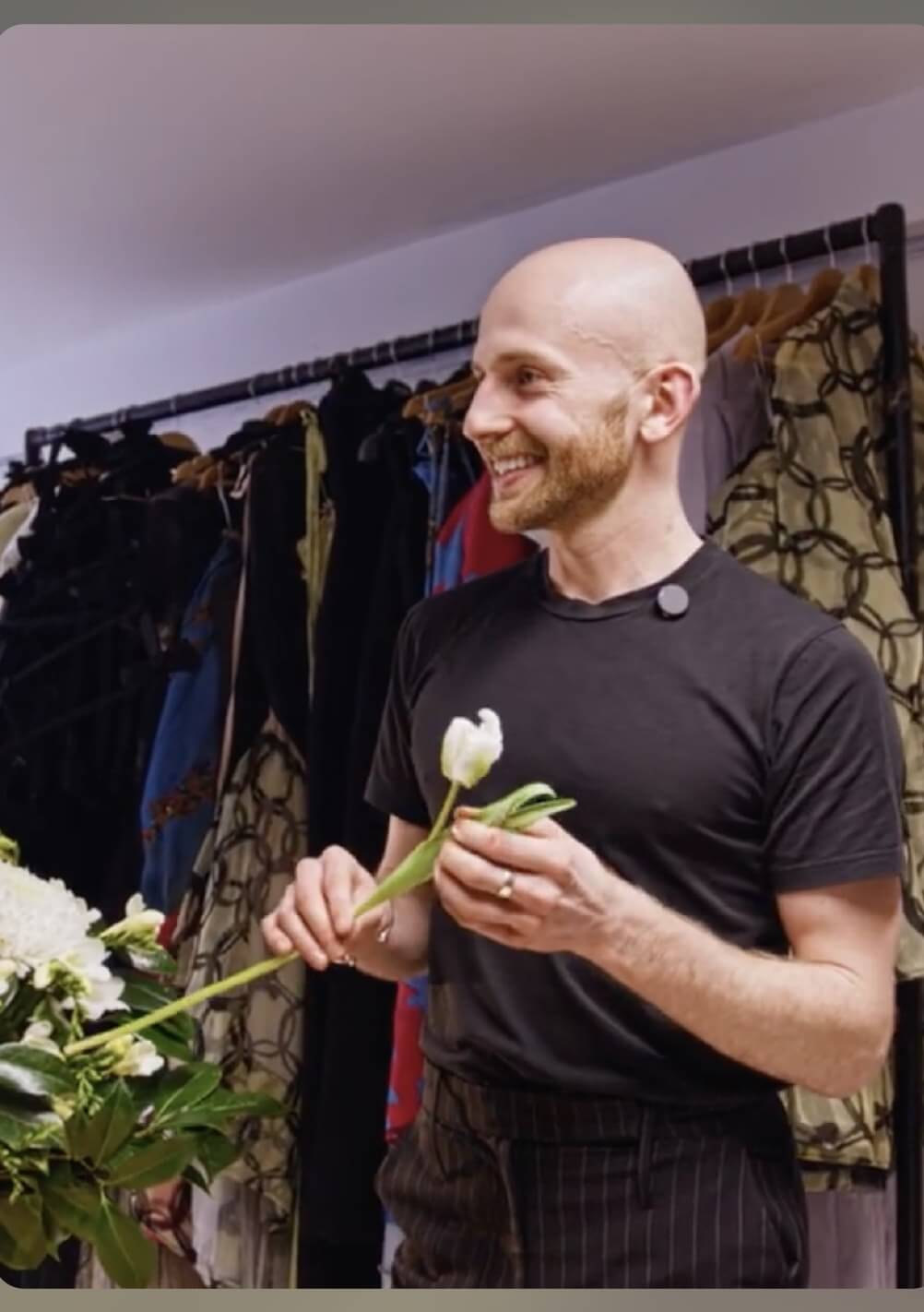
A flower contract is an operational commitment. The flowers arrive on schedule, in condition, to standard, every week, including the week half the team is on holiday. Ask who manages the account and what happens when something goes wrong. Our own split is simple: Michal leads design, Michael leads operations, and a contract needs both to hold.
Flexibility
Hotels change shape constantly. The restaurant closes for a private hire. A refurbished floor reopens. December asks for far more than a quiet week in January does. A good contract partner absorbs all of this without letting the standard slip, scales up for the festive period and handles the one-off VIP request without fuss.
Sustainability
Hotels report on their supply chains now, and the flowers are part of that picture. We’re a certified B Corporation, verified by B Lab, and Planet Mark certified; the detail sits on our sustainable floristry page. We work foam-free across every project, no exceptions. Floral foam is a single-use plastic that crumbles into microplastics (the Sustainable Floristry Network sets out the evidence), and we’ve written about how we build without it. We source seasonally, and spent stems come back with us.

What Contract Flowers for Hotels in London Cost
Contracts are priced on scope: how many locations, the scale at each, the frequency of service and the seasonal plan. Most are billed as a weekly or monthly fee. The hotel gets a fixed number to budget against; we get a predictable week. The weekly fee typically covers:
- All flowers and foliage
- Vessels, supplied by us or by the hotel
- Design, conditioning and preparation at the studio
- Delivery and installation
- Mid-week maintenance visits, where included
- Removal of spent stems
What moves the budget:
- Number of locations. Covering the lobby, restaurant, bar and corridors costs more than the lobby alone.
- Scale. A statement piece in reception takes more stems, more preparation and more installation time than a console arrangement.
- Season. Winter stems, amaryllis and hellebores in particular, cost more than their summer equivalents. The seasonal plan should budget for that.
- Festive periods. Christmas, New Year and Easter usually carry enhanced florals, quoted separately or built into the contract as seasonal supplements.
As a broad range: from around £500 a week for two or three locations, up to £10,000 or more a week covering public areas, restaurants and guest floors. Every hotel sits somewhere different on that line, and the number only firms up once we’ve seen the property. 

Getting Started
It starts with a site visit. We walk every space that might carry flowers, note the light, the temperature, the palette and the traffic, and turn that into a proposal: a map of the programme across the hotel, the approach for each location, the seasonal rotation and a detailed budget. For new contracts we usually suggest a trial of four to six weeks. A trial surfaces what no proposal can predict: how the flowers actually perform in that lobby, whether the mid-week check is enough, whether a palette that worked on paper works in the room. Both sides learn quickly. The contracts that work best are the old ones. Over time we learn the property: which console catches afternoon sun, where the air conditioning bites, how the festive build needs to land. The design sharpens and the service gets quicker. We hold contracts with hotels, private members’ clubs and commercial properties across London; our contract flowers practice page covers how the programmes run. If you manage a hotel or hospitality property in London and are weighing a flower contract, or reviewing one that’s gone stale, get in touch. We’ll walk the property with you and put together a proposal that fits the hotel and the budget.
You may also like: