Fashion Event Florals: The Craft Behind the Spectacle
Fashion and flowers share a language. Both deal in colour, texture, proportion, and the tension between structure and movement. Both are seasonal by nature. Both reward craft and punish shortcuts. But the relationship between a fashion event florist in London and the brands they work with is more complex than the finished images suggest. Behind a 30-second runway walk or a single editorial photograph lies weeks of design development, sourcing, engineering, and installation, often completed in a window of hours. This is the work behind the spectacle.
Why Fashion Events Need Flowers
Fashion events are, at their core, exercises in atmosphere. A runway show is not just a presentation of garments. It is a world. The set, the lighting, the music, the audience, and the flowers all contribute to the narrative the designer is constructing. Flowers bring something to that world that synthetic materials cannot. They are alive. They are imperfect. They change in the light. They carry scent. In a context where every surface is controlled and every angle is considered, the presence of something organic introduces a productive tension. This is why fashion brands continue to invest in live florals rather than artificial alternatives. The real thing does something different to a space. It shifts the atmosphere in a way that guests register even if they cannot articulate it.
Types of Fashion Event Florals
Runway Shows
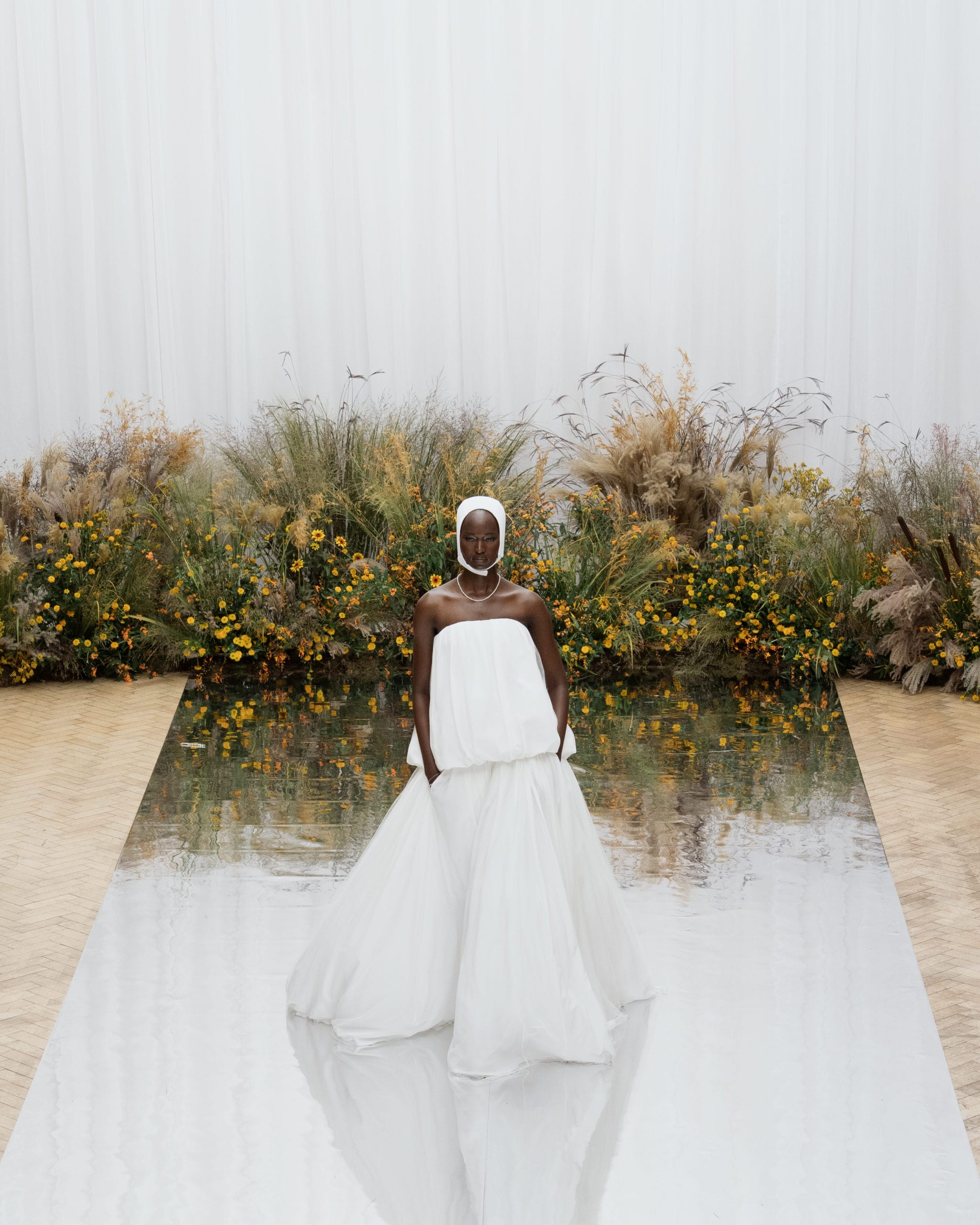
Runway florals operate under extreme constraints. The installation must be complete before doors open, which often means an overnight build or a dawn load-in. It must not interfere with the models’ path. It must read from the front row and from the photographers’ pit. And it must survive under hot show lighting for the duration of the event. The design approach varies enormously. Some shows call for a complete environment built around the runway. A garden, a meadow, a forest. Others want a single, precise gesture: an arch at the entrance, a suspended canopy above the seating, a line of single stems along the catwalk edge. 
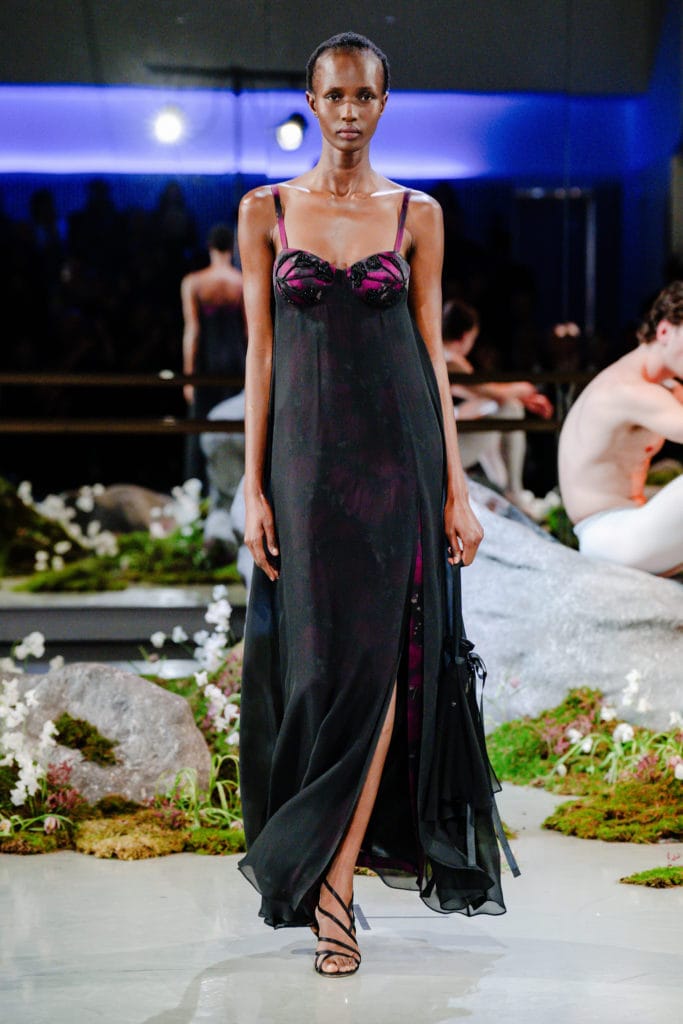
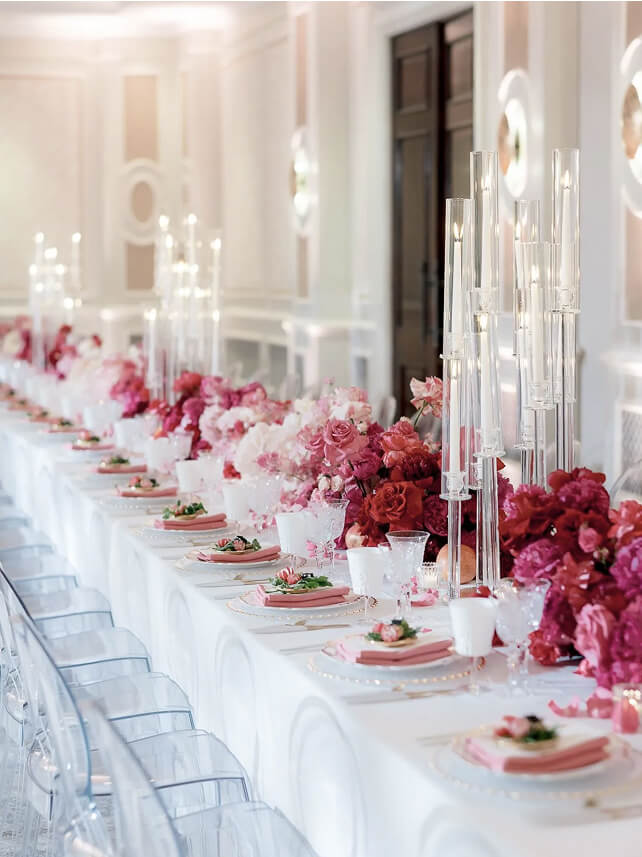
Blooming Haus x Patrick McDowell SS LFW 2026
The most effective runway florals are those that feel inevitable. Not applied to the set but integral to it. This requires close collaboration with the show’s creative director and set designer, often from the earliest concept stage.
Brand Launches and Store Openings
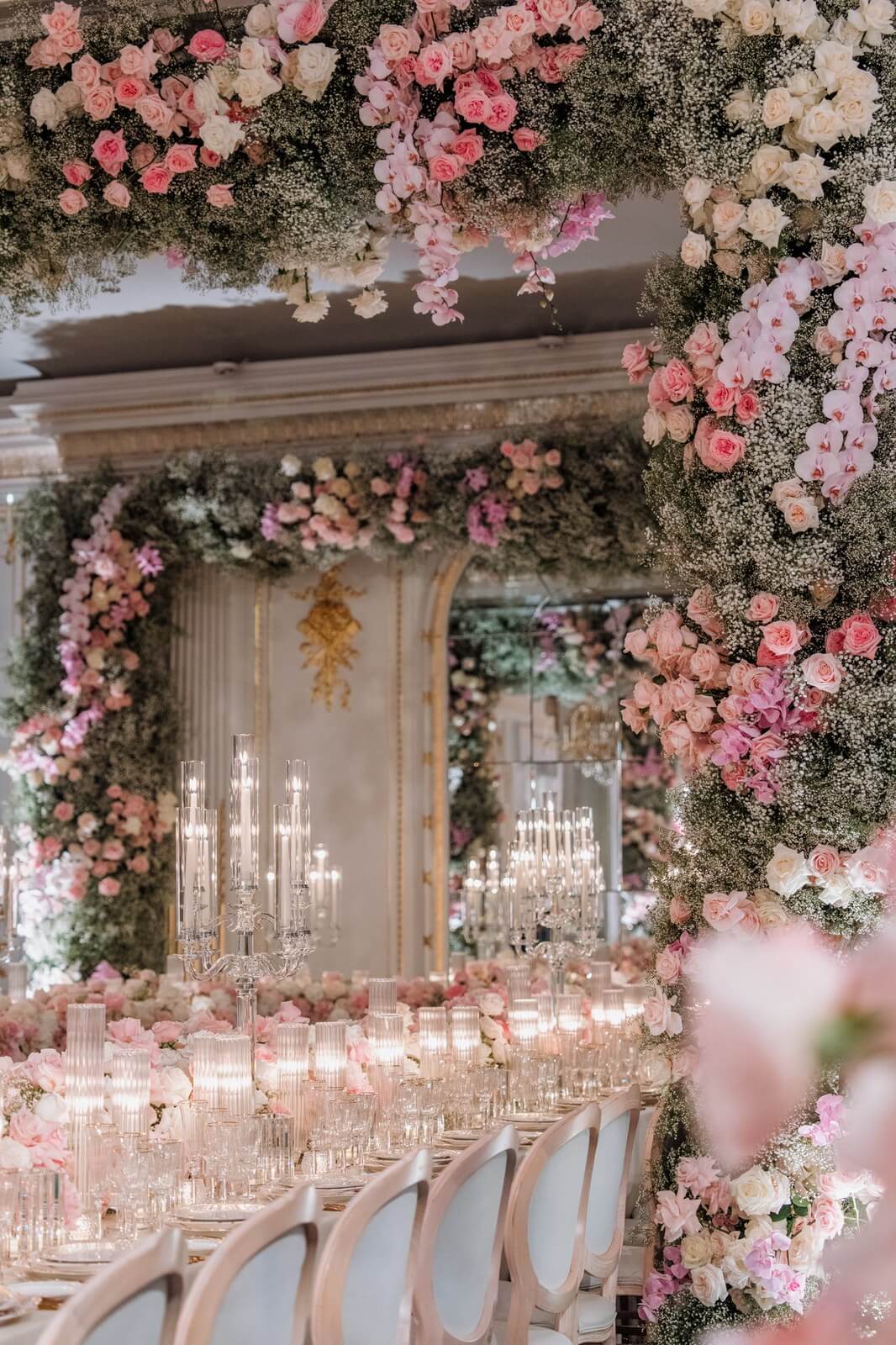
When a fashion brand opens a new space or launches a collection, the florals are part of the brand communication. They appear in press coverage, on social media, in the brand’s own channels. They need to work as both a physical experience and a photographic image. This dual requirement, spatial and editorial, shapes the design. Arrangements are considered from multiple angles. Colour is calibrated to the brand palette. Scale is set to work in both the physical space and through a camera lens. A fashion event florist in London working on brand launches needs to understand visual identity as well as they understand flowers. The conversation is as much about the brand’s aesthetic language as it is about stem choice.
Press Days and Showroom Appointments
Quieter than runway shows but no less considered. Press days are where editors, buyers, and stylists see the collection up close. The flowers set the mood of the showroom: seasonal, refined, consistent with the brand’s world. The approach is often more residential than theatrical. Composed arrangements on surfaces. A single variety in a considered vessel. Something that says care without saying effort. The flowers should feel as though they have always been there.
Editorial Shoots
Flowers for magazine features, campaign imagery, and lookbooks are designed for the camera. The arrangement may only need to work from one angle, for one shot, under controlled lighting. But it needs to be precise. This is detail-focused work. A single bloom held at the wrong angle, a petal that has started to brown, a stem that catches light in an unflattering way. These things are visible at high resolution. The florist is often on set throughout the shoot, adjusting, replacing, and responding to the photographer’s direction.
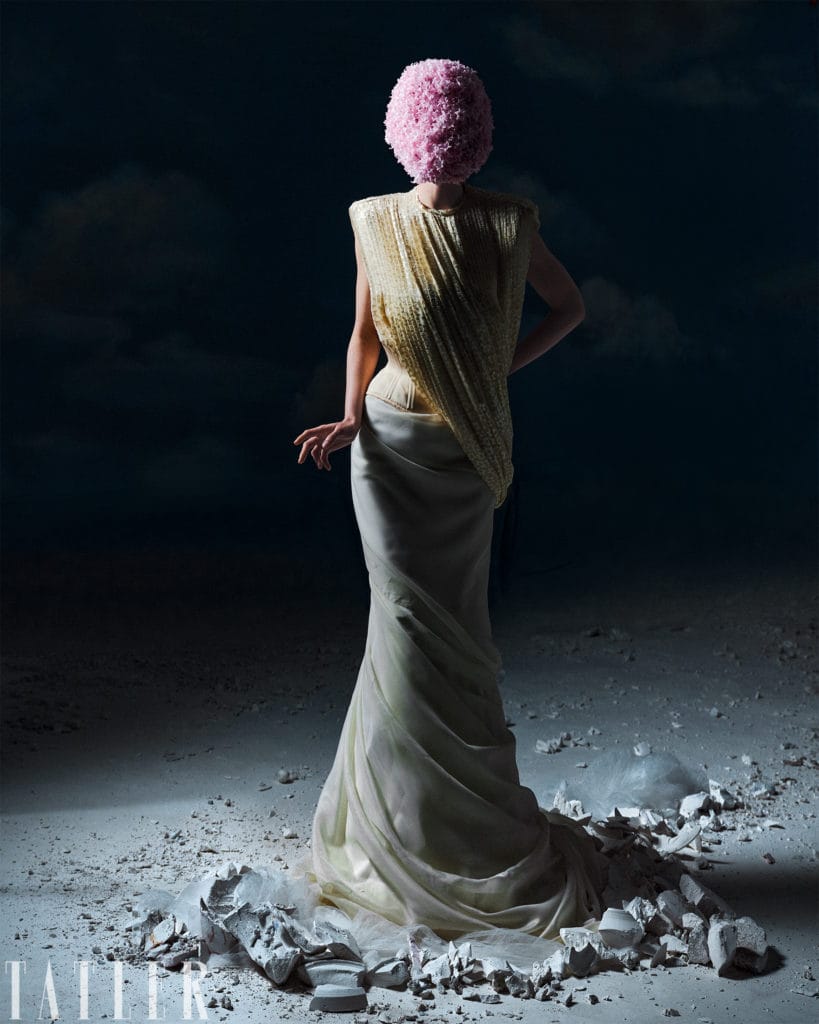
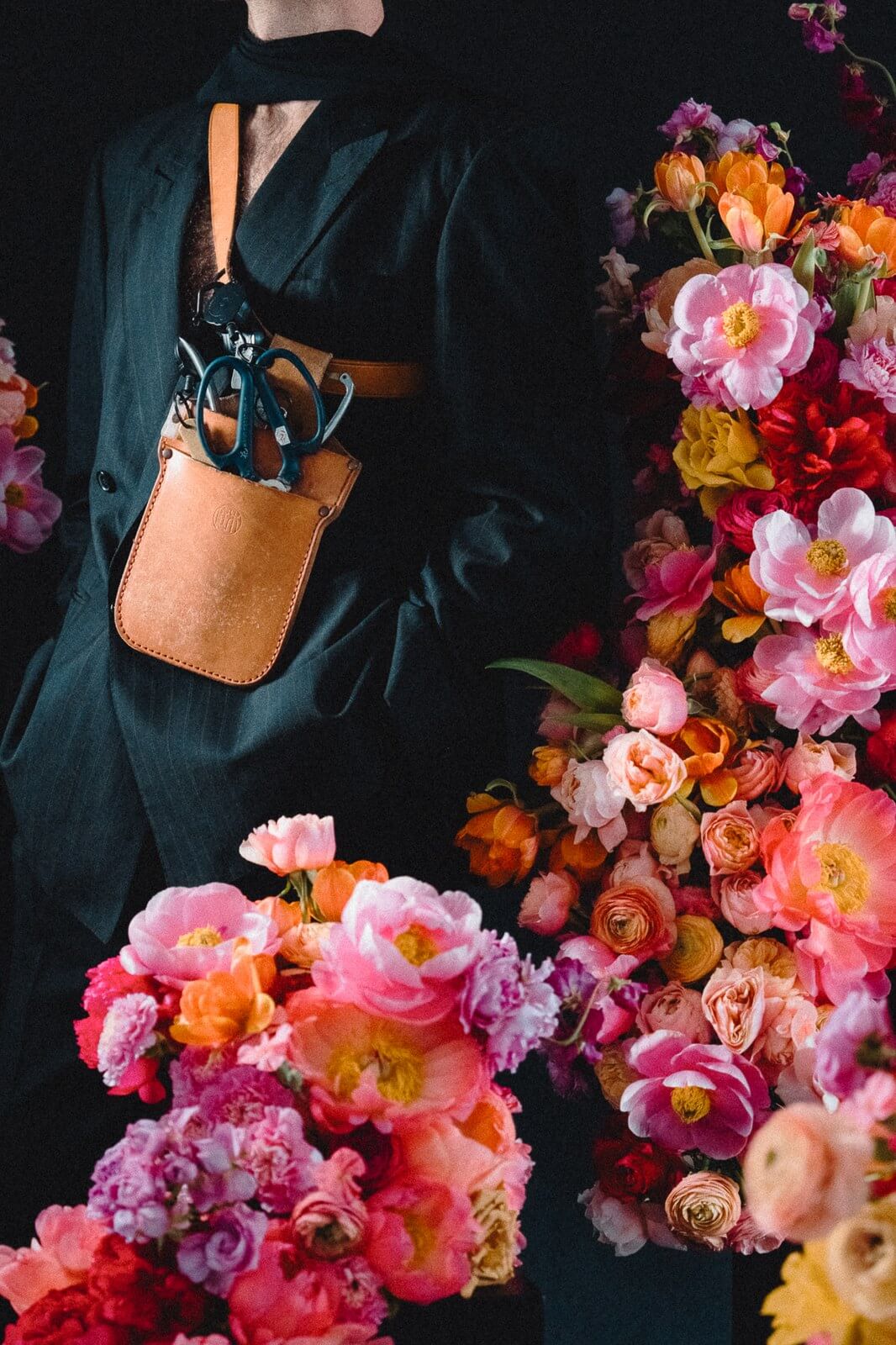
Blooming Haus x Tatler – Surrealism Shoot
Fashion Week Parties and Dinners
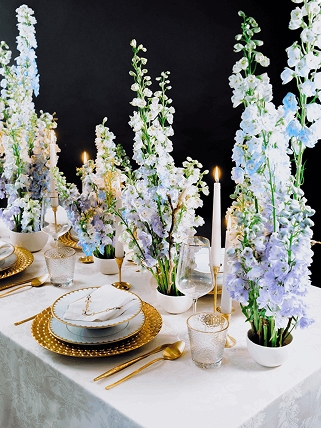
London Fashion Week generates a circuit of associated events: after-show dinners, brand parties, private viewings, showroom cocktails. These events are more intimate than runway shows, and the florals reflect that shift. Table arrangements for a post-show dinner of twenty need to work at conversational scale. They should add warmth without crowding the table. They should be low enough for guests to see each other and interesting enough to contribute to the visual story of the evening.
The Design Process for Fashion Florals
Brief and Concept
Fashion briefs arrive in various forms. Sometimes it is a mood board from the creative director: fabrics, colour swatches, references to art, architecture, or landscape. Sometimes it is a single sentence. Sometimes it is a phone call three weeks before the show. The role of a fashion event florist in London is to interpret the brief and translate it into botanical terms. What flowers carry the mood of the collection? What textures echo the fabrics? What palette bridges the gap between the garments and the environment? This translation is the creative work. It requires a visual literacy that goes beyond floristry: an understanding of fashion’s visual codes, its historical references, its current conversations.
Sourcing and Conditioning
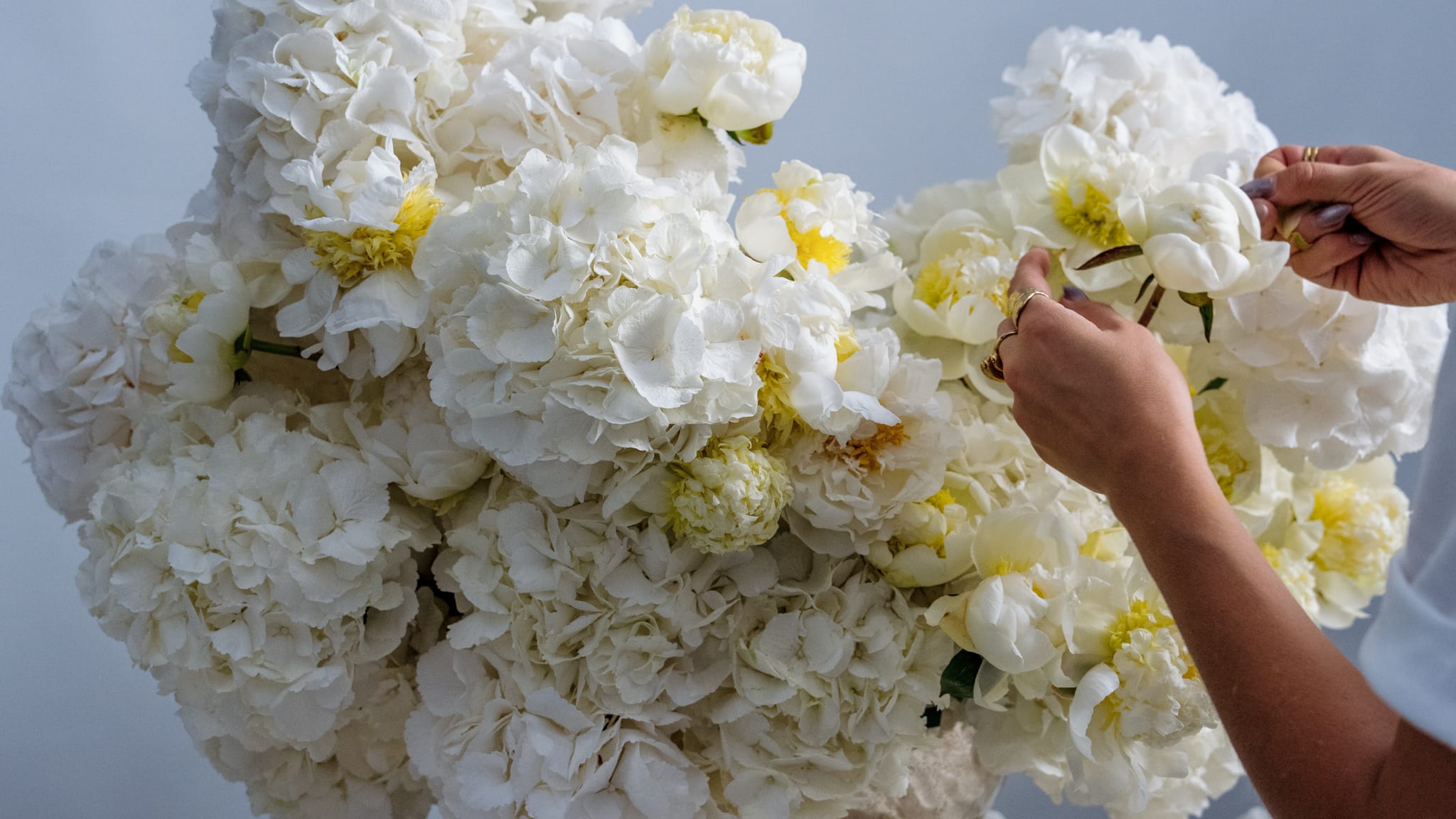
Fashion events demand precision in colour and quality. A brief that calls for dusty pink is not asking for salmon. A brief that calls for wild is not asking for messy. We source from specialist growers and the Dutch auction markets, often ordering specific varieties weeks in advance. For large installations, flowers arrive at the studio in stages. Some need days of conditioning to open properly. Others are kept in cold storage until the final hours. Conditioning is the invisible work of floristry. It determines whether a flower will hold for the duration of the event or collapse under show lighting. Each variety has its own requirements: cut angle, water temperature, conditioning solution, hydration time. This knowledge is what separates reliable work from hopeful work.
Prototyping
For significant installations, such as a suspended piece, a wall, or a ground-level landscape, we prototype at the studio before the event. This means building a section of the installation at full scale to test the structure, the density, the colour balance, and the mechanics. Prototyping takes time and materials, but it eliminates uncertainty. By the time we arrive at the venue, we know the design works. The on-site build is execution, not experimentation.
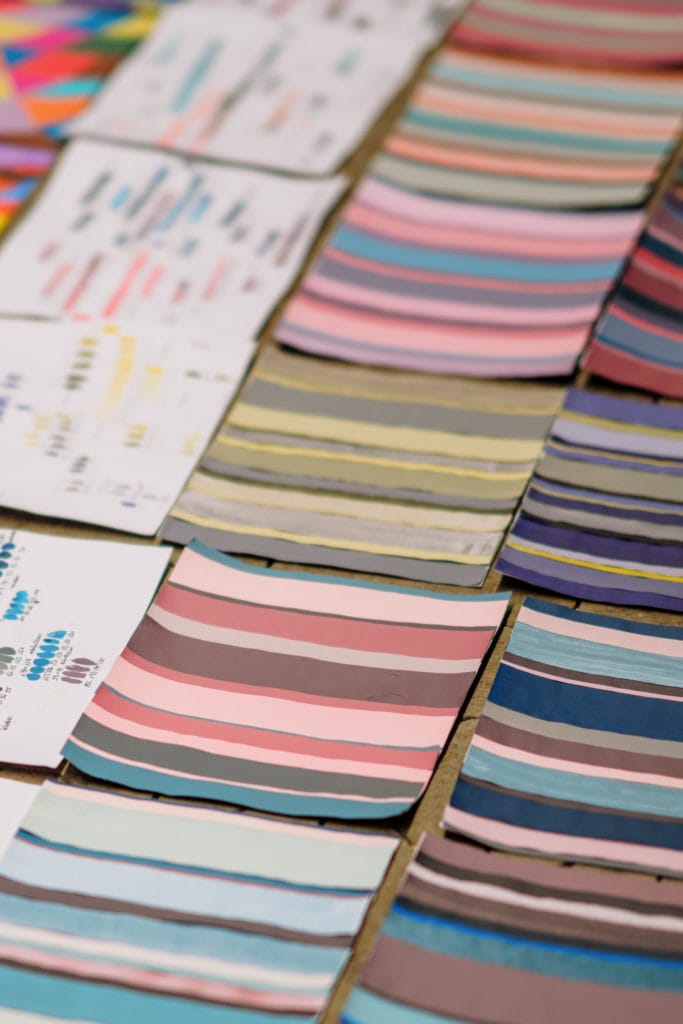
Colour Sampling in Studio
Installation
Fashion event installations are typically built against tight deadlines in venues that are simultaneously being dressed by lighting crews, AV teams, and set builders. Coordination is essential. A large installation might require six to ten florists working through the night. A runway show build at a venue like the Old Selfridges Hotel, 180 The Strand, or the BFC Show Space at the Store Studios involves navigating restricted access, limited water supply, and the pressure of a fixed show time. We bring our own infrastructure: water containers, chicken wire frames, structural supports, cable ties, step ladders, dust sheets. Nothing is left to chance and nothing is left behind.
The Event
During the event itself, the floral team is typically on standby. For runway shows, this means being available for last-minute adjustments as the seating plan shifts or the lighting changes. For longer events such as parties, dinners, and multi-day press previews, it means returning to refresh water, replace any stems that have dropped, and ensure the installation holds.
Breakdown
Fashion events end quickly. The breakdown often needs to happen the same night, sometimes within hours of the show. We manage the full removal: dismantling the installation, removing all materials, cleaning the space. Flowers are composted or donated. Wire, structure, and vessels are returned to the studio for reuse.
What Fashion Clients Value
Speed and Reliability
Fashion operates on compressed timelines. Briefs change. Show times move. Venues are confirmed late. A fashion event florist in London needs to be responsive without being reactive, able to adapt quickly while maintaining design standards.
Visual Sophistication
The audience for fashion events, from editors and buyers to photographers and designers, is visually literate. They notice detail. They recognise quality. They can distinguish between something that has been designed and something that has been assembled. The florals need to meet that standard.
Discretion
Fashion events often involve embargoed collections, unpublished campaigns, and unannounced collaborations. Discretion is not optional. We do not share images from events before the client does. We do not discuss upcoming projects. We protect the client’s creative timeline.
Sustainability Without Compromise
Fashion brands are increasingly accountable for the environmental impact of their events. Our foam-free approach, seasonal sourcing, and certified sustainability practice align with the direction the industry is moving, a shift the Sustainable Floristry Network has documented across the trade. Blooming Haus is an independently verified B Corporation. We can provide sustainability reporting for events where brands need to document their environmental measures.
The Relationship Between Fashion and Seasonal Design
Fashion is inherently seasonal: spring/summer, autumn/winter, resort, pre-fall. Working with a florist who understands seasonal flowers means the florals can echo the collection’s temporal position. A spring/summer show benefits from the lightness and movement of seasonal stems: sweet peas, cosmos, climbing roses, blossom. An autumn/winter presentation suits the density and depth of dahlias, turning foliage, and structural branches. This alignment is not always literal, but when the flowers and the garments share a seasonal logic, the result feels coherent rather than curated.
Scale and Investment
Fashion event florals range from a few hundred pounds for showroom arrangements to five figures for a full runway installation. The investment depends on the scale of the event, the complexity of the design, the venue logistics, and the timeline. What remains consistent is the level of craft. A small arrangement for a press appointment receives the same attention as a large-scale installation. The work is the work, regardless of scale.
Working With Us
We have worked with fashion brands across London on runway shows, launches, press events, and private entertaining. Our event flowers practice covers the full range of fashion-adjacent work. If you are planning a fashion event and want to discuss the floral approach, we are happy to begin with a conversation about the brief, the brand, and the space.
Starting the Conversation
Fashion event florals work best when the florist is involved early. Even a preliminary conversation about the creative direction helps us prepare: sourcing rare varieties, reserving studio time for prototyping, booking the installation team. Get in touch with the brief, the date, and the venue. We will take it from there.
You may also like: