


Your Ultimate Guide to Tablescaping for Small Intimate Events
A beautifully dressed table sets the tone for everything that follows – the conversation, the food, the atmosphere of the evening itself.
Whether you’re hosting an intimate dinner at home or planning a private celebration, the art of tablescaping transforms a meal into an occasion.
We’ve drawn on our experience styling tables for some of London’s most discerning clients to create this guide – ten considered steps to help you design a tablescape with intention, elegance, and personality.
Whether you’re hosting an intimate dinner at home or planning a private celebration, the art of tablescaping transforms a meal into an occasion.
We’ve drawn on our experience styling tables for some of London’s most discerning clients to create this guide – ten considered steps to help you design a tablescape with intention, elegance, and personality.
Your 10-Step Guide to Tablescaping for Intimate Events
1. Place Settings
2. Personal Touches
3. Creating a Comfortable Space
4. Place Cards
5. Menus
6. Napkins
7. Favours
8. Embellishments
9. Seasonal Elements
10. Florals
1. Place Settings
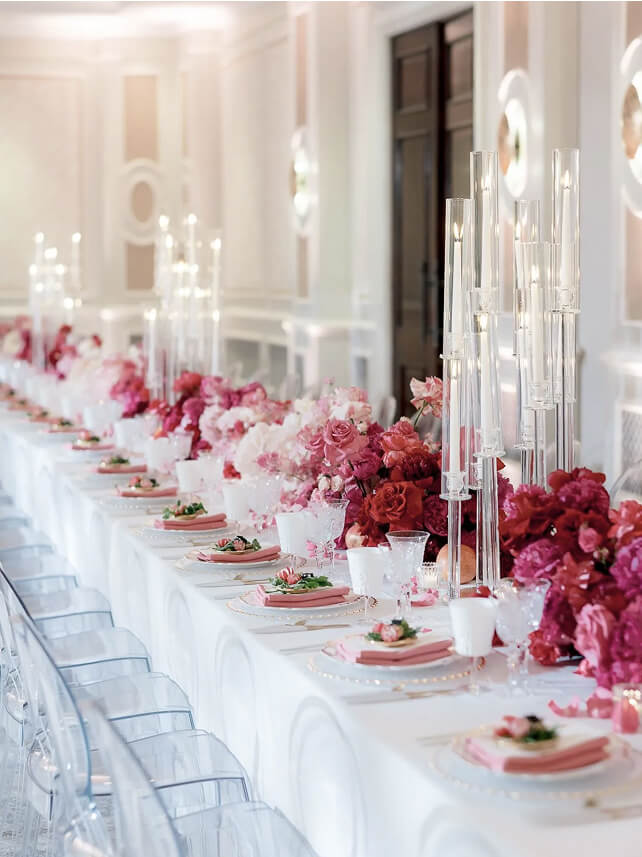
The place setting is the foundation of every tablescape. While there are conventions worth understanding, the best settings balance tradition with personality.
The essentials: plate, flatware, napkin, and glassware. From there, you might introduce a placemat, menu card, florals, or other personalised elements.
As a guide, the classic arrangement places forks to the left of the plate, knives (blades facing inward) and spoons to the right, with glassware positioned above the knives. Plates should be evenly spaced, and napkins placed either to the left or folded on the plate itself.
This is the traditional framework – but it’s precisely that, a framework. For a romantic dinner, a napkin tied with a single stem and placed on the plate can be far more effective than strict etiquette. The key is knowing the rules well enough to break them with intention.
The essentials: plate, flatware, napkin, and glassware. From there, you might introduce a placemat, menu card, florals, or other personalised elements.
As a guide, the classic arrangement places forks to the left of the plate, knives (blades facing inward) and spoons to the right, with glassware positioned above the knives. Plates should be evenly spaced, and napkins placed either to the left or folded on the plate itself.
This is the traditional framework – but it’s precisely that, a framework. For a romantic dinner, a napkin tied with a single stem and placed on the plate can be far more effective than strict etiquette. The key is knowing the rules well enough to break them with intention.

2. Personal Touches
What distinguishes a memorable table from a merely beautiful one is the sense that thought has been given to each guest individually.
This might take the form of hand-lettered menu cards, monogrammed napkins, or a carefully chosen favour at each setting. Even a small, considered gesture – a handwritten note, a bloom that holds significance – communicates care in a way that generic styling cannot.
The sections that follow offer specific ideas for weaving personalisation into every element of your tablescape.
This might take the form of hand-lettered menu cards, monogrammed napkins, or a carefully chosen favour at each setting. Even a small, considered gesture – a handwritten note, a bloom that holds significance – communicates care in a way that generic styling cannot.
The sections that follow offer specific ideas for weaving personalisation into every element of your tablescape.

3. Creating a Comfortable Space
Comfort is the invisible architecture of a successful gathering. When guests feel at ease, conversation flows naturally and the evening takes on a life of its own.
A few practical guidelines we follow:
– Ensure essentials – wine, water, bread – are within comfortable reach of every guest.
– Allow approximately 24 inches between place settings for adequate elbow room.
– Provide at least 20 inches of legroom per guest.
– Allow two feet of table length per chair.
Round tables are particularly well-suited to intimate events – their smaller footprint eliminates wasted corner space while encouraging the kind of inclusive, eye-to-eye conversation that makes a small gathering feel special.
A few practical guidelines we follow:
– Ensure essentials – wine, water, bread – are within comfortable reach of every guest.
– Allow approximately 24 inches between place settings for adequate elbow room.
– Provide at least 20 inches of legroom per guest.
– Allow two feet of table length per chair.
Round tables are particularly well-suited to intimate events – their smaller footprint eliminates wasted corner space while encouraging the kind of inclusive, eye-to-eye conversation that makes a small gathering feel special.

4. Place Cards
With a smaller guest list, there’s an opportunity to invest in details that would be impractical at larger scale.
Hand-calligraphed place cards bring a sense of occasion and craftsmanship that printed alternatives simply cannot match. The material and colour of the card itself can be chosen to echo your event’s palette, creating cohesion across the table and making each guest feel considered from the moment they take their seat.
Hand-calligraphed place cards bring a sense of occasion and craftsmanship that printed alternatives simply cannot match. The material and colour of the card itself can be chosen to echo your event’s palette, creating cohesion across the table and making each guest feel considered from the moment they take their seat.

5. Menus
A handwritten or hand-lettered menu elevates a place setting from functional to memorable. With only a handful of covers, the effort is entirely achievable – and the effect is immediate.
If calligraphy isn’t in your skill set, a professional stationer can produce something beautiful, or a talented friend may welcome the creative brief.
For an added layer of intimacy, consider including a short personal note on each menu – a line that speaks to your relationship with that particular guest. It’s a small detail that tends to be kept long after the evening ends.
If calligraphy isn’t in your skill set, a professional stationer can produce something beautiful, or a talented friend may welcome the creative brief.
For an added layer of intimacy, consider including a short personal note on each menu – a line that speaks to your relationship with that particular guest. It’s a small detail that tends to be kept long after the evening ends.

6. Napkins
Napkins are a functional necessity, but they needn’t be an afterthought. The right treatment can introduce texture, colour, and an element of surprise to each setting.
A single delicate bloom – a sweet pea or ranunculus – tucked into a linen fold adds softness without effort. Silk or velvet napkin rings introduce tactile richness. For something more playful, a small favour wrapped within the napkin creates a moment of discovery as guests sit down.
The choice between a classic fold and something more expressive depends entirely on the tone of your event. Either can be beautiful when it serves the overall design.
A single delicate bloom – a sweet pea or ranunculus – tucked into a linen fold adds softness without effort. Silk or velvet napkin rings introduce tactile richness. For something more playful, a small favour wrapped within the napkin creates a moment of discovery as guests sit down.
The choice between a classic fold and something more expressive depends entirely on the tone of your event. Either can be beautiful when it serves the overall design.

7. Favours
A well-chosen favour is a gesture of generosity – a way of thanking your guests for being present.
It needn’t be elaborate. Artisan chocolates, a beautifully packaged candle, a small bottle of fine olive oil or honey – what matters is that the choice feels considered rather than obligatory.
For truly intimate gatherings where you know each guest well, individually chosen favours that reflect their tastes or interests create a particularly memorable touch. A particular tea blend for one, a jar of homemade preserves for another. The specificity is what makes it meaningful.
For larger intimate events, a single beautifully presented gift that suits the occasion works equally well.
It needn’t be elaborate. Artisan chocolates, a beautifully packaged candle, a small bottle of fine olive oil or honey – what matters is that the choice feels considered rather than obligatory.
For truly intimate gatherings where you know each guest well, individually chosen favours that reflect their tastes or interests create a particularly memorable touch. A particular tea blend for one, a jar of homemade preserves for another. The specificity is what makes it meaningful.
For larger intimate events, a single beautifully presented gift that suits the occasion works equally well.

8. Embellishments
This is where a host’s personality can shine most clearly. Handmade or commissioned elements bring warmth and individuality to a table in a way that off-the-shelf styling never can.
Hand-illustrated placemats with personal messages, embroidered details on linen, even miniature portraits at each setting – we’ve seen hosts bring remarkable creativity to this part of the process.
For a more relaxed gathering among close friends, small chalkboard placemats invite guests to leave their own mark during the evening – a lovely way to create a collaborative, convivial atmosphere.
Hand-illustrated placemats with personal messages, embroidered details on linen, even miniature portraits at each setting – we’ve seen hosts bring remarkable creativity to this part of the process.
For a more relaxed gathering among close friends, small chalkboard placemats invite guests to leave their own mark during the evening – a lovely way to create a collaborative, convivial atmosphere.

9. Seasonal Elements
Drawing on the season grounds your tablescape in the moment and gives it a natural sense of authenticity.
In winter, pine cones make charming place card holders, and foraged greenery brings warmth and texture. Spring calls for lighter tones and seasonal blooms – take a look at our Guide to Spring Flowers in the UK for inspiration. Summer invites abundance – garden roses, trailing herbs, stone fruits as table accents.
Autumn is perhaps the most generous season for tablescaping, with its warm amber and copper tones, dried grains, seed heads, and the rich textures of harvest. Each season offers its own palette and materials – the best tablescapes work with these rather than against them.
In winter, pine cones make charming place card holders, and foraged greenery brings warmth and texture. Spring calls for lighter tones and seasonal blooms – take a look at our Guide to Spring Flowers in the UK for inspiration. Summer invites abundance – garden roses, trailing herbs, stone fruits as table accents.
Autumn is perhaps the most generous season for tablescaping, with its warm amber and copper tones, dried grains, seed heads, and the rich textures of harvest. Each season offers its own palette and materials – the best tablescapes work with these rather than against them.

10. Florals
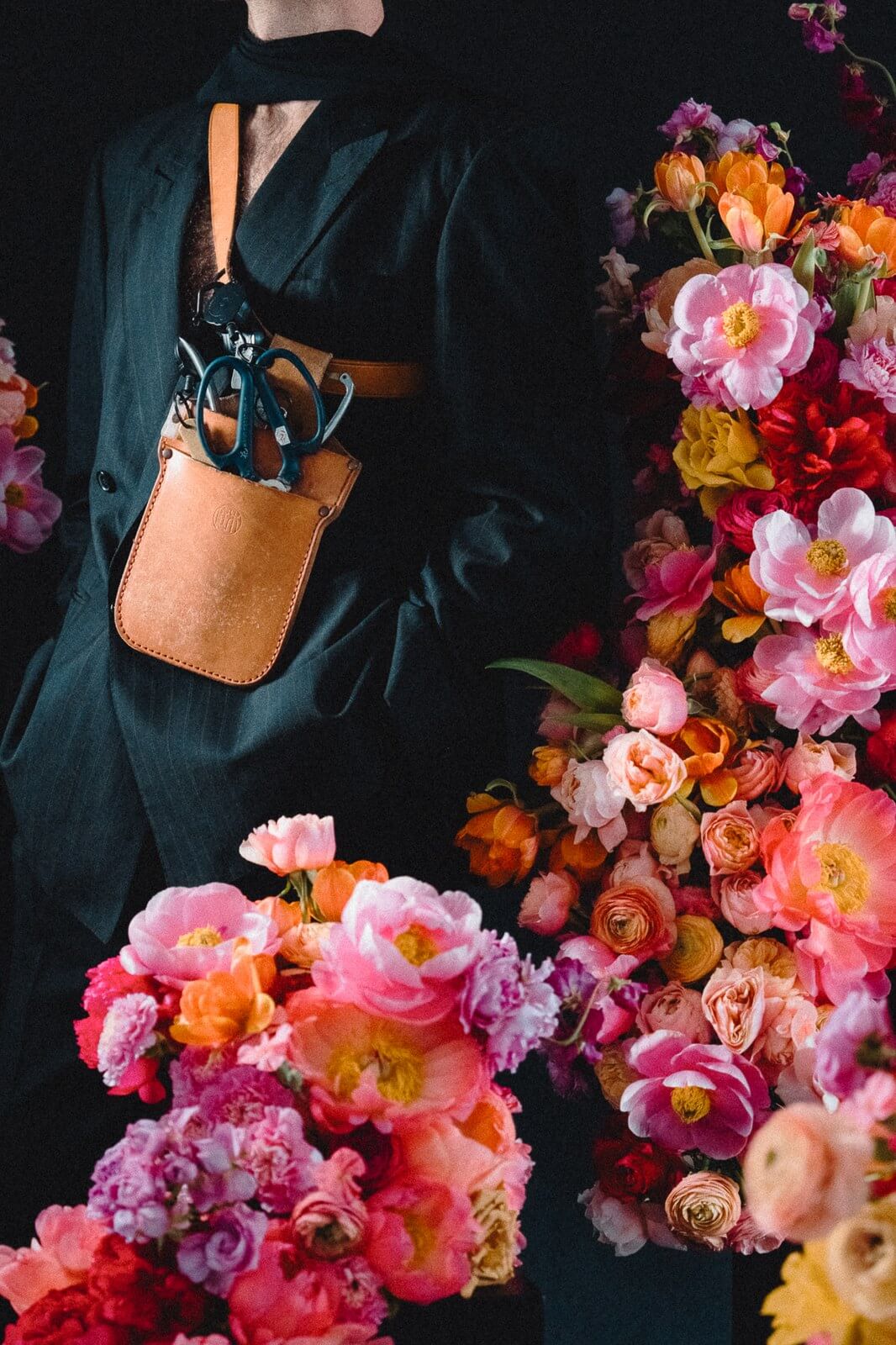
Flowers bring life, movement, and fragrance to a table in a way no other element can. A single stem at each setting, a low arrangement running the length of the table, delicate bud vases catching the candlelight – the possibilities are as varied as the blooms themselves.
The approach should reflect both the occasion and the setting. Loose, garden-gathered posies of seasonal blooms suit a relaxed countryside lunch. Sculptural arrangements with architectural stems create drama for a more formal evening. Herbs and succulents introduce an earthy, textural quality for less traditional gatherings.
One practical consideration: be mindful of fragrance near food. Heavily scented blooms can compete with the flavours on the plate. We tend to favour flowers with subtle or no fragrance for dining table arrangements, reserving the more aromatic varieties for entrance displays and other areas of the space.
Whatever direction you take, let your theme guide the selection and keep the overall composition in proportion with the table – guests should always be able to see one another across the arrangement.
The approach should reflect both the occasion and the setting. Loose, garden-gathered posies of seasonal blooms suit a relaxed countryside lunch. Sculptural arrangements with architectural stems create drama for a more formal evening. Herbs and succulents introduce an earthy, textural quality for less traditional gatherings.
One practical consideration: be mindful of fragrance near food. Heavily scented blooms can compete with the flavours on the plate. We tend to favour flowers with subtle or no fragrance for dining table arrangements, reserving the more aromatic varieties for entrance displays and other areas of the space.
Whatever direction you take, let your theme guide the selection and keep the overall composition in proportion with the table – guests should always be able to see one another across the arrangement.

Every image in this guide is from our own work. If you’d like professional support with the floral styling for your next event – from an intimate dinner to a larger celebration – do get in touch.
CONTACT US
CONTACT US
You may also like: