

Summer Weddings: What Flowers Are In Season?
Iris
Although primarily spring flowers, irises can be sourced into summer. They are an underused wedding flower — their layered, sculptural petals and deep purple or blue tones carry a quiet authority that transfers well into a hand-tied bouquet. They carry rich symbolic associations: spirituality, desire, sensuality and affection. Irises suit a coastal or informal summer setting as naturally as a more formal one. Combine purple blooms with roses, orchids, lavender or sunflowers for a bouquet that is composed without being stiff.
For more wedding inspiration, visit our Pinterest profile.
Freesia
Freesias are bell-shaped blooms with a delicate, expressive character — small in individual flower size but effective in adding lightness, texture and movement to a bouquet. Their fragrance is a significant part of their appeal: lavender-coloured varieties carry a sweet, pronounced scent, while deeper violet shades tend toward something richer. Lavender freesias pair well with voluminous peonies in pinks and purples; for a garden-led arrangement, dahlias, stock and lisianthus are natural companions. The bloom works across most summer wedding flower arrangements without dominating the overall composition.
Iris
Although primarily spring flowers, irises can be sourced into summer. They are an underused wedding flower — their layered, sculptural petals and deep purple or blue tones carry a quiet authority that transfers well into a hand-tied bouquet. They carry rich symbolic associations: spirituality, desire, sensuality and affection. Irises suit a coastal or informal summer setting as naturally as a more formal one. Combine purple blooms with roses, orchids, lavender or sunflowers for a bouquet that is composed without being stiff.
For more wedding inspiration, visit our Pinterest profile.
Veronica
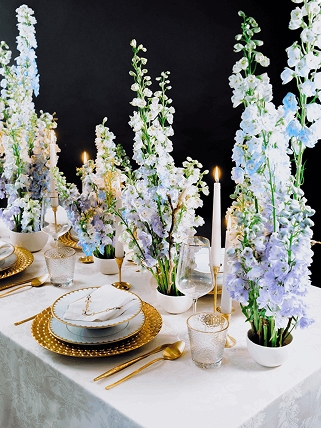
Veronicas are vertical flowers, their tapering spires adding a soft upright line to any arrangement. They work across a wide range of colour schemes and complement larger, rounder blooms particularly well — peonies, lilies of the valley and roses all benefit from their slender contrast. Bold purple veronicas combine naturally with cosmos, thlaspi and lisianthus, and the flower’s height allows it to extend gracefully from the top of a bouquet, giving a garden-inspired looseness to the overall arrangement.
Freesia
Freesias are bell-shaped blooms with a delicate, expressive character — small in individual flower size but effective in adding lightness, texture and movement to a bouquet. Their fragrance is a significant part of their appeal: lavender-coloured varieties carry a sweet, pronounced scent, while deeper violet shades tend toward something richer. Lavender freesias pair well with voluminous peonies in pinks and purples; for a garden-led arrangement, dahlias, stock and lisianthus are natural companions. The bloom works across most summer wedding flower arrangements without dominating the overall composition.
Iris
Although primarily spring flowers, irises can be sourced into summer. They are an underused wedding flower — their layered, sculptural petals and deep purple or blue tones carry a quiet authority that transfers well into a hand-tied bouquet. They carry rich symbolic associations: spirituality, desire, sensuality and affection. Irises suit a coastal or informal summer setting as naturally as a more formal one. Combine purple blooms with roses, orchids, lavender or sunflowers for a bouquet that is composed without being stiff.
For more wedding inspiration, visit our Pinterest profile.
Purple and pink flowers
Veronica
Veronicas are vertical flowers, their tapering spires adding a soft upright line to any arrangement. They work across a wide range of colour schemes and complement larger, rounder blooms particularly well — peonies, lilies of the valley and roses all benefit from their slender contrast. Bold purple veronicas combine naturally with cosmos, thlaspi and lisianthus, and the flower’s height allows it to extend gracefully from the top of a bouquet, giving a garden-inspired looseness to the overall arrangement.
Freesia
Freesias are bell-shaped blooms with a delicate, expressive character — small in individual flower size but effective in adding lightness, texture and movement to a bouquet. Their fragrance is a significant part of their appeal: lavender-coloured varieties carry a sweet, pronounced scent, while deeper violet shades tend toward something richer. Lavender freesias pair well with voluminous peonies in pinks and purples; for a garden-led arrangement, dahlias, stock and lisianthus are natural companions. The bloom works across most summer wedding flower arrangements without dominating the overall composition.
Iris
Although primarily spring flowers, irises can be sourced into summer. They are an underused wedding flower — their layered, sculptural petals and deep purple or blue tones carry a quiet authority that transfers well into a hand-tied bouquet. They carry rich symbolic associations: spirituality, desire, sensuality and affection. Irises suit a coastal or informal summer setting as naturally as a more formal one. Combine purple blooms with roses, orchids, lavender or sunflowers for a bouquet that is composed without being stiff.
For more wedding inspiration, visit our Pinterest profile.
Craspedia
Craspedia are small, perfectly spherical yellow flower heads from the daisy family. Their graphic form adds texture and visual punctuation to arrangements rather than volume. They work well within yellow, white and grey colour schemes — combining with roses, phlox and lisianthus for a garden arrangement, or with anthuriums and blue irises for something more structured. Yellow craspedia in a white bouquet creates a meadow-inspired composition with just enough contrast to give the arrangement definition.
Purple and pink flowers
Veronica
Veronicas are vertical flowers, their tapering spires adding a soft upright line to any arrangement. They work across a wide range of colour schemes and complement larger, rounder blooms particularly well — peonies, lilies of the valley and roses all benefit from their slender contrast. Bold purple veronicas combine naturally with cosmos, thlaspi and lisianthus, and the flower’s height allows it to extend gracefully from the top of a bouquet, giving a garden-inspired looseness to the overall arrangement.
Freesia
Freesias are bell-shaped blooms with a delicate, expressive character — small in individual flower size but effective in adding lightness, texture and movement to a bouquet. Their fragrance is a significant part of their appeal: lavender-coloured varieties carry a sweet, pronounced scent, while deeper violet shades tend toward something richer. Lavender freesias pair well with voluminous peonies in pinks and purples; for a garden-led arrangement, dahlias, stock and lisianthus are natural companions. The bloom works across most summer wedding flower arrangements without dominating the overall composition.
Iris
Although primarily spring flowers, irises can be sourced into summer. They are an underused wedding flower — their layered, sculptural petals and deep purple or blue tones carry a quiet authority that transfers well into a hand-tied bouquet. They carry rich symbolic associations: spirituality, desire, sensuality and affection. Irises suit a coastal or informal summer setting as naturally as a more formal one. Combine purple blooms with roses, orchids, lavender or sunflowers for a bouquet that is composed without being stiff.
For more wedding inspiration, visit our Pinterest profile.
Poppies
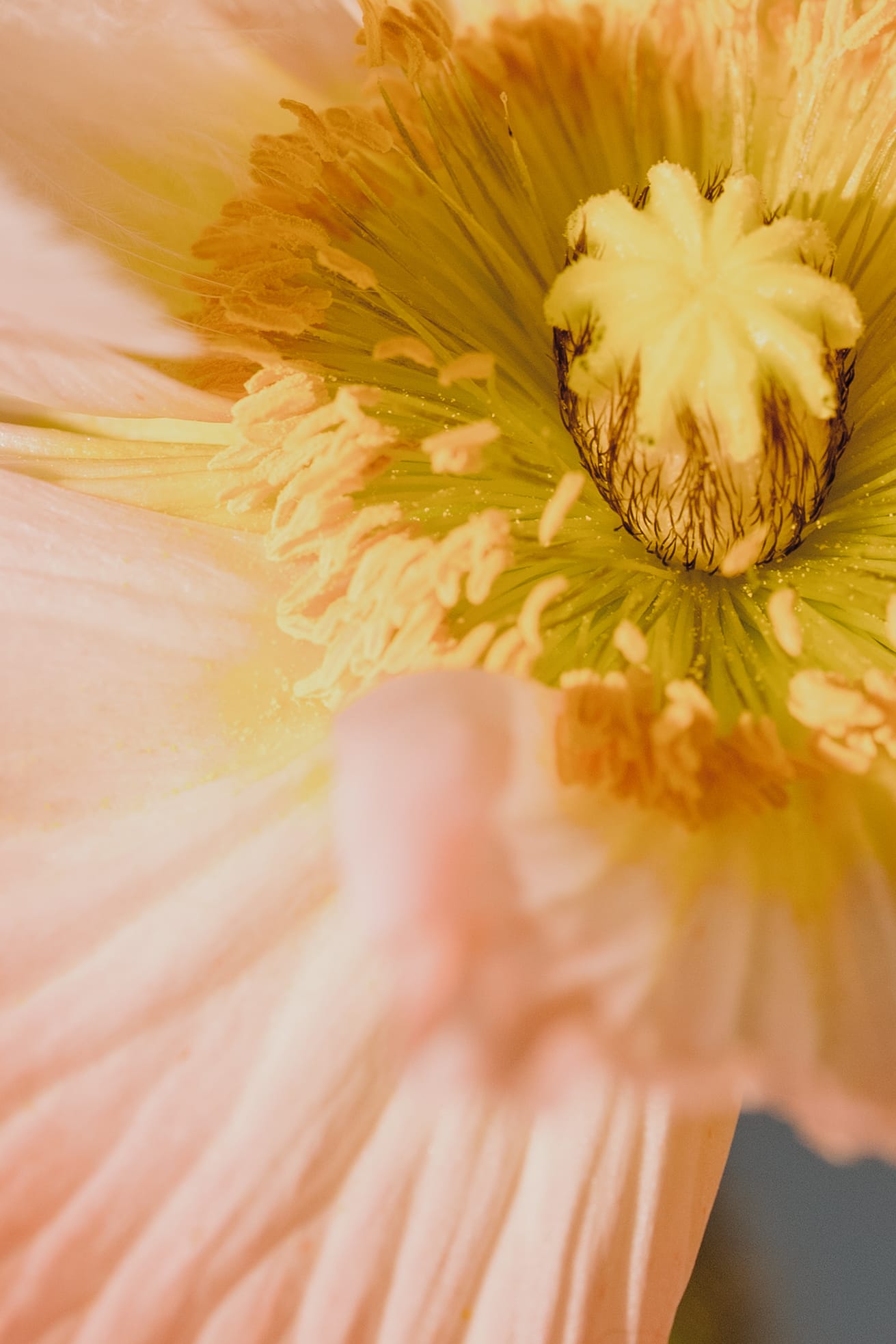
Poppies are available into early summer. Their petals are fine and papery, with an earthy, naturalistic quality that sits easily in a wedding bouquet without requiring much additional structure around them. They pair well with peonies, dahlias and garden roses, and their wiry, movement-filled stems add interest to almost any arrangement. Orange poppies in particular read well against a white wedding dress, where the colour contrast is clean and immediate.
Craspedia
Craspedia are small, perfectly spherical yellow flower heads from the daisy family. Their graphic form adds texture and visual punctuation to arrangements rather than volume. They work well within yellow, white and grey colour schemes — combining with roses, phlox and lisianthus for a garden arrangement, or with anthuriums and blue irises for something more structured. Yellow craspedia in a white bouquet creates a meadow-inspired composition with just enough contrast to give the arrangement definition.
Purple and pink flowers
Veronica
Veronicas are vertical flowers, their tapering spires adding a soft upright line to any arrangement. They work across a wide range of colour schemes and complement larger, rounder blooms particularly well — peonies, lilies of the valley and roses all benefit from their slender contrast. Bold purple veronicas combine naturally with cosmos, thlaspi and lisianthus, and the flower’s height allows it to extend gracefully from the top of a bouquet, giving a garden-inspired looseness to the overall arrangement.
Freesia
Freesias are bell-shaped blooms with a delicate, expressive character — small in individual flower size but effective in adding lightness, texture and movement to a bouquet. Their fragrance is a significant part of their appeal: lavender-coloured varieties carry a sweet, pronounced scent, while deeper violet shades tend toward something richer. Lavender freesias pair well with voluminous peonies in pinks and purples; for a garden-led arrangement, dahlias, stock and lisianthus are natural companions. The bloom works across most summer wedding flower arrangements without dominating the overall composition.
Iris
Although primarily spring flowers, irises can be sourced into summer. They are an underused wedding flower — their layered, sculptural petals and deep purple or blue tones carry a quiet authority that transfers well into a hand-tied bouquet. They carry rich symbolic associations: spirituality, desire, sensuality and affection. Irises suit a coastal or informal summer setting as naturally as a more formal one. Combine purple blooms with roses, orchids, lavender or sunflowers for a bouquet that is composed without being stiff.
For more wedding inspiration, visit our Pinterest profile.
Sunflowers and Rudbeckias
Sunflowers are available in bright yellow, warm orange, deep brown and, increasingly, white — there are many newer varieties on the market worth exploring. Their dark centres provide contrast, and their scale means a small number goes a long way. In any arrangement, they will naturally become the focal point, so restraint in quantity tends to produce a more balanced result. Paired with Rudbeckias, which offer the same warm colour family in a smaller form, the two create good proportion and harmony. Both work particularly well alongside complementary cool tones — thistles, delphiniums and scabiosas in blue bring out the warmth of the yellow and orange blooms.
Poppies
Poppies are available into early summer. Their petals are fine and papery, with an earthy, naturalistic quality that sits easily in a wedding bouquet without requiring much additional structure around them. They pair well with peonies, dahlias and garden roses, and their wiry, movement-filled stems add interest to almost any arrangement. Orange poppies in particular read well against a white wedding dress, where the colour contrast is clean and immediate.
Craspedia
Craspedia are small, perfectly spherical yellow flower heads from the daisy family. Their graphic form adds texture and visual punctuation to arrangements rather than volume. They work well within yellow, white and grey colour schemes — combining with roses, phlox and lisianthus for a garden arrangement, or with anthuriums and blue irises for something more structured. Yellow craspedia in a white bouquet creates a meadow-inspired composition with just enough contrast to give the arrangement definition.
Purple and pink flowers
Veronica
Veronicas are vertical flowers, their tapering spires adding a soft upright line to any arrangement. They work across a wide range of colour schemes and complement larger, rounder blooms particularly well — peonies, lilies of the valley and roses all benefit from their slender contrast. Bold purple veronicas combine naturally with cosmos, thlaspi and lisianthus, and the flower’s height allows it to extend gracefully from the top of a bouquet, giving a garden-inspired looseness to the overall arrangement.
Freesia
Freesias are bell-shaped blooms with a delicate, expressive character — small in individual flower size but effective in adding lightness, texture and movement to a bouquet. Their fragrance is a significant part of their appeal: lavender-coloured varieties carry a sweet, pronounced scent, while deeper violet shades tend toward something richer. Lavender freesias pair well with voluminous peonies in pinks and purples; for a garden-led arrangement, dahlias, stock and lisianthus are natural companions. The bloom works across most summer wedding flower arrangements without dominating the overall composition.
Iris
Although primarily spring flowers, irises can be sourced into summer. They are an underused wedding flower — their layered, sculptural petals and deep purple or blue tones carry a quiet authority that transfers well into a hand-tied bouquet. They carry rich symbolic associations: spirituality, desire, sensuality and affection. Irises suit a coastal or informal summer setting as naturally as a more formal one. Combine purple blooms with roses, orchids, lavender or sunflowers for a bouquet that is composed without being stiff.
For more wedding inspiration, visit our Pinterest profile.
Yellow and orange flowers
Sunflowers and Rudbeckias
Sunflowers are available in bright yellow, warm orange, deep brown and, increasingly, white — there are many newer varieties on the market worth exploring. Their dark centres provide contrast, and their scale means a small number goes a long way. In any arrangement, they will naturally become the focal point, so restraint in quantity tends to produce a more balanced result. Paired with Rudbeckias, which offer the same warm colour family in a smaller form, the two create good proportion and harmony. Both work particularly well alongside complementary cool tones — thistles, delphiniums and scabiosas in blue bring out the warmth of the yellow and orange blooms.
Poppies
Poppies are available into early summer. Their petals are fine and papery, with an earthy, naturalistic quality that sits easily in a wedding bouquet without requiring much additional structure around them. They pair well with peonies, dahlias and garden roses, and their wiry, movement-filled stems add interest to almost any arrangement. Orange poppies in particular read well against a white wedding dress, where the colour contrast is clean and immediate.
Craspedia
Craspedia are small, perfectly spherical yellow flower heads from the daisy family. Their graphic form adds texture and visual punctuation to arrangements rather than volume. They work well within yellow, white and grey colour schemes — combining with roses, phlox and lisianthus for a garden arrangement, or with anthuriums and blue irises for something more structured. Yellow craspedia in a white bouquet creates a meadow-inspired composition with just enough contrast to give the arrangement definition.
Purple and pink flowers
Veronica
Veronicas are vertical flowers, their tapering spires adding a soft upright line to any arrangement. They work across a wide range of colour schemes and complement larger, rounder blooms particularly well — peonies, lilies of the valley and roses all benefit from their slender contrast. Bold purple veronicas combine naturally with cosmos, thlaspi and lisianthus, and the flower’s height allows it to extend gracefully from the top of a bouquet, giving a garden-inspired looseness to the overall arrangement.
Freesia
Freesias are bell-shaped blooms with a delicate, expressive character — small in individual flower size but effective in adding lightness, texture and movement to a bouquet. Their fragrance is a significant part of their appeal: lavender-coloured varieties carry a sweet, pronounced scent, while deeper violet shades tend toward something richer. Lavender freesias pair well with voluminous peonies in pinks and purples; for a garden-led arrangement, dahlias, stock and lisianthus are natural companions. The bloom works across most summer wedding flower arrangements without dominating the overall composition.
Iris
Although primarily spring flowers, irises can be sourced into summer. They are an underused wedding flower — their layered, sculptural petals and deep purple or blue tones carry a quiet authority that transfers well into a hand-tied bouquet. They carry rich symbolic associations: spirituality, desire, sensuality and affection. Irises suit a coastal or informal summer setting as naturally as a more formal one. Combine purple blooms with roses, orchids, lavender or sunflowers for a bouquet that is composed without being stiff.
For more wedding inspiration, visit our Pinterest profile.
Cosmos
Cosmos are simple, daisy-like flowers with a lightness that translates well into hand-tied summer wedding bouquets. White varieties with a touch of yellow work particularly well in mixed arrangements alongside anemones and ranunculus. They are a reliable textural addition to most summer wedding compositions — used against other white flowers they create a layered, tonal composition without competing for attention.
Yellow and orange flowers
Sunflowers and Rudbeckias
Sunflowers are available in bright yellow, warm orange, deep brown and, increasingly, white — there are many newer varieties on the market worth exploring. Their dark centres provide contrast, and their scale means a small number goes a long way. In any arrangement, they will naturally become the focal point, so restraint in quantity tends to produce a more balanced result. Paired with Rudbeckias, which offer the same warm colour family in a smaller form, the two create good proportion and harmony. Both work particularly well alongside complementary cool tones — thistles, delphiniums and scabiosas in blue bring out the warmth of the yellow and orange blooms.
Poppies
Poppies are available into early summer. Their petals are fine and papery, with an earthy, naturalistic quality that sits easily in a wedding bouquet without requiring much additional structure around them. They pair well with peonies, dahlias and garden roses, and their wiry, movement-filled stems add interest to almost any arrangement. Orange poppies in particular read well against a white wedding dress, where the colour contrast is clean and immediate.
Craspedia
Craspedia are small, perfectly spherical yellow flower heads from the daisy family. Their graphic form adds texture and visual punctuation to arrangements rather than volume. They work well within yellow, white and grey colour schemes — combining with roses, phlox and lisianthus for a garden arrangement, or with anthuriums and blue irises for something more structured. Yellow craspedia in a white bouquet creates a meadow-inspired composition with just enough contrast to give the arrangement definition.
Purple and pink flowers
Veronica
Veronicas are vertical flowers, their tapering spires adding a soft upright line to any arrangement. They work across a wide range of colour schemes and complement larger, rounder blooms particularly well — peonies, lilies of the valley and roses all benefit from their slender contrast. Bold purple veronicas combine naturally with cosmos, thlaspi and lisianthus, and the flower’s height allows it to extend gracefully from the top of a bouquet, giving a garden-inspired looseness to the overall arrangement.
Freesia
Freesias are bell-shaped blooms with a delicate, expressive character — small in individual flower size but effective in adding lightness, texture and movement to a bouquet. Their fragrance is a significant part of their appeal: lavender-coloured varieties carry a sweet, pronounced scent, while deeper violet shades tend toward something richer. Lavender freesias pair well with voluminous peonies in pinks and purples; for a garden-led arrangement, dahlias, stock and lisianthus are natural companions. The bloom works across most summer wedding flower arrangements without dominating the overall composition.
Iris
Although primarily spring flowers, irises can be sourced into summer. They are an underused wedding flower — their layered, sculptural petals and deep purple or blue tones carry a quiet authority that transfers well into a hand-tied bouquet. They carry rich symbolic associations: spirituality, desire, sensuality and affection. Irises suit a coastal or informal summer setting as naturally as a more formal one. Combine purple blooms with roses, orchids, lavender or sunflowers for a bouquet that is composed without being stiff.
For more wedding inspiration, visit our Pinterest profile.
Jasmine
Jasmine is sought-after for bridal bouquets primarily for its fragrance — intensely sweet and distinctive, particularly noticeable when combined with other perfumed blooms like roses and peonies. Its stems move freely and its small star-shaped flowers and dainty leaves add a delicate quality to arrangements that heavier blooms cannot replicate. It has a long history in Middle Eastern wedding traditions, where it is associated with deep affection. Trails of jasmine woven through a bouquet are an understated detail with real presence. Pair it with honeysuckle, orange blossom and sweet peas for a fragrant, garden-led composition.
Cosmos
Cosmos are simple, daisy-like flowers with a lightness that translates well into hand-tied summer wedding bouquets. White varieties with a touch of yellow work particularly well in mixed arrangements alongside anemones and ranunculus. They are a reliable textural addition to most summer wedding compositions — used against other white flowers they create a layered, tonal composition without competing for attention.
Yellow and orange flowers
Sunflowers and Rudbeckias
Sunflowers are available in bright yellow, warm orange, deep brown and, increasingly, white — there are many newer varieties on the market worth exploring. Their dark centres provide contrast, and their scale means a small number goes a long way. In any arrangement, they will naturally become the focal point, so restraint in quantity tends to produce a more balanced result. Paired with Rudbeckias, which offer the same warm colour family in a smaller form, the two create good proportion and harmony. Both work particularly well alongside complementary cool tones — thistles, delphiniums and scabiosas in blue bring out the warmth of the yellow and orange blooms.
Poppies
Poppies are available into early summer. Their petals are fine and papery, with an earthy, naturalistic quality that sits easily in a wedding bouquet without requiring much additional structure around them. They pair well with peonies, dahlias and garden roses, and their wiry, movement-filled stems add interest to almost any arrangement. Orange poppies in particular read well against a white wedding dress, where the colour contrast is clean and immediate.
Craspedia
Craspedia are small, perfectly spherical yellow flower heads from the daisy family. Their graphic form adds texture and visual punctuation to arrangements rather than volume. They work well within yellow, white and grey colour schemes — combining with roses, phlox and lisianthus for a garden arrangement, or with anthuriums and blue irises for something more structured. Yellow craspedia in a white bouquet creates a meadow-inspired composition with just enough contrast to give the arrangement definition.
Purple and pink flowers
Veronica
Veronicas are vertical flowers, their tapering spires adding a soft upright line to any arrangement. They work across a wide range of colour schemes and complement larger, rounder blooms particularly well — peonies, lilies of the valley and roses all benefit from their slender contrast. Bold purple veronicas combine naturally with cosmos, thlaspi and lisianthus, and the flower’s height allows it to extend gracefully from the top of a bouquet, giving a garden-inspired looseness to the overall arrangement.
Freesia
Freesias are bell-shaped blooms with a delicate, expressive character — small in individual flower size but effective in adding lightness, texture and movement to a bouquet. Their fragrance is a significant part of their appeal: lavender-coloured varieties carry a sweet, pronounced scent, while deeper violet shades tend toward something richer. Lavender freesias pair well with voluminous peonies in pinks and purples; for a garden-led arrangement, dahlias, stock and lisianthus are natural companions. The bloom works across most summer wedding flower arrangements without dominating the overall composition.
Iris
Although primarily spring flowers, irises can be sourced into summer. They are an underused wedding flower — their layered, sculptural petals and deep purple or blue tones carry a quiet authority that transfers well into a hand-tied bouquet. They carry rich symbolic associations: spirituality, desire, sensuality and affection. Irises suit a coastal or informal summer setting as naturally as a more formal one. Combine purple blooms with roses, orchids, lavender or sunflowers for a bouquet that is composed without being stiff.
For more wedding inspiration, visit our Pinterest profile.
Peonies
Peonies carry associations of freshness, fertility and romance, and their full, ruffled heads make them a natural focal flower for summer arrangements. They hold well when hand-tied alone, and work equally well in layered combinations. For a soft, rounded composition, pair white peonies with peachy garden roses, orange blossom and hanging greens. They also sit naturally alongside early summer tulips and fresh herbs, which provide lighter, contrasting greenery against the peony’s deeper foliage.
Jasmine
Jasmine is sought-after for bridal bouquets primarily for its fragrance — intensely sweet and distinctive, particularly noticeable when combined with other perfumed blooms like roses and peonies. Its stems move freely and its small star-shaped flowers and dainty leaves add a delicate quality to arrangements that heavier blooms cannot replicate. It has a long history in Middle Eastern wedding traditions, where it is associated with deep affection. Trails of jasmine woven through a bouquet are an understated detail with real presence. Pair it with honeysuckle, orange blossom and sweet peas for a fragrant, garden-led composition.
Cosmos
Cosmos are simple, daisy-like flowers with a lightness that translates well into hand-tied summer wedding bouquets. White varieties with a touch of yellow work particularly well in mixed arrangements alongside anemones and ranunculus. They are a reliable textural addition to most summer wedding compositions — used against other white flowers they create a layered, tonal composition without competing for attention.
Yellow and orange flowers
Sunflowers and Rudbeckias
Sunflowers are available in bright yellow, warm orange, deep brown and, increasingly, white — there are many newer varieties on the market worth exploring. Their dark centres provide contrast, and their scale means a small number goes a long way. In any arrangement, they will naturally become the focal point, so restraint in quantity tends to produce a more balanced result. Paired with Rudbeckias, which offer the same warm colour family in a smaller form, the two create good proportion and harmony. Both work particularly well alongside complementary cool tones — thistles, delphiniums and scabiosas in blue bring out the warmth of the yellow and orange blooms.
Poppies
Poppies are available into early summer. Their petals are fine and papery, with an earthy, naturalistic quality that sits easily in a wedding bouquet without requiring much additional structure around them. They pair well with peonies, dahlias and garden roses, and their wiry, movement-filled stems add interest to almost any arrangement. Orange poppies in particular read well against a white wedding dress, where the colour contrast is clean and immediate.
Craspedia
Craspedia are small, perfectly spherical yellow flower heads from the daisy family. Their graphic form adds texture and visual punctuation to arrangements rather than volume. They work well within yellow, white and grey colour schemes — combining with roses, phlox and lisianthus for a garden arrangement, or with anthuriums and blue irises for something more structured. Yellow craspedia in a white bouquet creates a meadow-inspired composition with just enough contrast to give the arrangement definition.
Purple and pink flowers
Veronica
Veronicas are vertical flowers, their tapering spires adding a soft upright line to any arrangement. They work across a wide range of colour schemes and complement larger, rounder blooms particularly well — peonies, lilies of the valley and roses all benefit from their slender contrast. Bold purple veronicas combine naturally with cosmos, thlaspi and lisianthus, and the flower’s height allows it to extend gracefully from the top of a bouquet, giving a garden-inspired looseness to the overall arrangement.
Freesia
Freesias are bell-shaped blooms with a delicate, expressive character — small in individual flower size but effective in adding lightness, texture and movement to a bouquet. Their fragrance is a significant part of their appeal: lavender-coloured varieties carry a sweet, pronounced scent, while deeper violet shades tend toward something richer. Lavender freesias pair well with voluminous peonies in pinks and purples; for a garden-led arrangement, dahlias, stock and lisianthus are natural companions. The bloom works across most summer wedding flower arrangements without dominating the overall composition.
Iris
Although primarily spring flowers, irises can be sourced into summer. They are an underused wedding flower — their layered, sculptural petals and deep purple or blue tones carry a quiet authority that transfers well into a hand-tied bouquet. They carry rich symbolic associations: spirituality, desire, sensuality and affection. Irises suit a coastal or informal summer setting as naturally as a more formal one. Combine purple blooms with roses, orchids, lavender or sunflowers for a bouquet that is composed without being stiff.
For more wedding inspiration, visit our Pinterest profile.
White Wedding Flowers
Peonies
Peonies carry associations of freshness, fertility and romance, and their full, ruffled heads make them a natural focal flower for summer arrangements. They hold well when hand-tied alone, and work equally well in layered combinations. For a soft, rounded composition, pair white peonies with peachy garden roses, orange blossom and hanging greens. They also sit naturally alongside early summer tulips and fresh herbs, which provide lighter, contrasting greenery against the peony’s deeper foliage.
Jasmine
Jasmine is sought-after for bridal bouquets primarily for its fragrance — intensely sweet and distinctive, particularly noticeable when combined with other perfumed blooms like roses and peonies. Its stems move freely and its small star-shaped flowers and dainty leaves add a delicate quality to arrangements that heavier blooms cannot replicate. It has a long history in Middle Eastern wedding traditions, where it is associated with deep affection. Trails of jasmine woven through a bouquet are an understated detail with real presence. Pair it with honeysuckle, orange blossom and sweet peas for a fragrant, garden-led composition.
Cosmos
Cosmos are simple, daisy-like flowers with a lightness that translates well into hand-tied summer wedding bouquets. White varieties with a touch of yellow work particularly well in mixed arrangements alongside anemones and ranunculus. They are a reliable textural addition to most summer wedding compositions — used against other white flowers they create a layered, tonal composition without competing for attention.
Yellow and orange flowers
Sunflowers and Rudbeckias
Sunflowers are available in bright yellow, warm orange, deep brown and, increasingly, white — there are many newer varieties on the market worth exploring. Their dark centres provide contrast, and their scale means a small number goes a long way. In any arrangement, they will naturally become the focal point, so restraint in quantity tends to produce a more balanced result. Paired with Rudbeckias, which offer the same warm colour family in a smaller form, the two create good proportion and harmony. Both work particularly well alongside complementary cool tones — thistles, delphiniums and scabiosas in blue bring out the warmth of the yellow and orange blooms.
Poppies
Poppies are available into early summer. Their petals are fine and papery, with an earthy, naturalistic quality that sits easily in a wedding bouquet without requiring much additional structure around them. They pair well with peonies, dahlias and garden roses, and their wiry, movement-filled stems add interest to almost any arrangement. Orange poppies in particular read well against a white wedding dress, where the colour contrast is clean and immediate.
Craspedia
Craspedia are small, perfectly spherical yellow flower heads from the daisy family. Their graphic form adds texture and visual punctuation to arrangements rather than volume. They work well within yellow, white and grey colour schemes — combining with roses, phlox and lisianthus for a garden arrangement, or with anthuriums and blue irises for something more structured. Yellow craspedia in a white bouquet creates a meadow-inspired composition with just enough contrast to give the arrangement definition.
Purple and pink flowers
Veronica
Veronicas are vertical flowers, their tapering spires adding a soft upright line to any arrangement. They work across a wide range of colour schemes and complement larger, rounder blooms particularly well — peonies, lilies of the valley and roses all benefit from their slender contrast. Bold purple veronicas combine naturally with cosmos, thlaspi and lisianthus, and the flower’s height allows it to extend gracefully from the top of a bouquet, giving a garden-inspired looseness to the overall arrangement.
Freesia
Freesias are bell-shaped blooms with a delicate, expressive character — small in individual flower size but effective in adding lightness, texture and movement to a bouquet. Their fragrance is a significant part of their appeal: lavender-coloured varieties carry a sweet, pronounced scent, while deeper violet shades tend toward something richer. Lavender freesias pair well with voluminous peonies in pinks and purples; for a garden-led arrangement, dahlias, stock and lisianthus are natural companions. The bloom works across most summer wedding flower arrangements without dominating the overall composition.
Iris
Although primarily spring flowers, irises can be sourced into summer. They are an underused wedding flower — their layered, sculptural petals and deep purple or blue tones carry a quiet authority that transfers well into a hand-tied bouquet. They carry rich symbolic associations: spirituality, desire, sensuality and affection. Irises suit a coastal or informal summer setting as naturally as a more formal one. Combine purple blooms with roses, orchids, lavender or sunflowers for a bouquet that is composed without being stiff.
For more wedding inspiration, visit our Pinterest profile.

White Wedding Flowers
Peonies
Peonies carry associations of freshness, fertility and romance, and their full, ruffled heads make them a natural focal flower for summer arrangements. They hold well when hand-tied alone, and work equally well in layered combinations. For a soft, rounded composition, pair white peonies with peachy garden roses, orange blossom and hanging greens. They also sit naturally alongside early summer tulips and fresh herbs, which provide lighter, contrasting greenery against the peony’s deeper foliage.
Jasmine
Jasmine is sought-after for bridal bouquets primarily for its fragrance — intensely sweet and distinctive, particularly noticeable when combined with other perfumed blooms like roses and peonies. Its stems move freely and its small star-shaped flowers and dainty leaves add a delicate quality to arrangements that heavier blooms cannot replicate. It has a long history in Middle Eastern wedding traditions, where it is associated with deep affection. Trails of jasmine woven through a bouquet are an understated detail with real presence. Pair it with honeysuckle, orange blossom and sweet peas for a fragrant, garden-led composition.
Cosmos
Cosmos are simple, daisy-like flowers with a lightness that translates well into hand-tied summer wedding bouquets. White varieties with a touch of yellow work particularly well in mixed arrangements alongside anemones and ranunculus. They are a reliable textural addition to most summer wedding compositions — used against other white flowers they create a layered, tonal composition without competing for attention.
Yellow and orange flowers
Sunflowers and Rudbeckias
Sunflowers are available in bright yellow, warm orange, deep brown and, increasingly, white — there are many newer varieties on the market worth exploring. Their dark centres provide contrast, and their scale means a small number goes a long way. In any arrangement, they will naturally become the focal point, so restraint in quantity tends to produce a more balanced result. Paired with Rudbeckias, which offer the same warm colour family in a smaller form, the two create good proportion and harmony. Both work particularly well alongside complementary cool tones — thistles, delphiniums and scabiosas in blue bring out the warmth of the yellow and orange blooms.
Poppies
Poppies are available into early summer. Their petals are fine and papery, with an earthy, naturalistic quality that sits easily in a wedding bouquet without requiring much additional structure around them. They pair well with peonies, dahlias and garden roses, and their wiry, movement-filled stems add interest to almost any arrangement. Orange poppies in particular read well against a white wedding dress, where the colour contrast is clean and immediate.
Craspedia
Craspedia are small, perfectly spherical yellow flower heads from the daisy family. Their graphic form adds texture and visual punctuation to arrangements rather than volume. They work well within yellow, white and grey colour schemes — combining with roses, phlox and lisianthus for a garden arrangement, or with anthuriums and blue irises for something more structured. Yellow craspedia in a white bouquet creates a meadow-inspired composition with just enough contrast to give the arrangement definition.
Purple and pink flowers
Veronica
Veronicas are vertical flowers, their tapering spires adding a soft upright line to any arrangement. They work across a wide range of colour schemes and complement larger, rounder blooms particularly well — peonies, lilies of the valley and roses all benefit from their slender contrast. Bold purple veronicas combine naturally with cosmos, thlaspi and lisianthus, and the flower’s height allows it to extend gracefully from the top of a bouquet, giving a garden-inspired looseness to the overall arrangement.
Freesia
Freesias are bell-shaped blooms with a delicate, expressive character — small in individual flower size but effective in adding lightness, texture and movement to a bouquet. Their fragrance is a significant part of their appeal: lavender-coloured varieties carry a sweet, pronounced scent, while deeper violet shades tend toward something richer. Lavender freesias pair well with voluminous peonies in pinks and purples; for a garden-led arrangement, dahlias, stock and lisianthus are natural companions. The bloom works across most summer wedding flower arrangements without dominating the overall composition.
Iris
Although primarily spring flowers, irises can be sourced into summer. They are an underused wedding flower — their layered, sculptural petals and deep purple or blue tones carry a quiet authority that transfers well into a hand-tied bouquet. They carry rich symbolic associations: spirituality, desire, sensuality and affection. Irises suit a coastal or informal summer setting as naturally as a more formal one. Combine purple blooms with roses, orchids, lavender or sunflowers for a bouquet that is composed without being stiff.
For more wedding inspiration, visit our Pinterest profile.
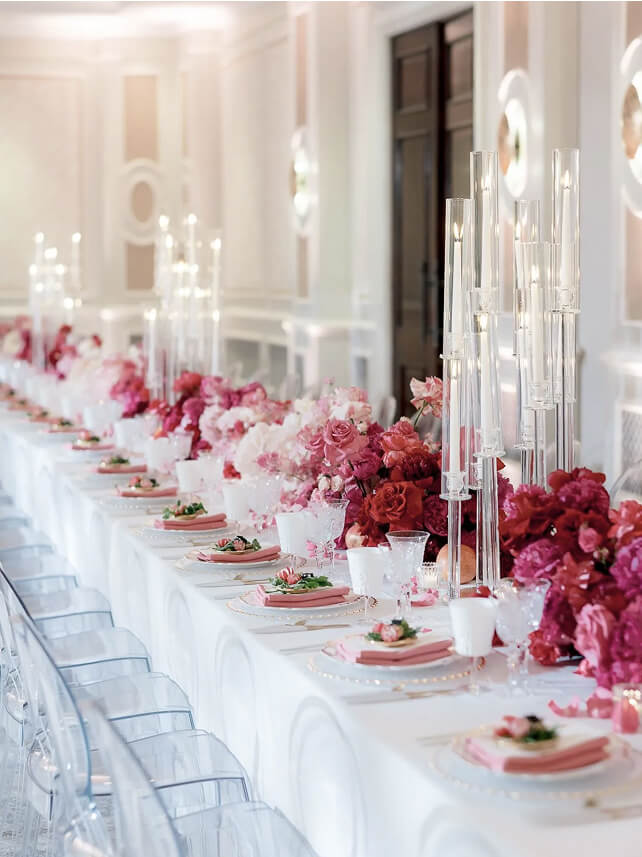
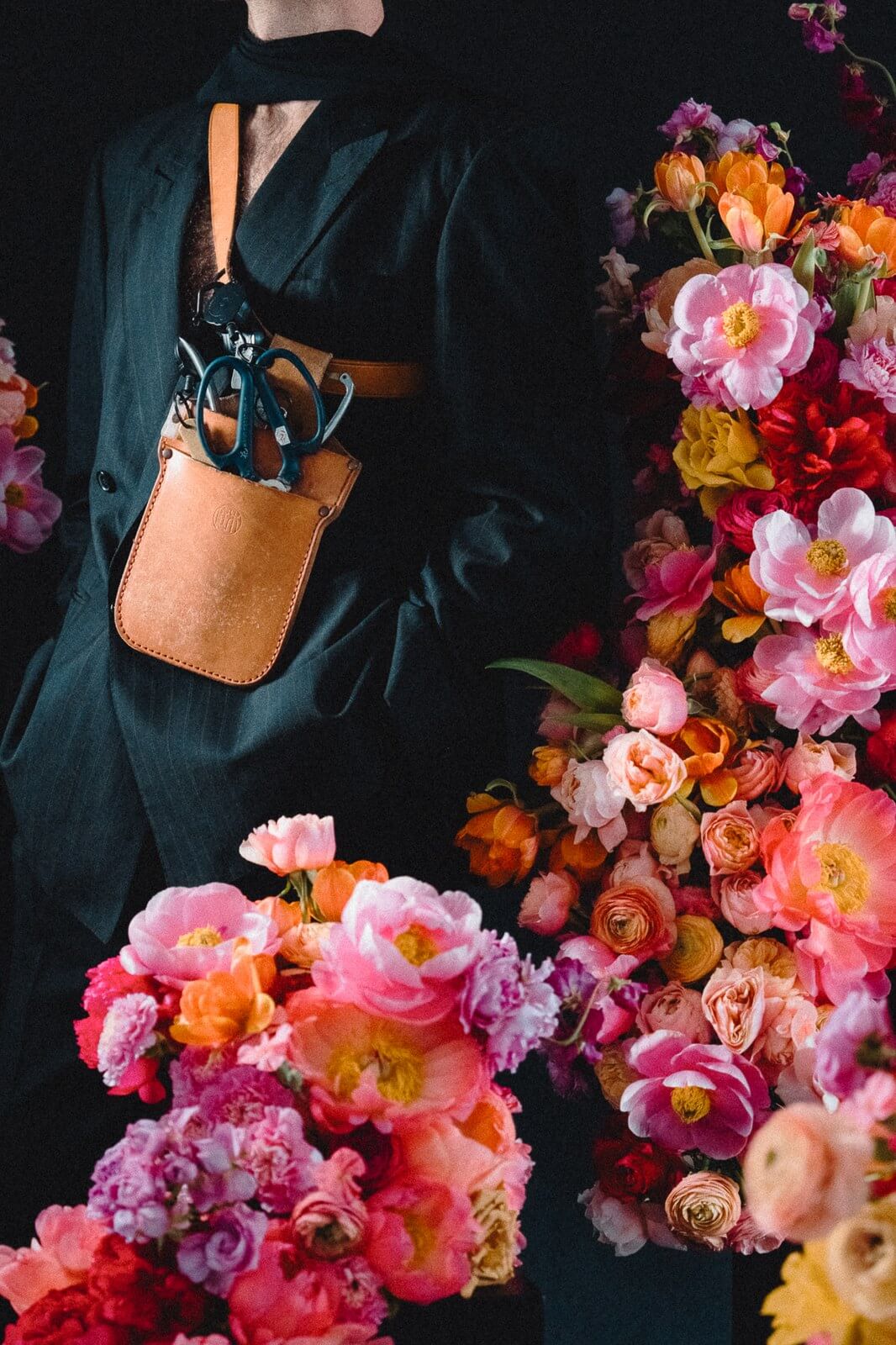
August is the most popular month to marry in the UK, and the draw of a summer wedding is easy to understand: outdoor receptions, long evenings, and an abundance of flowers at their seasonal peak. Summer provides a wider range of blooms than any other time of year, which makes the selection process both rich and, at times, difficult to narrow down. This guide covers what is in season through the warmer months to help you build your bridal bouquet and accessories.
White Wedding Flowers
Peonies
Peonies carry associations of freshness, fertility and romance, and their full, ruffled heads make them a natural focal flower for summer arrangements. They hold well when hand-tied alone, and work equally well in layered combinations. For a soft, rounded composition, pair white peonies with peachy garden roses, orange blossom and hanging greens. They also sit naturally alongside early summer tulips and fresh herbs, which provide lighter, contrasting greenery against the peony’s deeper foliage.
Jasmine
Jasmine is sought-after for bridal bouquets primarily for its fragrance — intensely sweet and distinctive, particularly noticeable when combined with other perfumed blooms like roses and peonies. Its stems move freely and its small star-shaped flowers and dainty leaves add a delicate quality to arrangements that heavier blooms cannot replicate. It has a long history in Middle Eastern wedding traditions, where it is associated with deep affection. Trails of jasmine woven through a bouquet are an understated detail with real presence. Pair it with honeysuckle, orange blossom and sweet peas for a fragrant, garden-led composition.
Cosmos
Cosmos are simple, daisy-like flowers with a lightness that translates well into hand-tied summer wedding bouquets. White varieties with a touch of yellow work particularly well in mixed arrangements alongside anemones and ranunculus. They are a reliable textural addition to most summer wedding compositions — used against other white flowers they create a layered, tonal composition without competing for attention.
Yellow and orange flowers
Sunflowers and Rudbeckias
Sunflowers are available in bright yellow, warm orange, deep brown and, increasingly, white — there are many newer varieties on the market worth exploring. Their dark centres provide contrast, and their scale means a small number goes a long way. In any arrangement, they will naturally become the focal point, so restraint in quantity tends to produce a more balanced result. Paired with Rudbeckias, which offer the same warm colour family in a smaller form, the two create good proportion and harmony. Both work particularly well alongside complementary cool tones — thistles, delphiniums and scabiosas in blue bring out the warmth of the yellow and orange blooms.
Poppies
Poppies are available into early summer. Their petals are fine and papery, with an earthy, naturalistic quality that sits easily in a wedding bouquet without requiring much additional structure around them. They pair well with peonies, dahlias and garden roses, and their wiry, movement-filled stems add interest to almost any arrangement. Orange poppies in particular read well against a white wedding dress, where the colour contrast is clean and immediate.
Craspedia
Craspedia are small, perfectly spherical yellow flower heads from the daisy family. Their graphic form adds texture and visual punctuation to arrangements rather than volume. They work well within yellow, white and grey colour schemes — combining with roses, phlox and lisianthus for a garden arrangement, or with anthuriums and blue irises for something more structured. Yellow craspedia in a white bouquet creates a meadow-inspired composition with just enough contrast to give the arrangement definition.
Purple and pink flowers
Veronica
Veronicas are vertical flowers, their tapering spires adding a soft upright line to any arrangement. They work across a wide range of colour schemes and complement larger, rounder blooms particularly well — peonies, lilies of the valley and roses all benefit from their slender contrast. Bold purple veronicas combine naturally with cosmos, thlaspi and lisianthus, and the flower’s height allows it to extend gracefully from the top of a bouquet, giving a garden-inspired looseness to the overall arrangement.
Freesia
Freesias are bell-shaped blooms with a delicate, expressive character — small in individual flower size but effective in adding lightness, texture and movement to a bouquet. Their fragrance is a significant part of their appeal: lavender-coloured varieties carry a sweet, pronounced scent, while deeper violet shades tend toward something richer. Lavender freesias pair well with voluminous peonies in pinks and purples; for a garden-led arrangement, dahlias, stock and lisianthus are natural companions. The bloom works across most summer wedding flower arrangements without dominating the overall composition.
Iris
Although primarily spring flowers, irises can be sourced into summer. They are an underused wedding flower — their layered, sculptural petals and deep purple or blue tones carry a quiet authority that transfers well into a hand-tied bouquet. They carry rich symbolic associations: spirituality, desire, sensuality and affection. Irises suit a coastal or informal summer setting as naturally as a more formal one. Combine purple blooms with roses, orchids, lavender or sunflowers for a bouquet that is composed without being stiff.
For more wedding inspiration, visit our Pinterest profile.
You may also like: