
Ten Wedding Flowers Mistakes To Avoid
Even well-planned flowers create problems if supplier arrival times are not properly coordinated. Confirm with the venue coordinator exactly when the florist, catering team and entertainment need to arrive and begin setting up, and make sure each supplier has those details in advance.
For help planning your wedding flowers, get in touch with the team.
10. Failing to coordinate schedules
Even well-planned flowers create problems if supplier arrival times are not properly coordinated. Confirm with the venue coordinator exactly when the florist, catering team and entertainment need to arrive and begin setting up, and make sure each supplier has those details in advance.
For help planning your wedding flowers, get in touch with the team.
A florist’s role extends beyond supplying flowers. They can advise on how arrangements should be scaled and placed within the venue, how different flowers interact with the available light, and how the overall floral scheme relates to other decorative elements. That expertise is difficult to replicate independently, particularly under the time pressure of a wedding day.
10. Failing to coordinate schedules
Even well-planned flowers create problems if supplier arrival times are not properly coordinated. Confirm with the venue coordinator exactly when the florist, catering team and entertainment need to arrive and begin setting up, and make sure each supplier has those details in advance.
For help planning your wedding flowers, get in touch with the team.
9. Trying to do everything yourself
A florist’s role extends beyond supplying flowers. They can advise on how arrangements should be scaled and placed within the venue, how different flowers interact with the available light, and how the overall floral scheme relates to other decorative elements. That expertise is difficult to replicate independently, particularly under the time pressure of a wedding day.
10. Failing to coordinate schedules
Even well-planned flowers create problems if supplier arrival times are not properly coordinated. Confirm with the venue coordinator exactly when the florist, catering team and entertainment need to arrive and begin setting up, and make sure each supplier has those details in advance.
For help planning your wedding flowers, get in touch with the team.
Some flower varieties need to be imported and must be ordered months in advance. Florists at the busier end of the market are often fully booked well ahead of peak season. As a guide, aim to have all floral arrangements confirmed at least six months before the wedding date. The more lead time you allow, the more options you are likely to have.
9. Trying to do everything yourself
A florist’s role extends beyond supplying flowers. They can advise on how arrangements should be scaled and placed within the venue, how different flowers interact with the available light, and how the overall floral scheme relates to other decorative elements. That expertise is difficult to replicate independently, particularly under the time pressure of a wedding day.
10. Failing to coordinate schedules
Even well-planned flowers create problems if supplier arrival times are not properly coordinated. Confirm with the venue coordinator exactly when the florist, catering team and entertainment need to arrive and begin setting up, and make sure each supplier has those details in advance.
For help planning your wedding flowers, get in touch with the team.
8. Leaving it too late to book
Some flower varieties need to be imported and must be ordered months in advance. Florists at the busier end of the market are often fully booked well ahead of peak season. As a guide, aim to have all floral arrangements confirmed at least six months before the wedding date. The more lead time you allow, the more options you are likely to have.
9. Trying to do everything yourself
A florist’s role extends beyond supplying flowers. They can advise on how arrangements should be scaled and placed within the venue, how different flowers interact with the available light, and how the overall floral scheme relates to other decorative elements. That expertise is difficult to replicate independently, particularly under the time pressure of a wedding day.
10. Failing to coordinate schedules
Even well-planned flowers create problems if supplier arrival times are not properly coordinated. Confirm with the venue coordinator exactly when the florist, catering team and entertainment need to arrive and begin setting up, and make sure each supplier has those details in advance.
For help planning your wedding flowers, get in touch with the team.

8. Leaving it too late to book
Some flower varieties need to be imported and must be ordered months in advance. Florists at the busier end of the market are often fully booked well ahead of peak season. As a guide, aim to have all floral arrangements confirmed at least six months before the wedding date. The more lead time you allow, the more options you are likely to have.
9. Trying to do everything yourself
A florist’s role extends beyond supplying flowers. They can advise on how arrangements should be scaled and placed within the venue, how different flowers interact with the available light, and how the overall floral scheme relates to other decorative elements. That expertise is difficult to replicate independently, particularly under the time pressure of a wedding day.
10. Failing to coordinate schedules
Even well-planned flowers create problems if supplier arrival times are not properly coordinated. Confirm with the venue coordinator exactly when the florist, catering team and entertainment need to arrive and begin setting up, and make sure each supplier has those details in advance.
For help planning your wedding flowers, get in touch with the team.
Wedding flowers can be expensive, and they should feature as a significant line in the budget rather than an afterthought. Ask your florist for an indication of typical costs for weddings of a similar scale, then discuss whether your ideas sit above or below that range. A common related mistake is planning to arrange the flowers independently: DIY floristry rarely produces results that hold up in professional photographs, and the time cost on the day itself is significant. For more on planning your floral spend, see our guide on how to budget for your wedding. [Note to editor: this link needs a URL before publishing.]
8. Leaving it too late to book
Some flower varieties need to be imported and must be ordered months in advance. Florists at the busier end of the market are often fully booked well ahead of peak season. As a guide, aim to have all floral arrangements confirmed at least six months before the wedding date. The more lead time you allow, the more options you are likely to have.
9. Trying to do everything yourself
A florist’s role extends beyond supplying flowers. They can advise on how arrangements should be scaled and placed within the venue, how different flowers interact with the available light, and how the overall floral scheme relates to other decorative elements. That expertise is difficult to replicate independently, particularly under the time pressure of a wedding day.
10. Failing to coordinate schedules
Even well-planned flowers create problems if supplier arrival times are not properly coordinated. Confirm with the venue coordinator exactly when the florist, catering team and entertainment need to arrive and begin setting up, and make sure each supplier has those details in advance.
For help planning your wedding flowers, get in touch with the team.
7. Underestimating the budget
Wedding flowers can be expensive, and they should feature as a significant line in the budget rather than an afterthought. Ask your florist for an indication of typical costs for weddings of a similar scale, then discuss whether your ideas sit above or below that range. A common related mistake is planning to arrange the flowers independently: DIY floristry rarely produces results that hold up in professional photographs, and the time cost on the day itself is significant. For more on planning your floral spend, see our guide on how to budget for your wedding. [Note to editor: this link needs a URL before publishing.]
8. Leaving it too late to book
Some flower varieties need to be imported and must be ordered months in advance. Florists at the busier end of the market are often fully booked well ahead of peak season. As a guide, aim to have all floral arrangements confirmed at least six months before the wedding date. The more lead time you allow, the more options you are likely to have.
9. Trying to do everything yourself
A florist’s role extends beyond supplying flowers. They can advise on how arrangements should be scaled and placed within the venue, how different flowers interact with the available light, and how the overall floral scheme relates to other decorative elements. That expertise is difficult to replicate independently, particularly under the time pressure of a wedding day.
10. Failing to coordinate schedules
Even well-planned flowers create problems if supplier arrival times are not properly coordinated. Confirm with the venue coordinator exactly when the florist, catering team and entertainment need to arrive and begin setting up, and make sure each supplier has those details in advance.
For help planning your wedding flowers, get in touch with the team.
6. Choosing flowers without your venue in mind
The scale, style and existing decor of a venue should inform the flower choices. A high-ceilinged hall calls for tall arrangements that fill the vertical space; a low barn or garden venue reads differently. At venue viewings, take note of the existing colours, textures and materials — stone, wood, fabric — and how much natural daylight comes through. These details will shape which arrangements work and which will not.
7. Underestimating the budget
Wedding flowers can be expensive, and they should feature as a significant line in the budget rather than an afterthought. Ask your florist for an indication of typical costs for weddings of a similar scale, then discuss whether your ideas sit above or below that range. A common related mistake is planning to arrange the flowers independently: DIY floristry rarely produces results that hold up in professional photographs, and the time cost on the day itself is significant. For more on planning your floral spend, see our guide on how to budget for your wedding. [Note to editor: this link needs a URL before publishing.]
8. Leaving it too late to book
Some flower varieties need to be imported and must be ordered months in advance. Florists at the busier end of the market are often fully booked well ahead of peak season. As a guide, aim to have all floral arrangements confirmed at least six months before the wedding date. The more lead time you allow, the more options you are likely to have.
9. Trying to do everything yourself
A florist’s role extends beyond supplying flowers. They can advise on how arrangements should be scaled and placed within the venue, how different flowers interact with the available light, and how the overall floral scheme relates to other decorative elements. That expertise is difficult to replicate independently, particularly under the time pressure of a wedding day.
10. Failing to coordinate schedules
Even well-planned flowers create problems if supplier arrival times are not properly coordinated. Confirm with the venue coordinator exactly when the florist, catering team and entertainment need to arrive and begin setting up, and make sure each supplier has those details in advance.
For help planning your wedding flowers, get in touch with the team.
5. Ignoring seasonality
Flowers have seasonal periods — some bloom in summer, others in winter — and choosing varieties that are out of season typically means importing them, which increases cost. Working with what is available at the time of year you are marrying is the most budget-conscious approach, and often produces the most cohesive results. We’ve put together a list of spring wedding flowers and a list of autumn wedding flowers as a starting point. [Note to editor: these two links need URLs before publishing.]
6. Choosing flowers without your venue in mind
The scale, style and existing decor of a venue should inform the flower choices. A high-ceilinged hall calls for tall arrangements that fill the vertical space; a low barn or garden venue reads differently. At venue viewings, take note of the existing colours, textures and materials — stone, wood, fabric — and how much natural daylight comes through. These details will shape which arrangements work and which will not.
7. Underestimating the budget
Wedding flowers can be expensive, and they should feature as a significant line in the budget rather than an afterthought. Ask your florist for an indication of typical costs for weddings of a similar scale, then discuss whether your ideas sit above or below that range. A common related mistake is planning to arrange the flowers independently: DIY floristry rarely produces results that hold up in professional photographs, and the time cost on the day itself is significant. For more on planning your floral spend, see our guide on how to budget for your wedding. [Note to editor: this link needs a URL before publishing.]
8. Leaving it too late to book
Some flower varieties need to be imported and must be ordered months in advance. Florists at the busier end of the market are often fully booked well ahead of peak season. As a guide, aim to have all floral arrangements confirmed at least six months before the wedding date. The more lead time you allow, the more options you are likely to have.
9. Trying to do everything yourself
A florist’s role extends beyond supplying flowers. They can advise on how arrangements should be scaled and placed within the venue, how different flowers interact with the available light, and how the overall floral scheme relates to other decorative elements. That expertise is difficult to replicate independently, particularly under the time pressure of a wedding day.
10. Failing to coordinate schedules
Even well-planned flowers create problems if supplier arrival times are not properly coordinated. Confirm with the venue coordinator exactly when the florist, catering team and entertainment need to arrive and begin setting up, and make sure each supplier has those details in advance.
For help planning your wedding flowers, get in touch with the team.

5. Ignoring seasonality
Flowers have seasonal periods — some bloom in summer, others in winter — and choosing varieties that are out of season typically means importing them, which increases cost. Working with what is available at the time of year you are marrying is the most budget-conscious approach, and often produces the most cohesive results. We’ve put together a list of spring wedding flowers and a list of autumn wedding flowers as a starting point. [Note to editor: these two links need URLs before publishing.]
6. Choosing flowers without your venue in mind
The scale, style and existing decor of a venue should inform the flower choices. A high-ceilinged hall calls for tall arrangements that fill the vertical space; a low barn or garden venue reads differently. At venue viewings, take note of the existing colours, textures and materials — stone, wood, fabric — and how much natural daylight comes through. These details will shape which arrangements work and which will not.
7. Underestimating the budget
Wedding flowers can be expensive, and they should feature as a significant line in the budget rather than an afterthought. Ask your florist for an indication of typical costs for weddings of a similar scale, then discuss whether your ideas sit above or below that range. A common related mistake is planning to arrange the flowers independently: DIY floristry rarely produces results that hold up in professional photographs, and the time cost on the day itself is significant. For more on planning your floral spend, see our guide on how to budget for your wedding. [Note to editor: this link needs a URL before publishing.]
8. Leaving it too late to book
Some flower varieties need to be imported and must be ordered months in advance. Florists at the busier end of the market are often fully booked well ahead of peak season. As a guide, aim to have all floral arrangements confirmed at least six months before the wedding date. The more lead time you allow, the more options you are likely to have.
9. Trying to do everything yourself
A florist’s role extends beyond supplying flowers. They can advise on how arrangements should be scaled and placed within the venue, how different flowers interact with the available light, and how the overall floral scheme relates to other decorative elements. That expertise is difficult to replicate independently, particularly under the time pressure of a wedding day.
10. Failing to coordinate schedules
Even well-planned flowers create problems if supplier arrival times are not properly coordinated. Confirm with the venue coordinator exactly when the florist, catering team and entertainment need to arrive and begin setting up, and make sure each supplier has those details in advance.
For help planning your wedding flowers, get in touch with the team.
Professional florists do not reproduce other designers’ work. They will take inspiration from arrangements you show them, but the result will always be their own interpretation — influenced by what is available, what works in the specific venue, and their own expertise. Going into a consultation prepared to be open to that interpretation will lead to better results than holding too rigidly to a reference image.
5. Ignoring seasonality
Flowers have seasonal periods — some bloom in summer, others in winter — and choosing varieties that are out of season typically means importing them, which increases cost. Working with what is available at the time of year you are marrying is the most budget-conscious approach, and often produces the most cohesive results. We’ve put together a list of spring wedding flowers and a list of autumn wedding flowers as a starting point. [Note to editor: these two links need URLs before publishing.]
6. Choosing flowers without your venue in mind
The scale, style and existing decor of a venue should inform the flower choices. A high-ceilinged hall calls for tall arrangements that fill the vertical space; a low barn or garden venue reads differently. At venue viewings, take note of the existing colours, textures and materials — stone, wood, fabric — and how much natural daylight comes through. These details will shape which arrangements work and which will not.
7. Underestimating the budget
Wedding flowers can be expensive, and they should feature as a significant line in the budget rather than an afterthought. Ask your florist for an indication of typical costs for weddings of a similar scale, then discuss whether your ideas sit above or below that range. A common related mistake is planning to arrange the flowers independently: DIY floristry rarely produces results that hold up in professional photographs, and the time cost on the day itself is significant. For more on planning your floral spend, see our guide on how to budget for your wedding. [Note to editor: this link needs a URL before publishing.]
8. Leaving it too late to book
Some flower varieties need to be imported and must be ordered months in advance. Florists at the busier end of the market are often fully booked well ahead of peak season. As a guide, aim to have all floral arrangements confirmed at least six months before the wedding date. The more lead time you allow, the more options you are likely to have.
9. Trying to do everything yourself
A florist’s role extends beyond supplying flowers. They can advise on how arrangements should be scaled and placed within the venue, how different flowers interact with the available light, and how the overall floral scheme relates to other decorative elements. That expertise is difficult to replicate independently, particularly under the time pressure of a wedding day.
10. Failing to coordinate schedules
Even well-planned flowers create problems if supplier arrival times are not properly coordinated. Confirm with the venue coordinator exactly when the florist, catering team and entertainment need to arrive and begin setting up, and make sure each supplier has those details in advance.
For help planning your wedding flowers, get in touch with the team.
4. Expecting an exact replica of someone else’s flowers
Professional florists do not reproduce other designers’ work. They will take inspiration from arrangements you show them, but the result will always be their own interpretation — influenced by what is available, what works in the specific venue, and their own expertise. Going into a consultation prepared to be open to that interpretation will lead to better results than holding too rigidly to a reference image.
5. Ignoring seasonality
Flowers have seasonal periods — some bloom in summer, others in winter — and choosing varieties that are out of season typically means importing them, which increases cost. Working with what is available at the time of year you are marrying is the most budget-conscious approach, and often produces the most cohesive results. We’ve put together a list of spring wedding flowers and a list of autumn wedding flowers as a starting point. [Note to editor: these two links need URLs before publishing.]
6. Choosing flowers without your venue in mind
The scale, style and existing decor of a venue should inform the flower choices. A high-ceilinged hall calls for tall arrangements that fill the vertical space; a low barn or garden venue reads differently. At venue viewings, take note of the existing colours, textures and materials — stone, wood, fabric — and how much natural daylight comes through. These details will shape which arrangements work and which will not.
7. Underestimating the budget
Wedding flowers can be expensive, and they should feature as a significant line in the budget rather than an afterthought. Ask your florist for an indication of typical costs for weddings of a similar scale, then discuss whether your ideas sit above or below that range. A common related mistake is planning to arrange the flowers independently: DIY floristry rarely produces results that hold up in professional photographs, and the time cost on the day itself is significant. For more on planning your floral spend, see our guide on how to budget for your wedding. [Note to editor: this link needs a URL before publishing.]
8. Leaving it too late to book
Some flower varieties need to be imported and must be ordered months in advance. Florists at the busier end of the market are often fully booked well ahead of peak season. As a guide, aim to have all floral arrangements confirmed at least six months before the wedding date. The more lead time you allow, the more options you are likely to have.
9. Trying to do everything yourself
A florist’s role extends beyond supplying flowers. They can advise on how arrangements should be scaled and placed within the venue, how different flowers interact with the available light, and how the overall floral scheme relates to other decorative elements. That expertise is difficult to replicate independently, particularly under the time pressure of a wedding day.
10. Failing to coordinate schedules
Even well-planned flowers create problems if supplier arrival times are not properly coordinated. Confirm with the venue coordinator exactly when the florist, catering team and entertainment need to arrive and begin setting up, and make sure each supplier has those details in advance.
For help planning your wedding flowers, get in touch with the team.
Flower arrangements should support the overall look of the wedding rather than compete with it. Too many flower varieties or colours in a single arrangement creates visual noise rather than impact. The same applies to accessories — novelty additions such as feathers, butterflies or decorative birds can overwhelm an arrangement if they are not carefully considered. Before committing to a design, review a florist’s portfolio to understand how they compose arrangements and whether their aesthetic matches yours.
4. Expecting an exact replica of someone else’s flowers
Professional florists do not reproduce other designers’ work. They will take inspiration from arrangements you show them, but the result will always be their own interpretation — influenced by what is available, what works in the specific venue, and their own expertise. Going into a consultation prepared to be open to that interpretation will lead to better results than holding too rigidly to a reference image.
5. Ignoring seasonality
Flowers have seasonal periods — some bloom in summer, others in winter — and choosing varieties that are out of season typically means importing them, which increases cost. Working with what is available at the time of year you are marrying is the most budget-conscious approach, and often produces the most cohesive results. We’ve put together a list of spring wedding flowers and a list of autumn wedding flowers as a starting point. [Note to editor: these two links need URLs before publishing.]
6. Choosing flowers without your venue in mind
The scale, style and existing decor of a venue should inform the flower choices. A high-ceilinged hall calls for tall arrangements that fill the vertical space; a low barn or garden venue reads differently. At venue viewings, take note of the existing colours, textures and materials — stone, wood, fabric — and how much natural daylight comes through. These details will shape which arrangements work and which will not.
7. Underestimating the budget
Wedding flowers can be expensive, and they should feature as a significant line in the budget rather than an afterthought. Ask your florist for an indication of typical costs for weddings of a similar scale, then discuss whether your ideas sit above or below that range. A common related mistake is planning to arrange the flowers independently: DIY floristry rarely produces results that hold up in professional photographs, and the time cost on the day itself is significant. For more on planning your floral spend, see our guide on how to budget for your wedding. [Note to editor: this link needs a URL before publishing.]
8. Leaving it too late to book
Some flower varieties need to be imported and must be ordered months in advance. Florists at the busier end of the market are often fully booked well ahead of peak season. As a guide, aim to have all floral arrangements confirmed at least six months before the wedding date. The more lead time you allow, the more options you are likely to have.
9. Trying to do everything yourself
A florist’s role extends beyond supplying flowers. They can advise on how arrangements should be scaled and placed within the venue, how different flowers interact with the available light, and how the overall floral scheme relates to other decorative elements. That expertise is difficult to replicate independently, particularly under the time pressure of a wedding day.
10. Failing to coordinate schedules
Even well-planned flowers create problems if supplier arrival times are not properly coordinated. Confirm with the venue coordinator exactly when the florist, catering team and entertainment need to arrive and begin setting up, and make sure each supplier has those details in advance.
For help planning your wedding flowers, get in touch with the team.
3. Overdoing the design
Flower arrangements should support the overall look of the wedding rather than compete with it. Too many flower varieties or colours in a single arrangement creates visual noise rather than impact. The same applies to accessories — novelty additions such as feathers, butterflies or decorative birds can overwhelm an arrangement if they are not carefully considered. Before committing to a design, review a florist’s portfolio to understand how they compose arrangements and whether their aesthetic matches yours.
4. Expecting an exact replica of someone else’s flowers
Professional florists do not reproduce other designers’ work. They will take inspiration from arrangements you show them, but the result will always be their own interpretation — influenced by what is available, what works in the specific venue, and their own expertise. Going into a consultation prepared to be open to that interpretation will lead to better results than holding too rigidly to a reference image.
5. Ignoring seasonality
Flowers have seasonal periods — some bloom in summer, others in winter — and choosing varieties that are out of season typically means importing them, which increases cost. Working with what is available at the time of year you are marrying is the most budget-conscious approach, and often produces the most cohesive results. We’ve put together a list of spring wedding flowers and a list of autumn wedding flowers as a starting point. [Note to editor: these two links need URLs before publishing.]
6. Choosing flowers without your venue in mind
The scale, style and existing decor of a venue should inform the flower choices. A high-ceilinged hall calls for tall arrangements that fill the vertical space; a low barn or garden venue reads differently. At venue viewings, take note of the existing colours, textures and materials — stone, wood, fabric — and how much natural daylight comes through. These details will shape which arrangements work and which will not.
7. Underestimating the budget
Wedding flowers can be expensive, and they should feature as a significant line in the budget rather than an afterthought. Ask your florist for an indication of typical costs for weddings of a similar scale, then discuss whether your ideas sit above or below that range. A common related mistake is planning to arrange the flowers independently: DIY floristry rarely produces results that hold up in professional photographs, and the time cost on the day itself is significant. For more on planning your floral spend, see our guide on how to budget for your wedding. [Note to editor: this link needs a URL before publishing.]
8. Leaving it too late to book
Some flower varieties need to be imported and must be ordered months in advance. Florists at the busier end of the market are often fully booked well ahead of peak season. As a guide, aim to have all floral arrangements confirmed at least six months before the wedding date. The more lead time you allow, the more options you are likely to have.
9. Trying to do everything yourself
A florist’s role extends beyond supplying flowers. They can advise on how arrangements should be scaled and placed within the venue, how different flowers interact with the available light, and how the overall floral scheme relates to other decorative elements. That expertise is difficult to replicate independently, particularly under the time pressure of a wedding day.
10. Failing to coordinate schedules
Even well-planned flowers create problems if supplier arrival times are not properly coordinated. Confirm with the venue coordinator exactly when the florist, catering team and entertainment need to arrive and begin setting up, and make sure each supplier has those details in advance.
For help planning your wedding flowers, get in touch with the team.
Researching and building a mood board before your first florist consultation will make the meeting more productive for both sides. Florists are working across multiple weddings simultaneously; arriving with visual references — textures, colours, shapes, any accessories you have in mind — allows them to respond to something concrete. Visit our Pinterest for wedding flower inspiration.
3. Overdoing the design
Flower arrangements should support the overall look of the wedding rather than compete with it. Too many flower varieties or colours in a single arrangement creates visual noise rather than impact. The same applies to accessories — novelty additions such as feathers, butterflies or decorative birds can overwhelm an arrangement if they are not carefully considered. Before committing to a design, review a florist’s portfolio to understand how they compose arrangements and whether their aesthetic matches yours.
4. Expecting an exact replica of someone else’s flowers
Professional florists do not reproduce other designers’ work. They will take inspiration from arrangements you show them, but the result will always be their own interpretation — influenced by what is available, what works in the specific venue, and their own expertise. Going into a consultation prepared to be open to that interpretation will lead to better results than holding too rigidly to a reference image.
5. Ignoring seasonality
Flowers have seasonal periods — some bloom in summer, others in winter — and choosing varieties that are out of season typically means importing them, which increases cost. Working with what is available at the time of year you are marrying is the most budget-conscious approach, and often produces the most cohesive results. We’ve put together a list of spring wedding flowers and a list of autumn wedding flowers as a starting point. [Note to editor: these two links need URLs before publishing.]
6. Choosing flowers without your venue in mind
The scale, style and existing decor of a venue should inform the flower choices. A high-ceilinged hall calls for tall arrangements that fill the vertical space; a low barn or garden venue reads differently. At venue viewings, take note of the existing colours, textures and materials — stone, wood, fabric — and how much natural daylight comes through. These details will shape which arrangements work and which will not.
7. Underestimating the budget
Wedding flowers can be expensive, and they should feature as a significant line in the budget rather than an afterthought. Ask your florist for an indication of typical costs for weddings of a similar scale, then discuss whether your ideas sit above or below that range. A common related mistake is planning to arrange the flowers independently: DIY floristry rarely produces results that hold up in professional photographs, and the time cost on the day itself is significant. For more on planning your floral spend, see our guide on how to budget for your wedding. [Note to editor: this link needs a URL before publishing.]
8. Leaving it too late to book
Some flower varieties need to be imported and must be ordered months in advance. Florists at the busier end of the market are often fully booked well ahead of peak season. As a guide, aim to have all floral arrangements confirmed at least six months before the wedding date. The more lead time you allow, the more options you are likely to have.
9. Trying to do everything yourself
A florist’s role extends beyond supplying flowers. They can advise on how arrangements should be scaled and placed within the venue, how different flowers interact with the available light, and how the overall floral scheme relates to other decorative elements. That expertise is difficult to replicate independently, particularly under the time pressure of a wedding day.
10. Failing to coordinate schedules
Even well-planned flowers create problems if supplier arrival times are not properly coordinated. Confirm with the venue coordinator exactly when the florist, catering team and entertainment need to arrive and begin setting up, and make sure each supplier has those details in advance.
For help planning your wedding flowers, get in touch with the team.
2. Arriving at the florist without ideas
Researching and building a mood board before your first florist consultation will make the meeting more productive for both sides. Florists are working across multiple weddings simultaneously; arriving with visual references — textures, colours, shapes, any accessories you have in mind — allows them to respond to something concrete. Visit our Pinterest for wedding flower inspiration.
3. Overdoing the design
Flower arrangements should support the overall look of the wedding rather than compete with it. Too many flower varieties or colours in a single arrangement creates visual noise rather than impact. The same applies to accessories — novelty additions such as feathers, butterflies or decorative birds can overwhelm an arrangement if they are not carefully considered. Before committing to a design, review a florist’s portfolio to understand how they compose arrangements and whether their aesthetic matches yours.
4. Expecting an exact replica of someone else’s flowers
Professional florists do not reproduce other designers’ work. They will take inspiration from arrangements you show them, but the result will always be their own interpretation — influenced by what is available, what works in the specific venue, and their own expertise. Going into a consultation prepared to be open to that interpretation will lead to better results than holding too rigidly to a reference image.
5. Ignoring seasonality
Flowers have seasonal periods — some bloom in summer, others in winter — and choosing varieties that are out of season typically means importing them, which increases cost. Working with what is available at the time of year you are marrying is the most budget-conscious approach, and often produces the most cohesive results. We’ve put together a list of spring wedding flowers and a list of autumn wedding flowers as a starting point. [Note to editor: these two links need URLs before publishing.]
6. Choosing flowers without your venue in mind
The scale, style and existing decor of a venue should inform the flower choices. A high-ceilinged hall calls for tall arrangements that fill the vertical space; a low barn or garden venue reads differently. At venue viewings, take note of the existing colours, textures and materials — stone, wood, fabric — and how much natural daylight comes through. These details will shape which arrangements work and which will not.
7. Underestimating the budget
Wedding flowers can be expensive, and they should feature as a significant line in the budget rather than an afterthought. Ask your florist for an indication of typical costs for weddings of a similar scale, then discuss whether your ideas sit above or below that range. A common related mistake is planning to arrange the flowers independently: DIY floristry rarely produces results that hold up in professional photographs, and the time cost on the day itself is significant. For more on planning your floral spend, see our guide on how to budget for your wedding. [Note to editor: this link needs a URL before publishing.]
8. Leaving it too late to book
Some flower varieties need to be imported and must be ordered months in advance. Florists at the busier end of the market are often fully booked well ahead of peak season. As a guide, aim to have all floral arrangements confirmed at least six months before the wedding date. The more lead time you allow, the more options you are likely to have.
9. Trying to do everything yourself
A florist’s role extends beyond supplying flowers. They can advise on how arrangements should be scaled and placed within the venue, how different flowers interact with the available light, and how the overall floral scheme relates to other decorative elements. That expertise is difficult to replicate independently, particularly under the time pressure of a wedding day.
10. Failing to coordinate schedules
Even well-planned flowers create problems if supplier arrival times are not properly coordinated. Confirm with the venue coordinator exactly when the florist, catering team and entertainment need to arrive and begin setting up, and make sure each supplier has those details in advance.
For help planning your wedding flowers, get in touch with the team.

2. Arriving at the florist without ideas
Researching and building a mood board before your first florist consultation will make the meeting more productive for both sides. Florists are working across multiple weddings simultaneously; arriving with visual references — textures, colours, shapes, any accessories you have in mind — allows them to respond to something concrete. Visit our Pinterest for wedding flower inspiration.
3. Overdoing the design
Flower arrangements should support the overall look of the wedding rather than compete with it. Too many flower varieties or colours in a single arrangement creates visual noise rather than impact. The same applies to accessories — novelty additions such as feathers, butterflies or decorative birds can overwhelm an arrangement if they are not carefully considered. Before committing to a design, review a florist’s portfolio to understand how they compose arrangements and whether their aesthetic matches yours.
4. Expecting an exact replica of someone else’s flowers
Professional florists do not reproduce other designers’ work. They will take inspiration from arrangements you show them, but the result will always be their own interpretation — influenced by what is available, what works in the specific venue, and their own expertise. Going into a consultation prepared to be open to that interpretation will lead to better results than holding too rigidly to a reference image.
5. Ignoring seasonality
Flowers have seasonal periods — some bloom in summer, others in winter — and choosing varieties that are out of season typically means importing them, which increases cost. Working with what is available at the time of year you are marrying is the most budget-conscious approach, and often produces the most cohesive results. We’ve put together a list of spring wedding flowers and a list of autumn wedding flowers as a starting point. [Note to editor: these two links need URLs before publishing.]
6. Choosing flowers without your venue in mind
The scale, style and existing decor of a venue should inform the flower choices. A high-ceilinged hall calls for tall arrangements that fill the vertical space; a low barn or garden venue reads differently. At venue viewings, take note of the existing colours, textures and materials — stone, wood, fabric — and how much natural daylight comes through. These details will shape which arrangements work and which will not.
7. Underestimating the budget
Wedding flowers can be expensive, and they should feature as a significant line in the budget rather than an afterthought. Ask your florist for an indication of typical costs for weddings of a similar scale, then discuss whether your ideas sit above or below that range. A common related mistake is planning to arrange the flowers independently: DIY floristry rarely produces results that hold up in professional photographs, and the time cost on the day itself is significant. For more on planning your floral spend, see our guide on how to budget for your wedding. [Note to editor: this link needs a URL before publishing.]
8. Leaving it too late to book
Some flower varieties need to be imported and must be ordered months in advance. Florists at the busier end of the market are often fully booked well ahead of peak season. As a guide, aim to have all floral arrangements confirmed at least six months before the wedding date. The more lead time you allow, the more options you are likely to have.
9. Trying to do everything yourself
A florist’s role extends beyond supplying flowers. They can advise on how arrangements should be scaled and placed within the venue, how different flowers interact with the available light, and how the overall floral scheme relates to other decorative elements. That expertise is difficult to replicate independently, particularly under the time pressure of a wedding day.
10. Failing to coordinate schedules
Even well-planned flowers create problems if supplier arrival times are not properly coordinated. Confirm with the venue coordinator exactly when the florist, catering team and entertainment need to arrive and begin setting up, and make sure each supplier has those details in advance.
For help planning your wedding flowers, get in touch with the team.
A consistent colour palette across bouquets, centrepieces and ceremony arrangements ties the whole day together. Two main colours is a workable starting point. Be cautious about matching flowers too closely to bridesmaid dress colours — if the tones are too similar, both can disappear in photographs. Avoid bright colours unless a bold palette is intentional. An experienced florist will advise on which colours complement each other and how they read in the space.
2. Arriving at the florist without ideas
Researching and building a mood board before your first florist consultation will make the meeting more productive for both sides. Florists are working across multiple weddings simultaneously; arriving with visual references — textures, colours, shapes, any accessories you have in mind — allows them to respond to something concrete. Visit our Pinterest for wedding flower inspiration.
3. Overdoing the design
Flower arrangements should support the overall look of the wedding rather than compete with it. Too many flower varieties or colours in a single arrangement creates visual noise rather than impact. The same applies to accessories — novelty additions such as feathers, butterflies or decorative birds can overwhelm an arrangement if they are not carefully considered. Before committing to a design, review a florist’s portfolio to understand how they compose arrangements and whether their aesthetic matches yours.
4. Expecting an exact replica of someone else’s flowers
Professional florists do not reproduce other designers’ work. They will take inspiration from arrangements you show them, but the result will always be their own interpretation — influenced by what is available, what works in the specific venue, and their own expertise. Going into a consultation prepared to be open to that interpretation will lead to better results than holding too rigidly to a reference image.
5. Ignoring seasonality
Flowers have seasonal periods — some bloom in summer, others in winter — and choosing varieties that are out of season typically means importing them, which increases cost. Working with what is available at the time of year you are marrying is the most budget-conscious approach, and often produces the most cohesive results. We’ve put together a list of spring wedding flowers and a list of autumn wedding flowers as a starting point. [Note to editor: these two links need URLs before publishing.]
6. Choosing flowers without your venue in mind
The scale, style and existing decor of a venue should inform the flower choices. A high-ceilinged hall calls for tall arrangements that fill the vertical space; a low barn or garden venue reads differently. At venue viewings, take note of the existing colours, textures and materials — stone, wood, fabric — and how much natural daylight comes through. These details will shape which arrangements work and which will not.
7. Underestimating the budget
Wedding flowers can be expensive, and they should feature as a significant line in the budget rather than an afterthought. Ask your florist for an indication of typical costs for weddings of a similar scale, then discuss whether your ideas sit above or below that range. A common related mistake is planning to arrange the flowers independently: DIY floristry rarely produces results that hold up in professional photographs, and the time cost on the day itself is significant. For more on planning your floral spend, see our guide on how to budget for your wedding. [Note to editor: this link needs a URL before publishing.]
8. Leaving it too late to book
Some flower varieties need to be imported and must be ordered months in advance. Florists at the busier end of the market are often fully booked well ahead of peak season. As a guide, aim to have all floral arrangements confirmed at least six months before the wedding date. The more lead time you allow, the more options you are likely to have.
9. Trying to do everything yourself
A florist’s role extends beyond supplying flowers. They can advise on how arrangements should be scaled and placed within the venue, how different flowers interact with the available light, and how the overall floral scheme relates to other decorative elements. That expertise is difficult to replicate independently, particularly under the time pressure of a wedding day.
10. Failing to coordinate schedules
Even well-planned flowers create problems if supplier arrival times are not properly coordinated. Confirm with the venue coordinator exactly when the florist, catering team and entertainment need to arrive and begin setting up, and make sure each supplier has those details in advance.
For help planning your wedding flowers, get in touch with the team.
1. Inconsistent colour scheme
A consistent colour palette across bouquets, centrepieces and ceremony arrangements ties the whole day together. Two main colours is a workable starting point. Be cautious about matching flowers too closely to bridesmaid dress colours — if the tones are too similar, both can disappear in photographs. Avoid bright colours unless a bold palette is intentional. An experienced florist will advise on which colours complement each other and how they read in the space.
2. Arriving at the florist without ideas
Researching and building a mood board before your first florist consultation will make the meeting more productive for both sides. Florists are working across multiple weddings simultaneously; arriving with visual references — textures, colours, shapes, any accessories you have in mind — allows them to respond to something concrete. Visit our Pinterest for wedding flower inspiration.
3. Overdoing the design
Flower arrangements should support the overall look of the wedding rather than compete with it. Too many flower varieties or colours in a single arrangement creates visual noise rather than impact. The same applies to accessories — novelty additions such as feathers, butterflies or decorative birds can overwhelm an arrangement if they are not carefully considered. Before committing to a design, review a florist’s portfolio to understand how they compose arrangements and whether their aesthetic matches yours.
4. Expecting an exact replica of someone else’s flowers
Professional florists do not reproduce other designers’ work. They will take inspiration from arrangements you show them, but the result will always be their own interpretation — influenced by what is available, what works in the specific venue, and their own expertise. Going into a consultation prepared to be open to that interpretation will lead to better results than holding too rigidly to a reference image.
5. Ignoring seasonality
Flowers have seasonal periods — some bloom in summer, others in winter — and choosing varieties that are out of season typically means importing them, which increases cost. Working with what is available at the time of year you are marrying is the most budget-conscious approach, and often produces the most cohesive results. We’ve put together a list of spring wedding flowers and a list of autumn wedding flowers as a starting point. [Note to editor: these two links need URLs before publishing.]
6. Choosing flowers without your venue in mind
The scale, style and existing decor of a venue should inform the flower choices. A high-ceilinged hall calls for tall arrangements that fill the vertical space; a low barn or garden venue reads differently. At venue viewings, take note of the existing colours, textures and materials — stone, wood, fabric — and how much natural daylight comes through. These details will shape which arrangements work and which will not.
7. Underestimating the budget
Wedding flowers can be expensive, and they should feature as a significant line in the budget rather than an afterthought. Ask your florist for an indication of typical costs for weddings of a similar scale, then discuss whether your ideas sit above or below that range. A common related mistake is planning to arrange the flowers independently: DIY floristry rarely produces results that hold up in professional photographs, and the time cost on the day itself is significant. For more on planning your floral spend, see our guide on how to budget for your wedding. [Note to editor: this link needs a URL before publishing.]
8. Leaving it too late to book
Some flower varieties need to be imported and must be ordered months in advance. Florists at the busier end of the market are often fully booked well ahead of peak season. As a guide, aim to have all floral arrangements confirmed at least six months before the wedding date. The more lead time you allow, the more options you are likely to have.
9. Trying to do everything yourself
A florist’s role extends beyond supplying flowers. They can advise on how arrangements should be scaled and placed within the venue, how different flowers interact with the available light, and how the overall floral scheme relates to other decorative elements. That expertise is difficult to replicate independently, particularly under the time pressure of a wedding day.
10. Failing to coordinate schedules
Even well-planned flowers create problems if supplier arrival times are not properly coordinated. Confirm with the venue coordinator exactly when the florist, catering team and entertainment need to arrive and begin setting up, and make sure each supplier has those details in advance.
For help planning your wedding flowers, get in touch with the team.
Ten wedding flower mistakes to avoid
1. Inconsistent colour scheme
A consistent colour palette across bouquets, centrepieces and ceremony arrangements ties the whole day together. Two main colours is a workable starting point. Be cautious about matching flowers too closely to bridesmaid dress colours — if the tones are too similar, both can disappear in photographs. Avoid bright colours unless a bold palette is intentional. An experienced florist will advise on which colours complement each other and how they read in the space.
2. Arriving at the florist without ideas
Researching and building a mood board before your first florist consultation will make the meeting more productive for both sides. Florists are working across multiple weddings simultaneously; arriving with visual references — textures, colours, shapes, any accessories you have in mind — allows them to respond to something concrete. Visit our Pinterest for wedding flower inspiration.
3. Overdoing the design
Flower arrangements should support the overall look of the wedding rather than compete with it. Too many flower varieties or colours in a single arrangement creates visual noise rather than impact. The same applies to accessories — novelty additions such as feathers, butterflies or decorative birds can overwhelm an arrangement if they are not carefully considered. Before committing to a design, review a florist’s portfolio to understand how they compose arrangements and whether their aesthetic matches yours.
4. Expecting an exact replica of someone else’s flowers
Professional florists do not reproduce other designers’ work. They will take inspiration from arrangements you show them, but the result will always be their own interpretation — influenced by what is available, what works in the specific venue, and their own expertise. Going into a consultation prepared to be open to that interpretation will lead to better results than holding too rigidly to a reference image.
5. Ignoring seasonality
Flowers have seasonal periods — some bloom in summer, others in winter — and choosing varieties that are out of season typically means importing them, which increases cost. Working with what is available at the time of year you are marrying is the most budget-conscious approach, and often produces the most cohesive results. We’ve put together a list of spring wedding flowers and a list of autumn wedding flowers as a starting point. [Note to editor: these two links need URLs before publishing.]
6. Choosing flowers without your venue in mind
The scale, style and existing decor of a venue should inform the flower choices. A high-ceilinged hall calls for tall arrangements that fill the vertical space; a low barn or garden venue reads differently. At venue viewings, take note of the existing colours, textures and materials — stone, wood, fabric — and how much natural daylight comes through. These details will shape which arrangements work and which will not.
7. Underestimating the budget
Wedding flowers can be expensive, and they should feature as a significant line in the budget rather than an afterthought. Ask your florist for an indication of typical costs for weddings of a similar scale, then discuss whether your ideas sit above or below that range. A common related mistake is planning to arrange the flowers independently: DIY floristry rarely produces results that hold up in professional photographs, and the time cost on the day itself is significant. For more on planning your floral spend, see our guide on how to budget for your wedding. [Note to editor: this link needs a URL before publishing.]
8. Leaving it too late to book
Some flower varieties need to be imported and must be ordered months in advance. Florists at the busier end of the market are often fully booked well ahead of peak season. As a guide, aim to have all floral arrangements confirmed at least six months before the wedding date. The more lead time you allow, the more options you are likely to have.
9. Trying to do everything yourself
A florist’s role extends beyond supplying flowers. They can advise on how arrangements should be scaled and placed within the venue, how different flowers interact with the available light, and how the overall floral scheme relates to other decorative elements. That expertise is difficult to replicate independently, particularly under the time pressure of a wedding day.
10. Failing to coordinate schedules
Even well-planned flowers create problems if supplier arrival times are not properly coordinated. Confirm with the venue coordinator exactly when the florist, catering team and entertainment need to arrive and begin setting up, and make sure each supplier has those details in advance.
For help planning your wedding flowers, get in touch with the team.
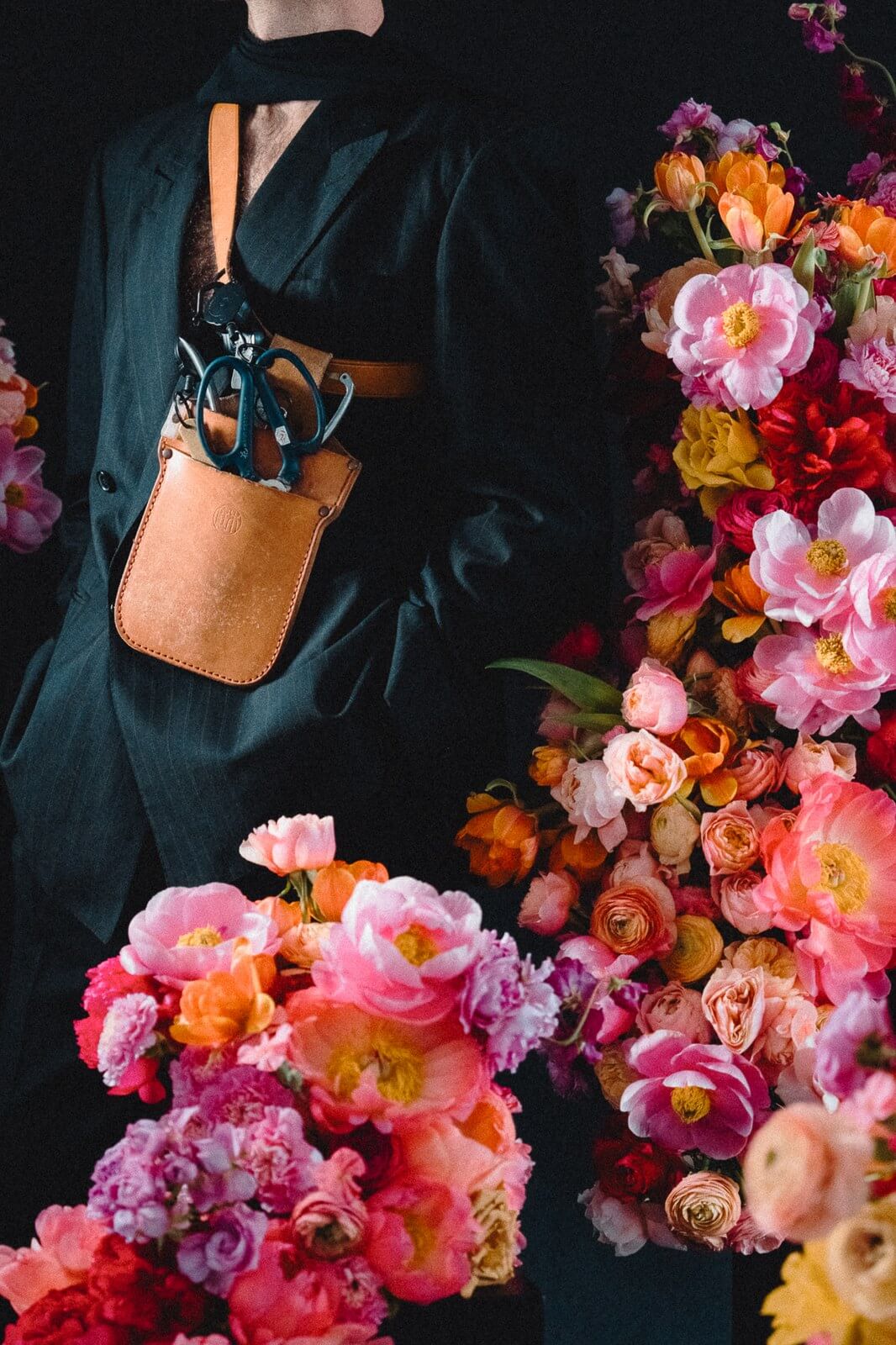
Flowers are one of the most visible elements of a wedding — present in the bouquet, the ceremony, the reception tables, and the buttonholes — and the decisions involved are more detailed than most couples anticipate. Here are ten of the most common mistakes to avoid when planning your wedding flowers.
Ten wedding flower mistakes to avoid
1. Inconsistent colour scheme
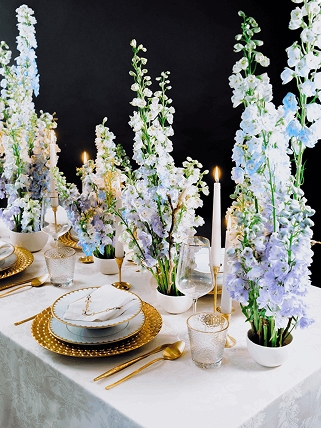
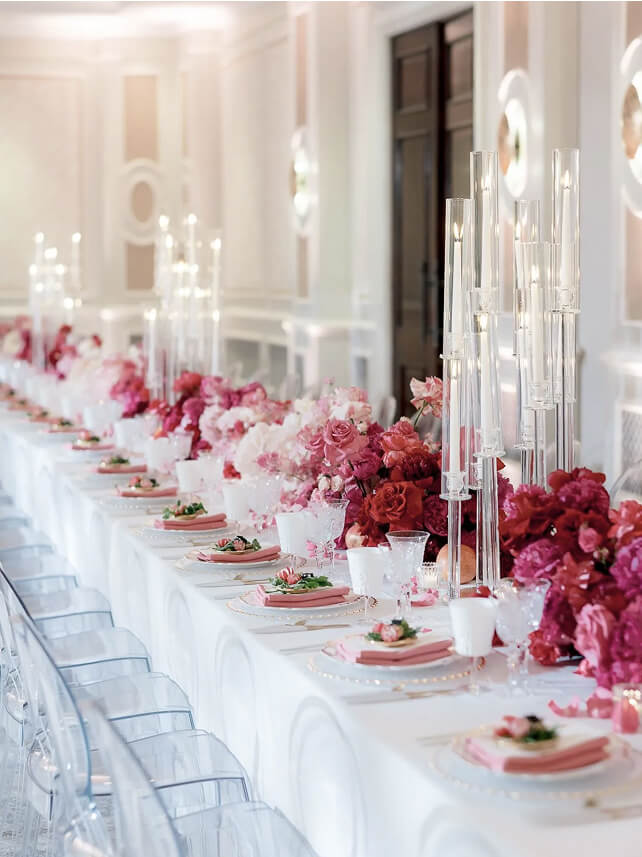
A consistent colour palette across bouquets, centrepieces and ceremony arrangements ties the whole day together. Two main colours is a workable starting point. Be cautious about matching flowers too closely to bridesmaid dress colours — if the tones are too similar, both can disappear in photographs. Avoid bright colours unless a bold palette is intentional. An experienced florist will advise on which colours complement each other and how they read in the space.
2. Arriving at the florist without ideas
Researching and building a mood board before your first florist consultation will make the meeting more productive for both sides. Florists are working across multiple weddings simultaneously; arriving with visual references — textures, colours, shapes, any accessories you have in mind — allows them to respond to something concrete. Visit our Pinterest for wedding flower inspiration.
3. Overdoing the design
Flower arrangements should support the overall look of the wedding rather than compete with it. Too many flower varieties or colours in a single arrangement creates visual noise rather than impact. The same applies to accessories — novelty additions such as feathers, butterflies or decorative birds can overwhelm an arrangement if they are not carefully considered. Before committing to a design, review a florist’s portfolio to understand how they compose arrangements and whether their aesthetic matches yours.
4. Expecting an exact replica of someone else’s flowers
Professional florists do not reproduce other designers’ work. They will take inspiration from arrangements you show them, but the result will always be their own interpretation — influenced by what is available, what works in the specific venue, and their own expertise. Going into a consultation prepared to be open to that interpretation will lead to better results than holding too rigidly to a reference image.
5. Ignoring seasonality
Flowers have seasonal periods — some bloom in summer, others in winter — and choosing varieties that are out of season typically means importing them, which increases cost. Working with what is available at the time of year you are marrying is the most budget-conscious approach, and often produces the most cohesive results. We’ve put together a list of spring wedding flowers and a list of autumn wedding flowers as a starting point. [Note to editor: these two links need URLs before publishing.]
6. Choosing flowers without your venue in mind
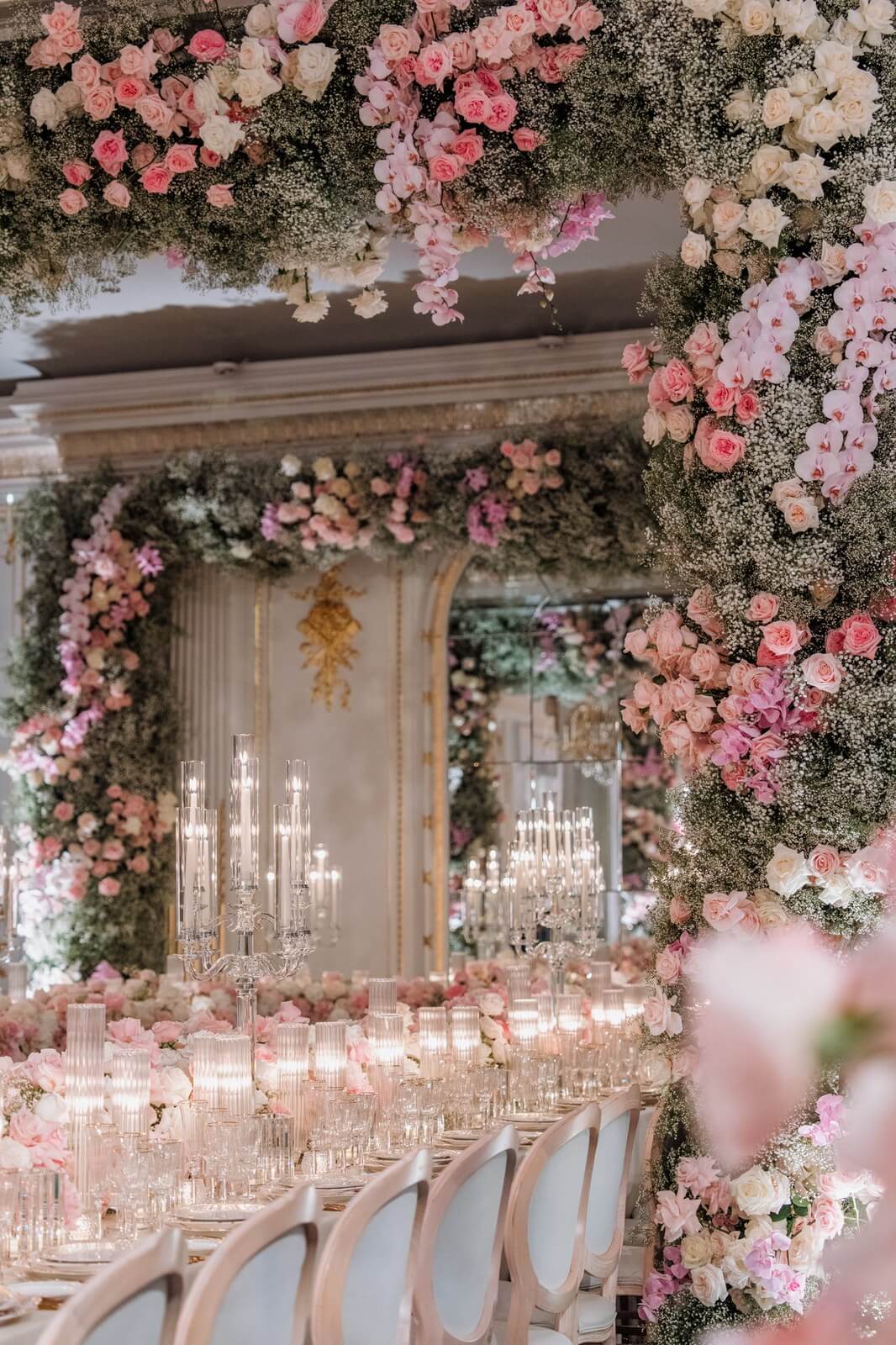
The scale, style and existing decor of a venue should inform the flower choices. A high-ceilinged hall calls for tall arrangements that fill the vertical space; a low barn or garden venue reads differently. At venue viewings, take note of the existing colours, textures and materials — stone, wood, fabric — and how much natural daylight comes through. These details will shape which arrangements work and which will not.
7. Underestimating the budget
Wedding flowers can be expensive, and they should feature as a significant line in the budget rather than an afterthought. Ask your florist for an indication of typical costs for weddings of a similar scale, then discuss whether your ideas sit above or below that range. A common related mistake is planning to arrange the flowers independently: DIY floristry rarely produces results that hold up in professional photographs, and the time cost on the day itself is significant. For more on planning your floral spend, see our guide on how to budget for your wedding. [Note to editor: this link needs a URL before publishing.]
8. Leaving it too late to book
Some flower varieties need to be imported and must be ordered months in advance. Florists at the busier end of the market are often fully booked well ahead of peak season. As a guide, aim to have all floral arrangements confirmed at least six months before the wedding date. The more lead time you allow, the more options you are likely to have.
9. Trying to do everything yourself
A florist’s role extends beyond supplying flowers. They can advise on how arrangements should be scaled and placed within the venue, how different flowers interact with the available light, and how the overall floral scheme relates to other decorative elements. That expertise is difficult to replicate independently, particularly under the time pressure of a wedding day.
10. Failing to coordinate schedules
Even well-planned flowers create problems if supplier arrival times are not properly coordinated. Confirm with the venue coordinator exactly when the florist, catering team and entertainment need to arrive and begin setting up, and make sure each supplier has those details in advance.
For help planning your wedding flowers, get in touch with the team.
You may also like: