Sustainable Wedding Flowers: What It Actually Means
Every florist website now mentions sustainability. Few explain what they actually do. This is an honest account of how we work: what we do, what we do not do, and where the industry still has work ahead.
The Problem With Flowers
The traditional model is wasteful by design. Floral foam, the green block that has underpinned commercial floristry for decades, is a single-use plastic. It fragments into microplastics that enter the water system. It cannot be recycled. It does not biodegrade in any meaningful timeframe. Flowers are flown thousands of miles from Kenya, Colombia, or Ecuador, wrapped in plastic, cooled in refrigerated containers, and sold through a chain of intermediaries before reaching the florist’s bench. After the event, most arrangements go in the bin. This is the system we inherited. It is not the system we use.
What We Do Differently
Foam-Free, Always
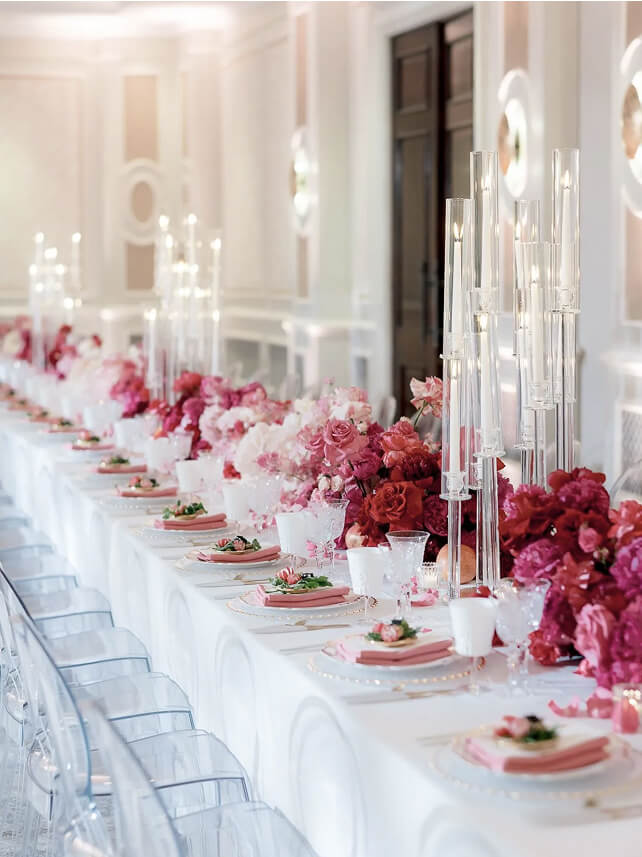
Every arrangement we make is foam-free. No exceptions. We use chicken wire, pin frogs (kenzan), moss, and mechanical structures to support our designs. Flowers arranged in water rather than foam last longer, drink naturally, and look more alive. Foam-free design takes more time and more skill. It is the reason some florists still use foam. We train every member of the team in these techniques from day one.
Seasonal Sourcing
Working with the seasons means the flowers we use are at their peak: fully open, deeply scented, and available without artificial forcing. In practice, this looks like:
- Spring: Ranunculus, anemones, narcissi, tulips, fritillaries, blossom branches
- Summer: Garden roses, sweet peas, foxgloves, delphiniums, peonies (May to June only), cosmos
- Autumn: Dahlias, chrysanthemums, hydrangeas, seasonal berries, turning foliage
- Winter: Amaryllis, hellebores, forced branches, evergreens, wax flower
British-Grown Where Possible
We work with growers in Sussex, Kent, Devon, and the Scilly Isles, supplementing with Dutch-grown flowers when British supply is limited. British flowers travel fewer miles, support local agriculture, and often arrive at the studio the day after cutting. They carry less packaging and no air-freight emissions. A British-grown sweet pea in July, cut that morning, is a different thing entirely from an imported stem. The scent alone tells you which is which.
Post-Event Repurposing
After every event, usable flowers are repurposed. Arrangements are donated through Floral Angels and Confetti Club, two organisations that redistribute flowers to people and places that need them. Guests are welcome to take arrangements home. All remaining green waste is composted. Nothing goes in the bin. This is not a service we charge for. It is part of how we work.
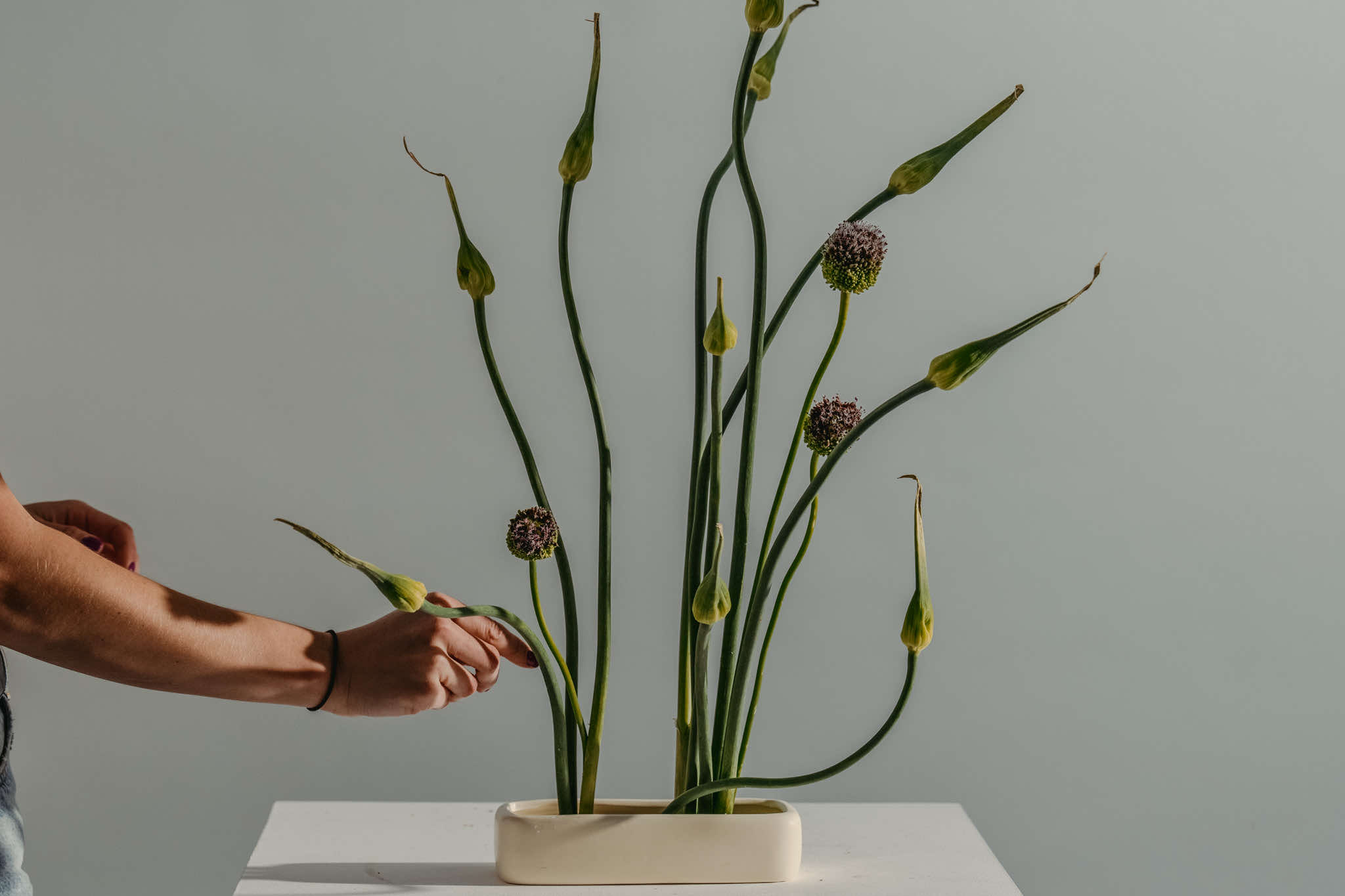
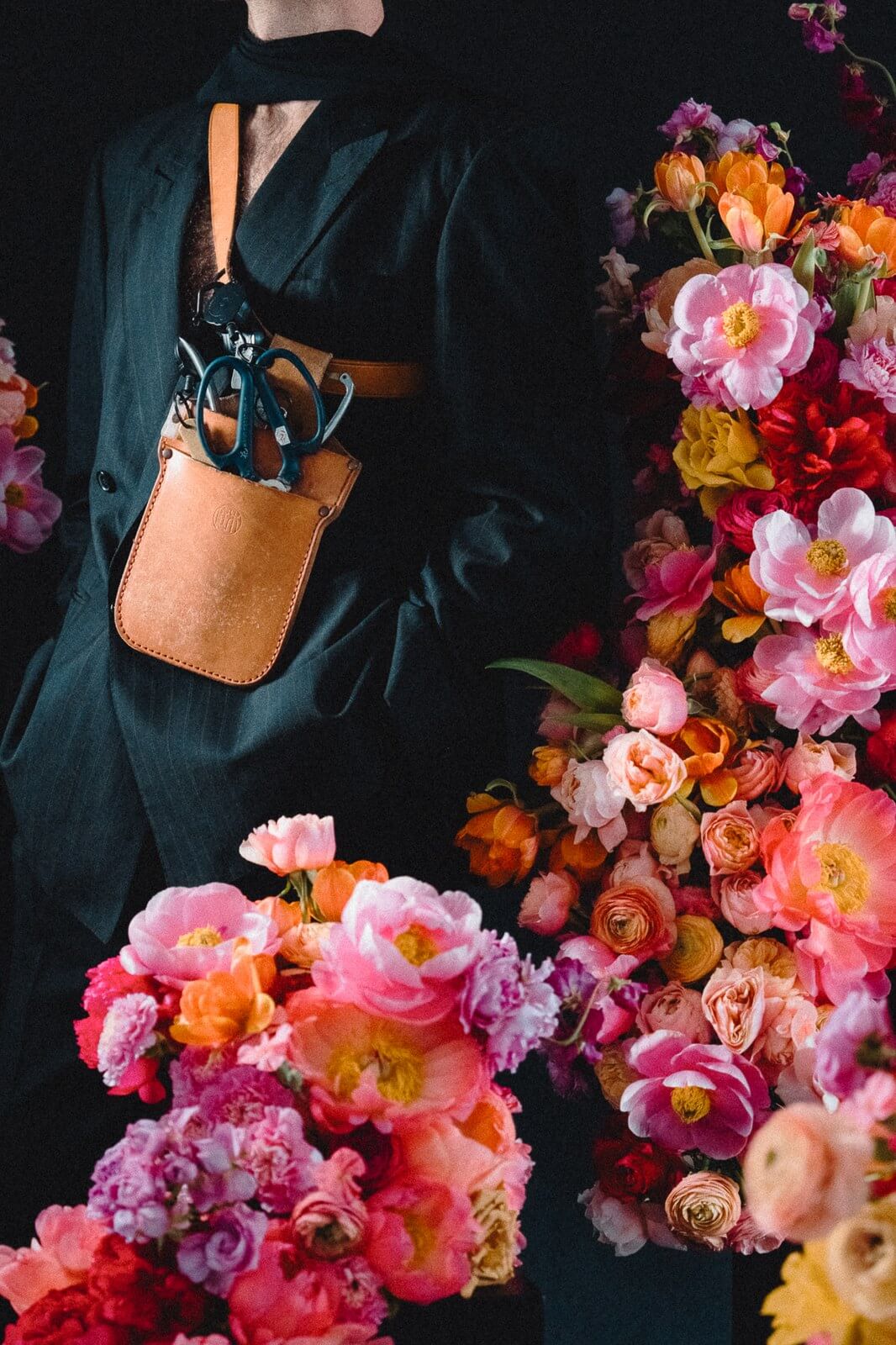
An arrangement made from organically grown alliums.
How the Studio Operates
The design work is only part of the picture. Sustainability has to run through the operation itself. Our studio at Arches 707–709, Havelock Terrace runs on 100% green energy. Deliveries are made by our electric van fleet, charged on-site, and supplemented by emissionless delivery partners. All green waste is composted. All packaging is either compostable or recyclable. Through our partnerships with Ecologi, National Forest, Woodland Trust, and Trees for Cities, we fund the planting of hundreds of trees each year in the UK and internationally. Every long-term corporate client has a tree planted in their brand’s name annually. We are members of the Floriculture Sustainability Initiative (FSI), the global programme working to drive responsible practices across the flower supply chain.
What Certification Means
We hold both B Corp and Planet Mark certifications. The only event florist in the world with both.
B Corp
B Corp certification is awarded by B Lab, a non-profit that assesses a company’s entire social and environmental impact: governance, workers, community, environment, and customers. Our B Corp Impact Score is 85.8. The median score for businesses completing the assessment is 50.9. In April 2025, B Lab published new certification standards. The framework now operates on a five-year cycle with progressive requirements, surveillance audits, and independent third-party verification. It is the most rigorous version of the certification to date. Being B Corp certified means our sustainability claims are examined and validated externally. We are not marking our own homework.
Planet Mark
Planet Mark certification requires year-on-year carbon reduction. It is not a one-time badge. Each year, our carbon footprint is measured and we must demonstrate measurable improvement. We track everything: studio energy use, transport emissions, packaging, supply chain impact. In 2025, Blooming Haus won the Planet Mark Best Company Award.
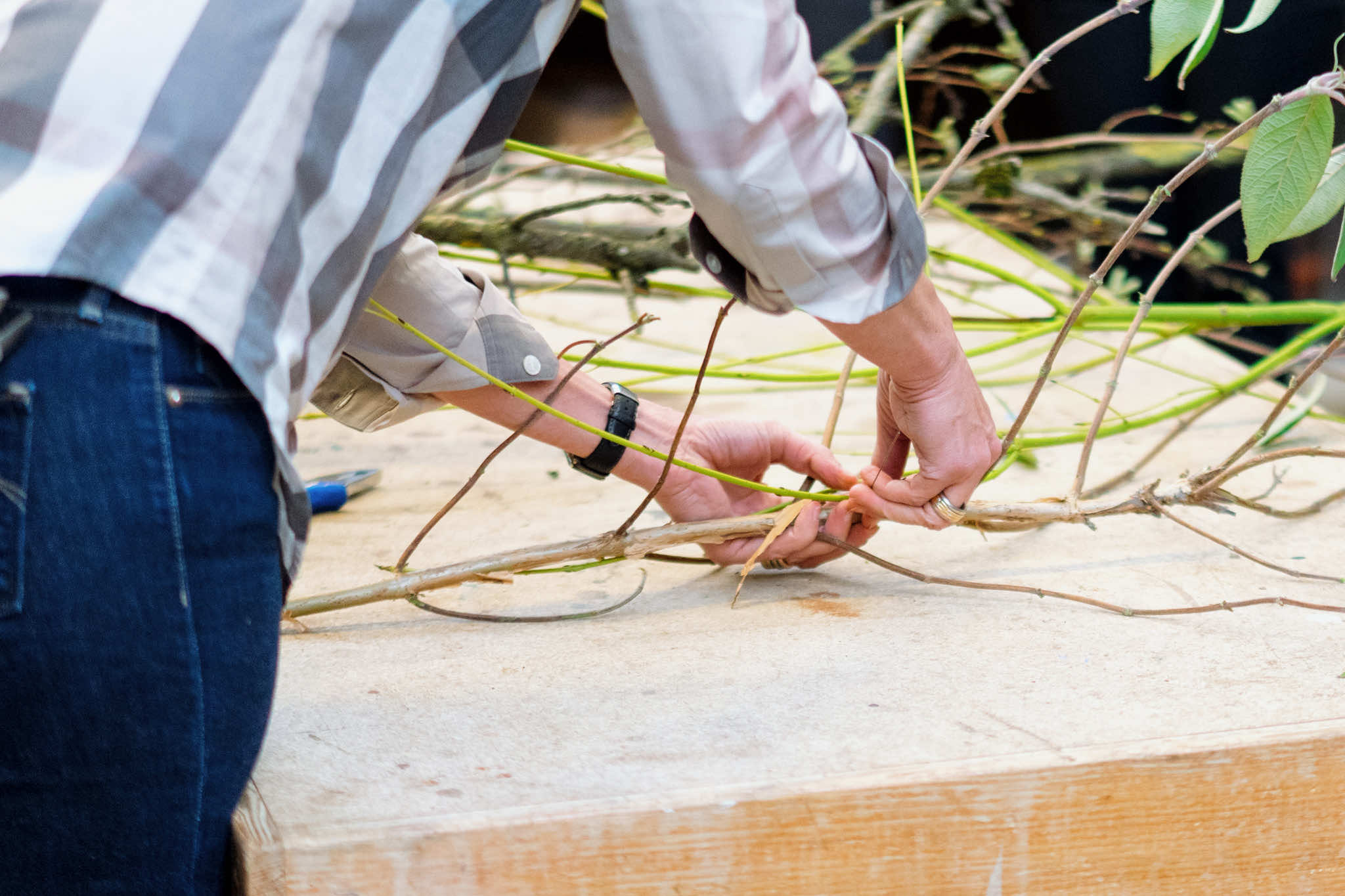
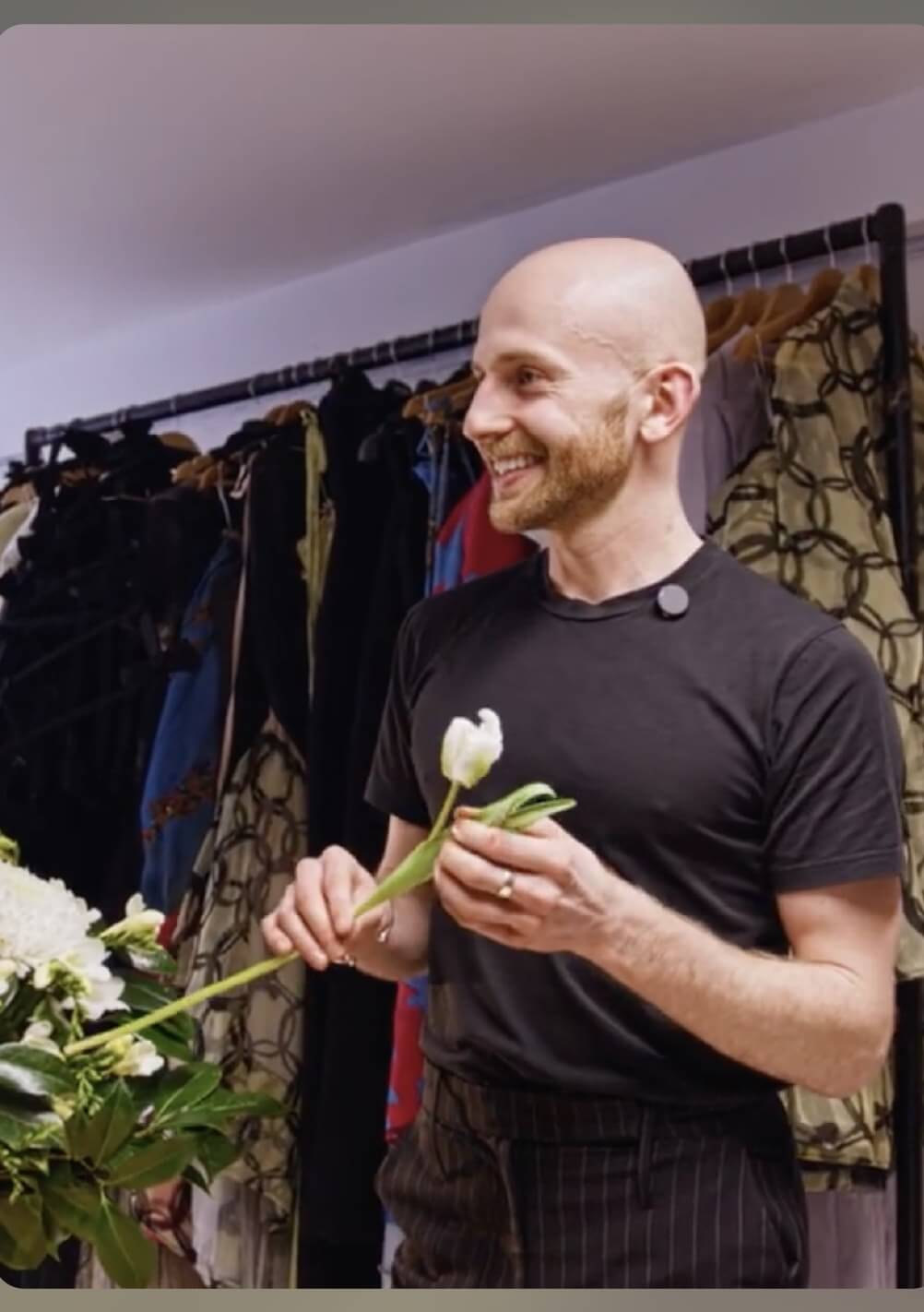
Making of an organic bouquet made with a base of branches.
What We Are Honest About
No florist is perfectly sustainable. We are not either. Some flowers we use still travel from Holland by refrigerated truck. Some come from further afield when a design requires a variety that does not grow in the UK or Europe. We still use floral tape, which contains plastic. Sustainability is a direction, not a destination. What matters is measurement, accountability, and consistent improvement.
Sustainable Wedding Flowers: Frequently Asked Questions
“Will seasonal flowers look different?” They look better. Flowers at their peak are more vibrant, more textured, and hold longer than out-of-season stems forced into bloom. “Does choosing sustainable floristry cost more?” Seasonal, British-grown stems can be more cost-effective than imported alternatives. Our foam-free techniques require more labour, but this is built into how we work. There is no surcharge. “Can I still have the flowers I want?” Almost always. Most varieties have a season when they are at their best. Where a specific flower is unavailable, we suggest alternatives that achieve the same colour, texture, and feeling. “What happens to the flowers afterwards?” Donated through Floral Angels and Confetti Club, taken home by guests, or composted at the studio.
The Industry Is Changing
More clients are asking about sustainability. More florists are listening. The shift towards foam-free, seasonal, and locally sourced floristry is real and accelerating. Considered, sustainable floristry produces work that is more beautiful, not less. The discipline and the craft are the same thing.
Talk to Us
If sustainability matters to you, and you want to know that the flowers reflect your values as well as your vision, we would welcome a conversation.
You may also like: