
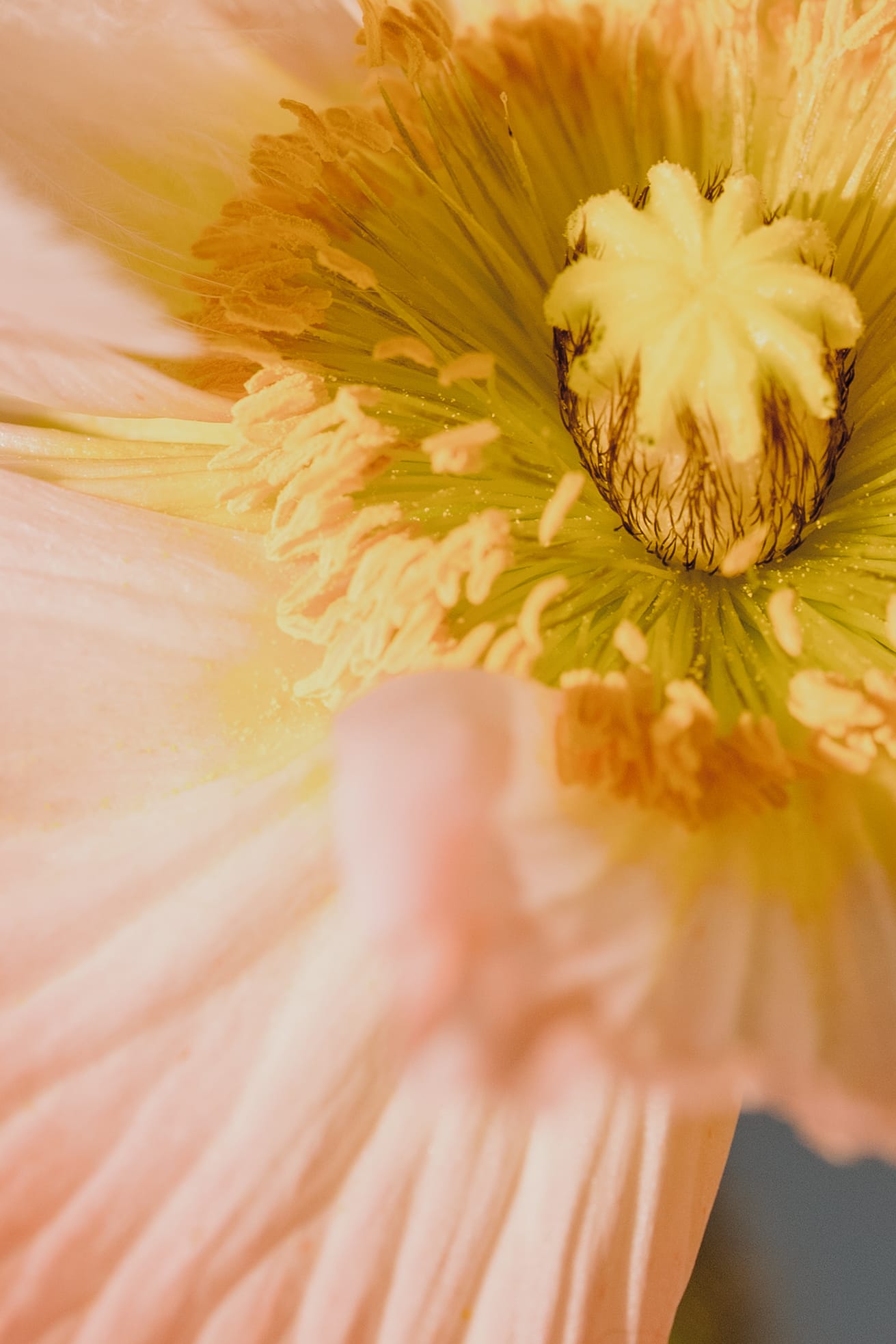
Wedding Flowers by Season: A Guide to What Blooms When
The best wedding flowers are the ones that want to exist when you need them.
That is the simplest argument for seasonal design. Not ideology. Not a lecture about carbon. Just this: a flower in its natural moment is fuller, more fragrant, more alive. It opens properly. It holds its colour. It does what you hoped it would do on the day.
Understanding wedding flowers by season is the single most useful thing to do before a first florist consultation. It shapes the palette, the texture, and the mood of everything that follows.
Why Seasonal Matters
There is a practical case and an aesthetic one.
The practical case is straightforward. Flowers grown in season, whether in British cutting gardens or in regions where the climate naturally supports them, are more abundant, more reliable, and at their structural peak. They have not been forced in heated glasshouses or flown across hemispheres in refrigerated containers.
The aesthetic case is harder to argue against. A ranunculus in March has a translucency and a depth of colour that the same variety, forced for September, simply cannot match. Dahlias in October have a richness and a weight that makes them feel right for the turning light. Sweet peas in July have a scent that fills a room.
Working with wedding flowers by season does not mean limiting yourself. It means starting from a position of abundance rather than compromise.
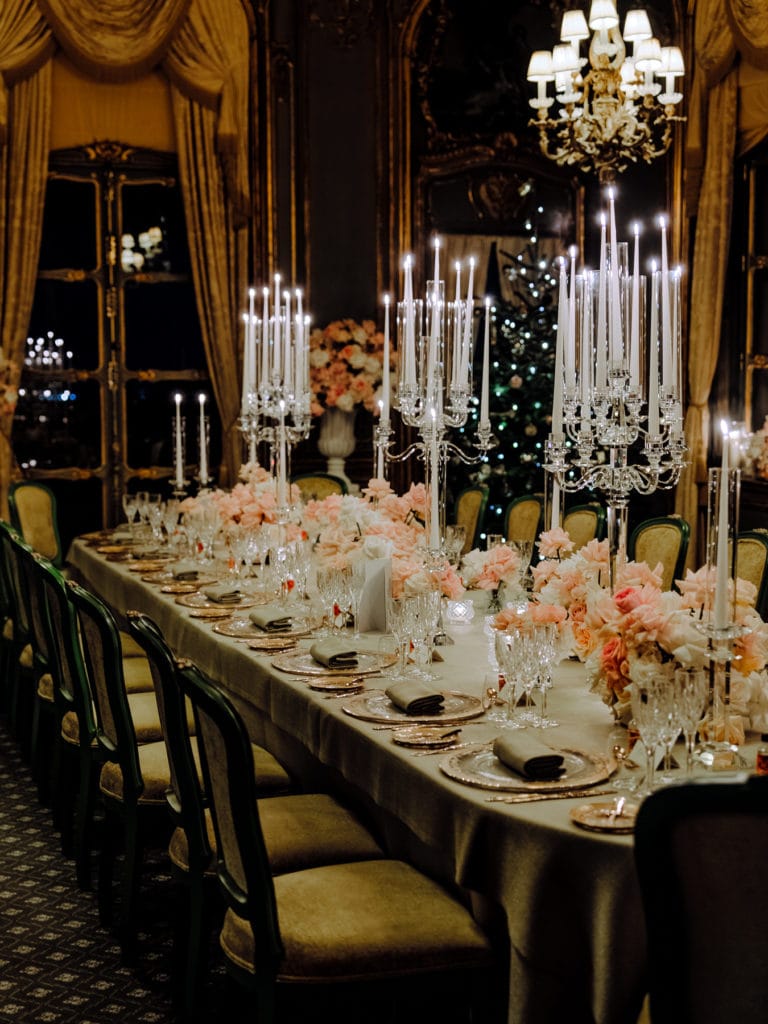
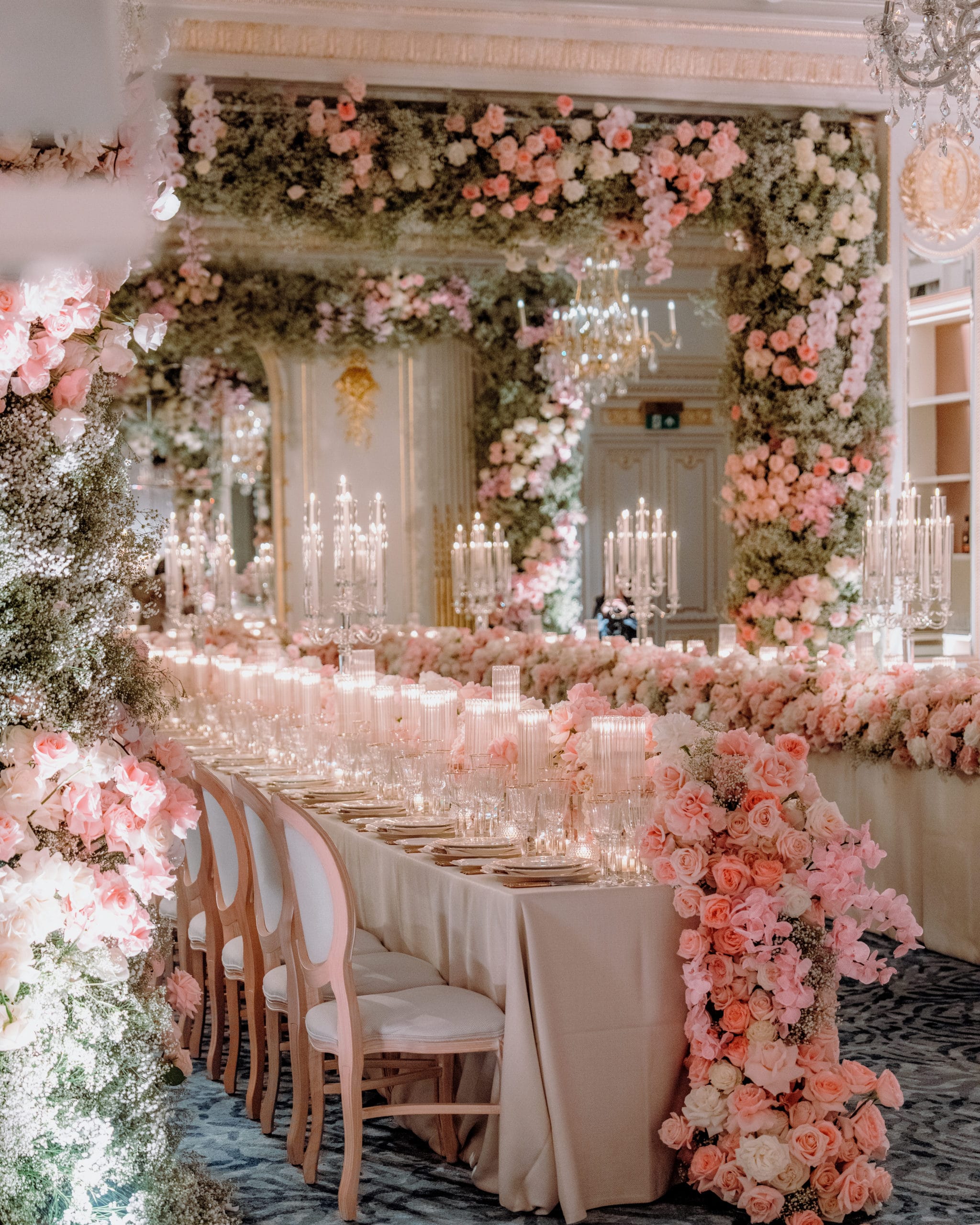
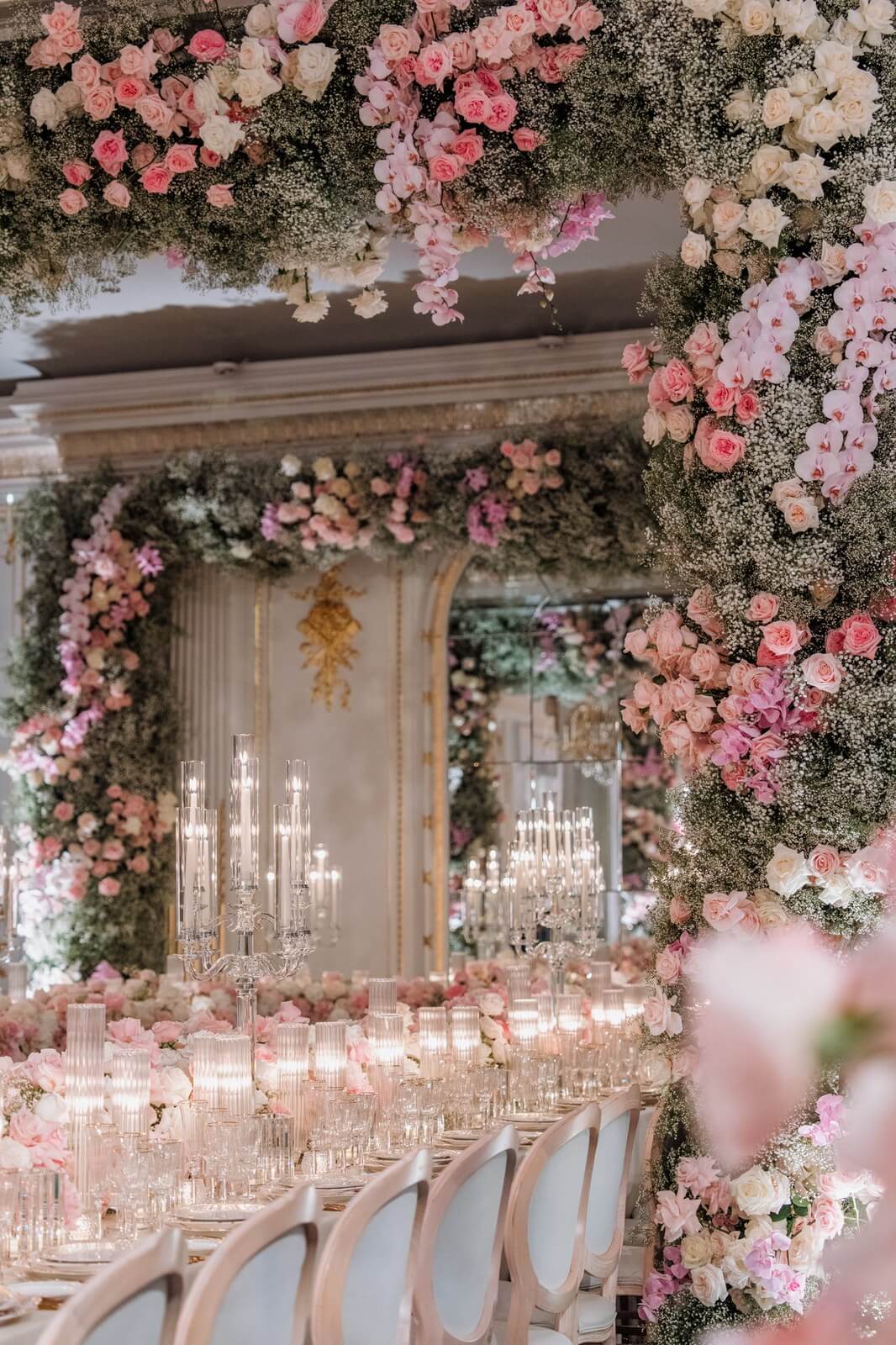
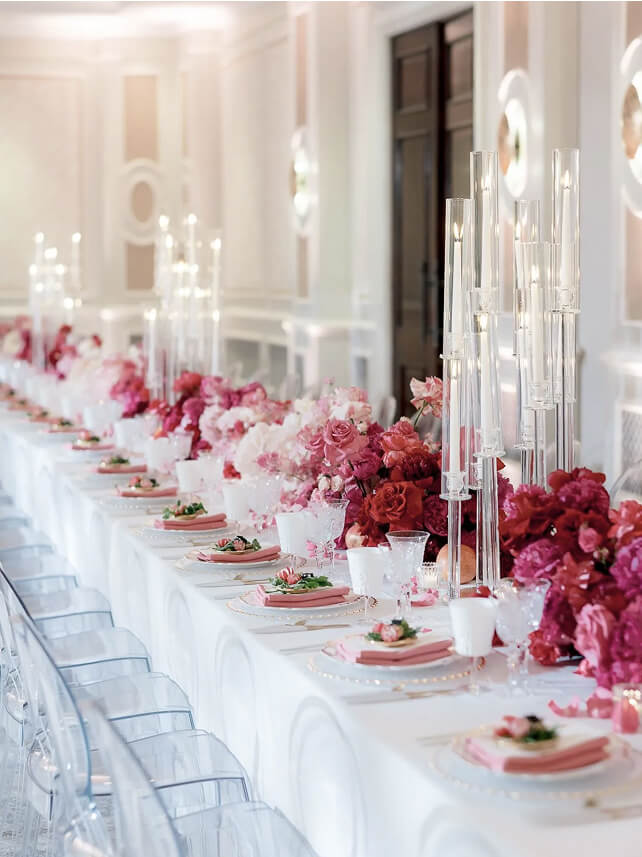
Cliveden House by Blooming Haus
Spring: March, April, May
Spring is a season of transition, and the flowers reflect it. Early spring is still cool, closer to winter than summer, and the palette tends toward softer, more muted tones. By late May, everything shifts.
What Is Available
Ranunculus. The defining flower of early spring. Layers of tissue-thin petals, available in almost every colour from blush to deep burgundy. Beautiful in bridal bouquets and table compositions alike. Italian ranunculus, the larger and more ruffled variety, are at their finest from late February through April.
Anemones. Clean, graphic, with dark centres that add contrast to any arrangement. The white variety with its black eye is quietly dramatic. Red and purple anemones carry a depth that photographs well in low church light.
Tulips. Often overlooked for weddings but remarkable when used with intention. Parrot tulips, with their feathered, painterly petals, can anchor a spring arrangement. French tulips have an elegant movement. They continue to grow and arc after cutting, which gives arrangements a living quality.
Narcissi and daffodils. For a March or early April wedding, British-grown narcissi bring scent and a sense of place. They are delicate and short-lived, which makes them feel generous rather than manufactured.
Fritillaries. The chequered pattern of snake’s head fritillaries is striking in a way that does not try to be. Good in buttonholes or woven through meadow-style table arrangements.
Blossom branches. Cherry, apple, blackthorn. Structural, architectural, and unmistakably spring. A few branches of blossom can transform a ceremony space, arching over a doorway or framing an altar, without requiring hundreds of stems.
Hellebores. Technically a late winter flower, but hellebores persist into March and early April. Nodding heads in green, plum, white, and dusky pink. They condition well when properly treated and add a woodland quality to hand-tied bouquets.
Spring Palette
Soft whites, blush pinks, butter yellows, fresh greens, occasional punctuation of deep plum or ink. The light in spring is gentle, and the flowers tend to match.
Venues That Suit Spring Flowers
Spring florals work naturally in venues with daylight, garden access, or botanical character. Kew Gardens makes seasonal design feel inevitable. The Orangery at Holland Park rewards a restrained palette. The Serpentine Galleries in Hyde Park, where we are an approved floral supplier, offer the rare combination of a minimal gallery interior and genuine parkland, which suits the unstructured, gathered quality of spring stems.
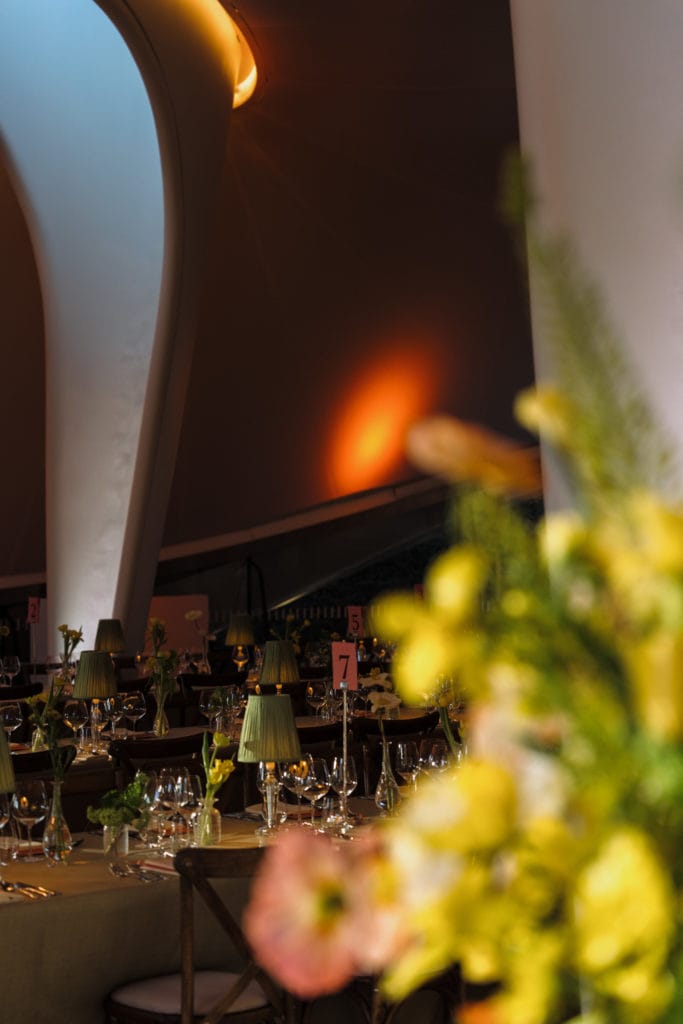
Serpentine Gallery by Blooming Haus
Summer: June, July, August
This is the season of abundance. More varieties are available in summer than at any other time of year, and the British cutting garden is at its peak.
What Is Available
Garden roses. The heart of summer weddings. David Austin varieties like Keira, Juliet, and Patience have become synonymous with English wedding flowers for good reason. Their scent is extraordinary, their form is generous, and their colour range runs from pure white through peach, apricot, and deep crimson.
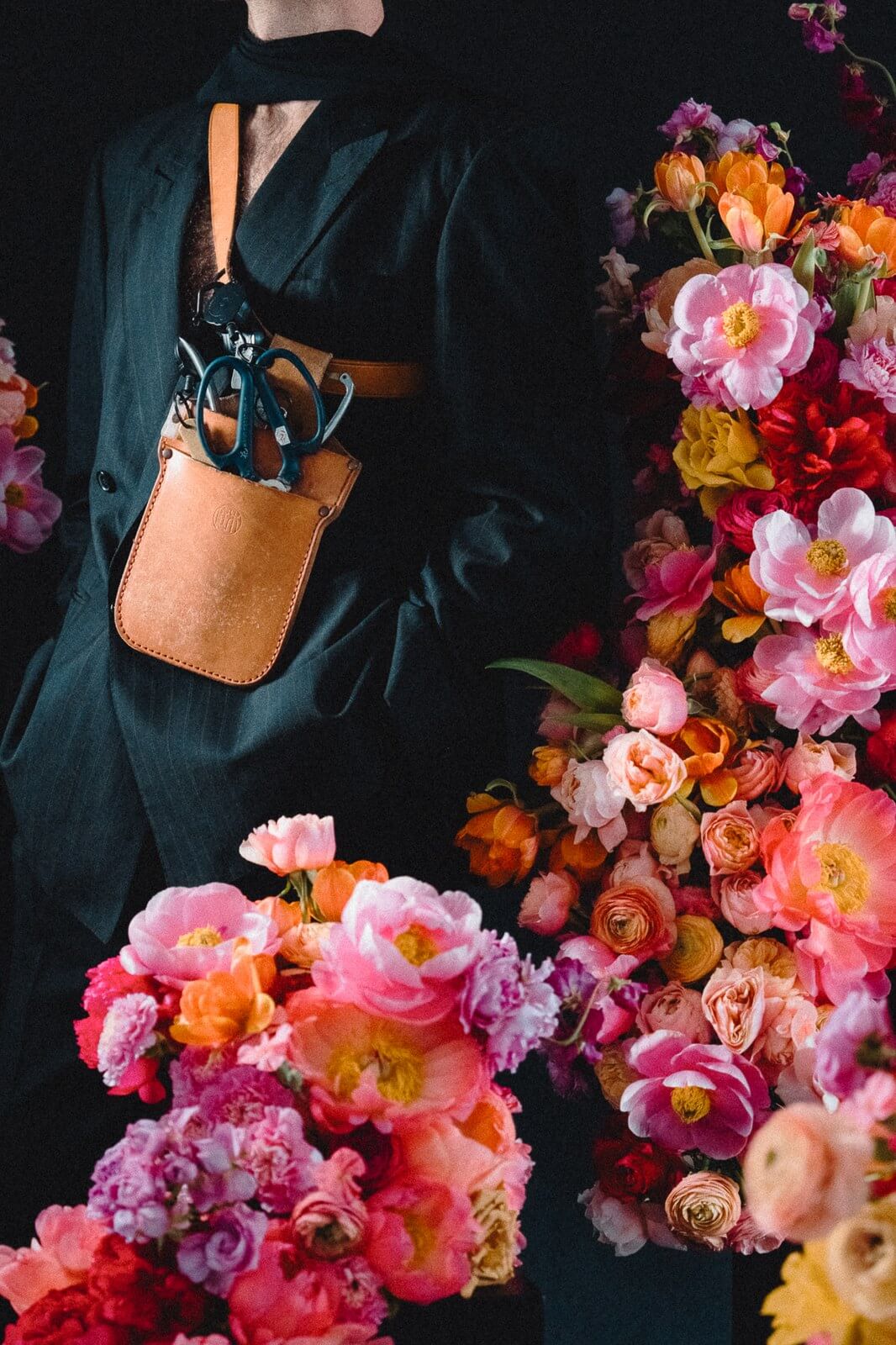
Peonies. Available for roughly six weeks, from late May to early July. Possibly the most requested wedding flower in existence. Their season is short and their supply is unpredictable. They open fast in warm weather and can be gone within days. If your wedding falls in peony season, they are glorious. If it does not, do not chase them out of season. Garden roses offer a similar lushness without the anxiety.
Sweet peas. Scent is their contribution. Delicate, fluttering, available in every shade from white to deepest burgundy. They wilt in heat, which means they are best for bouquets and intimate table arrangements rather than large-scale installations.
Foxgloves. Tall, architectural, with a wildflower quality that suits country and garden weddings. They add height to arrangements without requiring formal structure.
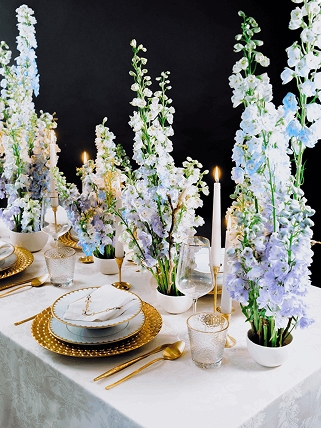
Delphiniums. Intense blues and purples that are difficult to find at any other time of year. Good for creating depth in large compositions and ceremony backdrops.
Cosmos. Light, movement, transparency. Cosmos have a quality of catching light that makes them almost ethereal. They are not a centrepiece flower. They are the supporting texture that lifts everything around them.
Stocks. Underrated. Dense, fragrant, available in a good colour range. They fill space generously and have a cottage-garden character that softens more structured designs.
Summer Palette
Everything is on the table. Rich corals, soft peaches, deep burgundies, clean whites, saturated blues. Summer light is strong enough to hold bold colour without it feeling overwhelming. This is the season to be generous.
Venues That Suit Summer Flowers
Summer abundance suits venues that can hold scale or open onto daylight. The Natural History Museum, with its high ceilings and stone archways, can absorb large-scale installations. Ham Yard Hotel offers a more intimate scale but responds well to overflowing, garden-gathered arrangements. George on Mount Street, where we are an approved floral supplier, has the rare advantage of a terrace opening onto Mayfair, which gives loose, garden-style compositions room to breathe. Annabel’s Garden Room, where we are also an approved floral supplier, is one of London’s most fully realised indoor gardens and extends the language of summer florals into an evening setting.
Annabel’s Reception
Autumn: September, October, November
The palette deepens. The light turns golden. Autumn weddings have a warmth and a richness that feels inherently romantic.
What Is Available
Dahlias. The defining flower of autumn. Available in an extraordinary range of forms, from dinner plate and pompon to cactus and ball, and in colours from soft blush to near-black. Cafe au Lait dahlias have become iconic, and deservedly so. Their creamy, blush tones shift in different light. They are generous flowers, and they last well.
Chrysanthemums. A flower that has been unfairly dismissed. The single-stem, disbud varieties, with their sculptural, globe-like heads, have real presence. Japanese spider mums add an unexpected texture. Forget the petrol-station connotations. These are craft flowers in the right hands.
Hydrangeas. In autumn, hydrangea heads take on antique tones. Faded greens, dusky mauves, rust-touched whites. They have a papery quality that suits the season and provide volume in compositions.
Seasonal berries. Rosehips, blackberries, snowberries, hypericum. These textural elements add movement, colour, and a sense of the hedgerow that grounds autumnal arrangements in the landscape.
Turning foliage. Beech, oak, liquid amber, cotinus. The changing colour of autumn foliage is impossible to replicate artificially. Branches of turning leaves provide architectural structure and a colour palette that no flower can match.
Amaranthus. Trailing, burgundy, textural. Amaranthus adds movement and drama to large-scale arrangements. It cascades over the edge of vessels and urns, softening structural compositions.
Autumn Palette
Terracotta, burnt orange, deep plum, warm cream, sage green, chocolate. The palette references the landscape. Turning leaves, late-afternoon light, the colours of the earth.
Venues That Suit Autumn Flowers
Autumn florals reward venues with warmth, candlelight, and character. The Savoy, with its art deco interiors, suits the rich palette. Claridge’s ballroom responds to deep tones and the drama of seasonal foliage. Mark’s Club on Charles Street, where we are an approved floral supplier, is the natural setting for autumn flowers: a restored Georgian townhouse with panelled walls, framed portraits, and the scale of a private home. The palette of turning leaves, dahlias, and rosehips sits seamlessly within its interiors.
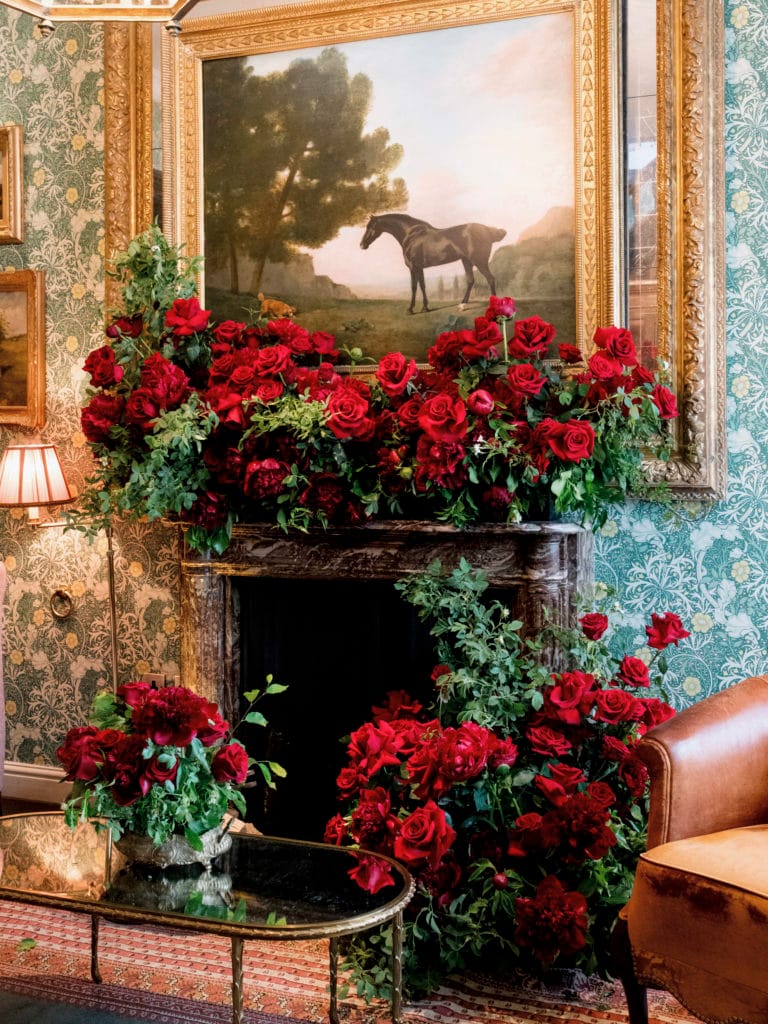
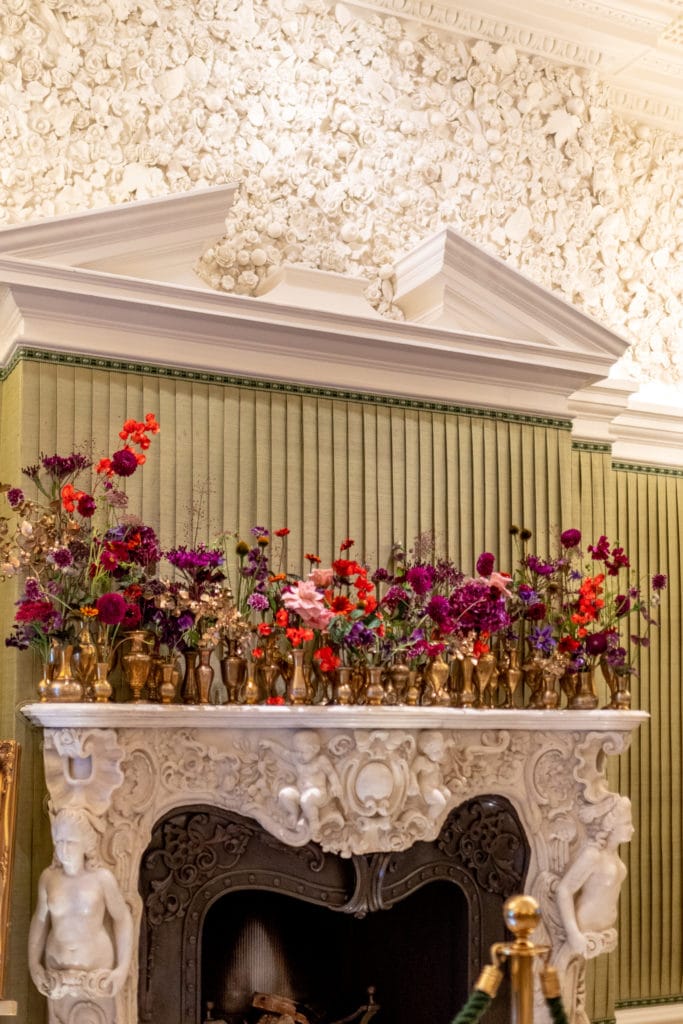
Mark’s Club Fireplace Installation by Blooming Haus.
Winter: December, January, February
Winter tests a florist. The availability is narrower, the stems are more structural, and the design approach shifts. But winter flowers, handled with care, have a quiet drama that other seasons cannot achieve.
What Is Available
Amaryllis. Tall, architectural, with a presence that commands attention. Red is traditional but white, soft pink, and striped varieties are more interesting for weddings. A single stem in a glass vessel is a complete statement. In larger compositions, amaryllis provides the structure around which everything else is arranged.
Hellebores. The finest winter flower. Nodding, complex, available in a range of greens, whites, and dusty pinks. They need careful conditioning but reward the effort with a beauty that feels almost accidental.
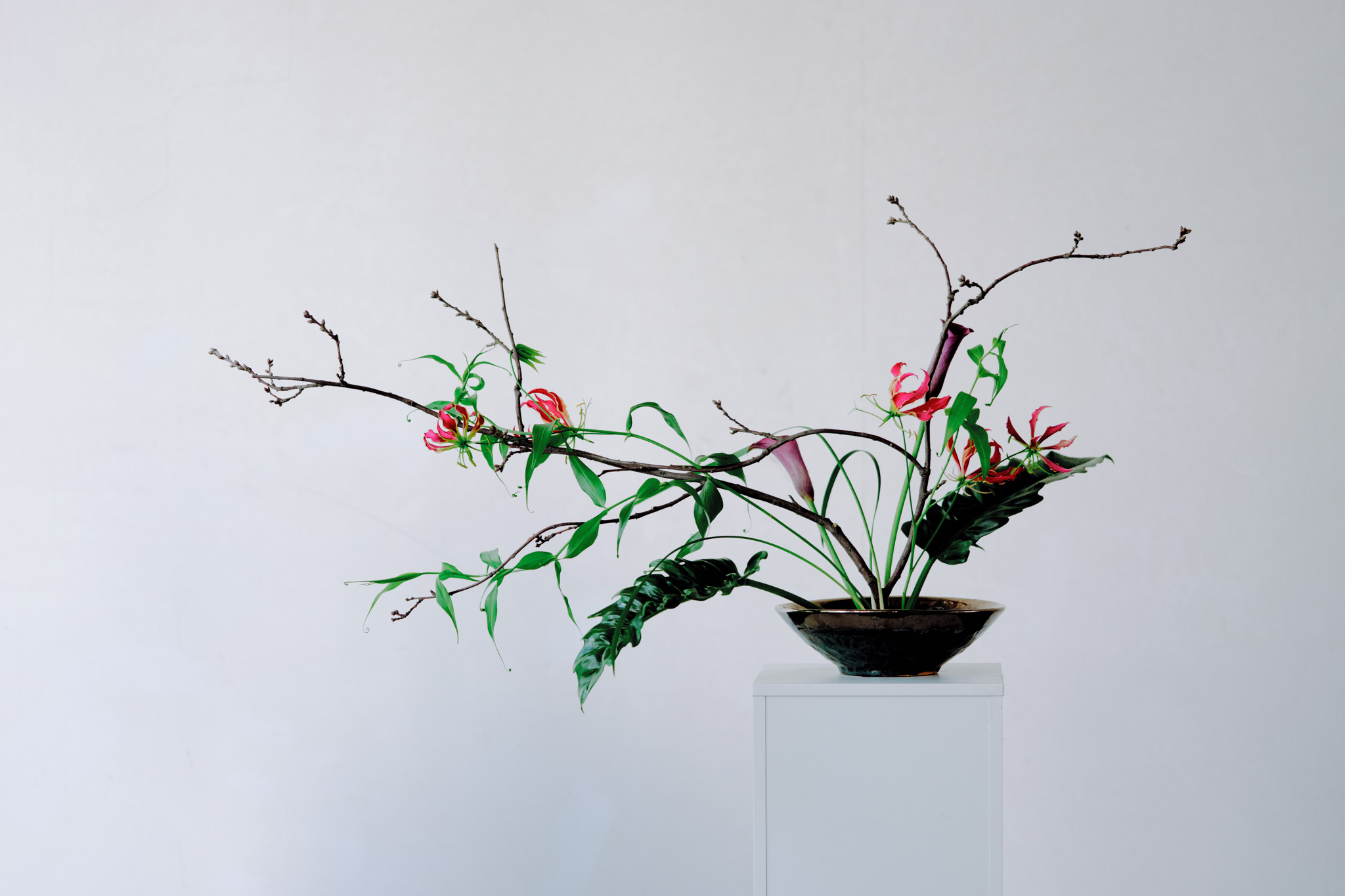
Forced branches. Quince, cherry, magnolia, cut early and brought into the warmth to bloom. Branches of forced blossom in January feel like a quiet rebellion against the season. They add height and architecture without mass.
Evergreens. Eucalyptus, ruscus, ivy, pine, bay. Winter foliage is not filler. It is the foundation of winter compositions. The scent of eucalyptus in a warm reception room is one of the underappreciated pleasures of a winter wedding.
Wax flower. A useful textural stem, available in white and soft pink. It fills space gracefully and has a star-like quality that catches candlelight.
Anemones. The first anemones of the season arrive in late January. By February, they are fully available and serve as a bridge between winter restraint and the coming spring.
Winter Palette
Ivory, forest green, burgundy, touches of gold, slate blue. Winter design often works best with fewer flower varieties and more textural greenery. The palette should feel considered rather than sparse. Intentional restraint, not limitation.
Venues That Suit Winter Flowers
Candlelit interiors amplify winter flowers. The Ned, with its low-lit, atmospheric dining rooms, suits restrained winter compositions. Spencer House, with its gilded interiors and chandeliers, responds to winter arrangements that lean into the formality of the season. Raffles London at The OWO, where we are an approved floral supplier, has the warm stone and Edwardian plasterwork that winter palettes were designed for: ivory, forest green, burgundy, and candlelight against restored architecture.
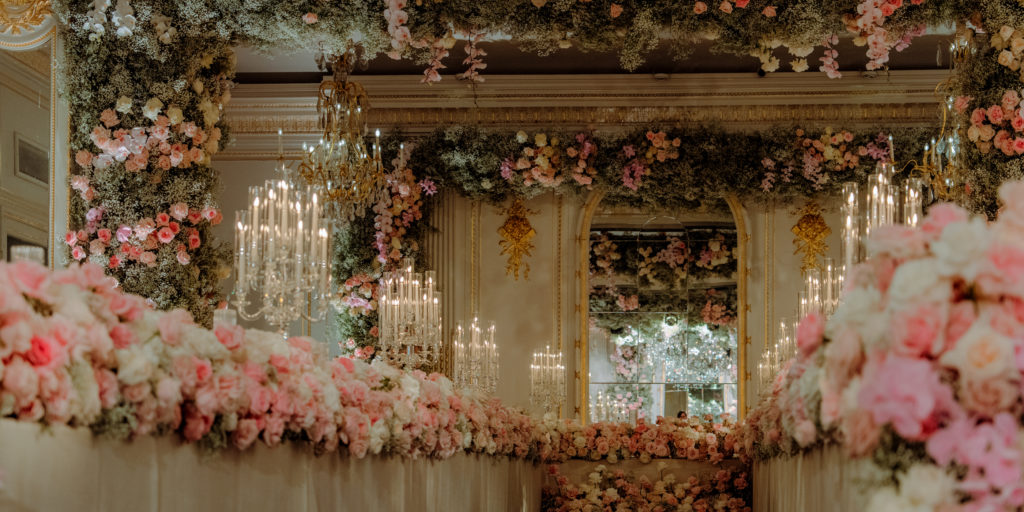
Mandarin Oriental Wedding by Blooming Haus
How to Use This Guide
Understanding wedding flowers by season is a starting point, not a constraint.
Most weddings draw on a combination of seasonal stems and reliably available flowers. Roses, lisianthus, and certain foliage types are accessible year-round. The seasonal flowers provide character and specificity. They are what make a spring wedding feel like spring, rather than a generic arrangement in a March venue.
A Few Principles
Trust the florist’s knowledge of the season. Your florist should know what is available in the weeks before your wedding, not just the month. Availability shifts week by week, especially in transitional periods like late spring and early autumn.
Be open to substitutions. The best wedding flowers by season are often the ones a florist discovers at the market that week. A particularly fine batch of ranunculus, an unexpected colour of dahlia, a branch of blossom that arrived early. Rigid flower lists produce rigid arrangements.
Consider the light. A June wedding at 4pm has entirely different light from a December wedding at 3pm. Soft, pale flowers disappear in low winter light. Deep tones can feel heavy in the bright midday sun of summer. Your florist should be thinking about this.
Let the season set the tone. Rather than choosing a colour palette and then finding flowers to match, consider starting with the season and letting the available flowers suggest the direction. This is how the most coherent wedding florals come together.
Working With a Seasonal Florist
At the studio, seasonal design is a practice, not a philosophy. Every consultation begins with the date, the venue, and the season. We source from British growers wherever the design allows and work with specialist importers for varieties that complement the seasonal palette.
The approach is foam-free across all wedding work. Every arrangement is built by hand using chicken wire, kenzan, and reusable armatures. This is consistent with our commitment to sustainable practice and produces flowers that last longer and look more natural.
Seasonal reference material is part of every wedding consultation. The design starts with the season, the space, and the feeling you are trying to create.
Related Reading
Starting the Conversation
The best time to discuss your wedding flowers is nine to twelve months before the date. This gives us time to understand the season, visit the venue, and develop a design that works with what nature offers rather than against it.
Get in touch to arrange a consultation at the studio. We will discuss the season, the venue, and the design approach that fits your day.
You may also like: